-
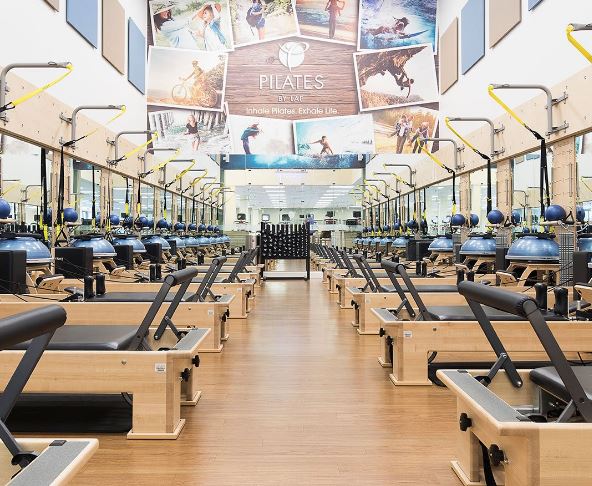
Are you trying to get in shape this year? If so, you know that the best way to do that is to join one of the best gyms in the Atlanta area: LA Fitness.
In this article, I’ll list the LA Fitness locations in Atlanta as well as how to cancel your membership.
In Atlanta, LA Fitness has taken over many of the Bally Fitness locations, thus giving it a huge advantage over other fitness centers where people get their exercise on.
Here Are LA Fitness Locations In Atlanta
- Ansley Mall: 1544 Piedmont Ave NE, Suite 115, Atlanta, GA 30324
- Akers Mill: 2995 Cobb Parkway, Atlanta, GA 30339
- Atlanta-Peachtree Road: 3535 Peachtree Road NE, Suite 300, Atlanta, GA 30326
- Atlantic Station: 261 19th St., Suite 1140, Atlanta, GA 30363
- Lenox/Buckhead: 3232 Peachtree Road NW, #A, Atlanta, GA 30305
- Brookhaven: 755 Brookhaven Ave, Atlanta, GA 30319 (Note: This appears to be an alternate or former name for an existing club, but it’s not separately listed in current official results)
- Camp Creek: 3755 Carmia Dr. SW, Suite 700, Atlanta, GA 30331
- College Park: 6385 Old National Highway, Atlanta, GA 30349
- Midtown: 75 Fifth Street NW, Suite E, Atlanta, GA 30308
- Toco Hills: 2880 N. Druid Hills Rd NE, Atlanta, GA 30329
How Much Does It Cost To Join LA Fitness In Atlanta?
The exact cost of membership at LA Fitness varies slightly depending on whether you have signed up under a special or not. I have a Multi-Club and multi-state membership that costs $29.99 a month.
The $29.99 membership allows you to go to multiple LA Fitnesses in your city and across the nation.
For $26.99 a month, you can get membership to a single LA Fitness.
I had to pay a $99 initiation fee for that though. For single club access, you can get a membership for about $25 a month.
History
The reason is because, if you’re like me, you need to know where you can workout, train or just play basketball around the city.
What would become LA Fitness was first named Rainbow Nautilus. It was founded by Chin Yi and Lisa Maria Novins in 1983. In Covina, just outside Los Angeles, California, the name change stuck and LA Fitness took off.
If you’re looking for a gym that has it all, LA Fitness is it!
How To Cancel An LA Fitness Membership
If you want to cancel your LA Fitness membership, it’s not as easy as it could be. There is no button on their website that allows you to cancel.
Instead, you have three ways you can cancel your LA Fitness membership:
- You have to write a cancellation letter to the corporate headquarters at PO Box 54170, Irvine, CA 92619-4170
- You can also call LA Fitness and tell their customer service representative that you would like to cance. The number is
- Finally, you can print a cancellation form online. from the LA Fitness site. Once you log on at My LA Fitness, click on Account Information tab and then click on the “Cancellation Form” option on the right side of the screen. Once you have the form, you can deliver the notice to the operations manager at your local LA Fitness facility between 9 a.m. and 5 p.m. Monday through Friday.
Pro tip: If you mail the notice by certified mail and keep a record for your files. Also, make sure your cancellation is postmarked at least five business days before your next billing date to avoid being billed.
Final Word
If you’re an LA Fitness nut like me, you know that one is never too far away no matter where you are in Atlanta. I wanted to show you where all the LA Fitness locations were in Atlanta.
See more articles from AtlantaFi.com:
-
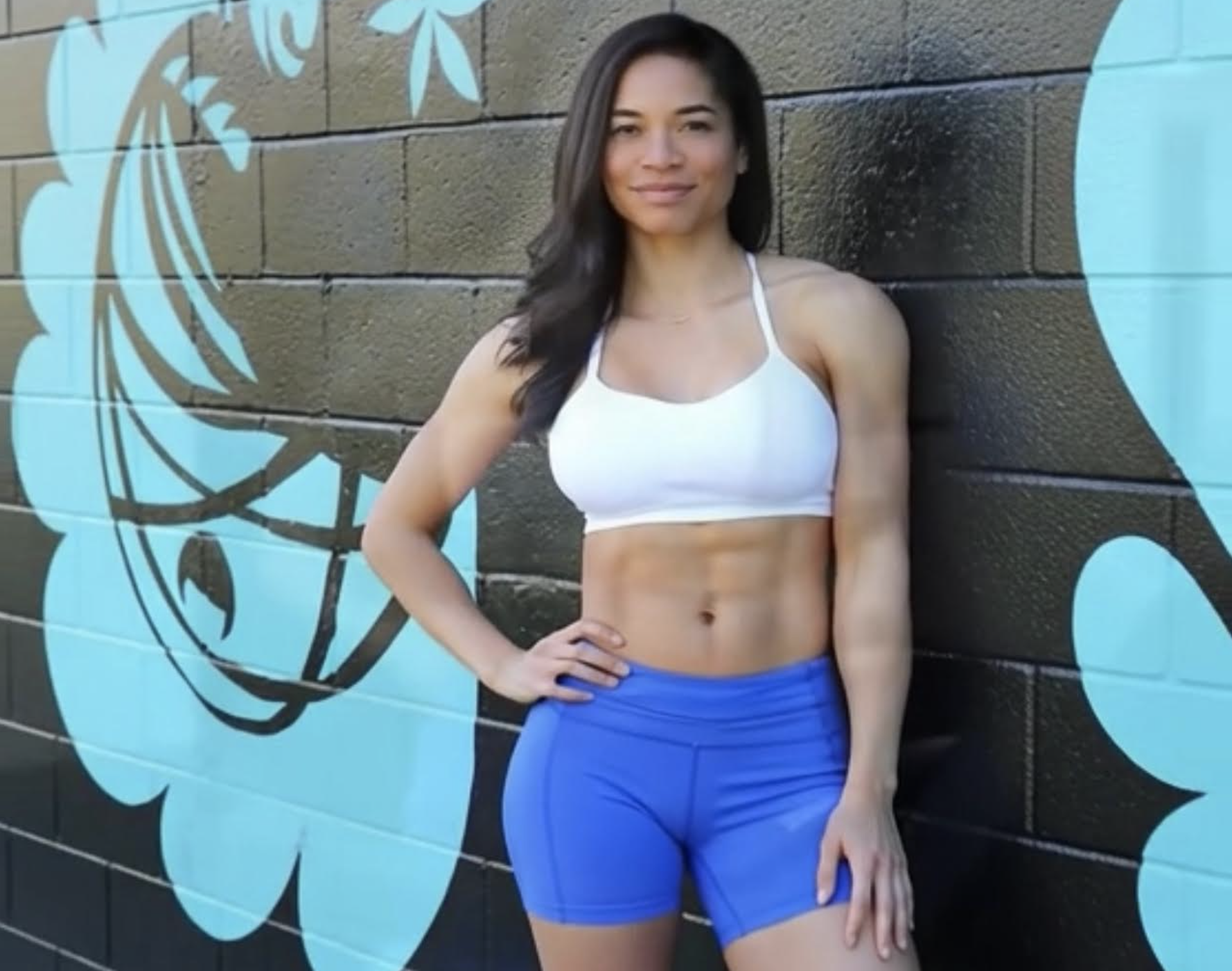
We’re not getting any younger. That means a big part of our personal health and wellness is physical fitness. And the good news is that you don’t have to be bulky to look fit.
Atlanta fitness guru Elle Ross has been helping people take better care of themselves by showing them workout routines and techniques. The Tacoma, Washington native says before she dedicated herself to self-transformation, she was once 40 lbs heavier, depressed and not feeling herself.
4 AWESOME Workout Routines For Beginners
“I took control of my life by making the conscious decision to improve my health holistically,” she tells AtlantaFi.com. “I created a solid routine. Fitness and weight training became my outlet and passion each morning.”
In the videos below, Ross shows us four workout routines that can change your life.
1. Work On Your Core
“Everyday is Abs Day. Get Summer Body Ready with these 10 Moves!

Core training targets the muscles in your abdomen, back, pelvis, and hips, creating a strong foundation for nearly every movement.
- Improved balance and stability: A strong core helps you stay steady, reducing fall risk.
- Better posture and reduced back pain: It supports the spine, alleviating lower back issues common in daily life.
- Enhanced everyday function: Makes bending, twisting, lifting, and standing easier.
- Injury prevention: Protects against strains during sports or activities by promoting efficient movement.
“I love what I do because each day I get to inspire others, specifically women, to improve their strength and self-esteem through fitness,”Ross says. “Body, Mind & Soul. Allowing them to gain greater confidence, develop SELF-LOVE and know that they are beautiful, powerful and strong!”
Buy Some Free Weights
You might want to think about investing in some free weights to build muscle and tone along with your workouts. Here are some free weight options from Amazon:
- Adjustable Dumbbells
- AmazonBasics 20 lb Adjustable Barbells
- Balance From BF 32 lb Barbells
- Adjustable Dumbbells
These tools excel at building serious strength and muscle, often overlapping with general strength training benefits.
- Maximal strength gains: Barbells allow heavier loads for compound lifts (e.g., squats, deadlifts, bench presses), ideal for power and muscle growth.
- Functional improvements: Dumbbells correct imbalances, enhance stability, and allow natural movement patterns.
- Bone and joint health: Builds density and resilience.
2. Cardio & Total Body:
“No Excuses. Get Up. Get Moving & GO ALL IN on YOU.”

Treadmill running delivers cardio benefits with added convenience and control.
- Cardiovascular endurance: Strengthens heart/lungs, lowers disease risk, and burns calories effectively.
- Convenience and consistency: Weather-proof, adjustable speed/incline for precise training (e.g., intervals or hills).Joint-friendly options: Cushioned surface reduces impact compared to pavement; great for beginners or recovery.
- Mental boost: Improves mood and stamina, with easy tracking for progress.
3. Upper Body Strength
“Get in tune with YOUr vision for life and invest in your health.”

This builds muscle, boosts metabolism, and supports long-term health.
- Increased muscle mass and strength: Counters age-related loss, improving daily tasks and independence.
- Stronger bones: Increases density, reducing osteoporosis risk.
- Better metabolic health: Helps manage weight, blood sugar, and chronic conditions like diabetes or heart disease.
- Improved quality of life: Enhances joint protection, balance, and mood while reducing inflammation.
4. Boxing Conditioning
“The Time is N:OW! Impossible is potential. Impossible is temporary. Impossible is nothing!”

Buy A Punching Bag

If you want the convenience of working on your body in your own home, you might want to invest in a punching bag. Here are some good ones from Amazon:
Elle Ross: ‘My Mind, Body And Soul Transformed For The Better’
“What inspired me is my own personal life and self-transformation,” she says. “That transformation led to me writing my book “The Blueprint: The 90-Day Breakthrough to Shift Your Mindset & Transform Your Life.“
She says it also motivated her to start her personal brand and business: The Elle Ross LLC – B-FIT with Elle.
“Now each day I wake up I get to live out my passion and encourage others to SWEAT (Success With Every Action Taken) toward their dreams.”
Bottom Line
If you want to take your health seriously, exercising is a great way to improve your body and mind. You don’t have to be an athlete to lose weight and train your body. There are workout routines for beginners that can help.
Exercising is not about how you look on the outside, it’s about how you feel on the inside and even more importantly, how you view yourself. Never forget that it’s you who can transform you life. If you look better, you’ll feel better.
The sooner you take the necessary steps you need to feel whole, the easier it will be for you in the future. Relax, you got this!
If you need training or branding help with Ross, reach out to her via info@theelleross.com.
And if you’re determined to change your life through exercise and eating right, never give up.
More from AtlantaFi.com:
-

In a heartwarming holiday announcement that captured national attention, NBA Hall of Famer and Atlanta-area resident Shaquille O’Neal has been promoted to Chief of Community Relations with the Henry County Sheriff’s Office, effective Christmas Day.
The surprise promotion was revealed live during ESPN’s Christmas edition of “NBA Tip-Off” by Sheriff Reginald B. Scandrett, who presented O’Neal with a special plaque recognizing his years of dedicated service.
NBA Legend Shaquille O’Neal Promoted to Chief of Community Relations for Henry County Sheriff’s Office
The elevation from his previous role as Director of Community Relations comes after nearly five years of impactful outreach that has strengthened ties between law enforcement and residents across the county, located just 30 miles southeast of Atlanta.
Under O’Neal’s leadership, the Sheriff’s Office has participated in approximately 370 community events, reaching more than 42,000 people, distributing over 25,000 meals to families through programs like Thanks4Giving, and providing 15,000 gifts to children.
Initiatives such as the Shaquille O’Neal Sports Spectacular Summer Camp, holiday meal distributions, Shop With a Deputy events, and the popular Ride4Unity motorcycle gathering have created meaningful connections and built lasting trust.
Sheriff Scandrett praised O’Neal’s contributions, stating that public safety thrives when law enforcement and the community work hand-in-hand. Captain Deon L. Wallace echoed the sentiment, saying, “I couldn’t be more proud of Shaquille,” highlighting their strong friendship and shared commitment to service.
O’Neal, often referred to as “Dr. Shaquille O’Neal” following his earned doctorate, responded to the honor with his trademark humor: “That’s how you address me from now on, as Big Chief.”
The NBA icon, who owns multiple homes in the McDonough area and has deep business ties in metro Atlanta (including Papa Johns and Krispy Kreme franchises), has long used his platform for good. His law enforcement background includes reserve officer service in Miami, Los Angeles, and Doral, Florida.
In Henry County, he’s gone beyond events to provide direct aid, such as donating shoes to schoolchildren, supporting families after tragedies, and even offering rewards for information leading to fugitive captures.
“Public safety works best when the community and law enforcement work together,” O’Neal said in a statement. “This role is about being present and creating opportunities for our youth and families. I’m honored to serve Henry County in this way.”
The promotion underscores the Sheriff’s Office’s belief that strong relationships are key to effective policing, prevention, and cooperation.
As one of the most recognizable figures in sports steps up his local commitment, Henry County residents are celebrating a true hometown hero making a difference off the court.
Stay tuned to AtlantaFi.com for more stories celebrating our community’s leaders and positive developments in the metro area.
-

As flu cases surge across Georgia this holiday season, with reports of an earlier-than-usual spike in infections and hospitalizations, health experts are urging residents to separate fact from fiction when it comes to colds, the flu, and vaccines.
The Georgia Department of Public Health and local doctors note increasing positive flu tests, particularly Influenza A, along with moderate levels of respiratory illnesses statewide.
In this article, we’ll cover truths about influenza, then we’ll share where you can get a free flu shot in Atlanta.
Flu Facts You Need To Know
Metro Atlanta hospitals are bracing for a potentially severe season, reminding everyone that it’s not too late to get vaccinated.
Here are some of the most persistent myths about colds and flu – and the truth behind them, backed by the Centers for Disease Control and Prevention (CDC) and scientific studies:
Myth 1: The flu vaccine can give you the flu
Fact: No, the flu shot cannot cause flu illness. Most flu vaccines use inactivated (killed) viruses or contain no flu virus at all – they simply teach your immune system to fight the real thing. Any side effects, like a sore arm or low-grade fever, are mild and short-lived.
The CDC clearly states that flu vaccines do not cause the flu, and getting vaccinated is the best way to protect yourself, especially as activity rises in Georgia.
Myth 2: Cold weather directly causes colds or the flu
Fact: While we’re seeing more illnesses during Georgia’s cooler months, the cold air itself isn’t the culprit. Viruses spread more easily indoors when people gather closely, and dry winter air helps them survive longer.
A Swedish study showed flu viruses travel farther in cold, dry conditions, but exposure to chilly weather doesn’t infect you – contact with the virus does.
Myth 3: Not bundling up properly will make you catch a cold
Fact: Your mom might have warned you, but going out without a jacket won’t give you a cold. Research from the UK, including a study where volunteers were exposed to cold conditions, found no link between chilling and developing cold symptoms.
It’s all about virus transmission through coughs, sneezes, or touched surfaces – not the temperature outside.
Myth 4: You should “starve a fever” (or flu) to recover faster
Fact: The old saying “feed a cold, starve a flu” is outdated and potentially harmful.
Cutting calories when sick can weaken your immune response. Studies on animals showed that restricted diets made it harder to fight influenza by reducing key infection-fighting cells. Stay nourished and hydrated – your body needs fuel to battle the virus.
Myth 5: Chicken soup or a hot toddy can cure a cold or flu
Fact: There’s no cure for the common cold, and flu requires rest and sometimes antivirals. That said, remedies like chicken soup can help soothe symptoms with hydration, warmth, and nutrients. Research supports its benefits for congestion relief. A hot toddy (hot water, lemon, honey, and perhaps a splash of whiskey) may ease mucus and provide vitamin C comfort – but it’s symptom relief, not a cure.
Pharmacies Offering Free Flu Vaccines in Metro Atlanta
As flu season continues into late 2025, many metro Atlanta pharmacies provide free flu shots for individuals with most health insurance plans (including Medicare Part B), with no copay in most cases.
Eligibility varies by plan, so confirm with your insurer or the pharmacy. Walk-ins are often accepted, but scheduling ahead is recommended due to high demand.Major Pharmacy Chains
- CVS Pharmacy (including locations inside Target stores)
Flu shots are no cost with most insurance. They offer standard, senior-dose, and egg-free options. Available at hundreds of locations across metro Atlanta. Schedule online at cvs.com/immunizations/flu or walk in. - Walgreens
No cost with most insurance. High-dose shots available for ages 65+. Walk-ins welcome or schedule at walgreens.com/topic/pharmacy/seasonal-flu.jsp. - Publix Pharmacy
Covered at no cost with most insurance plans. Many locations throughout metro Atlanta (common in suburbs like Marietta, Decatur, and Alpharetta). - Kroger Pharmacy (including affiliated stores)
Free with most insurance coverage.
Notes for Uninsured Individuals
Commercial pharmacies typically charge $45–$90 without insurance. For lower-cost options:
- Grady Health Neighborhood Centers → Offer walk-in flu shots for $10 (no insurance required) weekdays 8 a.m.–3 p.m.
- County Health Departments (e.g., Fulton, Cobb, DeKalb, Gwinnett) → Provide low-cost shots (often $21–$25 admin fee), and no one is turned away due to inability to pay. Call ahead for availability.
- Use Vaccinefinder.org to find nearby locations, including potential community clinics or events offering free/low-cost shots.
Final Word
With flu activity ramping up in Atlanta and across Georgia – including reports of hundreds of hospitalizations and warnings from Children’s Healthcare of Atlanta about early pediatric cases – experts emphasize prevention: Get your flu shot (available at pharmacies, clinics, and doctors’ offices), wash hands frequently, cover coughs, and stay home if sick.
The CDC recommends annual flu vaccination for everyone 6 months and older, noting it reduces severity even if you catch the virus.
As we head into the holidays, protecting yourself and vulnerable loved ones – like kids, seniors, and those with chronic conditions – is more important than ever.
Stay healthy, Atlanta! For the latest local flu updates, check the Georgia Department of Public Health website.
- CVS Pharmacy (including locations inside Target stores)
-
Hundreds of Black women from across the country gathered in Midtown Atlanta last month for the sixth annual Wellness Week(end), a powerful and restorative event organized by We Are ILL.
The national nonprofit organization is dedicated to supporting Black women living with autoimmune conditions such as multiple sclerosis (MS), lupus, and neuromyelitis optica spectrum disorder (NMOSD).
Held November 7–9, 2025, at the Renaissance Atlanta Midtown Hotel, this year’s gathering carried the theme “In Pursuit of Joy” — a bold reminder that joy remains essential, even amid the daily challenges of chronic illness.
The weekend offered a much-needed space for education, deep connection, and empowerment in a healthcare landscape that often overlooks the unique experiences of Black women.
Attendees participated in panel discussions exploring the realities of living with chronic illness in Black communities, intimate support groups, adaptive fitness sessions, and a joyful celebratory happy hour.
The event was led by Victoria Reese Brathwaite, Founder and President of We Are ILL, alongside Emmy Award-winning 11Alive news anchor Aisha Howard. Actress Ashley Blaine Featherson-Jenkins delivered inspiring opening remarks to set the tone for the weekend.
“‘In Pursuit of Joy’ is how we fight back and breathe easier,” said Reese Brathwaite. “Black women living with MS, lupus, and NMOSD are carrying heavy medical, financial, and emotional loads in a climate that often overlooks our pain and our power. Wellness Week(end) gives us tools, community, and permission to feel good again. We learn, we laugh, we rest — and we leave more connected and more confident.”
She added, “Every year, Wellness Week(end) reminds me why We Are ILL exists. This isn’t just an event — it’s a lifeline, a soft place to land, and proof that we deserve spaces designed with our joy and wellness at the center.”
Board-certified neurologist Dr. Jakai Nolan McEwen, a featured panelist, highlighted the cultural resonance of the programming: “The learning that happens here is different because it’s rooted in our lived experience. We’re talking about what it means to wake up in these bodies every day. The education delivered was affirming, accessible, and actionable — and that combination is non-negotiable.”
The weekend featured a distinguished lineup of speakers, clinicians, and advocates, including Dr. Annette Okai, Dr. Nicole Garner Scott, Dr. Mia Cowan, Goody Howard, Mia Keeys, Dr. Mima Akinsanya, The CommUnity ATL, and many others who led conversations on healthcare navigation, mental health, financial wellness, and holistic healing.
The event received support from major sponsors, including gold-level partners Biogen, EMD Serono, and Novartis, as well as silver sponsors Sanofi, Genentech, AbbVie, and Alexion.
For more information about We Are ILL and its ongoing mission to reshape healthcare experiences for Black women with autoimmune diseases, visit their website or follow their updates on social media.
-
Atlanta continues to attract newcomers with its booming job market, vibrant culture, and relatively affordable living compared to other major U.S. cities. But relocating here requires careful financial planning.
The amount of money you’ll need depends on whether you’re renting or buying, your lifestyle, family size, and where you’re moving from. Here’s a breakdown of the key costs based on the latest 2025 data.
Upfront Moving Costs
The initial expenses to get settled in Atlanta can add up quickly:
- Moving Expenses: For a local move within Georgia, expect $500–$3,500 depending on the size of your home and distance. Long-distance moves (e.g., cross-country) often start higher, around $2,000–$10,000 or more.
- Rental Upfront Costs: Most landlords require first month’s rent plus a security deposit (typically one month’s rent, though up to 1.5 months in the city of Atlanta). Add application fees ($50–$100) and possible pet fees.
- For an average one-bedroom apartment at ~$1,774/month: Plan for $3,500–$5,000 upfront (first month + deposit + fees).
- Utility Deposits and Setup: Electricity (Georgia Power), water, gas (Atlanta Gas Light), and internet may require deposits if you have poor credit. Deposits range from $100–$300 per utility, plus connection fees.
- Other Startup Costs: Furniture, household items, transportation setup (car registration if moving from out-of-state), and emergency funds.
Rough Estimate for Renters: $5,000–$10,000 to cover moving, deposits, and basics for a single person or small household.
Housing Costs
Housing is the biggest ongoing expense.
- Renting: The average rent in Atlanta is approximately $1,774 per month (as of late 2025).
- Studios: ~$1,500–$1,600
- One-bedroom: ~$1,600–$1,800
- Two-bedroom: ~$1,900–$2,200
Prices vary by neighborhood—cheaper in areas like Scotts Crossing (~$1,120) and higher in Buckhead or Midtown (~$2,000+). - Buying a Home: Median home prices hover around $400,000–$440,000 (sales prices ~$385,000–$440,000 depending on source and month).
- Down payment: 3–20% ($12,000–$80,000+)
- Closing costs: 2–5% of purchase price (~$8,000–$20,000)
Buying requires significantly more upfront capital, plus ongoing mortgage, taxes, and insurance.
Cost of Living Overview
Atlanta’s overall cost of living is close to or slightly below the national average in many metrics, though housing drives it up.
- Monthly Expenses (Single Person, Excluding Rent): ~$1,300–$1,500 (groceries ~$350–$400, utilities ~$150–$200, transportation ~$100–$200, healthcare, entertainment).
- Total Monthly for Singles (Including Rent): ~$2,700–$3,200
- For a Family of Four: ~$5,800–$6,000+
- Atlanta is cheaper than cities like New York, San Francisco, or Boston but more expensive than much of the rest of Georgia.
To live comfortably, experts recommend an annual salary of $55,000–$70,000 for singles (median Atlanta salary ~$70,000–$83,000). The “50/30/20” rule suggests spending no more than 30% of income on housing.
Tips for a Smooth Move
- Budget Buffer: Aim for 3–6 months of expenses in savings (~$10,000–$20,000) for unexpected costs.
- Neighborhoods to Consider: Affordable options include East Atlanta or suburbs; pricier but vibrant: Midtown or Buckhead.
- Job Market Boost: Strong sectors like tech, film, and finance help offset costs—average salaries support a good quality of life.
Atlanta offers great value for a major metro, but planning ahead is key.
Final Word
If you’re eyeing a specific neighborhood or need mortgage pre-approval insights, consult local real estate pros. Welcome to the ATL—it’s worth the move!
-
Winter is here and it’s time to bundle up. The end of warm weather doesn’t mean the end of the planting season.
Atlanta sits in USDA Zone 8a (with occasional dips into 7b), which means our winters are mild enough to grow a surprising amount of fresh food from November through March.
Average lows hover in the mid-30s°F range, with only a handful of nights dropping into the low 20s or teens most years. That’s perfect for cool-season crops!
In this article, we’ll share the top winter crops to plant in Atlanta. And no, you don’t have to own a farm to do it.
What To Plant This Winter in Atlanta
Here are the six most reliable, productive, and tasty crops you should plant right now (late October through early December) in the Atlanta area, plus exactly when and how to plant them and when you’ll be harvesting.
1. Garlic (Hardneck & Softneck)

- Best planting window in Atlanta: Mid-October to mid-December (plant now through Thanksgiving for biggest bulbs)
- Varieties that do great here: ‘Music’, ‘German Red’ (hardneck), ‘Inchelium Red’, ‘Lorz Italian’ (softneck)
How to plant:
- Break bulbs into individual cloves, keeping the papery husk on.
- Plant cloves 2–3 inches deep, pointed end up, 6 inches apart in rows 12 inches apart.
- Mulch heavily with straw or shredded leaves after planting.
- Harvest: Late May to mid-June 2026 when ⅓–½ of the leaves have browned.
- Bonus: Garlic is almost foolproof here and keeps the vampire mosquitoes away.
2. Collards & Kale

- Best planting window: September–February (yes, you can still plant in December/January!)
- Top varieties for Georgia: ‘Georgia Southern’ or ‘Morris Heading’ collards, ‘Lacinato’ (Dinosaur), ‘Winterbor’, or ‘Red Russian’ kale
How to plant:
- Direct seed or transplant 12–18 inches apart.
- They laugh at frost — flavor actually improves after a freeze.
- Harvest: Start picking outer leaves 45–60 days after planting (as early as late December if planted now). Keeps producing until April/May heat makes them bitter.
3. Lettuce (and other salad greens)

- Best planting window: October–February
- Best types: Loose-leaf (‘Black Seeded Simpson’, ‘Red Sails’), romaine (‘Parris Island Cos’), butterhead (‘Tom Thumb’, ‘Buttercrunch’), arugula, spinach, mâche, claytonia
How to plant:
- Succession plant every 2 weeks for continuous harvest.
- Sow seeds ¼ inch deep or set out transplants.
- Use row cover or low tunnel if temps drop below 20°F for multiple nights.
- Harvest: Baby leaves in 25–35 days, full heads in 45–60 days. You can be picking salads through April.
4. Carrots

- Best planting window: Late October–early February (sweetest when grown through winter)
- Best varieties for Georgia clay: ‘Napoli’ (early), ‘Bolero’, ‘Danvers 126’, ‘Sugarsnax’
How to plant:
- Sow seeds ¼ inch deep in loose, rock-free soil (raised beds are your friend here).
- Thin to 2–3 inches apart.
- Keep soil consistently moist during germination (10–21 days).
- Mulch lightly once established.
- Harvest: 65–85 days from planting (February–April). They get sweeter the colder it gets!
5. Beets & Turnips (including Hakurei turnips)

- Best planting window: October–February
- Top varieties: ‘Detroit Dark Red’, ‘Chioggia’ beets; ‘Hakurei’ (sweet salad turnips, ‘Purple Top White Globe’
How to plant:
- Direct sow ½ inch deep, thin to 3–4 inches apart.
- You can eat the thinnings as greens!
- Harvest:
- Beets: 55–70 days (baby beets by late January if planted now)
- Hakurei turnips: 35–45 days — these are incredibly sweet raw or roasted.
6. Onions (transplants or sets) & Multiplier Onions

- Best planting window for transplants/sets: Late November–late January
- Long-day varieties for North Georgia needs: ‘Texas Sweet’, ‘Candy’, ‘Red Creole’
- Egyptian walking onions and shallots can also go in now.
How to plant:
- Plant sets or transplants so the tip is just at soil level, 4–6 inches apart.
- They love rich soil and consistent moisture.
- Harvest: Bulbing onions ready May–June 2026. Green onions can be pulled earlier.
Quick Winter Gardening Tips for Atlanta Success
- Use raised beds or amend clay soil heavily with compost — drainage is everything.
- Mulch everything with 3–4 inches of straw, shredded leaves, or pine straw to moderate soil temperature.
- Row cover or low tunnels add 4–8°F of frost protection on the coldest nights (we usually only need it a few times a winter).
- Water when we go more than 10–14 days without rain — winter droughts happen here!
Plant these six crops now and you’ll be eating fresh, home-grown food from your Atlanta garden from Christmas straight through spring. Happy winter gardening! 🥬🧄🥕
More from AtlantaFi.com:
-
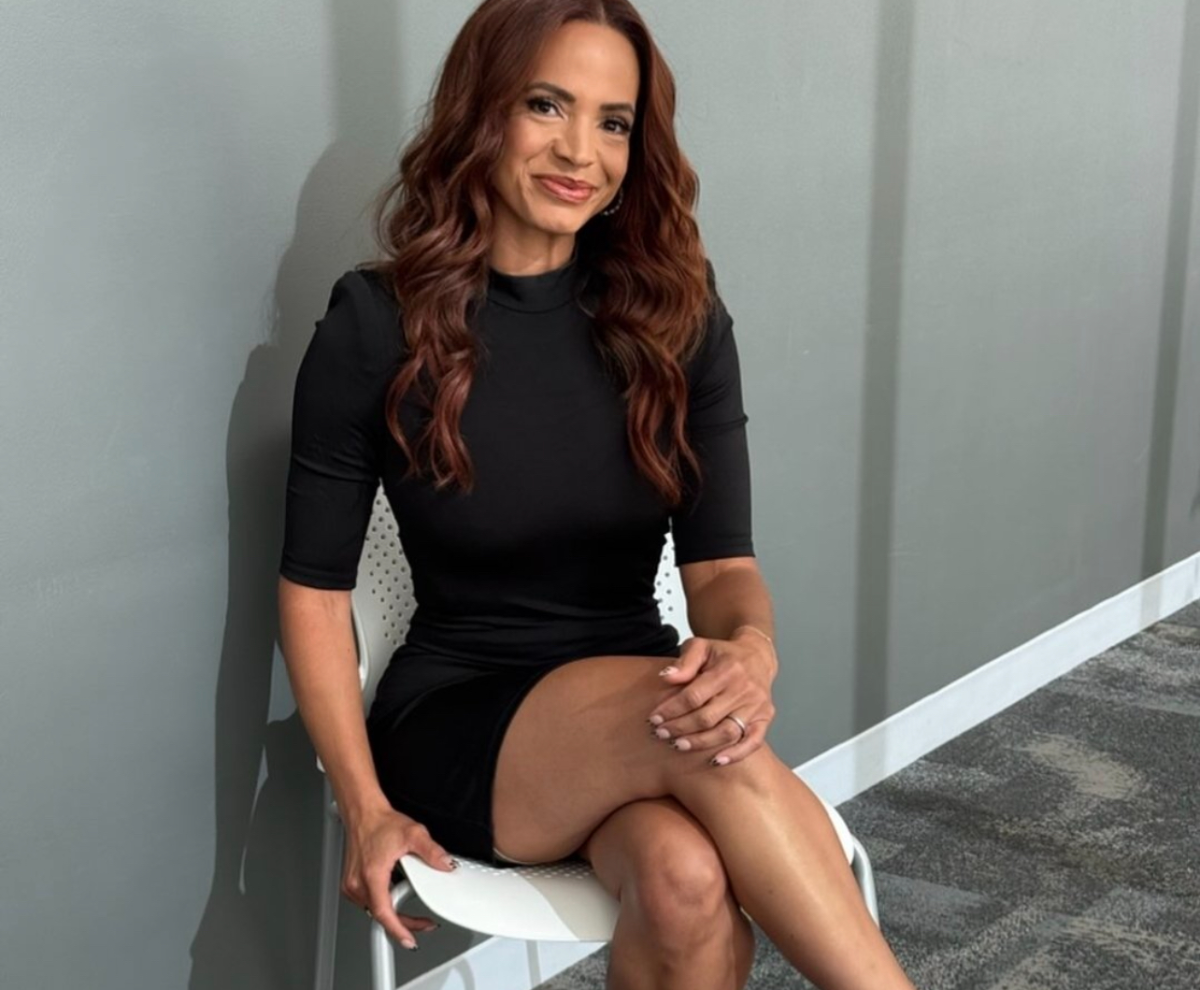
Atlanta’s own Elle Duncan, a beloved figure in local sports media before her rise to national stardom, is making a major career move.
The former ESPN SportsCenter anchor has been hired by Netflix under a multiyear deal to become the streaming giant’s first on-air sports host.
Elle Duncan Leaves ESPN, Joins Netflix
Duncan, known for her sharp analysis, warm personality, and standout coverage of women’s basketball, will host across Netflix’s growing lineup of live sports and cultural events.
Her debut is set for early 2026 with Skyscraper Live, a daring event featuring free solo climber Alex Honnold attempting to scale Taipei 101, the world’s tallest building in Taiwan at 1,667 feet.
“Joining Netflix feels like being invited to an already legendary party and somehow getting handed the aux cord!” Duncan said in a statement. “For a lifelong utility player, a multisport assignment is a full-circle moment… I’m bringing boundless energy, storytelling, and bad puns no one asked for but will be subjected to anyway.”
Netflix VP of Sports Gabe Spitzer praised the hire: “Elle Duncan’s proven ability to seamlessly move between hard-hitting sports analysis and warm, personality-driven cultural hosting makes her a perfect fit at Netflix.
She immediately adds credibility and familiar star power to our global programming slate.”
The move comes as Netflix expands aggressively into live sports, with existing deals for NFL games, MLB, the Women’s World Cup, WWE, and more.
Duncan’s Deep Roots in Atlanta Media
Longtime Atlantans will remember Duncan as a homegrown talent who got her start right here in the city.
Born and raised in Atlanta, she launched her broadcasting career in 2003 as a teenage intern and entertainment reporter for sports radio station 790 The Zone, working alongside the popular 2 Live Stews show.
By 2005, she joined V-103 (WVEE-FM), Atlanta’s iconic hip-hop and R&B station, where she spent seven years as a top-rated on-air personality.
Hired by radio legend Ryan Cameron, Duncan contributed to the Ryan Cameron Show, hosted midday and afternoon programs, and even served as a traffic reporter.

During this time, she branched into sports sideline reporting for the Atlanta Hawks (six years), the Atlanta Falcons Radio Network pre- and post-game shows, and SEC/ACC football for Comcast Sports South.
In 2012, she transitioned to television as a sports anchor and reporter for Atlanta’s NBC affiliate, WXIA-TV (11Alive), further solidifying her presence in local news and sports coverage.
After stints in Boston with NESN and then joining ESPN in 2016, Duncan became a fixture on SportsCenter (hosting the 6 p.m. edition), women’s college basketball College GameDay, and WNBA Countdown. Her nine-year run at ESPN ends with this high-profile jump to Netflix.
Duncan has often credited Atlanta for shaping her career, from the competitive local radio scene to covering the Hawks and Falcons up close.
She’s also given back to the community, launching the Cause & Effect series at V-103 to highlight underexposed nonprofits and serving as a spokeswoman for organizations like Enchanted Closet.
For Atlanta fans who watched her come up through V-103 mornings, Hawks sidelines, and 11Alive reports, seeing one of our own pioneer sports hosting on a global platform like Netflix is a proud moment. Congratulations, Elle—we’ll be tuning in!
Got an event or know of something opening in and around Atlanta? Holla: CJ@AtlantaFi.com. See what’s poppin’ in the ATL! Subscribe to our news alerts here, follow us on Twitter and like us on Facebook.
-
As a sudden cold snap grips metro Atlanta, with temperatures dipping into the low 20s and frost warnings blanketing the region from Cobb County to DeKalb, our beloved houseplants are facing an unexpected chill.
While we’re no strangers to Georgia’s fickle weather—after all, just last week we were basking in highs near 70— this December freeze serves as a stark reminder that winter is here.
How To Protect Your House Plants From the Cold
For Atlanta gardeners who double as indoor jungle enthusiasts, now’s the time to act fast to shield your leafy companions from the drop.
At AtlantaFi.com, where we champion everything from community tree plantings along the BeltLine to vibrant flower beds in Grant Park, we know indoor plants play a vital role in our urban oasis.
They purify the air in our high-rises and provide a touch of nature amid the concrete. But cold air seeping through windows and drafts from HVAC systems can stress even the hardiest ficus or pothos, leading to yellowing leaves, droopy stems, or worse—root rot from overcompensation with heat.
Here’s our expert guide to keeping your houseplants thriving through this frosty spell, drawn from local horticulturists at the State Botanical Garden of Georgia and the Atlanta Botanical Garden.
1. Relocate Away from the Cold Fronts
Your windowsills might offer prime sunlight during milder months, but they’re enemy territory right now. Cold glass can create “radiational cooling,” dropping temps by up to 10 degrees near the panes.
- Pro Tip: Move plants at least 2-3 feet away from untreated windows, especially north- or east-facing ones. In high-rises like those in Midtown, cluster them near interior walls or in warmer rooms like the kitchen.
- Local Note: If you’re in a drafty Craftsman bungalow in Inman Park, seal gaps with weatherstripping—it’s a quick win for both plants and your energy bill.
2. Maintain Steady Humidity and Watering
Atlanta’s indoor heating cranks up during snaps like this, sucking moisture from the air and your plants’ leaves. Aim for 40-60% humidity to mimic their tropical origins.
- Pro Tip: Group plants together on a tray filled with pebbles and water (keep pots elevated to avoid soggy roots). A quick misting with room-temperature water in the morning helps, but skip it at night to prevent fungal issues.
- Water Wisely: Let the top inch of soil dry out before watering—cold soil holds moisture longer, risking root rot. Use lukewarm water to avoid shocking roots. For succulents like your jade plant, ease up even more; they’re drought-tolerant champs.
3. Boost Warmth Without the Burn
No one wants crispy edges from a too-hot radiator, but a little gentle warmth goes a long way.
- Pro Tip: Place a space heater on low in the room (keep it 3 feet away from foliage), or use a plant lamp with a warm bulb for indirect light. Avoid direct blasts from vents—opt for a fan on low to circulate air evenly.
- Eco Twist: Atlanta’s sustainability crowd will love this: Drape a lightweight blanket over larger pots at night for insulation, reducing reliance on fossil-fuel heat.
4. Monitor for Stress Signals and Pests
This cold can weaken defenses, inviting spider mites or scale that love dry, chilly conditions.
- Pro Tip: Inspect undersides of leaves daily. Wipe with a damp cloth and neem oil solution if you spot trouble. Yellowing? It might be chill stress—prune affected leaves to redirect energy.
- When to Call in Pros: If your peace lily (a humidity hog) starts wilting despite TLC, head to Pike Nurseries in East Cobb for a check-up. They’re running a “Winter Prep Workshop” this weekend.
As we hunker down through this snap—expected to lift by Wednesday with highs rebounding to the 50s—remember that resilient indoor greenery sets the stage for spring’s outdoor planting frenzy. Whether you’re prepping for dogwoods in Piedmont Park or wildflowers along the Chattahoochee, healthy houseplants are your best practice run.
Final Word
Stay warm, Atlanta, and keep those greens growing. Got a plant survival story from this freeze? Share it in the comments below—we’re all in this frosty garden together.
AtlantaFi.com is your go-to source for sustainable agriculture news, from urban farming initiatives to tree-planting drives across the Peach State.
More from AtlantaFi.com:
-
As we wrap up 2025 and gear up for a fresh start in the new year, many Atlanta homeowners are already planning their spring cleanouts, home renovations, and yard overhauls.
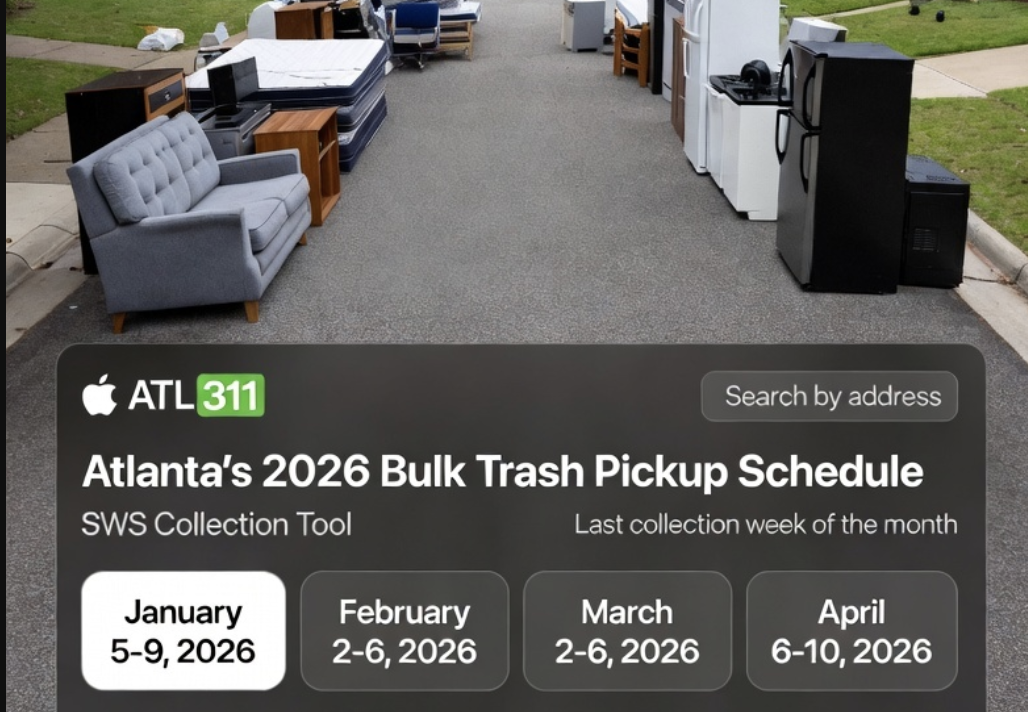
One essential service that helps keep our neighborhoods tidy is the City of Atlanta’s bulk trash pickup program, managed by the Department of Public Works Office of Solid Waste Services (SWS).
For 2026, the process remains straightforward and resident-friendly, offering up to 12 free scheduled collections per year for single-family homes.
Whether you’re ditching an old sofa or hauling away storm debris, here’s everything you need to know to stay on schedule and avoid common pitfalls.
How Bulk Trash Pickup Works in Atlanta
Unlike regular weekly garbage and recycling routes, bulk trash collection isn’t tied to a fixed calendar day—it’s an on-demand service that residents must schedule in advance. This flexibility allows you to plan around your needs, but it also means proactive booking is key.
- Scheduling Your Pickup: Residents can request a bulk collection at least one business day ahead of their desired date. Use the official SWS Collection Tool online or call ATL311 at (404) 546-0311 (or dial 311 from within city limits). atlantaga.gov The tool not only lets you book but also helps identify your regular trash and recycling days based on your address.
- Placement Rules: Once scheduled, place your bulk items at the curb by 7 p.m. the night before your pickup day. Items should be neatly piled and accessible, but keep them at least 3 feet from any carts or vehicles to ensure safe collection.
- Frequency Limit: Single-family households qualify for 12 free bulk pickups annually. Overages may incur fees, so track your requests through the ATL311 app or website. Multi-family properties or businesses have separate commercial guidelines—check with SWS for details.
For the most up-to-date availability, visit the Office of Solid Waste Services page.
What Qualifies as Bulk Trash?
Bulk items are defined as anything too large, heavy, or voluminous for standard garbage trucks. Common examples include:
- Furniture (sofas, mattresses, tables)
- Appliances (refrigerators, washers—freon-containing units must have certification tags)
- Large yard waste piles (over 20 bags of leaves or trimmings count as bulk)
- Construction debris like wooden playground sets or metal scraps
- Electronics (TVs, computers—e-waste recycling encouraged)
Pro Tip: Not everything goes in bulk. Tires, hazardous materials (paint, chemicals), and medical waste require special drop-off or services. For a full list, refer to the SWS guidelines.
Holiday Impacts on 2026 Collections
Holidays can shift your regular trash, recycling, and bulk schedules, but bulk pickups—being scheduled—may need rescheduling if they fall on a delayed day.
While the official 2026 holiday schedule hasn’t been released yet (as of December 2025), it’s expected to mirror 2025’s pattern: most federal holidays trigger a one-day delay for collections, with exceptions for Presidents’ Day, Indigenous Peoples’ Day, and Veterans’ Day, which follow normal routes.
Key 2026 dates to watch:
- Martin Luther King Jr. Day: Monday, January 19 (likely one-day delay)
- Presidents’ Day: Monday, February 15 (regular schedule)
- Memorial Day: Monday, May 25 (one-day delay)
- Juneteenth: Thursday, June 19 (one-day delay)
- Independence Day: Friday, July 3 (observed; one-day delay)
- Labor Day: Monday, September 7 (one-day delay)
- Indigenous Peoples’ Day: Monday, October 12 (regular)
- Veterans Day: Tuesday, November 11 (regular)
- Thanksgiving: Thursday, November 26 (one-day delay)
- Christmas: Thursday, December 25 (one-day delay)
Stay tuned to the SWS Holiday Schedule page for the official 2026 update, typically posted in late fall.
atlantaga.gov In the meantime, the 2025 schedule provides a reliable preview.Tips for a Smooth 2026 Cleanup
- Download the App: The free ATL311 app (available on iOS and Android) sends reminders, tracks requests, and reports issues like missed pickups.
- Eco-Friendly Alternatives: For large hauls, consider the city’s free drop-off events or partner with local recyclers to reduce landfill waste.
- Report Problems: If your bulk pickup is missed, log it via ATL311 within 24 hours.
Atlanta’s bulk trash program is a vital tool for maintaining our city’s cleanliness and sustainability goals. By scheduling early and following guidelines, residents can keep 2026 off to a clutter-free start.
For personalized assistance, head to the SWS Collection Tool today.
Final Word
As the city lights up with yet another special event this weekend, remember: Safe driving is the real treat. For more tips on navigating safely around the city, read our Atlanta Traffic Guide.
More from AtlantaFi.com: