-
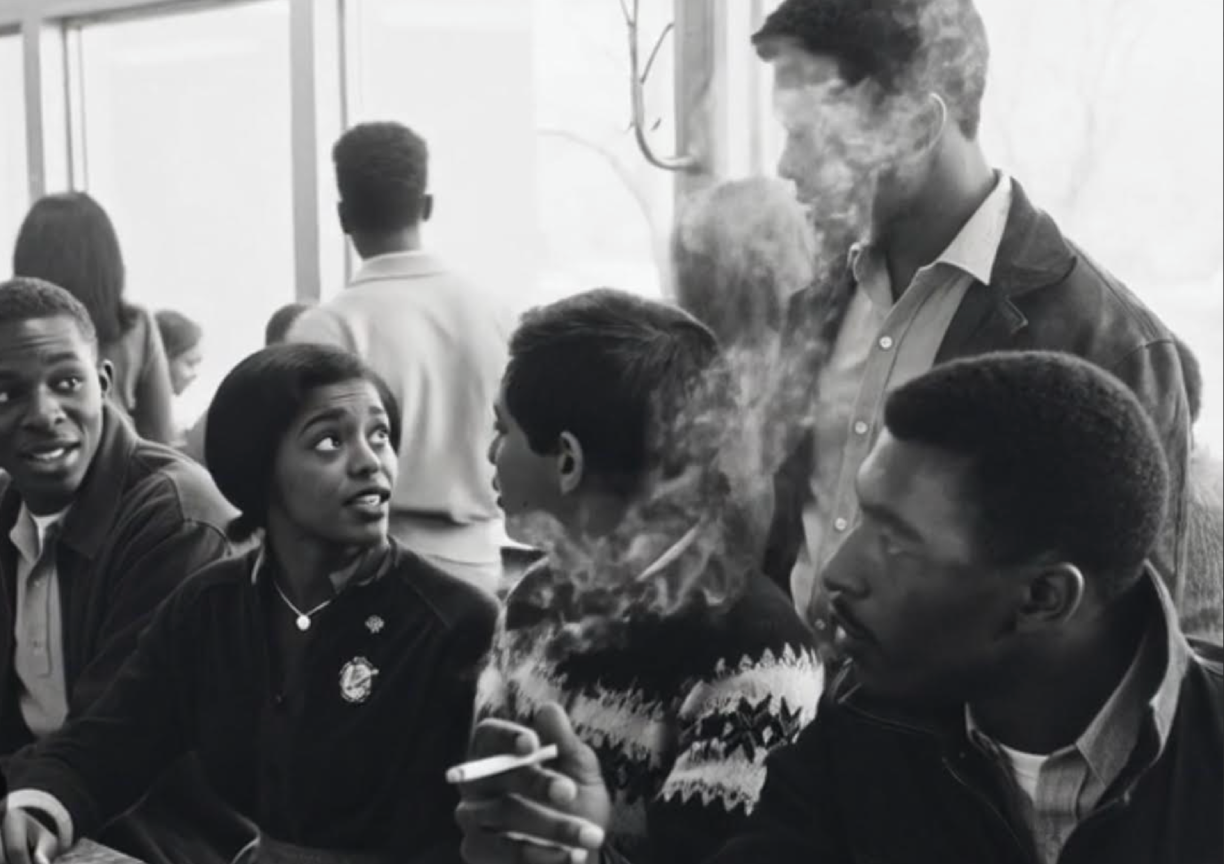
Atlanta has long been recognized as a cradle of the Civil Rights Movement, home to icons like Dr. Martin Luther King Jr. and pivotal organizations such as the Southern Christian Leadership Conference.
But beneath the well-known narratives lie lesser-explored stories of resistance, innovation, and alliance that shaped the city’s—and the nation’s—path toward equality.
Atlanta’s Civil Rights History: What To Know
We’ve delved into archives and accounts to uncover these hidden gems.
Here are seven surprising facts that highlight Atlanta’s multifaceted role.
Atlanta’s Civil Rights Roots Trace Back to the 1880s, Not Just the 1950s

While the post-World War II era often dominates discussions, Atlanta hosted an earlier civil rights surge from 1880 to 1910.
Black Atlantans employed strategies like collective self-defense, mass rallies against lynchings, and negotiation with white elites—tactics that resurfaced in the modern movement.
Key institutions, including churches and mutual aid societies, supported these efforts, fostering black enterprises like Alonzo Herndon’s barbershops and insurance company, which bolstered economic independence amid rising segregation.
The 1881 Washerwomen’s Strike: A Forgotten Labor Uprising

In July 1881, black washerwomen in Atlanta formed the Washing Society and orchestrated a massive strike involving 3,000 women (including some white allies) demanding higher wages and work autonomy.
Supported by black churches and fraternal groups, this action disrupted the city’s laundry services and highlighted early intersections of labor and racial justice.
Though short-lived, it demonstrated organized black women’s power in challenging economic exploitation during Reconstruction’s aftermath.
The 1906 Race Riot Sparked the NAACP and Influenced Brown v. Board

The Atlanta Race Riot of September 1906, fueled by fabricated stories of assaults and white fears of black progress, resulted in over 40 African American deaths and widespread destruction.
This violence profoundly impacted W.E.B. Du Bois, who armed himself for protection and later co-founded the NAACP in 1909. It also traumatized young Walter White, who rose to NAACP leadership and hired Thurgood Marshall, paving the way for the 1954 Brown v. Board of Education decision that ended school segregation.
Streets Honoring Unsung Heroes of Integration

Atlanta’s map pays tribute to lesser-celebrated figures through renamed streets. John Wesley Dobbs Avenue commemorates the activist who registered over 10,000 black voters in the 1930s, co-founded the Atlanta Negro Voters League, and helped integrate the police force.
Donald Lee Hollowell Parkway honors the lawyer who sued the University of Georgia to admit black students, while Hamilton E. Holmes Drive (and MARTA station) recognizes one of the first two black UGA enrollees, alongside Charlayne Hunter-Gault.
The 1948 Hiring of Atlanta’s First Black Police Officers

Photo credit: Atlanta Police Department
In a groundbreaking move for the South, Mayor William B. Hartsfield approved the hiring of eight black police officers in 1948, desegregating the force amid post-war pressures.
These officers, restricted initially to black neighborhoods, symbolized incremental progress and set a precedent for broader integration in city services, reflecting Atlanta’s self-proclaimed image as “the city too busy to hate.”
Lonnie King’s 1960 Sit-Ins to Sway a Presidential Election

While Dr. King is iconic, his childhood friend Lonnie C. King spearheaded Atlanta’s 1960 student movement, inspired by Greensboro sit-ins.
Lonnie organized protests at lunch counters like Rich’s Department Store, enlisting Martin Luther King Jr. for a pivotal October 19 sit-in that led to arrests.
Aimed at drawing national attention during the Kennedy-Nixon race, these actions influenced black voters and pressured candidates on civil rights, culminating in the desegregation of 75 Atlanta establishments by 1961.
The 1969 Piedmont Park Riot: A Cross-Racial Stand Against Police Brutality

On September 21, 1969, a free concert in Piedmont Park turned chaotic when undercover police clashed with hippies and radicals over drug arrests, sparking a riot with tear gas and projectiles.
This event, rooted in harassment of Atlanta’s counterculture “Strip” community, forged an unlikely alliance with black civil rights leaders like Hosea Williams.
Together, they protested police tactics, filed lawsuits, and highlighted shared grievances, bridging racial divides in the movement’s later years. Read Kenny Wilson’s blog for more.
Final Word
These stories remind us that Atlanta’s civil rights legacy is built on layers of perseverance, from everyday workers to radical youth
Exploring sites like the National Center for Civil and Human Rights or walking these historic streets can bring these facts to life, connecting past struggles to today’s ongoing fight for justice.
More from AtlantaFi.com:
-
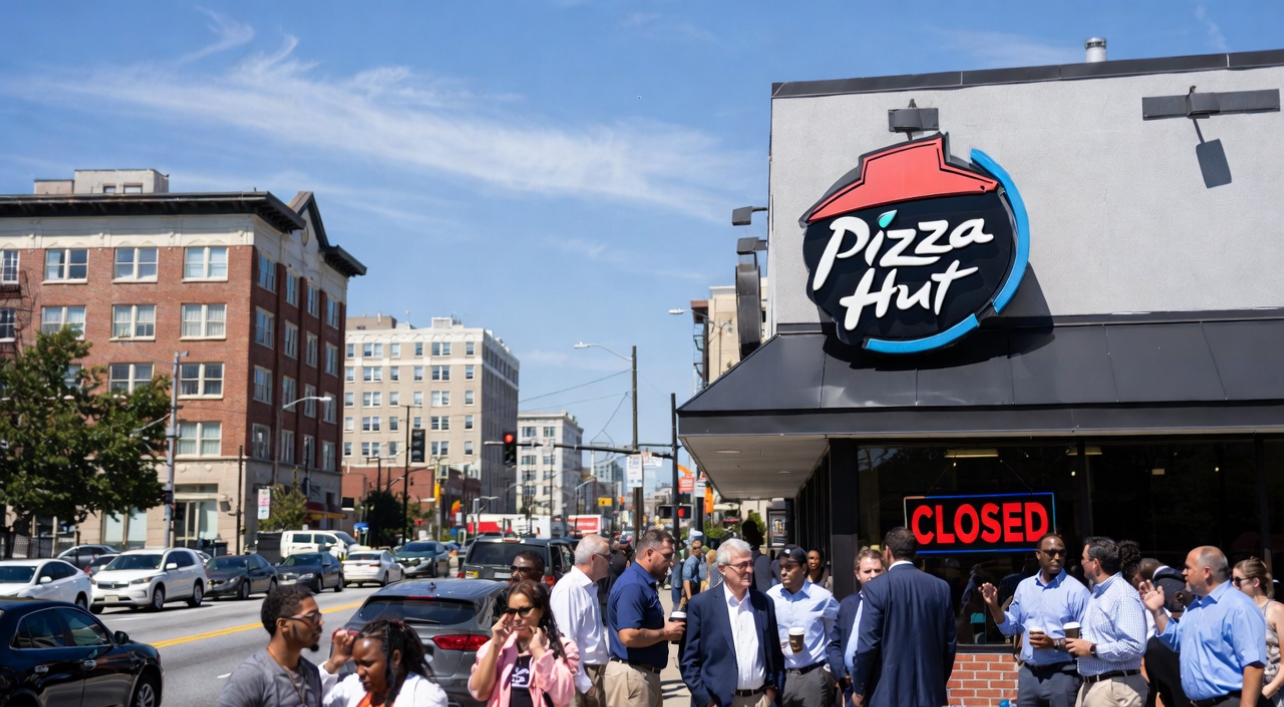
Pizza Hut, the iconic pizza chain familiar to many Atlanta-area residents, is planning to shutter approximately 250 of its U.S. restaurants during the first half of 2026.
The closures, announced by parent company Yum! Brands during its Q4 2025 earnings call, target underperforming locations as part of an ongoing effort to strengthen the brand.
Pizza Hut to Shutter Underperforming U.S. Locations in 2026 Amid Strategic Review
Pizza Hut operates more than 6,000 locations across the United States, meaning the planned closures represent roughly 3-4% of its domestic footprint. Specific locations set to close—including any in the greater Atlanta metro area or elsewhere in Georgia—have not yet been disclosed by the company.
Yum! Brands, headquartered in Louisville, Kentucky, owns several major fast-food chains including KFC, Taco Bell, and Habit Burger & Grill. Executives described the moves as tied to “Hut Forward,” a strategy focused on vibrant marketing, technology modernization, updated franchise agreements, and overall revitalization.
The chain has faced challenges in recent years, with U.S. same-store sales declining 5% in 2025.
Competition from rivals like Domino’s—which saw positive same-store sales growth—has intensified pressure, alongside issues like outdated store formats and shifting consumer preferences.
Globally, Pizza Hut ended 2025 with nearly 20,000 locations, down 251 from the prior year.
While international markets showed modest growth (up 1% in same-store sales, particularly strong in Asia, the Middle East, and Latin America), the U.S. market has lagged.
Yum! Brands is also conducting a formal strategic review of options for Pizza Hut, which could include a potential sale of the brand. The review is expected to conclude later this year.
A Pizza Hut spokesperson emphasized that the 250 closures represent a small portion of the chain’s nearly 20,000 global units and are seen as the right step forward.
For local customers, this news may raise questions about favorite neighborhood spots. Atlanta and surrounding areas feature numerous Pizza Hut locations offering dine-in, carryout, and delivery services.
Residents are advised to check the official Pizza Hut website or app for updates on any specific closures.
Final Word
Yum! Brands has not provided a timeline for announcing individual locations or further details on impacts to employees or franchises. This story will be updated as more information becomes available.
More From AtlantaFi.com:
-

Looking for a unique way to celebrate Valentine’s Day this weekend? Planet Fitness, one of the best gyms in Atlanta, is turning up the heat on romance by encouraging Atlantans to share the love through sweat and fitness.
Check Out This Planet Fitness Freebie
This Valentine’s Day weekend, February 14–15, Planet Fitness locations across Georgia—including all metro Atlanta clubs—are opening their doors for a special Guest Weekend.
Current members can bring a spouse, significant other, friend, or family member for free workouts together.
Guests of any fitness level are welcome to enjoy complimentary access to the gym floor, along with perks like massage chairs and HydroMassage sessions for post-workout recovery.
Participants must be 18 years or older and present a valid ID upon arrival.
The promotion highlights the benefits of partnering up for exercise.
Research shows that working out with someone else can boost mental well-being by reducing stress, lifting mood, and fostering stronger social bonds.
A study from the National Institutes of Health found that individuals who exercise with a friend are 45% more likely to report good mental health.
Planet Fitness clubs are known for their welcoming, Judgment Free Zone® atmosphere, making them ideal for beginners and seasoned gym-goers alike.
Each location offers certified fitness trainers, a wide range of strength and cardio equipment, and on-demand workouts available through the Planet Fitness App. Many Georgia clubs operate 24 hours a day for maximum convenience.
Event Details:
- What: Valentine’s Day Guest Special at Planet Fitness
- When: Saturday, February 14 – Sunday, February 15, 2026
- Where: All Planet Fitness locations in Georgia (including numerous spots throughout the Atlanta metro area)
- How to Participate: Current members simply bring their guest (18+ with valid ID) for free access during the weekend.
Whether you’re looking to bond with your partner over partner exercises, motivate a friend to try the gym, or simply enjoy a shared sweat session, this weekend offers a fun, healthy twist on Valentine’s Day traditions.
For more information or to find your nearest location, visit the Planet Fitness website or download the PF App. Get ready to make those heart rates rise—for all the right reasons!
More articles from AtlantaFi.com:
-
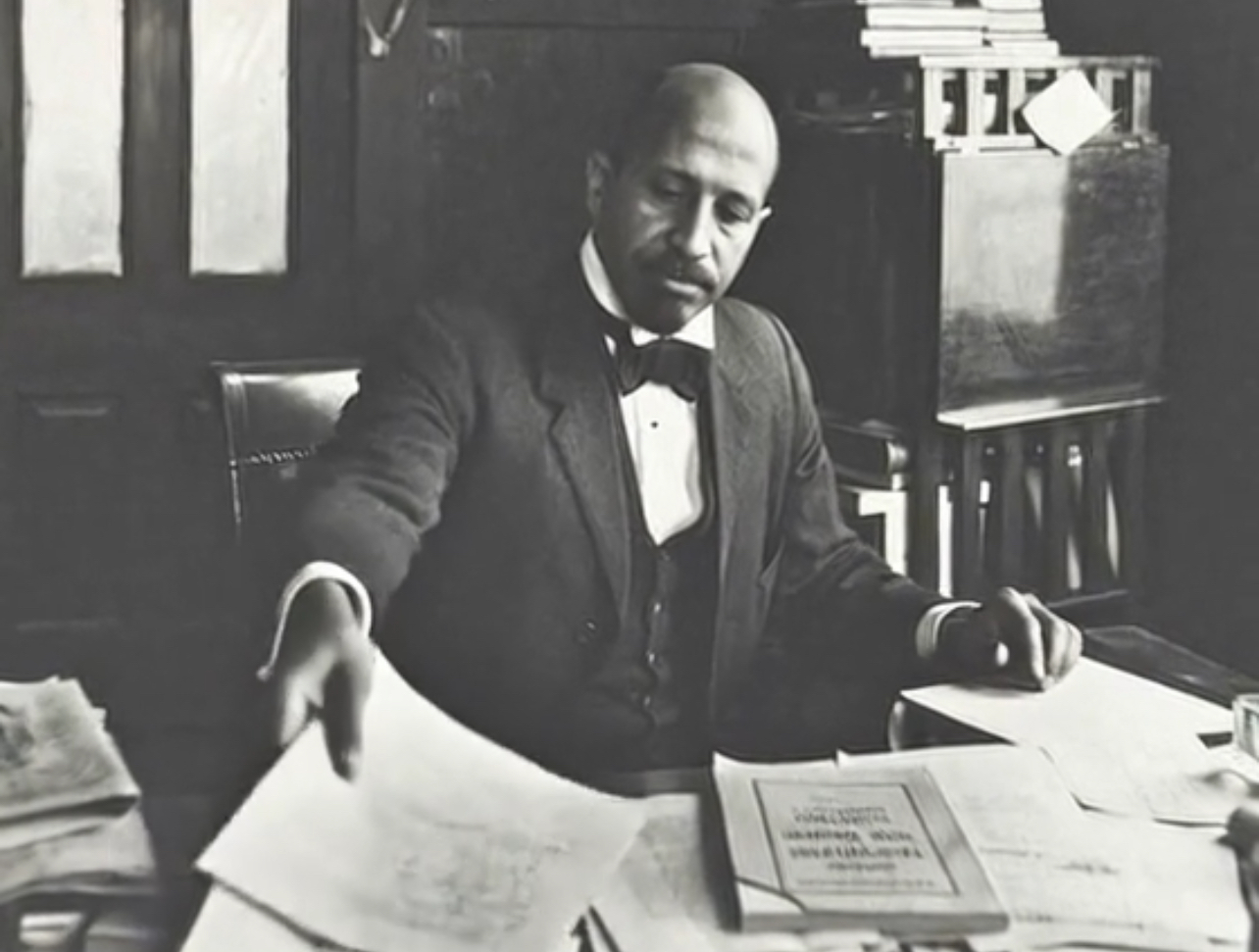
W.E.B. Du Bois remains one of the towering figures in American history: the brilliant scholar who co-founded the NAACP, edited The Crisis magazine for decades, authored the landmark The Souls of Black Folk, and helped define the fight against racial injustice.
In Atlanta, his legacy feels especially close—he spent formative years here as a professor at (Clark) Atlanta University, where he produced some of his most influential sociological work on Black urban life.
But even lifelong students of history might be surprised by these lesser-known facets of Du Bois’s remarkable life:
He Wrote Science Fiction and Speculative Stories

Beyond his essays and histories, Du Bois penned imaginative fiction, including the striking short story “The Comet” (1920), a post-apocalyptic tale set in New York where a Black man and white woman believe they are the last survivors on Earth—until racial terror reemerges.
Scholars have recently uncovered more of his unpublished speculative works, ranging from utopian visions to crime and intrigue plots during the McCarthy era.
This “weird” side of Du Bois reveals a creative mind exploring upheaval, race, and human possibility far beyond his better-known nonfiction.
He Created Pioneering Data Visualizations to Fight Racism

In 1900, Du Bois curated an exhibit for the Paris Exposition Universelle featuring hand-drawn charts (pictured above), graphs, and maps documenting African American life, progress, and economic achievements—particularly in Georgia.
These colorful, proto-modernist infographics were designed to refute racist stereotypes with hard data on literacy, population growth, and business ownership. Today, they’re celebrated as early masterpieces of information design.
He Grew Up in a Surprisingly Integrated Small Town

Born in 1868 in Great Barrington, Massachusetts, where his sculpture resides, Du Bois was raised in a community with relatively little overt segregation compared to the post-Reconstruction South.
He attended school with white children and felt accepted by many neighbors, which shaped his early optimism about racial integration—before he encountered the harsher realities of Jim Crow while studying at Fisk University in Nashville.
He Taught and Conducted Groundbreaking Research in Atlanta

Du Bois joined the faculty of Atlanta University in 1897 and again in the 1930s–40s.
His Atlanta Studies (1896–1914) produced some of the first rigorous sociological surveys of Black urban life, examining housing, family, crime, and education in the city’s Black neighborhoods.
These works laid foundational stones for urban sociology in America—and gave him an intimate, firsthand view of Atlanta’s racial dynamics.
The 1906 Atlanta Race Massacre Deeply Scarred Him
While living in Atlanta, Du Bois witnessed the horrific 1906 race riot (also called the Atlanta Race Massacre), in which white mobs killed dozens of Black residents amid false rumors.
He later described a related earlier lynching—that of Sam Hose in 1899—as a turning point: seeing body parts displayed in a shop window left him profoundly shaken. “Something died in me that day,” he wrote, hardening his resolve against accommodationist approaches to racism.
He became a Citizen of Ghana at Age 93

WEB Du Bois (L) celebrating his 95th birthday with Ghana’s President Kwame Nkrumah in 1963. — Photo credit: WEB DuBois Centre.
In his final years, disillusioned with Cold War-era America and facing passport restrictions, Du Bois moved to Ghana in 1961 at the invitation of President Kwame Nkrumah to work on an Encyclopedia Africana.
He took Ghanaian citizenship that year and died in Accra in 1963—at age 95—the day before the March on Washington. A moment of silence honored him during the event.
He Had a Bitter Public Feud with Marcus Garvey

The rivalry between Du Bois and Jamaican activist Marcus Garvey was intense and personal. Du Bois criticized Garvey’s Back-to-Africa movement and Black Star Line finances in The Crisis, while Garvey attacked Du Bois’s mixed heritage and called him a “mulatto monstrosity.”
The clash highlighted deep ideological divides within Black leadership—integration versus separatism, elite leadership versus mass mobilization—that still echo today.
Du Bois’s life bridged the post-Civil War era to the modern civil rights movement, and his time in Atlanta gave him a front-row seat to both progress and profound injustice.
As we continue reckoning with our city’s—and our nation’s—racial history, his fearless scholarship and unyielding vision remain as relevant as ever.
What’s your favorite Du Bois story or lesson? Share in the comments below—we’d love to hear from our Atlanta readers.
More from AtlantaFi.com:
-

Atlanta Falcons quarterback Michael Penix Jr. recently shared a powerful and deeply personal message on social media that has resonated widely across the Atlanta sports community and beyond.
In the heartfelt post, accompanied by a dramatic image of Penix in his black Falcons jersey standing resolute amid swirling smoke, the 25-year-old signal-caller opened up about the immense pressures he faces as a man, a provider, and a professional athlete.
Penix: I Won’t Fold Under Pressure
“As a man, you carry a lot of ‘pressure’ each and every day,” Penix wrote. “Pressure to provide for your family, pressure to succeed in everything you do in life, pressure of letting everybody around you down. But one thing I never did and never will do is fold in the face of it.”
The lengthy reflection traces Penix’s journey from humble beginnings—”I come from the mud literally”—to his current role as the Falcons’ franchise quarterback.
He emphasized self-reliance, declaring he “never had no handouts” and that his path to success was forged through relentless determination despite pain, uncertainties, and setbacks.
Penix credited his upbringing and faith for his unbreakable mindset: “I’m forever going to stand 10 toes and show why my God is Almighty and will never put me in a situation that I can’t get through.”
The post also served as motivation for others, urging readers to “STAY THERE” wherever they are in their own stories. “The turtle race continues…. 🏁 Year 2 ✓,” he concluded, signaling his ongoing commitment as he enters his second NFL season.
Penix, selected eighth overall by the Falcons in the 2024 NFL Draft after a standout college career at Washington (where he won the Maxwell Award and led the nation in passing yards), has faced his share of challenges.
His rookie year in 2024 included limited action due to competition and development, but he appeared in several games and showed flashes of his strong arm.
In 2025, he took on a larger role, starting nine games and throwing for nearly 2,000 yards with nine touchdowns before a knee injury sidelined him late in the season, landing him on injured reserve.
Now recovering and eyeing a return potentially as early as Week 1 of the upcoming campaign, Penix’s words highlight the mental fortitude required at the NFL level—especially for a young quarterback under the spotlight in a passionate football city like Atlanta.
Fans quickly rallied around the message, praising Penix’s authenticity and resilience.
In a league where vulnerability is rare, his openness about personal struggles while tying it to his faith and drive offers inspiration far beyond the gridiron.
As Penix continues his rehab and preparation for what could be a pivotal year in Atlanta, this post reminds everyone that behind the helmet and the stats is a determined individual refusing to fold—no matter the pressure.
The Falcons and their supporters are standing with him as the “turtle race” marches on.
-
Tech giant Salesforce is strengthening its roots in the Atlanta area with a significant investment that promises to boost the local economy and create hundreds of high-quality job opportunities.
Salesforce, Inc., the San Francisco-based leader in customer relationship management (CRM) software and cloud-based solutions, will invest $15 million to expand its operations across Georgia.
Salesforce To Bring Jobs, $15 Million Expansion in Atlanta
The project is expected to create more than 250 new jobs in Fulton County by the end of 2028, according to an announcement originally made by Governor Brian P. Kemp in late 2025.
The expansion builds on Salesforce’s already substantial footprint in the state, where the company currently supports over 2,000 jobs.
Salesforce serves a wide range of Georgia customers across key industries, including financial services, healthcare, retail, manufacturing, logistics, and the public sector.
Company leaders have highlighted Atlanta’s talented workforce, global connectivity, and inclusive business environment as major factors driving the decision to grow here.
“This investment underscores Salesforce’s confidence in Metro Atlanta as a hub for innovation and talent,” said Katie Kirkpatrick, President and CEO of the Metro Atlanta Chamber. “These new positions will bring well-paying opportunities in technology and related fields, further solidifying our region’s position in the global tech economy.”
Fulton County officials echoed the enthusiasm. “Salesforce’s expansion is a win for Fulton County,” said Chairman Robb Pitts of the Fulton County Board of Commissioners. “This major investment in jobs demonstrates the confidence that globally premier companies have in our community. We are proud to welcome this growth and look forward to the opportunities it will bring to our residents and local economy.”
The announcement was supported by a collaborative effort involving the Georgia Department of Economic Development’s Global Commerce team, Invest Atlanta, Fulton County, the Metro Atlanta Chamber, and Georgia Power.
While specific details about the types of roles, exact locations within Fulton County (such as potential ties to existing offices in areas like Buckhead or Midtown), and timelines for hiring have not been fully disclosed, the new positions are anticipated to include a mix of software development, sales, customer success, and support functions aligned with Salesforce’s AI-powered platforms and cloud services.
Final Word
As Atlanta continues to attract major corporate expansions in tech and related sectors, this move by Salesforce reinforces the city’s reputation as a growing destination for innovative companies. Residents interested in opportunities with Salesforce can monitor the company’s careers page for upcoming openings related to the Georgia expansion.
For more information on the project, visit the Georgia Department of Economic Development or Invest Atlanta.
-
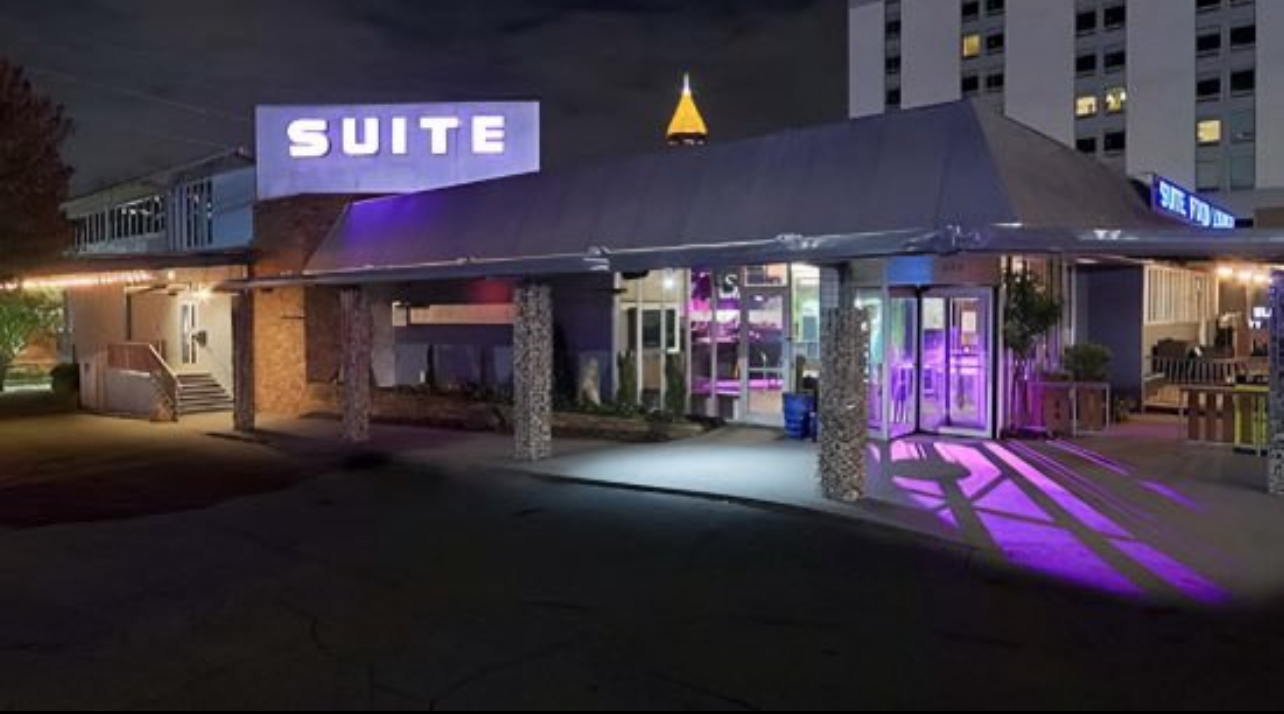
A beloved fixture of downtown Atlanta’s nightlife scene for over a decade, Suite Food Lounge at 375 Luckie Street NW, has announced that it prepares to close its doors for good.
The venue will be remembered as one of the best clubs in the city, with its eye-catching exterior bathed in vibrant purple and blue lighting, distinctive peaked roofline accented by a golden triangular element.
Iconic Downtown Atlanta Nightspot Suite Food Lounge Announces Closure
The modern, inviting entrance features automatic glass doors framed by textured stone pillars, outdoor seating areas, and colorful ground projections that create a dynamic, almost futuristic ambiance against the dark night sky.
Nearby high-rise buildings loom in the background, highlighting the spot’s prime location in the bustling Luckie Street entertainment district.
Suite Food Lounge – often simply called “Suite” by locals – has long been known as more than just a restaurant.
It combined upscale dining with a lively nightclub atmosphere, featuring multiple bars, a dance floor, live entertainment including the popular Suite Jazz Series, and a rooftop area known as Greenhaus.
The venue offered a fusion of classic American cuisine with Southern-inspired twists, from shrimp and grits to creative cocktails, drawing crowds for everything from dinner dates to late-night partying and special events.
After 13 years of operation, owners announced on Feb. 3 the permanent closure with heavy hearts. In a social media post, they expressed deep gratitude to loyal patrons, noting the countless memories created within its walls.
The news has sparked an outpouring of nostalgia online, with hundreds of commenters sharing stories of milestone celebrations, first dates, and unforgettable nights out in Atlanta’s downtown scene.
“Atlanta’s nightlife landscape is changing, but spots like Suite have left an indelible mark on our city’s culture,” said one longtime patron in response to the announcement.
Many are reflecting on how the venue helped define evenings in the area near Centennial Olympic Park and the Georgia Aquarium.
While the exact reason for the closure was not detailed beyond the owners’ emotional statement, the decision comes at a time when several longstanding entertainment venues in Atlanta have faced similar challenges. Suite’s final days are expected to draw large crowds eager for one last visit.
For those looking to reminisce or say goodbye, the venue’s website (suiteatl.com) and social media channels (@suiteloungeatl) remain active with updates.
As one era ends, Atlanta’s vibrant dining and entertainment community continues to evolve – but the glowing purple lights of Suite will linger in many memories.
Have your own Suite story? Share it in the comments below – we’d love to hear how this downtown gem impacted your Atlanta nights.
More from AtlantaFi.com:
-
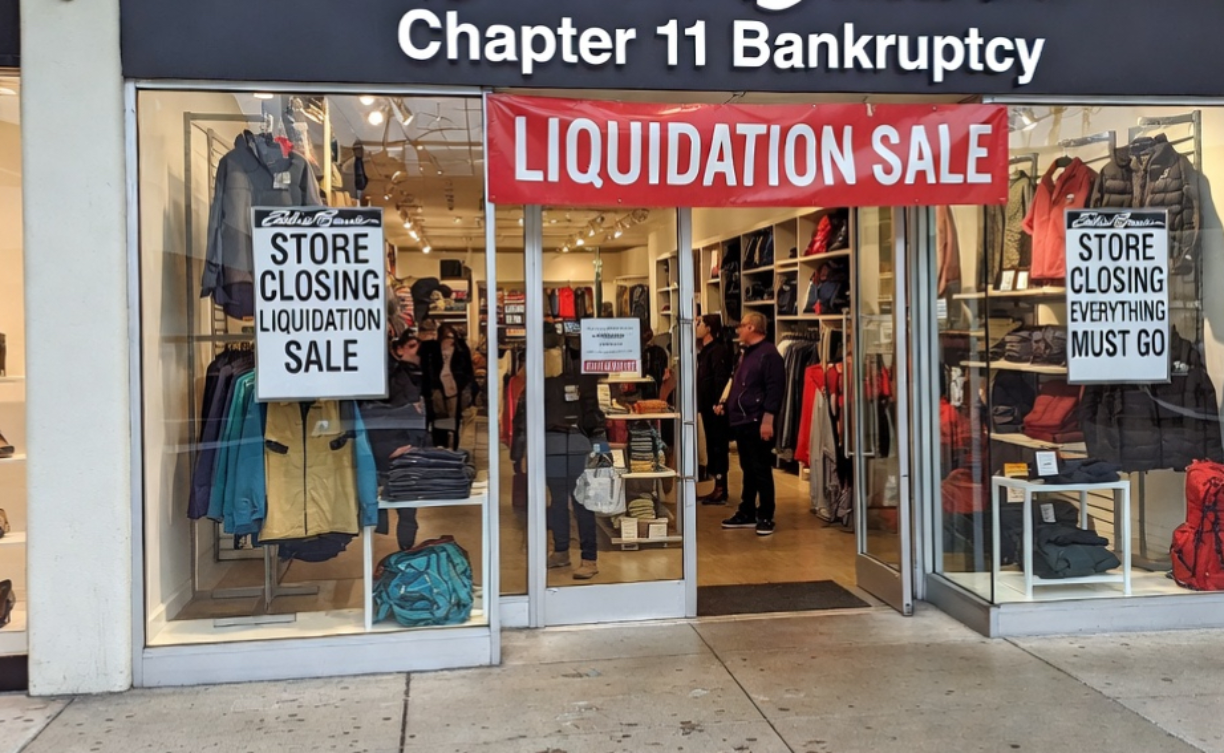
The iconic outdoor apparel brand Eddie Bauer is reportedly preparing to file for Chapter 11 bankruptcy protection, a move that could lead to the closure of all approximately 200 of its brick-and-mortar stores across North America.
According to multiple sources cited in recent reports from outlets like Women’s Wear Daily (WWD), Business Insider, and others, the impending filing involves the entity operated by Catalyst Brands, which holds the licensing rights to run Eddie Bauer retail locations in the United States and Canada.
Eddie Bauer Bankruptcy: What To Know
Catalyst Brands, a retail holding company formed through partnerships including Simon Property Group, Brookfield Corp., Authentic Brands Group, and others, is said to be gearing up for the restructuring process, with the bankruptcy potentially occurring in February 2026.
It’s not the only retailer shrinking its footprint in retail.
This development follows a January announcement from Authentic Brands Group (ABG), the current owner of the Eddie Bauer intellectual property and brand rights worldwide, that it would transition manufacturing, e-commerce, and wholesale operations in the U.S. and Canada to Outdoor 5, LLC (a global brand development and licensing platform).
That shift began taking effect in early February. A Chapter 11 filing by the Catalyst-operated retail entity would primarily impact physical stores, while online sales, wholesale channels, manufacturing, and international operations (such as stores in Japan) are expected to remain unaffected.
Eddie Bauer, founded in 1920 and known for its durable outerwear, down jackets, and adventure-focused gear, has a long history of navigating financial challenges.
The brand previously filed for Chapter 11 protection in 2009 amid the global financial crisis (after an earlier filing by its then-parent company, Spiegel Inc., in 2003).
It emerged from bankruptcy both times through acquisitions and restructurings, including a sale to private equity firm Golden Gate Capital in 2009 and later integration under Authentic Brands Group in 2021.
The current situation reflects broader pressures facing traditional mall-based retail, including shifting consumer preferences toward online shopping, economic headwinds, and competition in the outdoor apparel sector from brands like Patagonia, The North Face, and Columbia.
Reports indicate that while most—if not all—of the roughly 180–200 North American locations face closure, there may be interest from potential buyers in acquiring rights to operate a limited number of stores post-bankruptcy.
As of early February 2026, no official filing has been confirmed, and plans could still change. However, sources familiar with the matter describe the Chapter 11 preparation as advanced, with legal representation from Kirkland & Ellis already in place for the store-operating entity.
For shoppers, this could mean liquidation sales at many Eddie Bauer locations in the coming weeks or months, as the company seeks to wind down its physical retail footprint in North America while preserving the brand’s legacy through digital and wholesale channels.
Final Word
The development marks yet another chapter in the ongoing transformation of American retail, where heritage brands increasingly pivot away from traditional storefronts to survive in a digital-first era.
Here are more articles from AtlantaFi.com:
-

Atlanta has earned a spot among the top 10 most neighborly cities in the U.S. for 2026, coming in at No. 6 according to a new ranking from Redfin, the real estate brokerage.
The report, released January 28, highlights cities where residents actively build community through volunteering, helping neighbors, charitable giving, civic discussions, and participation in social organizations.
What Are the Most Neighborly Cities in America?
Salt Lake City, UT, took the top spot, followed by Portland, OR, and Kansas City, MO.Atlanta’s strong showing reflects the city’s vibrant neighborhood spirit and high number of civic organizations.
The metro area ranks No. 3 nationally for civic organizations per capita, underscoring how Atlantans stay engaged through local groups, events, and initiatives.
Key Atlanta Highlights from the Report:
- Median home-sale price: $385,000 (down 2.3% year-over-year), offering relative affordability despite expensive housing amid strong community ties.
- Volunteerism: 29% of residents volunteered in the last year (ranking No. 11 among analyzed metros).
Neighborhoods like Candler Park, with its local businesses, festivals, and walkable vibe, and Grant Park, home to community gatherings, an annual summer festival, and a popular farmers market, exemplify the neighborly feel that helps boost Atlanta’s ranking.Redfin analyzed major U.S. metros using metrics such as:
- Share of residents who volunteered recently
- Frequency of helping neighbors (e.g., at least monthly)
- Charitable donations
- Discussions of civic issues with neighbors
- Social clubs and civic organizations per capita
- Proximity to parks (share living within half a mile)
“Atlanta’s diverse neighborhoods foster real connections—whether through block parties in Grant Park or volunteer efforts across the city,” local real estate experts note, aligning with the report’s emphasis on community as a key factor in where people choose to live and stay.
America’s Most Neighborly Cities
The full top 10 most neighborly cities of 2026 per Redfin:
- Salt Lake City, UT
- Portland, OR
- Kansas City, MO
- Denver, CO
- Nashville, TN
- Atlanta, GA
- San Diego, CA
- Austin, TX
- Raleigh, NC
- Tampa, FL
For Atlantans, this ranking is a reminder of what makes our city special: tight-knit communities that look out for one another in neighborhoods from Midtown to the eastside and beyond. In a fast-growing metro, that neighborly spirit remains a big draw for newcomers and longtime residents alike.
Final Word
Atlanta is a top real estate city, with affordable housing in every quadrant of the city. Large backyards, manicured parcels and strong neighborhoods with ample dining amenities make it one of the top places for transplants.
Not to mention that the city’s dining scene is the best in the Southeast. Looking for a home? Check out our Real Estate Resource Page.
Keep up with what’s going on in Atlanta’s real estate scene here with our Apartment Guide.
See The Latest Atlanta Real Estate News At AtlantaFi.com.
More Articles From AtlantaFi:
-

When you think of your local library, it may conjure up analog memories of funny-smelling books with brown pages and quiet spaces of stillness.
Well, a lot of that is still true, but the library is also filled with free resources, including the latest streaming options and fresh educational content.
Want Free Stuff? Visit Your Local Library
In this article, we’ll highlight the incredible array of free resources available through the Fulton County Library System (commonly known as the Atlanta-Fulton Public Library System). We’ll also show you all the Atlanta library locations.
With a valid library card, residents across Atlanta and Fulton County can access an impressive suite of educational, entertainment, and practical tools at no additional cost.
Take Advantage of These Free Resources at Your Atlanta Library
Whether you’re a student, job seeker, family, or lifelong learner, your local library branch has something for you.
1. Getting Started: Your Free Library Card

A library card from the Fulton County Library System is completely free for residents, workers, or students in the area.
Apply online or visit any of the system’s 34 branches, including the iconic Central Library in downtown Atlanta. Once you have your card, a world of resources opens up—both in-person and digitally.
2. Digital Library: E-Books, Audiobooks, and More

The system’s Digital Library provides free access to thousands of e-books, audiobooks, magazines, and streaming media through platforms like Libby/OverDrive and others.
No waiting lists for many popular titles with “instantly available” collections. Residents can download bestsellers, classics, and series directly to phones, tablets, or e-readers—all at no charge.
Need to learn a new skill? The library offers free online learning tools, language courses, test prep materials, and research databases for homework, genealogy, or professional development.
3. Academic Support for Students

For K-12 students, the library partners with Paper.co to provide unlimited, on-demand free online tutoring. Available 24/7, this service connects students with live tutors for homework help, essay review, test prep, and more—perfect for busy families in Atlanta’s schools.
4. Computers, Wi-Fi, and Tech Access

Photo credit:
JÉSHOOTS / PexelsAll branches offer free public computers with internet access, productivity software (ideal for resumes, job applications, and school projects), printing, and scanning.
High-speed Wi-Fi is available throughout libraries for those bringing their own devices. Digital literacy classes help patrons build confidence with technology.
5. Partnership Passes and Take-Home Kits

Photo credit: Playhouse Media One of the most popular perks: free admission passes to local attractions through partnerships with the Georgia Public Library Service and other organizations. Check out passes for places like:
- Breman Jewish Heritage Museum (free admission for up to 4 people) and other museums
- Georgia State Parks & Historic Sites (free parking and admissions)
- Zoo Atlanta, cultural sites and other places to show visitors around the Atlanta metro area
Additional take-home kits include radon detectors and energy-monitoring tools like the Kill-A-Watt meter—great for home improvement and sustainability efforts.
Community and In-Person Programs

Dr. Sean Arthurs, senior manager of education initiatives for the National PTA, talks to kids Monday, April 23 at the Google workshop. Beyond materials, branches host free events such as storytimes for children, author talks, job search workshops, computer classes, and community resource sessions.
The Central Library and other locations regularly feature programming for all ages, including summer reading challenges and special exhibits.
More Ways to Explore
- Access to premium resources like the Atlanta Journal-Constitution newspaper archives (free online with your card).
- Community service information, including referrals for IDs, housing assistance, and more.
- Meeting rooms and study spaces available at many branches.
Where Are the Fulton County Libraries Located in Atlanta?
The Fulton County Library System branches located in Atlanta number approximately 21 branches within Atlanta city limits as part of the total 34 in the system. Here are their locations:
Branch Name Address Phone Number Central Library One Margaret Mitchell Square NW, Atlanta, GA 30303 404-612-8700 Auburn Avenue Research Library 101 Auburn Ave NE, Atlanta, GA 30303 404-613-4001 Adams Park Branch 2231 Campbellton Rd SW, Atlanta, GA 30311 404-612-9200 Adamsville-Collier Heights Branch 3424 Martin Luther King Jr. Drive SW, Atlanta, GA 30331 404-613-7330 Buckhead Branch 269 Buckhead Ave NE, Atlanta, GA 30305 404-613-7350 Cleveland Avenue Branch 47 Cleveland Avenue SW, Atlanta, GA 30315 404-613-6850 Dogwood Branch 1838 Donald Lee Hollowell Pkwy NW, Atlanta, GA 30318 404-612-3900 East Atlanta Branch 400 Flat Shoals Ave SE, Atlanta, GA 30316 404-613-7320 Evelyn G. Lowery Library at Cascade (formerly Southwest) 3665 Cascade Road SW, Atlanta, GA 30331 404-613-7000 Kirkwood Branch 11 Kirkwood Road NE, Atlanta, GA 30317 404-613-7200 Louise Watley Library at Southeast Atlanta 1463 Pryor Road, Atlanta, GA 30315 404-613-5771 Martin Luther King Jr. Branch 409 John Wesley Dobbs Ave, Atlanta, GA 30312 404-613-9890 or 404-730-1185 Mechanicsville Branch 400 Formwalt St SW, Atlanta, GA 30312 404-613-6820 Metropolitan Branch 1332 Metropolitan Parkway, Atlanta, GA 30310 404-613-5722 Northside Branch 3295 Northside Parkway NW, Atlanta, GA 30327 404-613-6870 Northwest Branch (at Scotts Crossing) 2489 Perry Boulevard NW, Atlanta, GA 30318 404-613-4364 Peachtree Branch 1315 Peachtree Street NE, Atlanta, GA 30309 404-613-9990 or 404-885-7830 Joan P. Garner Library at Ponce de Leon 980 Ponce de Leon Avenue NE, Atlanta, GA 30306 404-613-7310 Washington Park Branch 1116 Martin Luther King Jr. Drive, Atlanta, GA 30314 404-612-0110 West End Branch 525 Peeples Street SW, Atlanta, GA 30310 404-613-8000 Wolf Creek Branch 3100 Enon Road, Atlanta, GA 30331 404-613-4255 The Fulton County Library System continues to serve as a vital community hub in Atlanta, bridging access to information, education, and culture.
With branches conveniently located throughout the city and county—from Buckhead to East Point—there’s a library near you ready to help.
Final Word
Visit fulcolibrary.org to get started, explore the full A-Z list of resources, or find your nearest branch. Your library card is truly one of the most valuable (and free!) assets in Atlanta—don’t miss out!
To take advantage of this great city, stay tapped in on all the cool things happening in Atlanta this weekend. Downtown Atlanta or Midtown Atlanta always offer something cool to see and do! Check out these events in Atlanta today and this week and this weekend:
Here are more articles from AtlantaFi.com: