-

Ride-sharing remains one of the most popular ways to get around metro Atlanta — especially late at night in areas like Buckhead, Midtown, and Downtown.
Both Uber and Lyft have rolled out refreshed safety reminders for both riders and drivers in the Atlanta market. For the purposes of this article, we’ll focus on Uber.
The push comes after a string of high-profile incidents nationwide and local data showing a 12% increase in reported safety-related complaints in the Atlanta region, according to the Georgia Department of Public Safety.
Key Uber Safety Tips for Atlanta Riders
“Safety is my top priority when I get into an Uber, full stop,” said TinaThompson, a frequent traveler who takes a rideshare to the Atlanta airport when she goes out of town. “One thing I know about Uber is that they’re constantly updating tools and educating our community so everyone can get home safely.”
1. Verify Your Ride

Always check that the license plate, driver photo, and car make/model in the app match the vehicle that pulls up.
Uber’s “Verify Your Ride” PIN feature (available in Atlanta) lets you set a unique 4-digit code that the driver must verbally confirm before you get in.
2. Share Your Trip

Use the “Share Trip” feature to send real-time location updates to trusted friends or family. In Atlanta, many riders also share their trip with roommates when leaving popular nightlife spots like Edgewood Avenue or West Midtown.
3. Use In-App Emergency Button
The prominent red shield icon connects you directly to 911 and shares your live location, vehicle details, and trip info with dispatchers — a feature Atlanta Police Department partner since 2018.
4. Ride in the Back Seat
Especially when riding alone. It gives you easy access to both doors and keeps distance from the driver.
5. Trust Your Instincts
If something feels off, cancel the ride (no fee if the driver is more than 5 minutes away) and report it immediately.
Tips for Atlanta Uber Drivers
- Complete the in-app safety checklist before every trip (seatbelt on, no distractions, etc.).
- Never start the trip until the rider confirms their name.
- Use the anonymized phone numbers provided by Uber instead of sharing personal numbers.
- Pull over safely if a rider makes you uncomfortable and end the trip using the in-app safety toolkit.
New Atlanta-Specific Features
Uber recently expanded its “Audio Recording” pilot (opt-in for both riders and drivers) to the entire Atlanta metro area. If enabled, encrypted recordings are only unlocked if a safety report is filed. The company also increased the number of critical response team members dedicated to Georgia incidents.
Final Word
Atlanta Police report that ride-share related incidents remain relatively rare compared to the millions of trips completed each year, but late-night rides originating from entertainment districts continue to see the highest number of complaints.
Uber says 99.9% of trips in Atlanta end with no safety reports at all.
For the latest safety features, riders and drivers can visit the Safety section in the Uber app or help.uber.com.
Stay safe out there, Atlanta.
-

As the year draws to a close, Atlanta’s business landscape has felt the sting of a national layoff wave, with at least 11 companies announcing significant workforce reductions in the metro area.
These cuts, totaling more than 1,800 jobs, reflect broader trends in cost-cutting, AI integration, and restructuring driven by economic uncertainty, including tariffs and shifting consumer spending.
Layoffs Growing in Atlanta
While Georgia as a whole saw 28,668 layoffs through WARN notices this year, Atlanta bore a disproportionate share, underscoring vulnerabilities in key sectors like tech, manufacturing, and media.
The Worker Adjustment and Retraining Notification (WARN) Act requires companies with 100 or more employees to report major layoffs or closures, providing a window into the scale of job losses.
Drawing from state filings and local reports, here’s a breakdown of the major announcements affecting Atlanta workers in 2025:Key Layoff Announcements in Atlanta
- CNN (Warner Bros. Discovery): The cable news giant, headquartered in Midtown Atlanta, eliminated about 200 roles in January as part of a pivot to digital platforms. The cuts represented roughly 6% of its workforce and were aimed at reallocating resources to audience-shifting products.
- Block Inc. (Cash App parent): In March, the fintech firm laid off 49 employees from its North Avenue office, about 10% of its local staff of 474. This was part of a companywide reduction of 931 jobs, or 8% globally, amid operational streamlining.
- Americold Logistics: A July WARN notice signaled 12 layoffs at its Atlanta facility, effective in August, though details on the reason were sparse.
- Country Home Bakers LLC: The bakery supplier cut 164 positions in Atlanta in late August, contributing to ongoing consolidation in the food sector.
- General Motors: The automaker shuttered its Georgia IT Innovation Center in Roswell (metro Atlanta) in October, affecting all 325 employees there as part of a corporate restructuring.
- The William Carter Company (Carter’s Inc.): The children’s apparel brand reduced its Atlanta headquarters staff by 189 in October — about 19% of its 998-person workforce — via a WARN notice tied to operational efficiencies.
- Integrated Health Resources, LLC: October filings revealed 107 layoffs at its Peachtree Street office, set for December, impacting healthcare services.
- Cardlytics Inc.: The Atlanta-based marketing tech company slashed 120 jobs (30% of its workforce) in October to curb costs and bolster financial stability, with 90 full-time roles affected.
- Rivian Automotive: The electric vehicle maker announced 600 layoffs in Georgia in October, primarily at its metro-area operations, as part of supply chain adjustments.
- Smurfit Westrock: The packaging giant closed a South Fulton plant in November, leading to 55 job losses effective January 2026.
- CoStar Group: A minor cut of 3 employees was filed in November for its Peachtree Road office, starting January 2026, due to internal reorganization.
These figures represent only reported WARN-eligible layoffs; smaller cuts and non-WARN events may push the total higher.
Nationally, U.S. employers announced over 1.1 million job cuts in 2025 — the highest since the 2020 pandemic — with tech (153,536 cuts) and services sectors leading the charge.
Atlanta-based giants like UPS, which trimmed 48,000 positions globally through September, and Newell Brands, which announced 900 worldwide reductions in December (citing AI efficiencies), likely amplified local impacts, though exact Atlanta numbers remain undisclosed.
Trends Shaping Atlanta’s Job Market
Atlanta’s economy, a hub for logistics, tech, and media, has weathered these storms unevenly. Tech and fintech firms like Block and Cardlytics cited rising costs and AI-driven automation as culprits, while manufacturing outfits such as Smurfit Westrock and Country Home Bakers grappled with supply chain woes and plant closures.
Media’s turbulence, exemplified by CNN’s pivot, highlights the sector’s adaptation to streaming and digital ad shifts.Despite the gloom, experts note silver linings: Georgia’s unemployment rate hovered around 3.5% through November, buoyed by growth in healthcare and renewable energy.
Local workforce programs, administered by the Technical College System of Georgia, have ramped up rapid response services for displaced workers, offering retraining in high-demand fields like cybersecurity and advanced manufacturing.
Final Word
As 2026 looms, Atlanta business leaders urge vigilance. “These layoffs signal a recalibration, not a collapse,” said Metro Atlanta Chamber economist Dr. Maria Lopez in a recent panel. “Investments in upskilling will be key to turning this tide.
“For those affected, resources are available via WorkSource Georgia’s Rapid Response portal. Atlanta Business Pulse will continue tracking these trends — stay tuned for updates on hiring rebounds and policy responses.
Want more job resources? Read our guide on how to navigate a job layoff.
If you’re looking to get hired in Atlanta right now, there’s a very real possibility that you can land your dream job.
Read more: Best Work From Home Jobs In Atlanta, Georgia
- How To Write A Resume That Works ForYou In Atlanta (Or Any City)
- The Best Side Jobs In Atlanta Right Now
- 6 Steps To Find A Good Job In Atlanta
AtlantaFi.com is your source for metro business news, trends, and insights. Have a tip? Email us at news@atlantafi.com.
-

In a windfall for bargain-hunting Georgians, Amazon is disbursing millions in refunds as part of a landmark $2.5 billion settlement with the Federal Trade Commission (FTC) over allegations of deceptive Prime subscription practices.
If you’re one of the estimated 150 million Prime members nationwide—including tens of thousands right here in metro Atlanta—this could mean up to $51 back in your pocket, no questions asked for many eligible users.
Amazon Settlement: What To Know
The settlement, finalized in September, addresses claims that Amazon tricked customers into enrolling in its $139 annual Prime program without clear consent and buried cancellation options in a maze of fine print.
Now, with automatic payments hitting inboxes this holiday season, local consumers are being urged to check their email and act fast to avoid missing out.
The Backstory: Why Amazon Is Paying Up
The FTC’s 2023 lawsuit accused Amazon of using “dark patterns”—sneaky website designs that nudge users into subscriptions they didn’t intend to buy. Think: pre-checked boxes for Prime trials during checkout or endless hoops to hit “cancel.”
Amazon denied wrongdoing but agreed to the payout, including $1 billion in civil penalties and $1.5 billion for consumer refunds capped at one year’s subscription fee.
For Atlanta’s e-commerce enthusiasts, who shelled out billions on everything from Hartsfield-Jackson airport impulse buys to Ponce City Market meal kits, this is a timely boost amid rising living costs.
“In a city where online shopping is as routine as traffic on I-85, this settlement levels the playing field for everyday shoppers,” said consumer advocate Maria Gonzalez, executive director of the Georgia Consumer Protection Division.
Who Qualifies? Check If You’re Eligible
Not every Prime user will get an automatic check, but broad criteria make many Atlanta households potential recipients. To qualify for the full automatic refund:
- You must be a U.S. resident with an active or former Prime subscription.
- Enrollment occurred between June 23, 2019, and June 23, 2025, through one of the FTC-identified “challenged” sign-up methods (like bundled trials during purchases).
- Crucially, you used three or fewer Prime perks—like free shipping, video streaming, or grocery delivery—in any 12-month period post-enrollment. Casual users, this is your cue. scrippsnews.com
If you don’t meet these for automatic payout, don’t fret—a claims process kicks off later this month for heavier users who still enrolled deceptively.Step-by-Step: How to Snag Your RefundRefunds are being issued in two waves, starting now. Here’s your action plan:
- Watch for the Automatic Email (No Action Needed Upfront):
Between November 12 and December 24, 2025, eligible Atlantans will receive an email from Amazon with refund instructions. Most will get up to $51 via PayPal or Venmo—accept within 15 days to cash in instantly. livenowfox.com Pro tip: Double-check your spam folder, as these could blend in with Black Friday deal alerts. - Prefer a Good Old-Fashioned Check?
Ignore the digital offer, and Amazon will mail a paper check to your Prime account’s default shipping address (update it in your account settings if needed). Cash it within 60 days of receipt to avoid it expiring. cbsnews.com - Missed the Auto Wave? File a Claim:
Starting December 24, 2025, Amazon will email notices to remaining eligible users through January 23, 2026. You’ll have 180 days from receiving the form to submit your claim online. Expect similar payout methods, with the same $51 cap. nypost.com
For the latest status, visit the FTC’s dedicated Amazon refunds page at ftc.gov/enforcement/refunds/amazon-refunds.
ftc.gov No fees or lawyers required—just your Amazon login and a quick form.Beyond the Cash: Bigger Changes for ShoppersThe deal isn’t just about refunds. Amazon must now:
- Add a prominent “Decline Prime” button during sign-ups (no more vague “No thanks” buried in text).
- Mirror easy sign-up processes for cancellations.
- Disclose subscription costs, billing dates, and frequencies upfront.
These tweaks, which Amazon claims it already implemented years ago, aim to prevent future headaches for Peach State purchasers.
Atlanta’s Takeaway: Act Now, Shop Smarter
With holiday shipping deadlines looming, this settlement arrives like an unexpected gift card. Local experts estimate up to 20% of Atlanta’s Prime users—roughly 300,000 households—could qualify, injecting fresh dollars into the local economy just in time for New Year’s resolutions.
If you’ve got questions, reach out to the FTC at 1-877-FTC-HELP or Georgia’s consumer hotline at 404-651-8600. And remember: In the world of online retail, knowledge is the best free shipping.
Final Word
Are you trying to become more financially literate? Check out Money Mondays at AtlantaFi.com, where we’ll share strategies to save and make cash.
If saving money is something you’re serious about, AtlantaFi.com has a lot of resources to help you.
Read more:
-
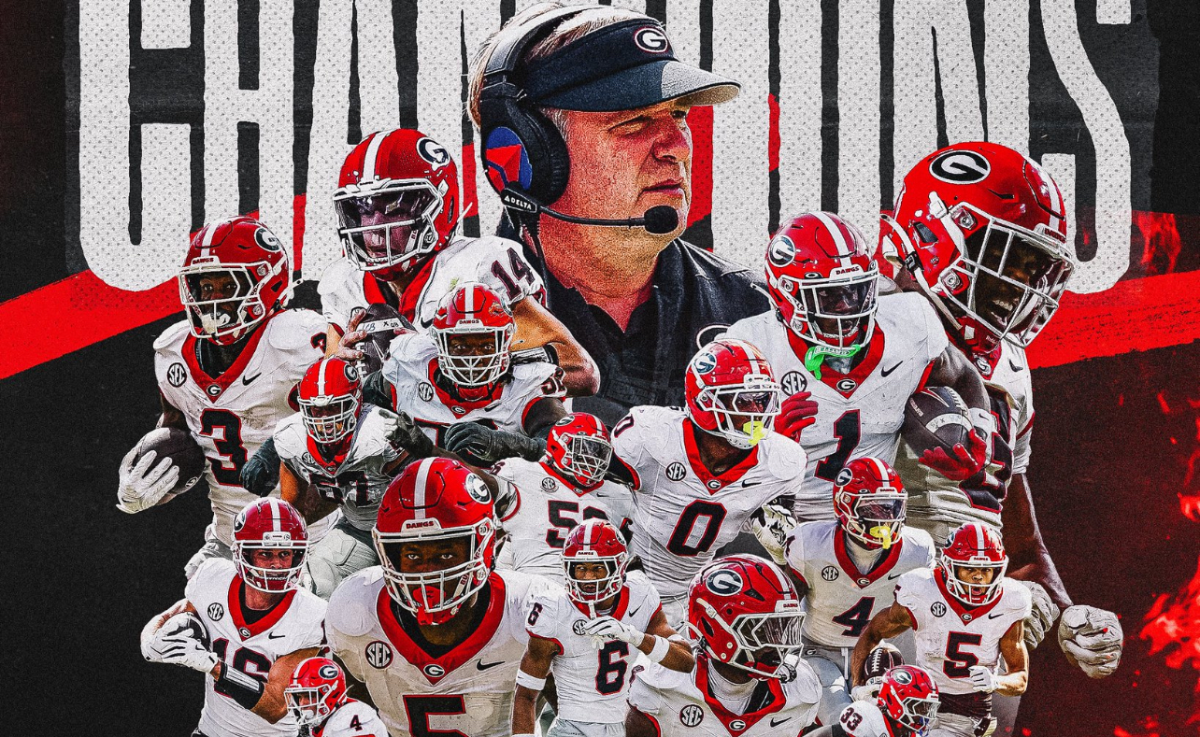
After capping off an 11-1 regular season with a commanding 28-7 thrashing of Alabama in the SEC Championship Game at Mercedes-Benz Stadium, Kirby Smart’s squad enters the expanded 12-team College Football Playoff as the No. 3 overall seed – and a first-round bye to boot.
It’s been a 2025 season that tested Georgia’s mettle early on, but the Bulldogs turned every challenge into a statement.
A gritty 16-9 victory over in-state rival Georgia Tech on Nov. 28 – the first neutral-site Clean, Old-Fashioned Hate since 1913, hosted right here in Atlanta – propelled them into the conference title clash with renewed fire.
That win, coupled with Texas A&M’s stumble against Texas the following weekend, vaulted Georgia from No. 5 to No. 4 in the penultimate CFP rankings released on Dec. 2.
Now, with the committee’s final reveal set for noon ET today on ESPN, projections from NCAA.com, The Athletic, USA TODAY, and CBS Sports all point to the Dawgs locking down the No. 2 spot behind a shocking Big Ten champion Indiana.
“Georgia is the team to be feared right now,” said ESPN analyst Scott Dochterman in a pre-selection breakdown. “They’ve got the resume, the eye test, and home-field advantage written all over them.”
Indeed, the Bulldogs’ only blemish – a narrow loss to Alabama back in September – feels like ancient history after dismantling the Crimson Tide.
Defensively, Georgia held Bama to just 210 total yards, a fitting exclamation point on a unit that’s allowed fewer than 15 points per game since mid-September.
For Atlanta fans, this isn’t just a Georgia story – it’s our story. Sanford Stadium will host a first-round playoff game if the Dawgs stay in the top four, turning Athens into a December madhouse just a stone’s throw from the Peach State capital.
“The energy in this city when Georgia’s rolling is unmatched,” Smart said post-championship, his voice echoing through a raucous Mercedes-Benz crowd. “We’ve got unfinished business, and we’re ready to chase that ring.”
A Bracket Shaped by Championship Chaos
The road to the Jan. 19 national championship in Miami Gardens, Fla., takes a new form this year with the 12-team format, blending automatic bids for conference champions, at-large selections, and byes for the top four seeds.
The weekend’s title games delivered drama and clarity in equal measure, setting the stage for today’s big unveil.
Indiana’s improbable 13-10 upset over defending champ Ohio State in the Big Ten Championship cements the Hoosiers as the projected No. 1 seed – a Cinderella run under second-year coach Curt Cignetti that’s being hailed as one of college football’s greatest turnarounds. “Believe it: Indiana is the Big Ten champ and the College Football Playoff’s No. 1,” crowed The Athletic’s pre-reveal projections.
Texas Tech, meanwhile, stormed the Big 12 with a 34-7 demolition of BYU, earning the conference’s auto-bid and a likely top-four seed.
The Red Raiders’ 12-1 mark and explosive offense have them slotted at No. 3 in most mocks.
Georgia’s SEC crown guarantees an auto-bid, but their body of work – including blowout wins over Tennessee, Auburn, and now Alabama – has experts tabbing them for the No. 2 bye. That positions the Bulldogs to host a quarterfinal clash in the Sugar Bowl (New Orleans) or Fiesta Bowl (Glendale, Ariz.), depending on bracketing.
The at-large battle is where things get spicy, particularly for bubble teams like Alabama (10-3 after their SEC title rout), Notre Dame (11-1 independents), Miami (10-2), and James Madison (11-1 Sun Belt champs).
Before the seedlings were finalized, CBS Sports’ Brad Crawford projected Alabama sneaking in at No. 9 despite three losses, including two by 21+ points, edging out Notre Dame and the Hurricanes.
“The committee would have to devalue the SEC Championship for the first time ever to leave Bama out,” Crawford noted. USA TODAY agrees, but warns JMU’s 11-game win streak – capped by a Sun Belt title – could steal a spot if the Dukes crack the top 12.
Projected 12-Team Bracket: How It Stacks Up
Based on consensus from NCAA.com, The Athletic, USA TODAY, and ESPN’s Mark Schlabach and Kyle Bonagura, here’s a snapshot of the expected field entering today’s reveal:
Seed Team Conference Notes 1 Indiana Big Ten (Champ) Undefeated; hosts first round 2 Ohio State Big Ten 11-1; dominant bye 3 Georgia SEC (Champ) 12-1; blowout over Bama; bye 4 Texas Tech Big 12 (Champ) 12-1; blowout win vs. BYU 5 Oregon PAC 12 10-2; edged Virginia in OT 6 Ole Miss At-Large
10-2; SEC runner-up7 Texas A&M At-Large 10-2; pre-title ranking holdover 8 Oklahoma At-Large 10-2; SEC runner-up 9 Alabama At-Large 10-3; SEC title loss hurts 10 Miami ACC runner-up 10-2; strong resume, in conference 11 Tulane At-Large 10-2; Big 12 runner-up 12 James Madison Sun Belt (Champ) 11-1; G5 auto-bid First-round matchups could include:
No. 9 Alabama vs. No. 8 Oklahoma
Fri. Dec. 19, 8 ET | ESPN & ABCNo. 10 Miami vs. No. 7 Texas A&M
Sat. Dec. 20, Noon ET | ESPN & ABCNo. 11 Tulane vs. No. 6 Ole Miss
Sat. Dec. 20, 3:30 ET | TNT & HBO MAXNo. 12 James Madison vs. No. 5 Oregon
Sat. Dec. 20, 7:30 ET | TNT & HBO MAXEyes on the Prize: Georgia’s Path Forward
If the projections hold, Georgia’s journey begins in the quarterfinals, where they could face the winner of Texas A&M-Notre Dame.
The Irish, led by a balanced attack and elite defense, present a tough out, while the Aggies boast SEC pedigree. But don’t count out the Dawgs’ depth – a transfer portal haul in January 2025 reloaded the roster, and Beck’s leadership has this group believing.
For Atlanta, it’s more than brackets and byes. It’s the echo of “How ‘Bout Them Dawgs?” chants from last night’s watch parties at Midtown taverns to the tailgates already forming in Athens.
As the committee deliberates, one thing’s clear: Georgia isn’t just in the playoff – they’re built to win it.
Tune in at noon for the official reveal, and keep it locked to AtlantaFi.com for live updates, analysis, and what it means for our Bulldogs. Go Dawgs!
CJ Johnson covers Georgia Bulldogs football for AtlantaFi.com. Follow him on X @atlhaps for instant reactions.
-

In a statement win that silenced doubters and avenged an earlier-season heartbreak, the No. 3 Georgia Bulldogs steamrolled the No. 9 Alabama Crimson Tide 28-7 on Saturday night at Mercedes-Benz Stadium, securing their second consecutive SEC Championship and a likely first-round bye in the expanded College Football Playoff.
The victory, played out before a raucous crowd of 77,247 decked out in red and black, marks the program’s 16th conference title and ends a frustrating four-game skid against Alabama in SEC title tilts.
Dawgs Repeat as SEC Champs
It was a night of pure dominance for Kirby Smart’s squad, who entered the matchup hungry after dropping a razor-thin 24-21 decision to the Tide back on Sept. 28 in Athens as part of a grueling 2025 schedule.
Stockton Rises To the Occasion
Quarterback Gunner Stockton, stepping up with poise under the bright lights, orchestrated four touchdown drives, tossing three scores while adding 39 rushing yards on 13 carries.
His connection with wideout Zion Branch proved lethal, capped by a 13-yard dart in the fourth quarter that sent the Dawg Nation into a frenzy and sealed the deal at 28-7 with 6:51 remaining.
“It’s all about execution,” Stockton said postgame, his voice hoarse from shouting over the roar of the Dawg Walk earlier in the evening. “We knew we had unfinished business with these guys.
Stout Defense Steps Up Yet Again
The defense gave us short fields, and we just had to cash in.
“That defense? A brick wall. Georgia’s unit, ranked among the nation’s elite all season, suffocated Alabama’s offense, limiting them to a measly 103 total yards and just three plays inside Bulldog territory through three quarters.
The Tide managed a late cosmetic touchdown, but it was too little, too late against a front seven that sacked QB Ty Simpson twice and forced three punts in the opening half alone.
Linebacker CJ Allen led the charge with eight tackles and a forced fumble, while the secondary—bolstered by All-SEC cornerback Daylen Everette’s tip-drill interception in the first quarter—blanketed Alabama’s receivers.
No opponent has topped 21 points against Georgia since mid-October, and Saturday’s shutout through three quarters extended that streak of defensive mastery.The game kicked off with Georgia asserting control early.
After Everette’s pick set up shop at midfield, Stockton needed just six plays to find tight end Oscar Delp for a 12-yard strike, putting the Bulldogs up 7-0 at the 8:12 mark of the first. Alabama’s response? A three-and-out, courtesy of a third-down sack on Simpson that pinned the Tide deep.
The second quarter belonged to the run game, as tailback Nate Frazier broke free for a 22-yard scamper to the house, extending the lead to 14-0. Stockton wasn’t done, however, capping a clock-chewing 14-play, 57-yard march with a 5-yard laser to Dillon Bell just before halftime.
The Bulldogs headed to the locker room with a commanding two-score edge, having held Alabama to 71 yards on 3.6 yards per play.
Halftime adjustments? Alabama tried to air it out, but Georgia’s secondary swatted down any hopes. A 34-yard punt return by Everette set up Stockton’s third TD toss—this one a bullet to Bell again—making it 21-0 midway through the third.
The Tide finally cracked the scoreboard with 12:33 left in the fourth on a short Germie Oti run, but Branch’s breakaway response extinguished any flicker of a comeback.
With the win, Georgia improves to 12-1 (8-1 SEC), having beaten every team on their slate—including this rematch redemption. The Bulldogs’ only blemish? That September slip-up to Bama, now firmly in the rearview as they eye a potential No. 2 seed in Sunday’s CFP reveal.
Smart, trophy in hand during the on-field ceremony, didn’t mince words about his squad’s grit. “This group believed from Day 1. We’ve got the horses, and tonight we galloped. Now, it’s playoff time—let’s keep the streak alive.”
As the confetti rained down and Ludacris—yes, the ATL native—led the Dawgs in a postgame chant, Athens faithful could exhale.
Nine straight wins, a gleaming SEC crystal football, and a path to January glory. The national title chase? It’s wide open, and Georgia looks every bit the favorite.For now, though, savor the moment. Go Dawgs.
Follow AtlantaFi.com for live coverage of the CFP selection show Sunday at noon on ESPN, and stay tuned for playoff bracket breakdowns.
-
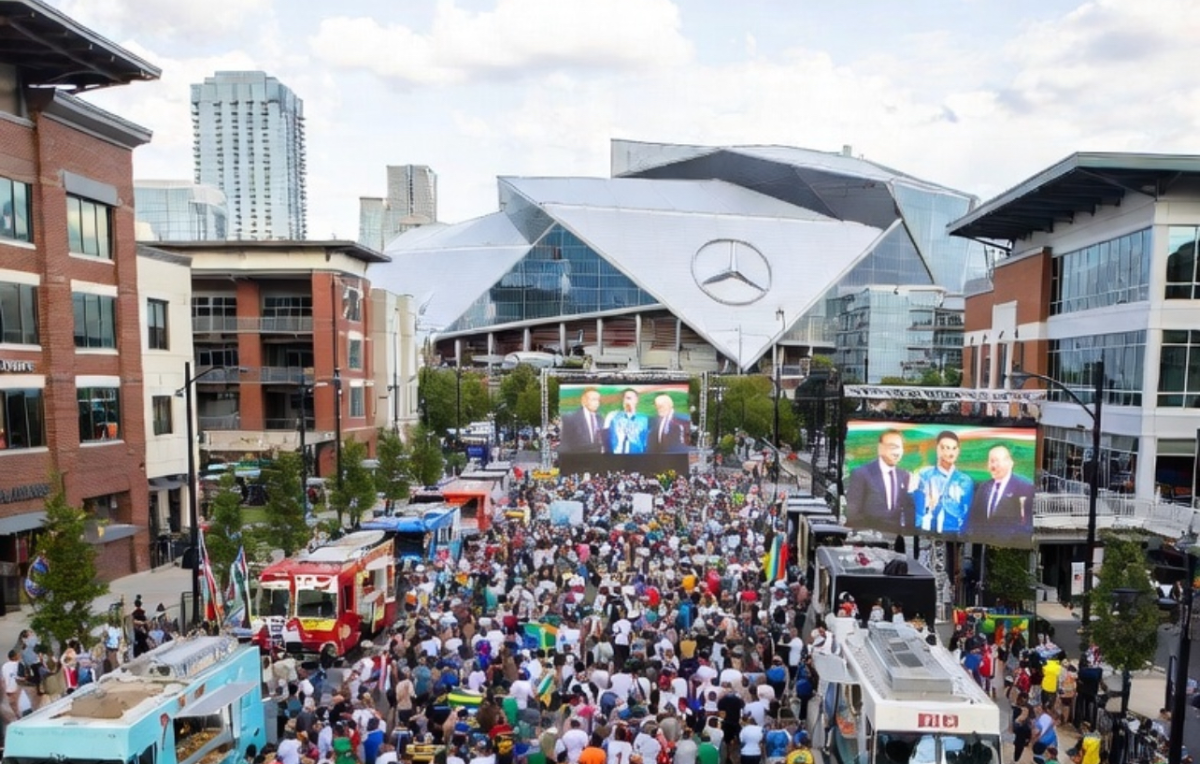
The electric buzz of soccer fever swept through the city today as the FIFA World Cup 2026 Final Draw unfolded live from the John F. Kennedy Center for the Performing Arts in Washington, D.C.
For Atlantans, the ceremony wasn’t just a distant spectacle—it was a direct line to the eight blockbuster matches set to light up Mercedes-Benz Stadium next summer, including a high-stakes semifinal.
With the draw complete, the path is now clear for the Peach State’s role in hosting the world’s biggest sporting event, and the groups promise drama, underdogs, and potential dream matchups right here at home.
Atlanta’s Spotlight on the Global Stage: FIFA World Cup 2026 Draw
The draw, emceed by Manchester United legend Rio Ferdinand and featuring A-list assistants like NFL icon Tom Brady, NBA great Shaquille O’Neal, baseball star Aaron Judge, and hockey hall-of-famer Wayne Gretzky, sorted 48 teams into 12 groups of four.
FIFA President Gianni Infantino hailed it as “the greatest World Cup ever,” a sentiment echoed by the roaring crowds at Atlanta’s official watch party in Buckhead Village, where Mayor Andre Dickens and Atlanta United goalkeeper Brad Guzan joined thousands of fans for giveaways, food trucks, and giant screens beaming the action.
A Kind Draw for the Hosts—and a Boost for Atlanta’s USMNT Hopes
As co-hosts, the United States Men’s National Team (USMNT) was pre-seeded into Group D, and the draw delivered a relatively gentle opening act for Mauricio Pochettino’s squad.
The Americans will face Australia (FIFA ranked 26th), Paraguay (39th), and the winner of UEFA Playoff Path C—potentially Turkey, Romania, Slovakia, or Kosovo—in what experts are calling a “favorable” group.
No powerhouse South American or European giants here; instead, it’s a winnable trio that could propel the USMNT deep into the knockout stages.
For Atlanta, this draw hits close to home. While none of the USMNT’s group stage games (slated for SoFi Stadium in Inglewood and Lumen Field in Seattle) will touch down in the city, the ripple effects are massive.
Atlanta United supporters, known for their raucous Five Stripes Army, see this as a golden opportunity to rally behind a homegrown push for glory.
“Group D feels like a launchpad,” said local fan and Atlanta United season-ticket holder Sonya Henderson at the Buckhead watch party. “If the U.S. advances, we could see them in Atlanta for the Round of 32 or beyond—imagine that energy in our stadium!”
The full group lineup, revealed pot by pot, sets the stage for diverse clashes:
- Group A: Mexico, South Africa, South Korea, UEFA Playoff D Winner
- Group B: Canada, UEFA Playoff A Winner, Qatar, Switzerland
- Group C: Brazil, Morocco, Scotland, Haiti
- Group D: USA, Australia, Paraguay, UEFA Playoff C Winner
- Group E: Germany, Curaçao, Ivory Coast, Ecuador
- Group F: Netherlands, Japan, UEFA Playoff B Winner, Tunisia
- Group G: Belgium, Egypt, Iran, New Zealand
- Group H: Spain, Cape Verde, Saudi Arabia, Uruguay
- Group I: France, Senegal, Inter-confederation Playoff Path 2 Winner, Norway
- Group J: Argentina, Algeria, Austria, Jordan
- Group K: Portugal, Inter-confederation Playoff Path 1 Winner, Uzbekistan, Colombia
- Group L: England, Croatia, Ghana, Panama
Group L emerged as the unofficial “Group of Death,” pitting England against Croatia and a gritty Ghana-Panama matchup.
Meanwhile, defending champions Argentina drew a solid but navigable Group J, potentially setting up Lionel Messi’s swan song against familiar foes.
Atlanta’s Eight-Match Bonanza: Semifinal Glory Awaits
Mercedes-Benz Stadium—rebranded as “Atlanta Stadium” for FIFA’s neutral naming rules—will host a whopping eight matches, transforming the city into a soccer mecca from June 15 to July 15, 2026.
The slate kicks off with five group stage thrillers on June 15, 18, 21, 24, and 27, followed by a Round of 32 clash on July 1, a Round of 16 showdown on July 7, and the crowning jewel: the second semifinal on July 15.
Today’s draw teases tantalizing possibilities for Atlanta’s fixtures. The stadium’s group stage games span Groups A, C, H, and K—meaning fans could witness powerhouses like Brazil (Group C) or Portugal (Group K) in action, alongside rising stars from Haiti or Jordan.
A Round of 32 matchup involving a Group D third-place finisher (hello, possible USMNT cameo) adds intrigue, while the Round of 16 could pit group winners against third-placers from other brackets.
The semifinal? That’s where legends are made. With top seeds like Spain (Group H) or France (Group I) eyeing deep runs, Atlanta could host a clash between continental titans.
“This draw just cranked up the hype,” said Atlanta Sports Council President Charlie Harper. “We’re talking global icons under our roof, with the city’s hotels, restaurants, and BeltLine buzzing for weeks.”
City of Soccer: Atlanta Gears Up for the World
Atlanta’s soccer roots run deep, from Atlanta United’s MLS Cup triumph in 2018 to record-breaking crowds at Mercedes-Benz Stadium.
The 2026 influx—projected to pump $500 million into the local economy—has the city in full prep mode. Upgrades to Hartsfield-Jackson Atlanta International Airport, expanded MARTA service, and fan zones along the Atlanta BeltLine are underway.
FIFA estimates a single World Cup tourist spends $416 per day; multiply that by thousands, and it’s a boon for local businesses from Midtown eateries to Little Five Points shops.
Hospitality packages are already flying off the shelves, with FIFA’s ticketing lottery opening December 11 for general sales.
Prices start at $60 for upper-deck group stage seats but climb to $2,895 for premium semifinal views
“We’re ready to show the world Southern hospitality meets world-class soccer,” Mayor Dickens told the Buckhead crowd. “Atlanta isn’t just hosting—we’re owning this moment.”
As the full match schedule drops tomorrow, December 6, Atlantans can dream big: a USMNT semifinal run? A Brazil-Uruguay upset in the groups?
Whatever unfolds, one thing’s certain—the draw has Atlanta primed for its finest hour on the pitch. The beautiful game is coming home, and the South is rising.
Follow AtlantaFi.com for live updates on tomorrow’s schedule reveal and ticket tips. Share your draw reactions: Which matchup are you most excited for at Mercedes-Benz Stadium?
-
In a move that’s rippling from the silver screens of Burbank to the bustling newsrooms of downtown Atlanta, Netflix has clinched a staggering $82.7 billion deal to acquire Warner Bros. Discovery’s studios and streaming empire.
Announced Friday morning, the cash-and-stock transaction—valued at $27.75 per share—positions the streaming behemoth to swallow up iconic franchises like Harry Potter, Game of Thrones, and the DC universe, while merging HBO Max into its already dominant platform.
Netflix’s Blockbuster Bid for Warner Bros.: A Hollywood Shake-Up with Atlanta Echoes
But for the Peach State’s media heartbeat, CNN, this seismic shift spells both continuity and uncertainty, as the network’s cable roots remain firmly planted in a soon-to-be-separated entity.
The deal, which Netflix co-CEO Ted Sarandos called a “rare opportunity” to fuse innovation with century-old storytelling, caps a frenzied bidding war that pitted the Los Gatos-based streamer against heavyweights like Paramount Skydance and Comcast.
Warner Bros. Discovery (WBD), still reeling from its 2022 merger that ballooned its debt to $55 billion (now whittled down to about $34 billion), had already set the stage for this divestiture back in June.
That’s when the company unveiled plans to cleave itself into two: a glitzy Streaming & Studios arm—now Netflix’s prize—and a leaner Global Networks division housing cable stalwarts like CNN, TNT, TBS, and Discovery Channel.
Is The Deal Illegal?
The pending aquistion of Warner Bros. by Netflix has ignited immediate concerns about reduced competition in an already consolidating entertainment industry.
Regulators in the U.S. and Europe are poised to scrutinize the transaction, with the Clayton Act serving as a primary legal tool for potential intervention.
What Is The Clayton Act?
The Clayton Act, enacted in 1914 as an amendment to the Sherman Antitrust Act, is a cornerstone of U.S. antitrust law designed to prevent mergers and acquisitions that could substantially lessen competition or create monopolies before they fully materialize.
Unlike the broader Sherman Act, which targets existing anticompetitive behavior, Section 7 of the Clayton Act focuses on prospective harm, empowering the Federal Trade Commission (FTC) and Department of Justice (DOJ) to block deals that threaten market dynamics. Violations are assessed through a “reasonableness” standard, considering factors like market concentration, barriers to entry, and potential effects on consumers, competitors, and innovation.
If the Netflix-WBD deal runs afoul of this, it could be enjoined by a court, forcing divestitures or outright abandonment.
Key Ways the Deal Could Violate the Clayton Act
To understand the risks, consider how regulators might apply Clayton Act principles to this merger.
The core allegation would likely center on the deal’s potential to entrench Netflix’s dominance in subscription video-on-demand (SVOD) streaming, a market already strained by cord-cutting and content wars. Here’s a breakdown:
Clayton Act Factor Potential Violation in Netflix-WBD Deal Supporting Evidence/Concerns Market Concentration (e.g., Herfindahl-Hirschman Index or HHI) The merger could push Netflix’s U.S. SVOD market share above 30-40%, crossing the DOJ/FTC’s “presumptively illegal” threshold of 30% under merger guidelines. Pre-merger, Netflix holds ~20-25% globally; adding HBO Max’s ~10-15% U.S. share would create a combined entity controlling over a third of subscribers. Rep. Darrell Issa warned in a November 2025 letter to the DOJ and FTC that this exceeds the 30% “presumptively problematic” level, potentially harming consumers by reducing choices. nbcnews.com Analysts note the HHI (a measure of market concentration) could surge by over 200 points, triggering strict scrutiny. thebignewsletter.com Lessening of Competition By acquiring a direct rival (HBO Max), Netflix would eliminate head-to-head competition for premium content, allowing it to raise prices, hoard exclusives, or degrade service quality without fear of subscriber churn. Warner’s library would become unavailable to competitors like Disney+ or Amazon Prime Video, foreclosing rivals’ access to must-have IP. Sen. Mike Lee highlighted this as a “serious competition question,” more acute than deals in the past decade, potentially stifling innovation in content creation. cnn.com A government official echoed that adding HBO Max to Netflix’s “market dominance” would “stifle competition,” akin to Google/Amazon probes. timesofindia.indiatimes.com Monopolization Risks The combined firm would control ~50% of premium scripted content production, giving Netflix undue leverage over Hollywood talent, theaters, and downstream markets like advertising and licensing. This could create barriers for indie creators and exhibitors, turning the merger into a “recipe for monopolization.” Experts call it a “straightforward challenge under the Clayton Act,” as it consolidates power over storytelling, potentially leading to fewer theatrical releases and job losses for professionals. thebignewsletter.com +1 Cinema United labeled it an “unprecedented threat” to theaters. reuters.com Vertical Integration Concerns Netflix’s ownership of Warner’s studios would deepen vertical control—from production to distribution—potentially discriminating against rival platforms by withholding content or favoring its own algorithms, harming downstream competition in video consumption. Former WarnerMedia CEO Jason Kilar argued it’s “the most effective way to reduce competition in Hollywood.” reuters.com This echoes past DOJ blocks like AT&T-Time Warner (initially challenged on similar grounds). These factors align with the DOJ/FTC’s 2023 Merger Guidelines, which emphasize “serial acquisitions” (Netflix’s history of smaller content buys) and the cumulative impact on nascent markets like streaming. Critics, including Sens. Elizabeth Warren, Richard Blumenthal, and Bernie Sanders, have urged the DOJ to probe for “political favoritism,” while anonymous filmmakers called for “the highest level of antitrust scrutiny.”
Paramount, a losing bidder, has accused WBD of bias and may lobby the Trump administration to intervene, citing ties to figures like ex-DOJ official Makan Delrahim.
What Happens To Atlanta’s CNN Operations?
For Atlanta, where Ted Turner’s legacy looms as large as the CNN Center’s glass facade, the implications hit close to home.
CNN, born here in 1980 as the world’s first 24-hour news channel, employs thousands across its Techwood Campus and the iconic CNN Center—once the world’s largest cable news facility before a 2020 sale amid AT&T’s debt-slashing frenzy.
Though much of the network’s high-profile anchoring has migrated to New York and Washington, D.C., Atlanta remains the nerve center for operations, from digital production to global bureaus.
The city’s media ecosystem, bolstered by these jobs and the economic ripple of events like the annual CNN Political Forum at the nearby Georgia World Congress Center, stands to feel the aftershocks.
A Clean Break for CNN: Stability in Separation?
Crucially, CNN isn’t crossing over to Netflix’s subscriber-driven world. The acquisition explicitly excludes WBD’s linear TV assets, leaving the news giant under the umbrella of the newly minted Discovery Global—a standalone public company expected to launch in Q3 2026, post-regulatory hurdles.
Led by WBD CFO Gunnar Wiedenfels, this entity will encompass CNN alongside sports powerhouse TNT Sports, lifestyle networks like HGTV, and digital offshoots such as Discovery+ and Bleacher Report
It’s a nod to the enduring power of cable in a streaming age, even as cord-cutting erodes viewership.
Indeed, WBD CEO David Zaslav has long championed CNN’s “editorial integrity,” a stance echoed in past mergers. During the 2022 Discovery-WarnerMedia union, Zaslav vowed to “lean into” news, praising CNN’s global reach as rivaling only the BBC.
Yet, that era wasn’t without pain: Layoffs hit 200 in CNN’s TV division earlier this year, part of broader cost-cutting that trimmed bloat from the merger. With Discovery Global inheriting a chunk of WBD’s remaining debt, whispers of further efficiencies—perhaps in back-office ops at Techwood—aren’t off the table.
Atlanta’s Media Mosaic: Jobs, Legacy, and the Streaming Shadow
Zoom in on the ground, and the deal underscores Atlanta’s evolution from Turner’s scrappy superstation to a Southern Hollywood contender. The city’s film tax credits have lured over $10 billion in productions since 2008, with Warner Bros. Television contributing hits like Ozark spin-offs filmed at Pinewood Atlanta Studios.
Netflix’s absorption of Warner’s studios could indirectly boost this: Expanded U.S. production capacity, as promised in the deal, might mean more shoots in Georgia’s tax-friendly environs, creating spillover jobs for Atlanta crew and vendors.
But for CNN staffers—over 1,000 in metro Atlanta alone—the mood is cautiously optimistic. “We’ve weathered mergers before, from Time Warner to AT&T to Discovery,” says one anonymous producer at the CNN Center, where the network’s digital arm hums alongside a bustling atrium drawing tourists and locals alike. “This feels like a reset: No more subsidizing HBO’s prestige dramas with news budgets.”
The separation could free up resources for innovations like CNN’s award-winning VR documentaries or its push into podcasts, areas where Atlanta’s tech-savvy talent pool shines.
Challenges persist, though. Cable ad revenue, CNN’s lifeblood, dipped 10% industry-wide last quarter, forcing pivots to events and syndication. Rivals like Fox News and the rebranded MS NOW (formerly MSNBC, spun off earlier this year) are adapting with hybrid models, and Discovery Global’s success will hinge on bundling CNN with sports and lifestyle content to stem subscriber bleed.
Locally, that means more integration with TNT Sports’ NBA coverage—headquartered here—or Discovery’s real estate shows tying into Atlanta’s booming housing market.
Broader economic ripples could touch Atlanta’s creative class. Theater owners nationwide, including Georgia Exhibition Hall of Fame inductees like Regal’s local chains, decry the deal as a “threat to exhibition,” fearing Netflix’s day-and-date releases will gut box office hauls from Warner films like the upcoming Superman reboot.
With Atlanta’s AMC Dine-In Tara screening rooms already hurting post-pandemic, fewer theatrical runs could mean less buzz for local premieres and red carpets.
What Lies Ahead: A Peachtree Path Forward?
As the deal awaits shareholder nods and antitrust scrutiny—likely smoother than past sagas, given the cable carve-out—Atlanta watches with bated breath.
Netflix’s vow to “maintain Warner Bros.’ current operations, including theatrical releases” offers some solace, but the real story for CNN is reinvention under Discovery Global.
Final Word
In a city that’s hosted civil rights marches and Olympic flames, where MLK’s legacy inspires CNN’s town halls, the network’s Atlanta roots could be its anchor.
For now, the Techwood Campus in Midtown Atlanta buzzes on, a testament to resilience.
As Sarandos put it, this merger is about “stories that matter most to audiences.” In Atlanta, that means ensuring the city’s voice—fierce, diverse, unfiltered—stays amplified, whether via cable, stream, or the next big scoop from the CNN Center. Hollywood may have new overlords, but the South’s media capital isn’t fading quietly.
-
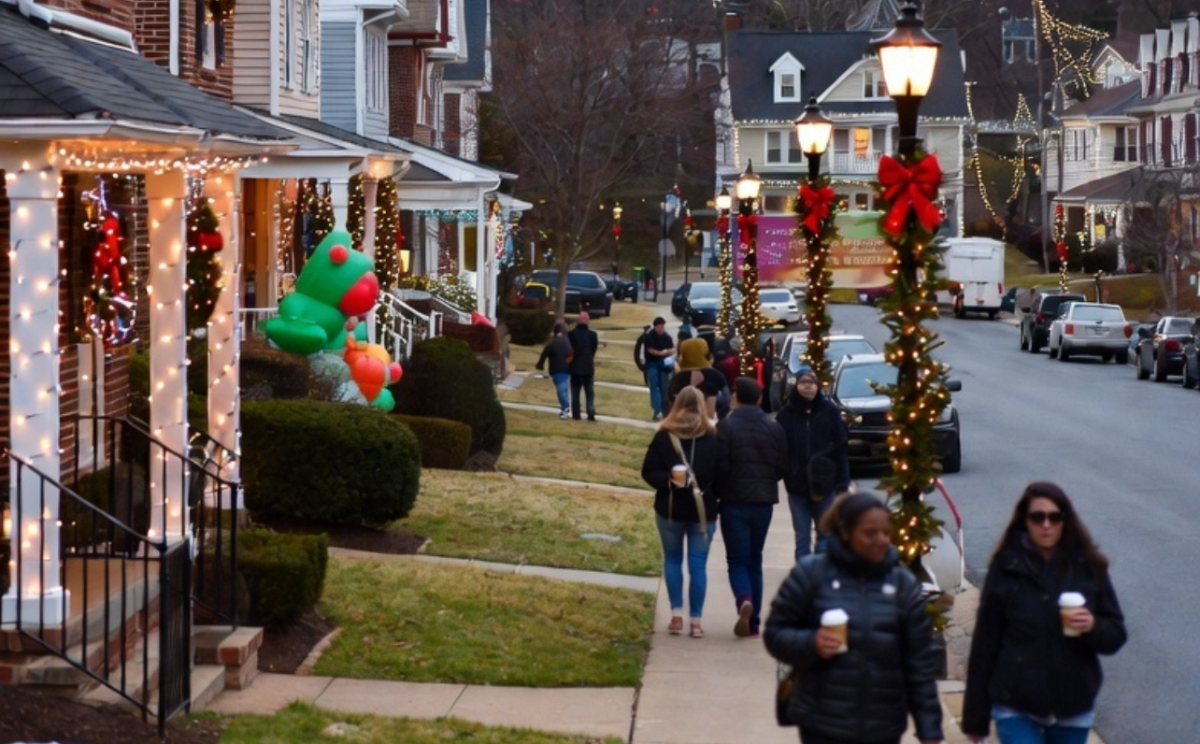
Atlanta’s historic Virginia-Highland neighborhood is gearing up for its biggest holiday weekend yet.
For the first time, the Virginia-Highland Civic Association (VHCA) is combining the beloved Tour of Homes with the neighborhood’s festive Winterfest celebration — and adding a brand-new attraction called Window Wonderland.
The weekend of December 13-14 will feature 10 stunning century-old homes decked out in full holiday splendor (some of which have been featured in Architectural Digest and House Beautiful).
There will also be family-friendly activities, a holiday parade, a Jingle Jog 5K, and creative window displays designed by Midtown High School art students in partnership with local businesses.
Virginia-Highland To Debut New ‘Window Wonderland’ Display
This is the perfect way to kick off the holiday season in one of Atlanta’s most iconic neighborhoods. And it’s so cool that they’re bringing everything together in one weekend and debuting Window Wonderland as a new tradition that supports both local merchants and the area’s talented high school artists.
What to Expect
- Virginia-Highland Tour of Homes
Saturday, Dec. 13: Noon – 6 p.m.
Sunday, Dec. 14: Noon – 5 p.m.
Ten carefully selected homes showcasing a century of architectural styles, all dressed in their holiday finest. Visitors may start the self-guided tour at any home. - Window Wonderland
On display throughout December along North Highland Avenue and neighboring streets. Midtown High School art students collaborated with Virginia-Highland businesses to create custom holiday window installations. The project also serves as a fundraiser for the Midtown High School Art Club. - Winterfest (Saturday only – Dec. 13)
- Jingle Jog 5K: 8 a.m.
- Holiday Parade: 10 a.m.
- Gift Market & Kids Corner: 11 a.m. – 5 p.m. (Kids Corner closes at 4 p.m.)
Tickets & Details
Advance tickets for the Tour of Homes are $35 (children 10 and under free). Day-of tickets are $40. Tickets can be purchased online at vahitourofhomes.org or through the official tour app on Apple or Google Play.Window Wonderland and Winterfest activities are free and open to the public.
For the full schedule, home addresses, and to purchase tickets, visit vahitourofhomes.org.
The Virginia-Highland neighborhood is located just east of Midtown and Piedmont Park, easily accessible from I-85 and the BeltLine’s Eastside Trail. Parking is limited; rideshare and walking are encouraged.
Final Word
As the city lights up with yet another special event this weekend, remember: Safe driving is the real treat. For more tips on navigating safely around the city, read our Atlanta Traffic Guide.
More from AtlantaFi.com:
- Virginia-Highland Tour of Homes
-
In the heart of downtown Atlanta, at the corner of Peachtree and Ellis streets, stands a 15-story building that has borne witness to both glamour and unimaginable horror.
Now known as the Ellis Hotel, this structure was once the Winecoff Hotel – a beacon of early 20th-century luxury that became the site of the deadliest hotel fire in U.S. history on December 7, 1946.
Nearly 79 years later, the tragedy continues to shape fire safety standards nationwide and serves as a somber reminder of how quickly complacency can turn deadly.
The Winecoff Hotel: A History
In the early 1900s, downtown Atlanta pulsed with post-Reconstruction energy. Peachtree Street, the city’s grand artery, was transforming from a dusty thoroughfare into a commercial powerhouse.
The area around what would become 176 Peachtree lay just north of the Fairlie-Poplar Historic District, a hub of late-19th-century brick buildings housing banks, shops, and offices.
Pioneer hotel builder William F. Winecoff envisioned a luxurious retreat for Atlanta’s elite.
A ‘Fireproof’ Icon Rises in Atlanta
Opened in 1913, the Winecoff Hotel was designed by renowned architect William Lee Stoddart and quickly established itself as one of Atlanta’s tallest and most prestigious buildings.
Boasting 15 stories and a steel-frame construction clad in brick and terra cotta, it was marketed aggressively as “absolutely fireproof.”

This claim stemmed from its non-combustible exterior and structural materials, which met the building codes of the era. On a compact lot of less than 5,000 square feet, the hotel was exempt from requirements for multiple stairways, fire escapes, or sprinklers – a loophole that would prove catastrophic.
The Winecoff catered to travelers, holiday shoppers, and locals drawn to downtown Atlanta’s vibrant scene.
Its location near department stores like Davison’s and the Loew’s Grand Theatre – where Disney’s Song of the South was screening – made it a hub during the post-World War II boom.
Guests included families, businessmen, and even the hotel’s founders, W. Frank Winecoff and his wife Grace, who resided in a penthouse apartment.

With only one central stairway, two elevators, and no automatic alarms or suppression systems, the hotel relied on its “fireproof” reputation.
Interior finishes – wallpaper, carpets, and furnishings – were highly flammable, but this went largely unquestioned in an era before widespread fire safety reforms.
The Night the Flames Consumed Everything
The fire ignited around 3:15 a.m. on a chilly Saturday, December 7, 1946, likely on the third floor in a hallway mattress.
Theories abound: a discarded cigarette, electrical fault, or even arson tied to a late-night card game. Whatever the spark, the blaze spread with terrifying speed.
The open stairwell acted like a chimney, funneling superheated gases and smoke upward through the building’s core.
Of the 304 guests asleep that night, panic erupted as corridors filled with choking smoke.
Many were in town for Christmas shopping or the YMCA Youth Assembly at the state Capitol – including 30 of Georgia’s brightest high school students.
Screams echoed down Peachtree Street as trapped occupants smashed windows and hurled mattresses in desperate bids for survival.
Atlanta Fire Department engines arrived within minutes, mustering 385 firefighters, 22 engines, and 11 ladders.
But the hotel’s height outstripped their equipment; aerial ladders reached only the eighth floor. Rescuers extended ladders from the adjacent Mortgage Guaranty Building, forming human chains and using nets to catch jumpers.
Bystanders, including off-duty soldiers, held nets as bodies plummeted – some missing by inches and crashing onto marquees or pavement.
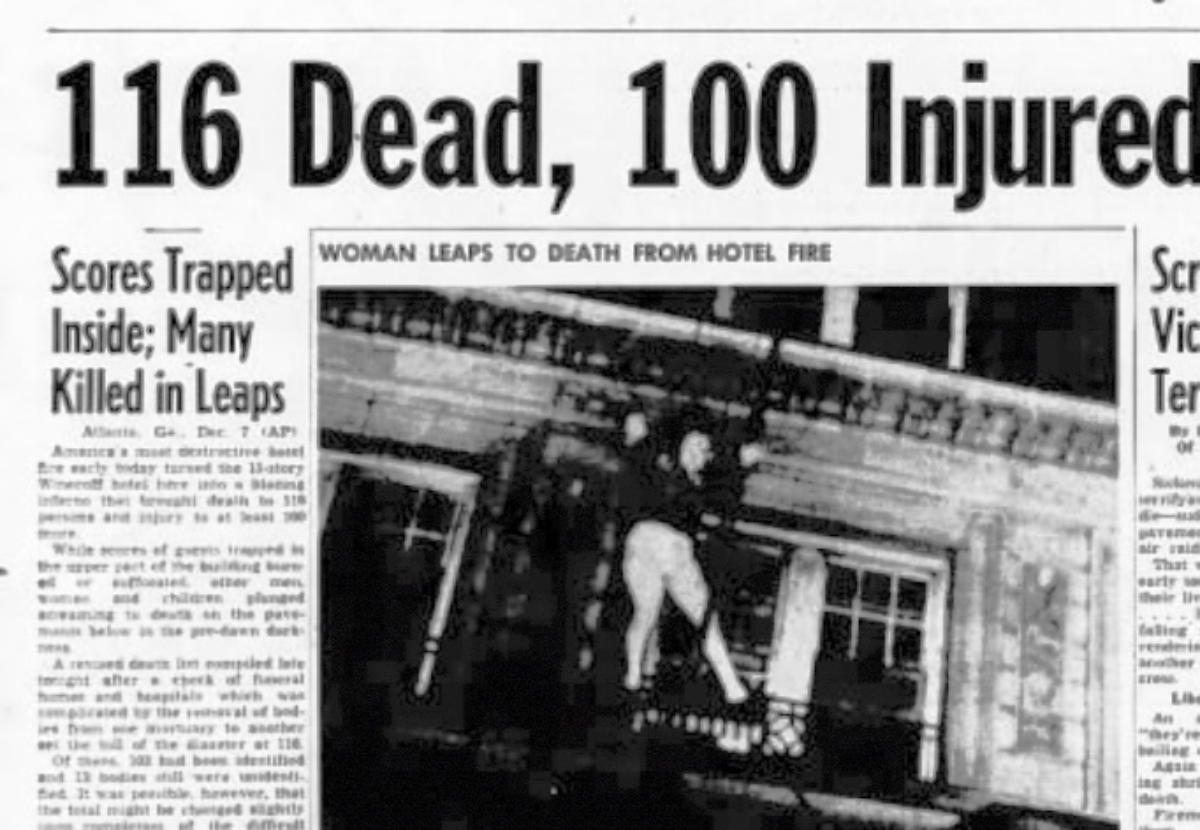
Amateur photographer Arnold Hardy captured the chaos, snapping a Pulitzer Prize-winning image of a woman mid-fall. Firefighters battled for over two hours in freezing temperatures, rescuing about 120 uninjured but forever scarred.
The Night That Changed Everything
At 24, Hardy was returning home around 3:30 a.m. from a date at a downtown dance hall. Hearing fire sirens, he phoned the station and learned of the blaze at the Winecoff Hotel on Peachtree Street.
Grabbing his camera and five flashbulbs, he cabbed to the scene—the first photographer there. In the pitch-black frenzy, guests leaped from windows or dangled from bedsheet ropes.
Hardy offered aid to firefighters, who declined, so he focused his lens.
One bulb exploded in the cold; he fired off shots of horrified faces in windows.
With his last bulb, he aimed upward, timing a shutter release to capture a woman plummeting feet-first from the 11th floor. Her skirt billowed, revealing white underpants against the flaming facade—a raw, unflinching image titled “Death Leap From Blazing Hotel.”

Developing the film in Tech’s darkroom by 6 a.m., Hardy sold three photos to the Associated Press for $300 (about $4,800 today).
The AP wired it nationwide; it graced front pages and magazine covers, humanizing the Winecoff’s 119 deaths.
Initial reports claimed the woman died on impact. In reality, she was Daisy McCumber, a 41-year-old from Vidalia, Georgia, who survived with shattered bones, internal injuries, and eventual leg amputation.
Embarrassed by the exposure, McCumber avoided publicity until her 1992 death.
In 1947, Hardy’s photo earned the Pulitzer—the first for an amateur—plus five other top awards.
A Devastating Toll: 119 Lives Lost
By dawn, the fire had claimed 119 lives – 41 from burns, 32 from suffocation, and 26 from falls or jumps. Another 65 were injured.
Among the dead: the Winecoffs themselves, suffocated in their penthouse; 17-year-old Christine Adams Hinson, a Youth Assembly delegate; and former Miss Atlanta runner-up Margaret Wilson Nichols, who fell from the seventh floor.
Survivors recounted harrowing escapes: tying bedsheets into ropes, crawling through smoke-filled halls, or leaping into nets.
One intoxicated guest slept through the ordeal unharmed. Firefighter R.B. Sprayberry, who helped recover bodies, never spoke of the night again.
Aftermath: A Nation Awakens to Fire Risks
The Winecoff disaster, coming months after deadly blazes in Chicago and Dubuque, shocked America.
The president convened a national fire safety conference, and cities rushed to update codes.
Georgia enacted a building exit law requiring multiple egress routes, effective on the fire’s first anniversary.
Nationally, standards mandated sprinklers, fire-resistant doors, alarms, and retrofits for older buildings – debates once dismissed as unconstitutional takings.
The hotel reopened in 1951 after renovations but struggled, closing in the 1980s.
It sat vacant until 2007, when a $23 million rehab transformed it into the boutique Ellis Hotel – complete with sprinklers, modern alarms, and fireproof materials. Today, it honors the past with a historical marker dedicating the site to victims, survivors, and rescuers.
Legacy: Safer Skies in the City Too Busy to Hate
The Winecoff fire remains the deadliest hotel blaze in U.S. history, a testament to its profound impact. It spurred the professionalization of firefighting, statewide training requirements, and innovations like self-closing doors.
Atlanta’s skyline, now dotted with high-rises, owes its safety to those lost that night.
What Is the Site of the Winecoff Hotel Today?
As Atlanta grows, the Ellis Hotel stands as a resilient symbol.

Visitors can stay in rooms with views of Peachtree, but the echoes of 1946 linger – urging vigilance.
“We were all spared for a reason,” survivors have said. In a city that rose from ashes before, the Winecoff reminds us: Fireproof is a promise only as strong as the precautions behind it.
For more on Atlanta’s historic fires, visit the Georgia Historical Society marker at 176 Peachtree St. NE.
Here Are The Best New Restaurants In Atlanta
-
In the heart of the bustling Atlanta metropolitan area, where skyscrapers pierce the skyline and traffic hums along I-75, nature offers a surprising escape: rolling hills and prominent peaks that provide breathtaking views, rich history, and a touch of wilderness.
While Atlanta itself sits in the relatively flat Piedmont region, its sprawling suburbs—stretching into Cobb, DeKalb, Fulton, and Gwinnett counties—boast some of the highest natural elevations in the core metro area.
Atlanta’s Suburban Summits: Majestic Heights Beyond City Lights
These “suburban summits” aren’t the towering giants of North Georgia’s Blue Ridge Mountains, but they rise dramatically above the surrounding terrain, offering hikers, history buffs, and families a quick getaway from urban life.
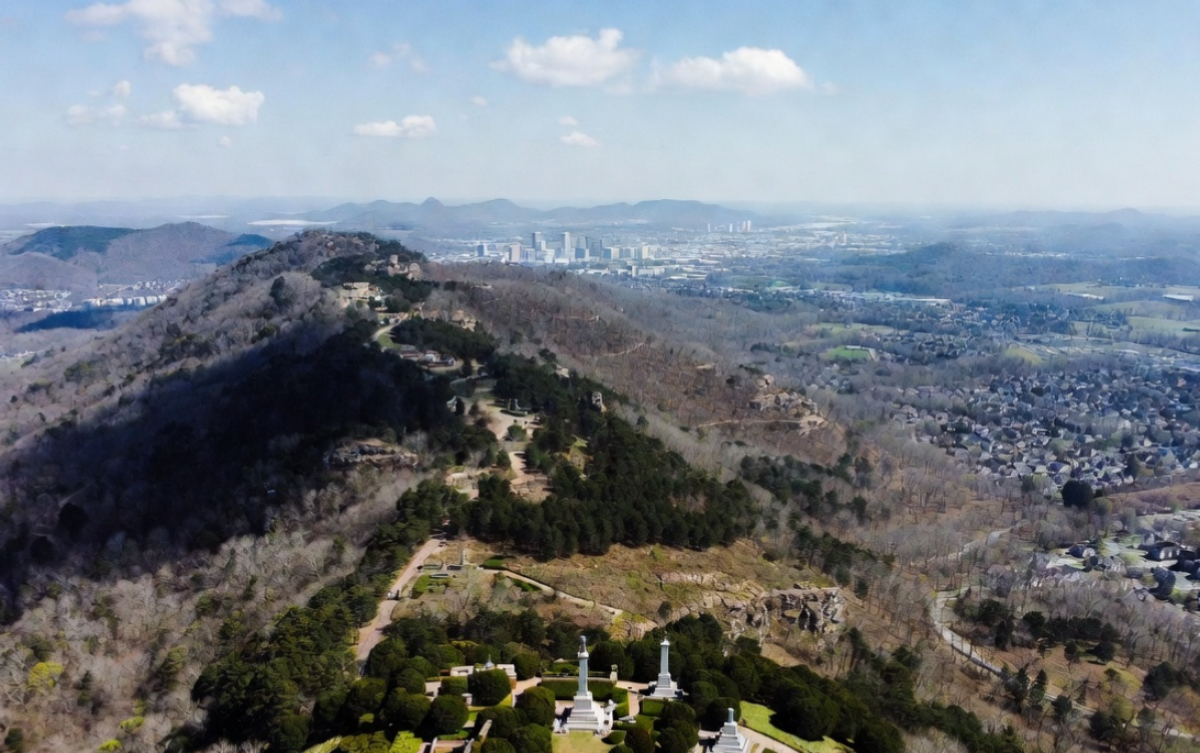
At the top of this list is Kennesaw Mountain, the undisputed king of suburban Atlanta’s peaks.

Standing at an impressive 1,808 feet (551 meters) above sea level, this monadnock— an isolated hill rising abruptly from a plain—marks the highest point in the urban and suburban core of metro Atlanta.
Located between the vibrant suburbs of Marietta and Kennesaw in Cobb County, just 25 miles northwest of downtown, Kennesaw Mountain isn’t just a geological marvel; it’s a living testament to the city’s Civil War heritage.
The mountain played a pivotal role in the 1864 Atlanta Campaign, where Confederate forces under General Joseph E. Johnston dug in to defend against Union General William Tecumseh Sherman’s advancing army.
The ensuing Battle of Kennesaw Mountain on June 27, 1864, was one of the war’s bloodiest engagements, claiming over 5,000 lives in a single day of brutal frontal assaults.
Today, Kennesaw Mountain National Battlefield Park preserves 2,923 acres of battlefield, complete with interpretive trails, monuments, and a visitor center that draws more than a million visitors annually.
Hikers can tackle the 1.2-mile Cheatham Hill Trail or the steeper 0.7-mile path to the summit, where panoramic views stretch across the suburbs to glimpses of the Atlanta skyline on clear days.
But Kennesaw isn’t alone in its lofty prominence. Nearby peaks like Sweat Mountain and Little Kennesaw offer equally compelling adventures, blending natural beauty with suburban accessibility.
Sweat Mountain, at 1,688 feet, is a favorite among amateur radio enthusiasts and birdwatchers, its summit dotted with rock outcrops and remnants of old communication towers.
Just south, in DeKalb County’s Stone Mountain Park, the massive quartz monzonite dome rises to 1,686 feet, famous for its controversial Confederate carving but beloved for its laser light shows and 5-mile walk-up trail. Stone Mountain also has an insane, crazy past.

These peaks provide vital green spaces amid Atlanta’s rapid suburban growth.
As the metro population swells past 6 million, trails on these hills serve as urban oases, supporting biodiversity from wild turkeys to rare orchids while promoting mental health through outdoor recreation.
Recent initiatives by the National Park Service and local conservation groups aim to expand trail networks, ensuring these heights remain protected for future generations.
Whether you’re seeking a history lesson, a strenuous workout, or simply a sunset vista over the city, suburban Atlanta’s peaks deliver. As we head into the holiday season, lace up your boots—winter’s chill makes for fewer crowds and crisp, clear views from the top.
The 5 Highest Peaks in Suburban Atlanta
Here’s a quick guide to the top five, ranked by elevation. All are accessible within a 30-45 minute drive from downtown Atlanta, with public parks or trails available.
Rank Peak Name County Elevation (ft) Key Feature 1 Kennesaw Mountain Cobb 1,808 Civil War battlefield, panoramic views 2 Sweat Mountain Cobb 1,688 Rock formations, amateur radio site 3 Stone Mountain DeKalb 1,686 Granite dome, laser shows 4 Pine Mountain Cobb 1,350 Wooded trails, wildlife viewing 5 Lost Mountain Cobb 1,247 Quiet hikes, fall foliage hotspot For more details on trails and park hours, visit the National Park Service website or local suburb recreation departments. Stay safe out there—Atlanta’s suburbs may be hilly, but they’re worth the climb!
Final Thoughts
As the city lights up with yet another special event this weekend, remember: Safe driving is the real treat. For more tips on navigating safely around the city, read our Atlanta Traffic Guide.
More from AtlantaFi.com:
- How Long Does It Take To Drive Around I-285?
- Moving To Georgia: Everything You Need to Know
- Feeling adventurous? Here are some outdoorsy things to do in ATL
AtlantaFi.com is your source for hyper-local stories in the Peach State. Have a tip? Email us at news@atlantafi.com.