-
Delta Air Lines is giving a glimpse of a major overhaul of its flagship Delta One product, shifting emphasis from the seat alone to a complete elevated experience of dining, service, and thoughtful details.
In the promo, Delta, asks: “What makes a great flight? It’s not just the seat. It’s what you eat, what you sip, how you’re taken care of and all the details around you. We’ve been working on all of it, and it’s all part of the new Delta One Coming soon.”
This messaging aligns with Delta’s formal announcement of its largest investment and most holistic redesign of Delta One in nearly 30 years, informed by two decades of customer insights and building on more than $1 billion already invested in the fleet.
Delta One Overhaul Being Soft-Launched This Fall from LAX
The refreshed “soft product”—covering food, beverages, service rituals, amenities, and personalization—debuts first on transoceanic Delta One routes departing Los Angeles International Airport this fall, before expanding across the global network in early 2027. Specific early launches include Auckland (from around October 24), Brisbane (October 26), and additional cities such as Sydney, Melbourne, Tokyo, Hong Kong, Shanghai, and Paris starting November 3.19
Delta’s Chief Marketing and Product Officer Ranjan Goswami described the approach as “rooted in solving real customer needs and desires, with intentionality behind every detail,” aiming for the industry’s most premium end-to-end experience.46
Delta One Overhaul: Elevated Dining Focused on Classics

The culinary program, developed with chef Simon Hulstone (associated with Michelin-starred work), prioritizes elevated comfort food rather than overly formal fine dining. Highlights include:
- A Delta One Wagyu burger with caramelized onions, cheddar, and cornichons on a toasted brioche bun.
- Hong Kong-style or regionally inspired sea bass / grilled salmon.
- Braised lamb with red-wine demi-glace, lyonnaise potatoes, and grilled asparagus.
- Beef short rib, seasonally rotating risotto, macaroni and cheese, and a chicken Caesar salad entrée.
- Mid-flight lighter options such as a chicken salad croissant, hummus, and crudité.
Dessert retains the signature sundae cart with upgrades (new chocolate sauce, Amarena cherries, pecan praline), plus a dairy-free sorbet that can be paired with a Champagne Taittinger float and a Napa Valley-inspired fruit-and-cheese plate. Pre-order windows extend to 18 hours before departure—longer than before and the closest among major U.S. carriers—with expanded gluten-free, lighter, and pre-arrival (sleep-maximizing) choices.
New tableware (over 60 pieces with Delta branding) and service touches support the experience, including a “sip and settle” welcome with a hot towel, warm nuts, and a preferred beverage, plus fresh cracked pepper and improved sauce presentation.
Upgraded Beverages and Hospitality
The drinks program adds Blanton’s single-barrel bourbon (93 proof, starting December 1—the first airline to offer it), Dassai 45 sake on Tokyo-Haneda flights (from November 3), and alcoholic/non-alcoholic Hugo Spritz and Paloma cocktails (rolling out in 2027)
The wine list, curated with Master Sommelier Andrea Robinson and SkyMiles input from 1,600 options down to 13 from 11 wineries, features high-end Napa selections such as Silver Oak alongside an expanded Taittinger Champagne partnership and fewer rotations for consistency.
Amenities include a refreshed Missoni Winter Elsewhere collection (with Grown Alchemist skincare, Marvis dental kit, and a reusable wrist strap), a second Missoni Mini pillow on ultra-long-haul flights, enhanced mattress pads, memory-foam pillows, slippers, and eye masks. Limited-edition Delta x Bombas socks return on select flights.
Service design drew heavily from flight attendants, with over 200 team members contributing across testing phases and trial flights.
Next-Generation Suites Coming in 2027
While the soft product arrives first, a next-generation Delta One suite hard product debuts on new Airbus A350-1000 aircraft in 2027 (with retrofits planned for A330-200/300 fleets). These feature longer lie-flat beds (extending to around 83 inches / more than 6.5 feet in some descriptions, angled for better views and space), 24-inch cinema-quality screens, wireless charging, Bluetooth, improved storage, and privacy doors. Broader cabin refreshes will reach more than 800 aircraft over several years, and Delta is expanding its Porsche ground transfers.
The reel’s focus on the full journey—beyond the seat—mirrors passenger comments that mix excitement for the upgrades with ongoing requests for reliable Wi-Fi, consistent seating quality, and service attentiveness. Delta positions the changes as addressing those holistic needs across thousands of touchpoints.
For premium travelers, the initial LAX transoceanic launches this fall offer an early look at the reimagined Delta One, with the full suite of new seats and network-wide rollout following in 2027. Official details are available on Delta’s news hub and Delta One pages.
-

Actress Selma Blair was arrested Sunday night after authorities say she became physically abusive toward flight attendants on a Delta Air Lines flight from Los Angeles to New York, injuring two crew members.
We have reached out to Atlanta-based Delta Air Lines for a statement and will update this article when we get one.
Actress Selma Blair Arrested After Alleged Attack on Delta Crew Members
The 54-year-old star of films including Legally Blonde, Cruel Intentions, and Hellboy was taken into custody at John F. Kennedy International Airport and transported to a hospital for evaluation.
Port Authority Police responded around 11 p.m. local time to a call about a “physically abusive passenger” aboard Delta Flight 938, which had arrived from Los Angeles International Airport and was parked at the gate. Officials identified the passenger as Blair. Two flight attendants reported injuries, and one was taken to the hospital for further evaluation. The FBI is investigating the incident, as is standard for assaults aboard aircraft.
According to multiple reports citing law enforcement sources and air traffic control audio, Blair allegedly punched one flight attendant and bit another, leaving injuries including a bloody nose and bite marks. Crew members reportedly restrained her during the flight. Some accounts also state she attempted to open an aircraft door mid-flight. Dispatch audio described minor injuries to crew and noted that the disruptive passenger appeared to have bashed her head against a bulkhead.
After landing, Blair was reportedly involved in further alleged altercations: she allegedly kicked a Port Authority police officer in the ambulance and assaulted a nurse at the hospital. She faces reported state assault charges related to those incidents and a federal violation summons connected to the onboard events, though formal charges and court proceedings remain developing. She was traveling with a service dog.
Blair’s representative attributed the events to a medical emergency. “Selma experienced a medical emergency that led to the alleged conduct. Upon landing, she received immediate medical attention and is currently in stable condition,” the publicist said in statements to multiple outlets.
Delta Air Lines stated it has “zero tolerance for unruly or unlawful behavior, as the safety of our customers and crew always comes first.” The airline confirmed law enforcement met the flight upon arrival at JFK, noted that the flight landed ahead of schedule with no operational impact, and deferred further comment to authorities.
Blair was diagnosed with multiple sclerosis in 2018 after years of symptoms that had often been dismissed. She has spoken publicly about living with the condition, including periods of remission, and has advocated on disability issues. This is not her first in-flight incident. In 2016, while traveling from Mexico to Los Angeles, she had an outburst that required her to be subdued and removed from the plane on a stretcher; she later apologized, saying she had mixed alcohol with medication and blacked out.
As of Monday, Blair remained in custody in the New York area amid ongoing investigations. Authorities have not released extensive additional details, and the precise nature of the reported medical emergency has not been specified.
-
A Frontier Airlines jet that beat its schedule into Atlanta by 20 minutes still left much of the cabin stuck in the dark at the gate, after a jet bridge at Hartsfield-Jackson malfunctioned and deplaning was stopped.
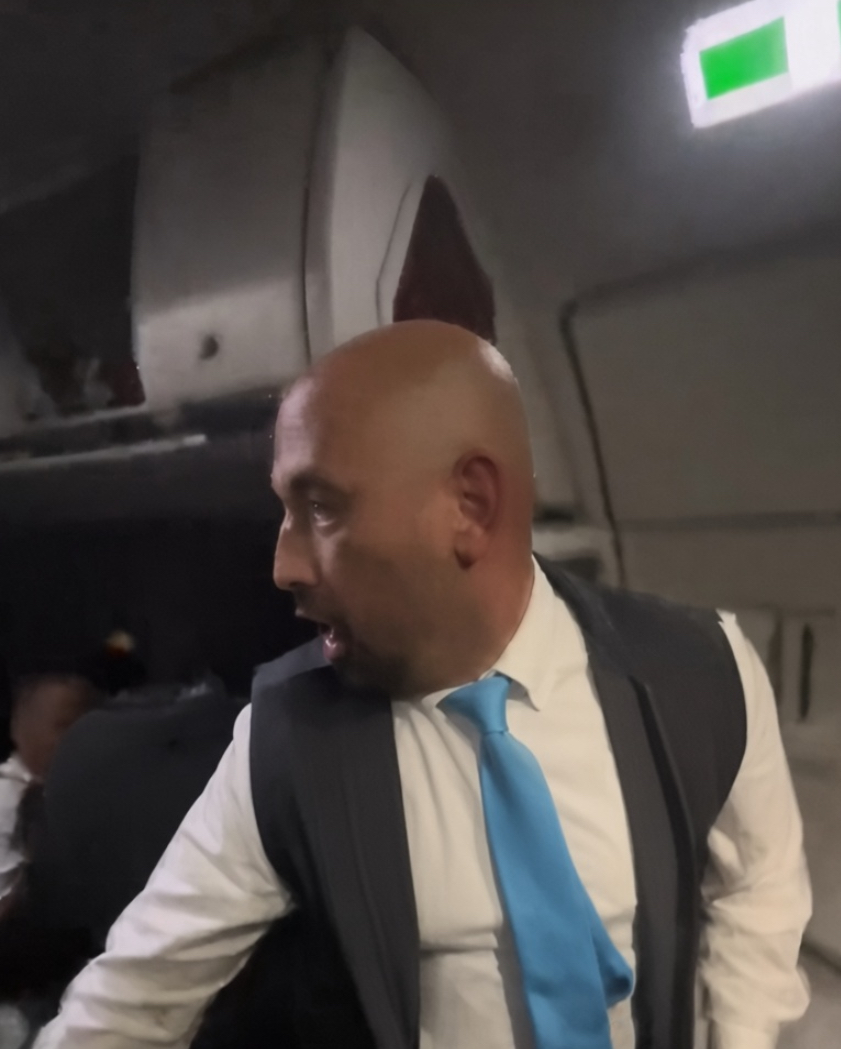
Passenger video from the world’s busiest airport shows the wait ending in a confrontation at the forward door.
Frontier Airlines Flight Arrives To Atlanta Early, Leaves Passengers on Plane
Frontier flight 2052, an Airbus A321 registered N670FR, left New Orleans around 5:37 p.m. on October 6 and touched down at Hartsfield-Jackson Atlanta International Airport around 7:38 p.m., about 20 minutes early, according to airline and aviation accounts of the flight.
The aircraft taxied to the gate, the jet bridge was brought up to the forward door, and the first passengers — along with the pilots, by one account — began to get off.
Then the bridge failed. Frontier says a mechanical problem left it misaligned with the cabin door, so crews halted the rest of the deplaning until maintenance could fix and reconnect it. In a statement, the airline said announcements were made, deplaning resumed once the bridge was safely repaired, and it was “sincerely” sorry for the “inconvenience and discomfort.” It said it was still gathering details.
That is the airline’s version of an Atlanta ground stop. Passengers describe something closer to a sealed cabin.
The traveler who posted the clip, TikTok user @tavi.dinero, wrote that once the plane was at the gate the engines and lights were cut, the air conditioning stopped, and people sat without water. Cabin video shows only emergency lighting. She said that after about 30 minutes a woman began hyperventilating, shaking, and became unresponsive for five to eight minutes, and that the door still was not opened.
She also wrote that some passengers and the pilots had already left, that the wait ran roughly 35 to 50 minutes, and that communication was poor. The New York Post reported passenger claims of a wait of up to an hour in a stuffy, dark airplane, with people struggling to breathe.
The woman in the gray hoodie at the door was, according to the poster, the daughter of the passenger who had collapsed. In the 13-second clip she screams “Open the door!” A flight attendant wraps his arms around her and pushes her back from the doorway while another passenger shouts not to put hands on her. The poster later said the daughter was beating on the door, not trying to open it, because a Frontier worker was already standing on the other side.
The date is slightly muddled in the public record. Frontier’s statement places the arrival on October 6. The passenger’s caption says the night of October 7. What is not in dispute is the airport.
Hartsfield-Jackson is not a side gate where a broken bridge is a private inconvenience. It is the busiest airport in the world, a Delta fortress with a thin Frontier footprint and a jet-bridge system that has to turn aircraft on a clock measured in minutes. The bridge itself is airport ground equipment. When it slips out of alignment after the first passengers have already walked off, the people still in the seats are trapped between two systems: an airline that has shut the engines down, and an airport fix that has to happen before the door can be used again.
That is the Atlanta-specific failure. The flight did its job. It landed early at ATL. The breakdown started at the gate, on the jet bridge, after the aircraft was already parked. With the auxiliary power apparently not keeping the cabin cool and the main door closed for safety, the early arrival became a wait in a dark A321 while maintenance worked the bridge. One passenger account says a woman passed out in that interval. Her daughter’s reaction is what the video captured.
Frontier’s apology treats the episode as discomfort during a safety hold. The Atlanta footage treats it as a cabin that had already been partly emptied, then sealed again, at the airport that moves more people than any other on earth. The jet made up 20 minutes in the air. Hartsfield-Jackson gave them back, with the lights off.
-
Editor’s note: A correction has been issued for this article.
A Delta Air Lines flight bound for Minneapolis–Saint Paul returned safely to Atlanta on Wednesday after striking a bird shortly after takeoff, the airline said.
Delta Air Lines Flight Turns Around Shortly After Takeoff Due To Hitting Bird
Delta flight 2654, operated by an Airbus A321, was carrying 187 passengers when the impact occurred on the departure from Hartsfield-Jackson Atlanta International Airport. The crew turned the aircraft around and landed back in Atlanta without further incident, according to Delta.
The airline apologized to customers for the disruption to their travel plans and moved all 187 passengers onto a replacement aircraft to complete the trip to Minneapolis–Saint Paul.
Delta has not said whether the A321 sustained any damage from the strike. It is also unclear how long passengers waited before departing on the second aircraft.
The account is based on a statement from Delta. The airline did not release further details on the altitude of the strike, which engine or part of the airframe was hit, or whether any passengers or crew were injured. No injuries have been reported in available accounts of the return.
Correction: This article previously listed publishing instructions related to AI.
-

Offset erupted at a high-stakes blackjack table in Paris, arguing with casino staff that other players were being allowed into what he called his spot while he was betting tens of thousands of dollars a hand.
Video obtained by Backgrid and posted by TMZ on Monday shows the Migos rapper standing at a casino on the Champs-Élysées, gesturing and confronting employees in suits.
He repeatedly insisted the game was high-limit and that staff should treat him according to the size of his bets.
Offset Gets Upset at Blackjack Table in Paris
“You don’t speak English. You’re not listening to me,” Offset says in the clip. “If I play here and I put the disposable card, nobody should f**** play my hands, bro. This is not the little kid. This is high limit. Nobody touch my s***.”
He claimed he was betting $10,000 to $20,000 a hand and said he had already beaten the house out of $200,000. “I’m betting more than anybody in this motherfucker. Why the fuck did people get my seat?” he continued. “If I put a disposable card and I’m paying $10,000, bro, they shouldn’t be playing on my table… If I beat y’all tonight, I got $200,000 I beat y’all out of. I’ll just go home. No fucking sense, bro.”
TMZ reported that the blowup came amid word Offset had suffered a sizable loss at the table, even though people in his entourage had earlier said he was up about $80,000. The casino and the exact amount of any win or loss have not been independently confirmed.
The footage, roughly a minute and a half long, shows Offset in a gray tank top, jeans, and jewelry, moving between staff and the table while other patrons remain seated. Staff appear to try to calm the exchange; the clip ends with him still standing near the table.
Offset has drawn attention for casino scenes before. In recent months he has been linked in public reporting to high-stakes gambling claims, including disputes with other artists over money, though he has not publicly addressed this Paris incident.
-
An Atlanta-to-Seattle Delta Air Lines flight that should have been a routine 5½-hour trip has become the subject of a personal-injury lawsuit after passenger Rolando Jimenez said he was forced to sit twisted against the cabin wall for the entire journey — and later needed emergency back surgery.
Jimenez filed suit in Gwinnett County State Court against Delta Air Lines, Inc., docketed as Rolando Jimenez v. Delta Air Lines, Inc., No. 26-C-09516-S6.
Delta lawsuit: Crowded Seat Led to Spine Problems
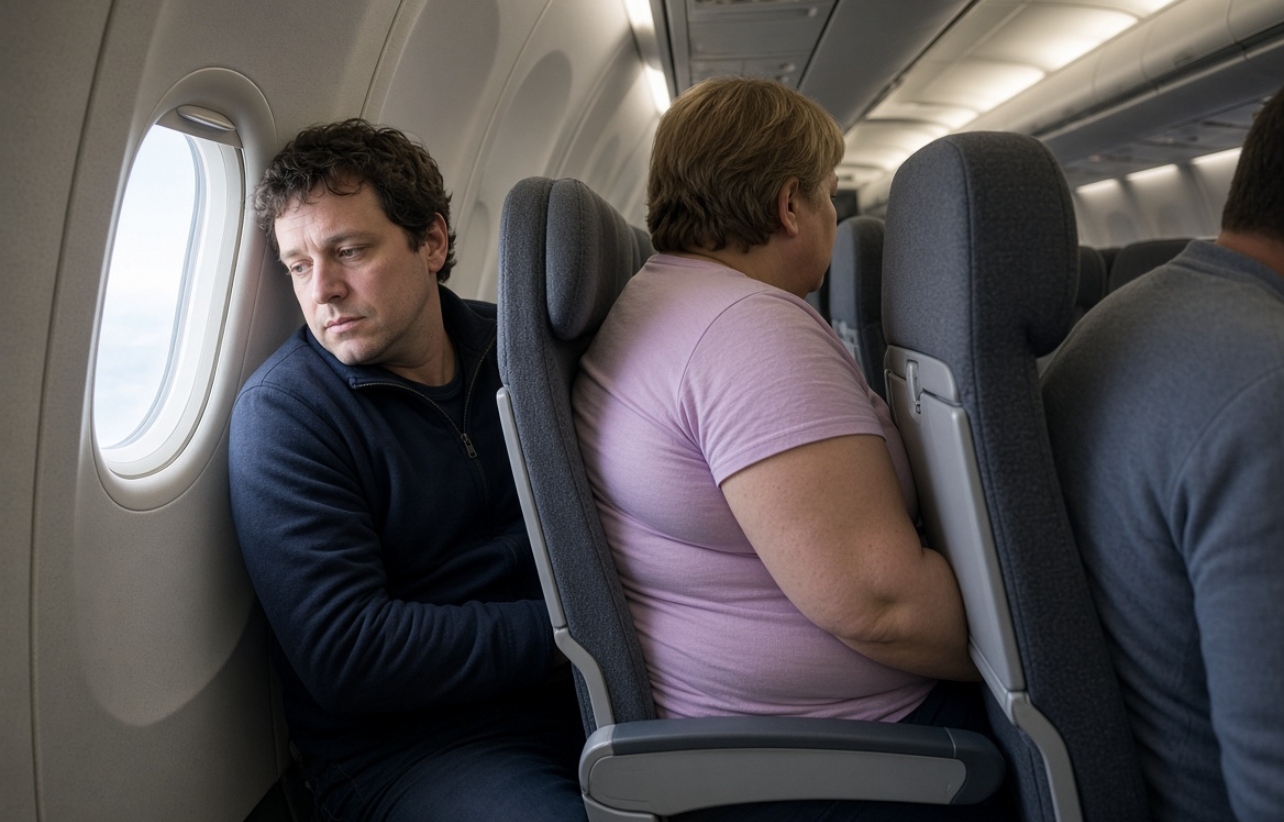
The complaint alleges that in October 2024 he was a fare-paying Main Cabin passenger in a window seat aboard an Airbus A321 when the larger passenger in the middle seat spilled into his assigned space. With no room to sit normally, Jimenez says he spent the flight in a “constrained and twisted posture” pressed against the aircraft wall.
He asked flight attendants to move him. The flight was full, the lawsuit says, and no alternative seat was offered.
When he stood after landing, Jimenez alleges he felt “immediate and severe pain radiating from his lower back down his left leg.” He sought urgent care within two days. In the weeks that followed, the pain worsened; walking, climbing stairs, bathing, and sleeping became difficult, and he eventually needed a cane.
On November 8, 2024, he underwent an L3-4 laminectomy. Symptoms later returned. He has since been diagnosed with chronic pain syndrome and may need a spinal cord stimulator, the complaint states. Medical bills to date are listed at $44,447.51, plus claims for pain and suffering, emotional distress, future care, punitive damages, and attorney’s fees. He has requested a jury trial.
The legal theory: seats, space, and duty of care
The lawsuit is not only about one neighboring passenger. Jimenez’s attorneys argue Delta configured its A321 Main Cabin with seats about 17.3 inches wide and 31 to 32 inches of pitch — dimensions they say leave a measurable share of adults unable to fit without overflowing into the next seat. The complaint alleges the airline increased density to maximize revenue and shifted the physical cost onto neighboring passengers.
Causes of action include negligence, common-carrier liability, and aggravation of a preexisting condition, along with a claim that Delta failed to enforce its own seating policies or provide a safe, usable seat.
Delta, based in Atlanta, told local media it does not comment on pending litigation.
What happens next
The allegations remain unproven. Airlines routinely defend seating configurations as industry-standard, and courts often treat passenger size, preexisting spinal conditions, and mid-flight posture as fact-intensive questions of causation. Still, the case puts a spotlight on a familiar complaint: economy seats have grown tighter while the flying public has not. A nonstop Atlanta–Seattle hop covers roughly 2,180 miles and typically lasts five to five-and-a-half hours — long enough, Jimenez’s lawyers say, for a cramped, twisted posture to become more than an inconvenience.1
Whether a Georgia jury will treat that as negligence — or as an unavoidable feature of packed air travel — is now a question for the court.
More From AtlantaFi.com:
-
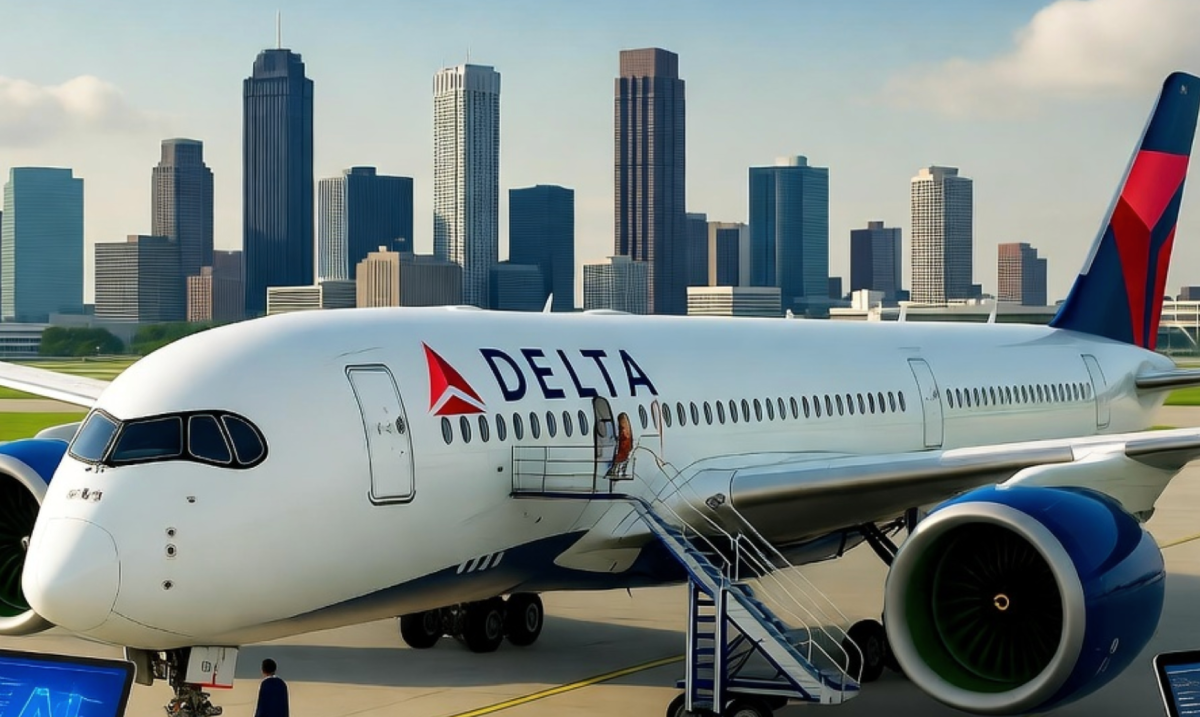
Delta Air Lines, headquartered in Atlanta, maintains frequent nonstop flights between Hartsfield-Jackson Atlanta International Airport (ATL)—the world’s busiest—and Paris-Charles de Gaulle Airport (CDG), giving Georgia travelers seamless access to Europe and far beyond.
Delta Continues to Strengthen Its Hometown Hub with Robust Nonstop Service to Paris—Voted the World’s Most Luxurious City to Live In
Delta and its SkyTeam partner Air France operate multiple daily nonstops on the route (often using widebody aircraft such as the Airbus A350-900 or A330 family), with flight times typically around 8 hours 15–40 minutes. The service provides Atlantans premium options across Delta One (lie-flat seats with privacy doors), Delta Premium Select, Delta Comfort, and Main Cabin.
Paris ranked as the most luxurious place to live in a recent study, and the Atlanta gateway offers more than just a direct hop to the City of Light. Through Air France’s CDG hub, passengers enjoy extensive one-stop connections across Europe, India, Africa, and beyond—reinforcing Atlanta’s role as a major international connecting point.
Delta’s deep roots in Atlanta make the city a cornerstone of its transatlantic network. The airline operates one of the densest schedules from ATL to European destinations (including multiple daily Paris flights in peak seasons), alongside strong partnerships that amplify connectivity. Officials have long highlighted how Atlanta’s growth and Delta’s investment keep the hub competitive and convenient for local travelers heading overseas.
Beyond Paris, Delta’s Atlanta operation supports a broad international slate and domestic feed that funnels passengers efficiently through the airport. The carrier’s ongoing investments in facilities, aircraft, and schedules at ATL underscore its commitment to the region as both its corporate home and primary hub.
In short, while Delta expands elsewhere (including new seasonal Austin–Paris flying starting March 27, 2027), Atlanta remains the powerhouse: multiple daily nonstops to Paris on premium widebodies, world-class connections, and the hometown advantage that makes international travel from Georgia straightforward and frequent.
Final Word
Traveling with your significant other is the best way to go. Looking for a destination? There are some great cities that you can vacation in for cheap right now.
Check Out Our Atlanta Travel Guide
-

Travel is best when you find a place that will refresh you in every way. If you bring your significant other, your trip will be ten times better. So where can you and your friend travel to?
In this article, we’ll show you the best places to travel domestically as well as internationally over the year. If you’re someone who likes to get out and about, you may be asking yourself the following question:
Where Should I Travel To Next?
There are some truly great cities in the world and you could use a break to experience them: Enter our curated list.
We used Google Flights to find cheap fares out of Atlanta, Georgia at top destinations in the U.S. and around the world.
Got your passport? Here are some top destinations to go in spring, summer and beyond that you can book last-minute and have a great time.
Best Places To Travel In 2026
To come up with these list, we searched for some of the most affordable flights out of Atlanta, so you can save money when you travel.
Here Are The Best Domestic Travel Deals From Atlanta:
New York
Mid September: Frontier Airlines: Airfare from $182

Photo by Roberto Hund from Pexels Who doesn’t love the Big Apple. New York City is comprised of five boroughs along the Hudson River. At the center of it all is Manhattan, a densely populated downtown that is one of the world’s most popular cultural and financial centers. You can also visit:
- Grand Central Terminal
- Central Park.
- American Museum of Natural History
- Metropolitan Museum of Art
Miami
Mid October: Frontier Airlines: Airfare from $80

Photo by Grace Barrejon from Pexels Who doesn’t like fun in the sun? You get it all and then some in Miami, a coastal metropolis located in southeastern Florida in the United States. Visit this city and take a cruise through South Beach, at at one of the beach restaurants or bars and party all night.
Here are some must-visit places in Miami:
- Miami Millionaire’s Row Cruise
- Zoo Miami
- Wynwood
- Little Havana
- American Airlines Arena
Las Vegas
Late October: Frontier Airlines: Airfare from $190

Photo by Zachary DeBottis from Pexels What stays in Vegas… who stays in Vegas??? If you’re planning to visit, walk the strip and check out the shopping and gambling. There are so many activities to do in Vegas that you’ll need to carefully plan to take advantage of it all.
You can’t forget to stop by the Bellagio, Elle Island Casino & Brewery and Paris Las Vegas for a good time.
Here are some things to do in Vegas:
- The Titanic Exhibit
- Museum Tour
- Casino Strolls
- The Shark Reef Aquarium at Mandalay Bay
- Marvel Avengers S.T.A.T.I.O.N.
Boston
Late October: Frontier Airlines. Airfare from $248

Photo by Mohan Nannapaneni from Pexels Your friends will be green with envy when you book a flight to Boston. Beantown is the capital and most populous city of the Commonwealth of Massachusetts. That means there’s a lot of history there, but it’s also a modern city with contemporary architecture and style.
Here are the best things to do in Boston:
- Arnold Arboretum
- Boston Public Garden
- Boston Tea Party Ships & Museum
- Charles River Esplanade
- Isabella Stewart Gardner Museum
- Fenway Park
- Freedom Trail
- Museum of Fine Arts
- North End
- Rose Kennedy Greenway
San Francisco
Early November: Frontier Airlines: Airfare from $270

Photo by Tae Fuller from Pexels San Francisco and the whole Bay area is made up of expensive real estate, funky and diverse places to eat and an eclectic set of neighborhoods. The free spirit of San Fran can’t help but influence your actions when you’re in the Bay Area. And the best thing: Flights are cheap right now! Here are some top attractions to visit in San Francisco:
- Alcatraz Island
- Dolores Park
- Mission Murals
- Haight Ashbury
- Golden Gate Bridge
- Oracle Park
- Palace of Fine Arts Theatre
Those are some of the best airfares you’ll find out of Atlanta this year. Now let’s get into some cheap flights abroad in destinations that you’ll enjoy.
Here Are The Best International Flight Deals From Atlanta
Remember to click on the links and scroll down to see other airlines that offer similar airfares.
Havana
Early December: American Airlines: Airfare from $516

Havana, Cuba is a lover’s paradise as well as a soloist’s dream. If you love beaches, Playas del Este will take your breath away.
Here are some spots not to miss in Havana:
- Castillo de la Real Fuerza. Castillo de la Real Fuerza
- Catedral de San Cristobal. Catedral de San Cristobal
- Museo de la Ciudad (City Museum)
- Plaza de Armas. Plaza de Armas
- Plaza Vieja. Plaza Vieja
Toronto
Early December: United and Canada Air: Airfare from $621

Photo credit: Roberto Nickson / Pexels From catching the breathtaking views at CN Tower to relaxing along the shore of Lake Superior, Toronto is one of the nicest cities in the world.
If you go, remember to be mindful of the currency exchange and pack for the cool nights.
Here are some things to do in Toronto, Ontario:
- Distillery Historic District
- Ripley’s Aquarium of Canada
- Toronto Island Park
- St. Lawrence Market
- Royal Ontario Museum
- The AGO, Art Gallery of Ontario
Dublin, Ireland
Mid October: JetBlue Airways: Airfare from $755

Photo by Mark Dalton from Pexels Want an incredibly awesome cultural experience? Head to Dublin, Ireland and enjoy the city. Dublin, capital of the Republic of Ireland, is on the country’s eastern seaboard. Take a week off and come have a pint with some of the most fun-loving people in Europe!
Here are some top tourist attractions in Dublin, Ireland:
- Chester Beatty Library. Chester Beatty Library
- St. Stephen’s Gree
- The Irish Emigration Museum
- Phoenix Park and Dublin Zoo
- Kilmainham Gaol
- St. Patrick’s Cathedral
- Trinity College
Read about our Atlanta to Ireland trip.
Paris
Early February: Air France: Airfare from $793

Photo by Daria Shevtsova from Pexels France is for lovers, but Paris is for tourists. This major European city stands out for its cultural significance when it comes to art, fashion and architecture. Rent a 19th-century cottage and explore the cityscape like a local.
Here are some top things to do in Paris.
- Eiffel Tower.
- Hop on Hop off Bus
- Musee d’Orsay
- Notre Dame
- Tour Montparnasse
- Sainte Chapelle
- Seine River Cruise
Ottawa
Mid October: United Airlines: Airfare from $607

iStock Photo You might want to put Ottawa on your list of cities to visit. Once the weather warms, the Canadian destination is big on museums and tourist attractions,
Here are some of the best places to visit in Ottawa:
- National Gallery of Canada
- Tour Parliament Hill
- Rideau Canal
- Gatineau Park
- Mooney’s Bay
Final Thought
Few things can beat traveling with your significant other. Not only is there a sense of safety, but sharing beautiful sights and sounds can bring you closer together.
Traveling with your friend or lost interest is the best way to take a trip these days. It’s also a cool way to get to know someone (besides shopping for travel). Now where should you go?
Traveling with your significant other is the best way to go. Looking for a destination? There are some great cities that you can vacation in for cheap right now.
Check Out Our Atlanta Travel Guide
-
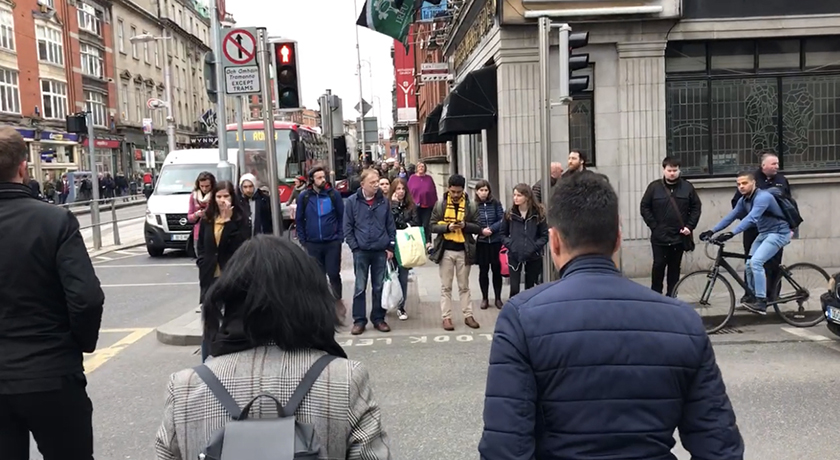
If you’re really trying to travel to Europe, might I suggest a magical place: Ireland. It’s spacious, the people are awesome and the countryside is like no other.
Of course, there are some things you should know before going to Dublin or another city in the European country.
If you want to know about what you should bring on your trip as well as what to expect going from Atlanta to Dublin, here’s everything you need to know.
Best Time To Travel To Ireland
When is the best time to travel to Ireland? The weather is normally on the chilly side, but not frigid. Even in summer, the temperatures are mid 60s at the highest. So, it’s wise to always bring a jacket, because a chance of rain is ever-present.
The summertime months of July and August are when airfare is the highest for Ireland. For the best fares, it’s best to book a flight in the spring or fall.
Can You Fly Direct To Ireland?
Nonstop flights to Ireland can be had from airlines like Air France and Aer Lingus. From Atlanta, your best bet is Air Canada or Delta Air Lines.
If you’ve ever flown international from Hartsfield-Jackson International Airport, you know that the quality of your experience depends almost entirely on how early you arrive for your flight.
Hartsfield asks that you be at the airport at least three hours ahead of time when flying internationally. Hartsfield has an updated international concourse that makes it more convenient, but it all depends on how long the security checkpoint lines.
The checkpoint requires that you have your ID as well as passport, so don’t forget it.
Flying from Atlanta to Dublin

Once on your flight, it’s going to take most of the day for you to get there. Ireland’s timezone is five hours forward of Atlanta, so if it’s midnight in Georgia, it’s 5 a.m. in Dublin. You’ll need to keep this in mind while flying, because it may well mean you’ll be jetlagged when you touch ground.
Once you land in Ireland, you’ll be shuffled down a series of stairs and into the customs line. There you’ll show your passport and state your business in the country. The customs agent will ask you where you’re staying, too.
Renting A Car In Ireland
If you don’t have someone picking you up from the airport, you may have prearranged a car rental at Dublin Airport. The good news is that the airport has all the major car rental companies that you’re familiar with in the United States: Budget, Avis, Sixth, Etc.
If you’re renting a car at the airport, the first thing you’ll need to do is venture just outside the building to one of the transportation zones, where a shuttle will transport you to the appropriate rental car hub.
The one thing that I heard about renting a car in Ireland is that they are pretty strict about getting you to take out additional car insurance, a damage waiver to be precise.
Your options were said to be either take the extra car insurance, which could be upwards of $30-$40 a day or show proof of primary auto insurance.
If you do the latter and decline the rental car company’s insurance, they’re going to put at least a $5,000 hold on your credit card. Yes, you read that right!
Another option, it’s been said, to get out of this extra rental insurance was to have a letter or email authorization from your credit card that covers car rental insurance. Because I had this very credit card, I called them and asked that they send me their card benefits, which lists your coverage.
Surprisingly, I didn’t have to produce said email. I simply told them that I had insurance and they took me at my word and promptly put a $5,000 hold on my card.
Here’s some good information from Chase about renting a car:
When you pick up your rental, be sure to inspect the vehicle thoroughly. If you see any damage, immediately notify the rental car company. Record any pre-existing damage on the rental car company’s check out slip. It may also be helpful to take photos of the vehicle’s condition at the time of renting for your records.
The major thing about driving in Ireland is this:
You drive on the opposite side of the street. That’s the reason why car rental insurance is so crucial in Ireland. In fact, I saw a statistic that said that around 90% of rental cars have damage to them.
On the car that I rented, the agent was sure to mark at least four pre-existing marks around the vehicle. I found a couple more.
Once you hit the road, driving on the other side of the road is unnerving to say the least. The good news is that Irish drivers are no where NEAR as aggressive as Atlanta drivers. In many instances, people never even switch lanes to pass me up and in no case was a horn every honked at me.
Exchanging Your Currency
The biggest thing to remember is when you leave the airport, you may find it advantageous to exchange your U.S. dollars for some Euros. For peace of mind, this makes sense, but literally only a little sense. Don’t exchange a large amount in the airport because frankly the exchange rate is cheaper elsewhere.
The exchange rate at Dublin’s Airport is expensive compared to elsewhere in the city. Your best bet is using an ATM in your hotel. Of course, you’ll want to call ahead to make sure they have one.
Checking Into Your Hotel
Ireland’s hotels offer wide ranges of experiences. No matter if you choose an old Celtic cottage for your lodgings or an expensive modern hotel in Center Centre, they all operate the same way.
Whether it’s a parking fee or if you want to borrow a phone charger, everything is charged to your credit card “on hold.”
Tipping In Ireland
Unlike the United States, you don’t have to tip in Ireland. You’ll notice that your meals will generally be cheaper. As you venture to more restaurants, you’ll find that many of the servers will be from other parts of Europe, like France or Britain. They’re going to expect tips!
The key is that one size definitely doesn’t fit all when it comes to tips. So it’s best to risk the embarrassment and ask your server.
People
The Irish are a hospitable people who are more mannerly than Americans. My interactions, even when I was holding up traffic, were super-pleasant.
Of course, as an Uber driver told me, there are good and bad in all people. But for the most part, the republic just wants you to respect its heritage and enjoy a good “pint” at the pub.
The Irish are a stylish people, especially the young adults. Adidas is clearly the athletic apparel of choice.
Places To Visit In Dublin, Ireland
Dublin offers plenty of tourist destinations for visitors. Among them are:
- Guinness Storehouse
- Jameson Distillery
- Dublin Historical Walking Tour
- Dublin City Bike Tour
- Blarney Castle tour (Cork)
- Game of Thrones tour (Northern Ireland)
- Cliffs of Moher (day trip)
The Irish tour guides are very cognizant of tourist traps. At every turn most of them will tell you whether an establishment is one or not.
“They charge 8 Euro for a pint of Guinness,” they’ll say, incredulously.
You’ll hear about the 850 years under British rule and the instrumental role that Daniel O’Connell played in the rebellion and Irish independence.
Cliffs of Moher

One of the most beautiful nature wonders in all of Ireland are the Cliffs of Moher, sea cliffs on the edge of County Clare on the country’s eastern coast.
The cliffs may be the grand finale, but the journey there from Ireland is worth the ride. Castles throughout the countryside mark pivotal points in the Irish fight for independence as well as relics of British nobility.
Miles of sheep and other livestock dot the lush landscapes as you travel farther from a Dublin to Ireland’s westerly coast.
The tour guide points out the small town where Barack and Michelle Obama stopped some years back as part of a president visit. A monument outside a pub makes the spot.
Cost To Travel To Ireland
To properly calculate the cost of travel to Ireland, it needs to include the things you really want to do and see in the beautiful country, not necessarily the airfare, which varies.
When I added up the costs of a hotel and food + activities and tours, here’s what it cost to travel to Ireland.
- Food: 267
- Hotel: 1100
- Activities: $60
To sum it all up, Ireland is a great country for visitors looking to have an enjoyable vacation. If you visit during June, the sunlight lasts from about 3:30 a.m. to 10:30 p.m.
While Dublin proper is not as widespread as some European city centers, the core is packed with activity and the frenzy you’d expect in a metropolitan city. Ireland: Come for the pints, stay for the people.
Once you get your passport, you should be ready for your trip. Make sure you have found the cheapest flights from Atlanta that are on sale.
To Atlanta is one of the most convenient places to travel to and from. A large part of that is because Hartsfield-Jackson International Airport is so accessible.
Not only is it the world’s busiest airport, but it’s state-of-the-art in every way. If you’re interesting in traveling around Atlanta via car or even on scooter, here’s what to know.
More Articles Like This:
Traveling Soon? Check Out Our International Checklist
- How Not To Get Kicked Off A Delta Flight
- How To Get A Cheap flight Out Of Hartsfield Airport
- Strategies That Work: How To Save On Travel
Up Next: Atlanta Travel Guide
-

With rising gas prices, expensive plane tickets, and ongoing inflation squeezing household budgets, more Americans are opting for staycations—vacations spent exploring their own cities or nearby areas.
A new WalletHub study highlights Atlanta as a standout destination, ranking it No. 7 among 182 U.S. cities for the best staycation experiences.
Why Atlanta Ranks for Staycations
WalletHub evaluated cities across 41 key metrics in three main categories: Recreation, Food & Entertainment, and Rest & Relaxation. These included parks per capita, restaurant meal prices, entertainment options, and opportunities for affordable relaxation.
Atlanta earned a total score of 59.80, placing it ahead of bigger-name cities:
- Chicago (No. 9)
- New York City (No. 22)
- Los Angeles (No. 36)
The city particularly excelled in Food & Entertainment (No. 10 ranking) and showed strong performance in Recreation (No. 13). It also stands out with high numbers of swimming pools and ice cream/frozen yogurt shops per capita.
Expert Insight: Andrew Burnstine, associate professor at Lynn University’s College of Business and Management, noted that staycations have “skyrocketed in popularity due to inflation.” Locals are choosing creative adventures closer to home instead of costly flights and hotels.
Top Attractions Making Atlanta a Staycation Winner
Atlanta offers a diverse mix of experiences without leaving the metro area:
- Outdoor Recreation — Hiking in the North Georgia mountains, biking or walking in abundant parks.
- Family-Friendly Fun — Georgia Aquarium (with whale sharks), Center for Puppetry Arts.
- Dining and Entertainment — World-class restaurants, vibrant food scene, and numerous venues.
- Relaxation — Spas, wellness centers, and green spaces for unwinding.
Patty Janes, professor of Hospitality and Tourism Management at Grand Valley State University, emphasized the value of local “non-typical tourist attractions” like parks, library programs, and community events that provide rich experiences without the tourist markup.
National Rankings at a Glance (Top 10 from WalletHub 2026)
- Orlando, FL (65.13) — Theme parks like Disney and Universal.
- Cincinnati, OH
- Las Vegas, NV
- St. Louis, MO
- Honolulu, HI
- Salt Lake City, UT
- Atlanta, GA (59.80)
- Tampa, FL
- Chicago, IL
- Portland, ME
At the bottom: Pearl City, HI, underscoring that even paradise can lack diverse local activities for staycations.
Why This Matters Now
As summer 2026 travel plans ramp up—with about 72% of Americans intending to vacation—staycations offer a smart, budget-friendly alternative. Atlanta’s central location, Hartsfield-Jackson International Airport (a major hub), and mix of urban amenities with nearby nature make it ideal for both locals and short-trip visitors.
Whether you’re a lifelong Atlantan or planning a regional getaway, the city proves you don’t need to travel far for a memorable escape. From aquarium adventures to mountain hikes and top-tier dining, Atlanta delivers vacation vibes right in your backyard.
Ready to plan your Atlanta staycation? Start with local parks, book a table at a favorite restaurant, or explore a museum you’ve never visited. Your perfect vacation might be closer than you think.
Check Out Our Atlanta Travel Guide