-
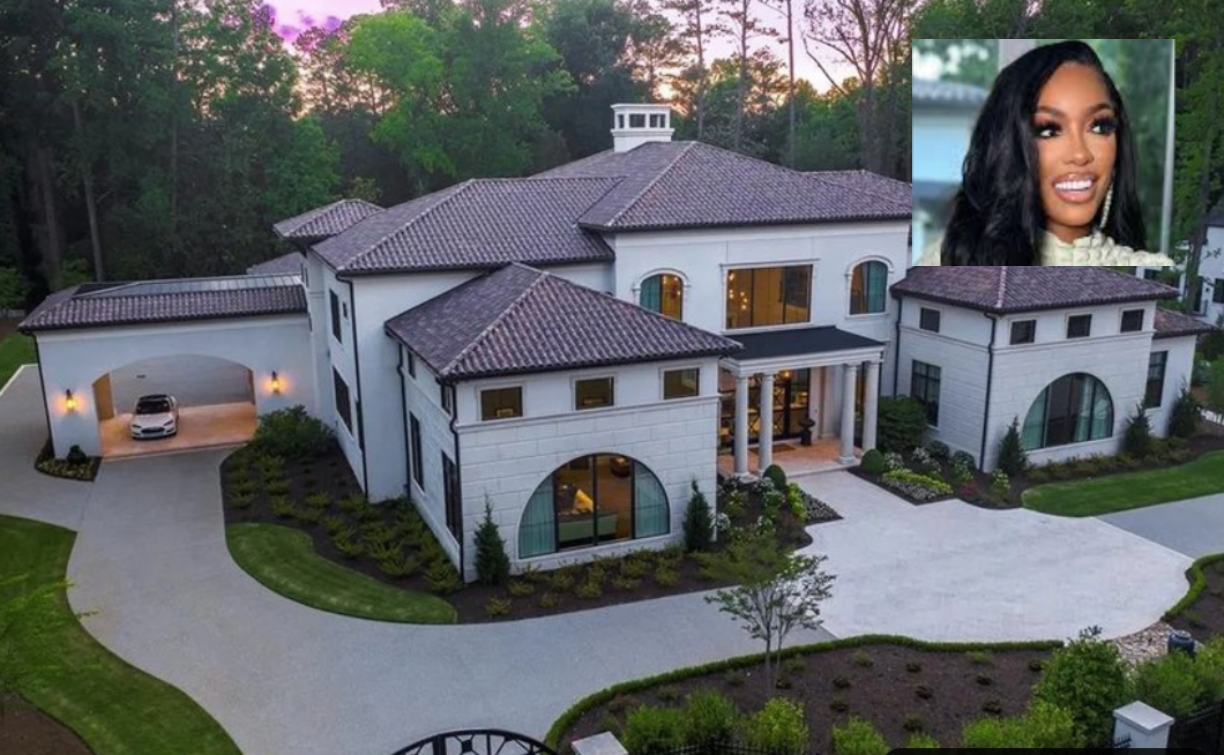
In the ever-glamorous world of Real Housewives of Atlanta, Porsha Williams continues to set the standard for luxury living.
Where Does Porsha Williams Live in Atlanta?
Porsha actually lives in a Sandy Springs mansion with an Atlanta address.
Her current home — the stunning Mediterranean-style mega-mansion in Sandy Springs with those unbeatable views of the Buckhead skyline — remains the talk of the town, especially as she settles into life post-divorce from Simon Guobadia.
Inside Porsha Williams’ New House
Fans have been dying to see more of this 15,284-square-foot showstopper, so we’ve rounded up some standout photos of the exterior, backyard oasis, and elegant interiors that capture why this estate feels like the perfect next chapter for Porsha.
The home, built in 2018 and purchased by Simon in 2021, blends timeless Mediterranean elegance with modern Atlanta opulence. Here’s a closer visual look:

This aerial shot showcases the full grandeur of the gated estate: the sprawling white stucco facade, tiled roof, arched entryways, and lush landscaping that wraps around the nearly 2-acre lot.
The circular driveway and porte-cochère add that extra layer of sophistication.

Another breathtaking exterior view highlights the resort-style backyard — complete with a sparkling private pool, outdoor lounge areas, cabana, and that signature Buckhead skyline peeking through the trees at dusk.
t’s the ultimate spot for those iconic RHOA pool parties or quiet family evenings with daughter PJ.
A front-facing perspective emphasizes the home’s welcoming yet grand entrance, with stately columns, arched windows glowing warmly, and the manicured grounds leading up to the main house.
The design screams high-end custom build by Paradise Builders.

Stepping inside, this expansive great room/living area features soaring ceilings, neutral tones, elegant columns, and seamless flow between living spaces — perfect for entertaining or cozy nights in. The open layout, fireplace, and natural light make it feel airy and luxurious.
The chef’s kitchen is a true highlight: massive island, high-end appliances, custom cabinetry, and those beautiful pendant lights over the seating area. It’s designed for both everyday family meals and lavish gatherings.

These images (sourced from real estate listings and media features) give a real sense of the home’s scale and style — from the dramatic exteriors to the sun-filled, sophisticated interiors Porsha has made her own. Whether decked out for holidays or everyday glam, it’s clear why she’s fought so hard to stay put.
As we reported earlier, the estate’s history is relatively modern (custom-built in 2018), and Porsha’s Atlanta residential journey — from the Roswell home during her Kordell years, to her independent Duluth purchase in 2016 (which sold last year), to this Sandy Springs crown jewel — mirrors her evolution into the powerhouse she is today.
Stay locked in to AtlantaFi.com for more updates on Porsha’s life, her businesses, and any next moves in real estate. In ATL, the homes tell the stories — and Porsha’s is one for the books.
Keep up with what’s going on in Atlanta’s real estate scene here with our Apartment Guide.
See The Latest Atlanta Real Estate News At AtlantaFi.com.
More Articles From AtlantaFi:
-

As Atlanta’s economy continues to hum along amid rising prices, one question we hear frequently is: “Is $90,000 a good salary here?”
With the city’s vibrant tech scene, world-class film industry, and corporate hubs drawing in talent, salaries can vary widely by role and experience.
Can You Make It On $90K a Year in Atlanta?
But let’s break it down with the latest 2026 data to see if $90k stacks up against the realities of living in the A-T-L with a good salary.
How Does $90k Compare to Atlanta’s Average Salary?
First things first: $90,000 places you solidly above the city’s median earnings. The average annual salary in Atlanta hovers around $71,620, according to recent labor market analyses.
Other sources peg it slightly higher at about $82,000 for base pay across various professions. For context, the median salary citywide is closer to $59,160, meaning half of Atlanta workers earn less.
If you’re in high-demand fields like IT, finance, or healthcare, $90k might feel entry-level—but for many roles in marketing, education, or admin, it’s a strong earner.
After taxes, that $90k shakes out to roughly $65,855 in take-home pay annually (or about $5,488 monthly), assuming standard deductions in Georgia. That’s enough to cover essentials and then some, but how far does it really go?
Breaking Down Atlanta’s Cost of Living in 2025
Atlanta’s overall cost of living is about 4% below the national average, making it a more affordable big city than places like New York or San Francisco.
However, housing remains the biggest expense, and with inflation ticking up, everyday costs like groceries and gas have crept higher. Here’s a snapshot for a single adult (excluding rent):
- Monthly essentials (food, transport, utilities, etc.): Around $1,317–$1,500.
- For a family of four: Up to $4,810, not including housing.
Add in rent or a mortgage, and the total monthly outlay for a comfortable single lifestyle lands between $2,500 and $3,200. Let’s dive deeper.
Housing: The Make-or-Break Factor
Housing eats up the largest chunk of your budget in Atlanta.
The median rent for a one-bedroom apartment is $1,498, while a two-bedroom runs about the same at $1,499—yes, you read that right; space comes cheap in some neighborhoods.
If you’re buying, the average home value sits at $392,310, with median prices forecasted between $380,000 and $424,792 for 2025. At current mortgage rates (hovering 5.8%–6.2%), that could mean $2,200 monthly for a suburban family home.
On $90k, you could comfortably afford a $1,500–$1,800 rent in trendy spots like Midtown or a more affordable suburb like Decatur, leaving room for savings.
Groceries and Dining Out
Expect to pay about 1% more than the national average for groceries. A single person might budget $400–$500 monthly for staples, or $8,400 annually if you’re cooking at home. Read our updated guide on how to save on groceries.
For families, that’s closer to $900. Atlanta’s food scene is a perk—think affordable Southern eats and farmers’ markets—but eating out frequently could add $200–$300 extra.
Transportation: MARTA, Gas, or Rideshares?
Getting around is 1.7% pricier than average. A MARTA monthly pass costs $95, gas is $3.14 per gallon, and if you’re driving, factor in $800 monthly for a family (including insurance and maintenance). Many Atlantans rely on cars due to sprawl, but remote work trends have eased commutes for some.
Utilities and Miscellany
Basic utilities (electricity, gas, water, internet) for a 915 sq ft apartment average $200–$205 monthly. Healthcare runs 6.7%–8% above national norms, so budget $300–$400 for premiums if not employer-covered. Goods and services? Just 2.5% higher overall.
What a $90k Budget Looks Like in Atlanta
Here’s a sample monthly breakdown for a single professional on $90k (post-tax: ~$5,488):
Category Estimated Cost Notes Rent (1BR) $1,500 Central location Groceries $450 Home-cooked meals Utilities $200 Basic setup Transportation $150 MARTA + occasional Uber Dining/Entertainment $300 Date nights, events Healthcare/Misc $400 Gym, streaming, etc. Savings/Debt $1,000+ Emergency fund or student loans Total $4,000 Leaves ~$1,488 for flexibility For a family of four in the suburbs? Bump housing to $2,200 (mortgage), add $900 for food and $800 for transport/childcare—totaling ~$5,500. That’s tighter, but doable with dual incomes.
Factors That Could Make or Break It
- Lifestyle: Love luxury? $90k might feel stretched in Buckhead. Prefer frugal vibes in East Atlanta? You’ll thrive.
- Family Size: Singles or couples can live very comfortably; families may need $100k+ for “easy” breathing room.
- Job Perks: Employer-covered health or transit benefits stretch your dollar further.
- Inflation Watch: With 2025 forecasts showing modest rises in housing (2–4% appreciation), now’s a solid time to lock in.
The Verdict: Yes, $90k Is a Good Salary in Atlanta
In short, $90,000 is a good salary in Atlanta—above average, affording a solid middle-class life with room for fun and savings.
It’s not “quiet luxury” territory, but for most, it means no scraping by. If you’re job hunting, aim for roles in growing sectors like cybersecurity or logistics to push toward $100k+.
Atlanta has one of the best real estate markets in the country, with affordable housing in every quadrant of the city. Large backyards, manicured parcels and strong neighborhoods with ample dining amenities make it one of the top places for transplants.
Not to mention that the city’s dining scene is the best in the Southeast. Looking for a home? Check out our Real Estate Resource Page.
Keep up with what’s going on in Atlanta’s real estate scene here with our Apartment Guide.
See The Latest Atlanta Real Estate News At AtlantaFi.com.
More Articles From AtlantaFi:
- Most Expensive Homes in Atlanta Right Now
- Apartment Resource Guide: Atlanta
- How To Rent An Apartment In Atlanta
Ready to land that $90k gig? Browse our Atlanta job listings today and see what’s out there. What’s your take—dream salary or just getting by? Drop a comment below!
-

Atlanta be losing some productions here and there, but it’s still the “Hollywood of the South.” That means Georgia’s largest city continues to draw major film and TV productions thanks to its world-class studios, diverse locations, and generous tax incentives.
In 2026, several high-profile projects are gearing up to film in the metro area, promising jobs, economic boosts, and exciting sightings of A-list stars on local sets.
This guide will show you the production codes for films and TV series currently filming as well as those that have just wrapped.
Movie Productions Continue in Georgia: Here Are the Production Codes
While many productions keep details under wraps until closer to principal photography, industry sources and announcements point to these as the hottest anticipated shoots for the coming year. Here’s our roundup of the top production codes and projects expected to light up Atlanta in 2026:
In Atlanta, it’s become a common sight to see movie signs and production codes in this neighborhood and the next. That’s because there are are so many movies being filmed here that it’s hard to keep count. Today, you can even make your own movie here.
With so many movies being produced in Atlanta, including what’s happening at Tyler Perry Studios productions, you might want to know what are the production codes for movies in Atlanta.
Atlanta TV / Movie Production Codes For 2026
- ACE — Superman
- AZRA — R&B (Ruth & Boaz)
- BETTY — Will Trent
- BIB1 — Beauty in Black
- BHS – Reasonable Doubt
- Exodus — Man of Tomorrow (Superman)
- King Street — Tulsa King
- Hudson Avenue — Scary Movie 6
- Lost — Found
- SMOKY – The Rescue
- Scar Tissue — Scream 7
- MHS — The English Teacher
- PAW PAW — Paw Patrol
- SM4 — Sweet Magnolias
- STAG — P Valley
- NBRS — Flowervale Street (Neighbors)
- TML — Tell Me Lies
What Is The Purpose of Production Codes?
You may be wondering what the purpose of production codes are? They are two-fold:
For one, the production code serves as nothing more than a working title. As an example, a movie about The Hulk may be called “Green” or “Green Guy.”
The past year featured many great productions and you might have missed some of the production codes.
Final Word
There are so many movies filmed in Atlanta these days that it’s hard to keep up with it all. That’s why I suggest you subscribe to AtlantaFi.com to get all the freshest movie casting calls, celeb sightings and Atlanta happenings delivered to your inbox.
See Atlanta Casting Calls And Auditions Available Right Now
Want to work in Georgia film & TV? Here are the latest Atlanta casting calls
Read More From AtlantaFi.com:
-
Atlanta United fans have plenty to look forward to in 2026, starting with the return of head coach Gerardo “Tata” Martino, who led the club to its only MLS Cup title in 2018.
With the release of ATLUTD’s 2026 schedule, the mood for pro soccer in Atlanta is one of excitement and opportunity, as you’ll see.
The 2026 schedule offers a mix of marquee matchups and logistical challenges that will test the team’s depth.
A home-heavy start with early games against Real Salt Lake and Philadelphia Union allows fans to build momentum at Mercedes-Benz Stadium, while rivalry nights against Orlando City SC and Inter Miami CF promise electric atmospheres.
Check Out Atlanta United’s 2026 Schedule
Date Opponent Home/Away Time (ET) Venue Feb 21, 2026 FC Cincinnati Away 4:30 PM TQL Stadium, Cincinnati, OH Mar 7, 2026 Real Salt Lake Home 7:30 PM Mercedes-Benz Stadium, Atlanta, GA Mar 14, 2026 Philadelphia Union Home 3:00 PM Mercedes-Benz Stadium, Atlanta, GA Apr 18, 2026 Nashville SC Home 7:30 PM Mercedes-Benz Stadium, Atlanta, GA Apr 25, 2026 Toronto FC Away 4:30 PM BMO Field, Toronto, ON May 2, 2026 CF Montréal Home 7:00 PM Mercedes-Benz Stadium, Atlanta, GA May 9, 2026 LA Galaxy Home 7:30 PM Mercedes-Benz Stadium, Atlanta, GA May 16, 2026 Orlando City SC Away 7:30 PM Inter&Co Stadium, Orlando, FL May 24, 2026 Columbus Crew Away 5:00 PM Lower.com Field, Columbus, OH Aug 15, 2026 New York Red Bulls Home 7:30 PM Mercedes-Benz Stadium, Atlanta, GA Aug 29, 2026 Charlotte FC Home 7:30 PM Mercedes-Benz Stadium, Atlanta, GA Sep 9, 2026 Orlando City SC Home 7:30 PM Mercedes-Benz Stadium, Atlanta, GA Oct 17, 2026 Inter Miami CF Home 7:30 PM Mercedes-Benz Stadium, Atlanta, GA Nov 1, 2026 Toronto FC Home 4:30 PM Mercedes-Benz Stadium, Atlanta, GA Nov 7, 2026 New York Red Bulls Away TBD Red Bull Arena, Harrison, NJ Note: This table includes all confirmed matches from official announcements as of November 20, 2025. The full 34-game schedule is available on ATLUTD.com, with additional details on times and venues to be finalized for select games.
What To Expect From the 5 Stripes This Season
The roster overhaul spearheaded by Chief Soccer Officer Chris Henderson is another major highlight, transforming a squad that struggled with consistency into a more balanced unit.
Key returns like Miguel Almirón, who rejoins after six years in the Premier League with Newcastle United, bring proven goal-scoring threat and familiarity with Martino’s system.
Coupled with the record-breaking signing of striker Emmanuel Latte Lath from Middlesbrough and the No. 2 overall pick in the 2026 MLS SuperDraft, the attack looks revitalized.
Defensively, expect reinforcements through free agency targets and re-signed options like Jamal Thiaré, addressing last year’s vulnerabilities.
This mix of homegrown stars, international flair, and draft gems should make for an entertaining, unpredictable team capable of upsetting top Eastern Conference rivals.
Martino’s appointment, announced earlier in the offseason, signals a return to the high-pressing, attacking style that defined the team’s golden era. With his technical staff now in place, including familiar faces from past successes, the Five Stripes are poised for a cultural and tactical reset after a disappointing 2025 season that saw them finish near the bottom of the Eastern Conference.
Expect a renewed emphasis on possession-based soccer, youth integration, and defensive solidity, as Martino aims to blend veteran leadership with emerging talents to climb back into playoff contention.
The season’s pause for the FIFA World Cup (May 25–July 16) provides a crucial reset, but the subsequent road-heavy stretch—including trips to Nashville and Charlotte amid international commitments—will demand resilience.
With 17 home games, including late-season clashes with Toronto FC, supporters can anticipate packed houses and potential for a strong finish if the squad gels early.
Final Word
Overall, 2026 represents a redemption arc for Atlanta United, blending nostalgia with ambition in a World Cup year that elevates MLS visibility.
Fans can expect passionate play, star-powered moments, and a genuine shot at the Supporters’ Shield or deeper playoff run, provided injuries are managed and the new-look midfield clicks.
As the club leverages its No. 2 draft pick and ongoing negotiations (like with Brooks Lennon), the focus on youth development could yield long-term dividends. With Martino at the helm and Arthur Blank’s commitment unwavering, the energy in the Terminus could rival the inaugural 2017 buzz—uniting a fanbase hungry for glory.
-

In a major step forward for women’s professional soccer in the region, the National Women’s Soccer League (NWSL) Atlanta has finalized an agreement with the City of Marietta to acquire land for a dedicated, world-class training facility.
The announcement marks an exciting milestone for the expansion franchise, owned by Arthur Blank’s AMB Sports and Entertainment (AMBSE), as it builds toward its debut season in 2028.
The deal involves AMBSE purchasing a nearly 33-acre property along Franklin Gateway in Marietta.
This strategic site, located just half a mile from the Children’s Healthcare of Atlanta Training Ground (home to MLS side Atlanta United), positions the new NWSL club to benefit from proximity to established elite soccer infrastructure while establishing its own independent headquarters.
As part of the agreement, the City of Marietta will acquire a separate 10-acre parcel currently owned by AMBSE, creating a mutually beneficial land exchange.
Marietta city leaders unanimously approved the transaction, valued at approximately $21 million, during a recent council session.
Construction on the state-of-the-art facility is set to begin immediately, with completion targeted ahead of the club’s inaugural 2028 campaign. Plans include an approximately 38,000-square-foot headquarters building, four full-size soccer fields, and two half-size pitches.
The overall investment in the project is expected to exceed $100 million, delivering significant economic benefits to the Marietta area through jobs, development, and community impact.
Arthur Blank, owner and chairman of AMBSE, emphasized the importance of this development in creating a top-tier organization.
“When we announced NWSL Atlanta 2028, we made a commitment to provide the necessary resources to create a world-class organization on and off the pitch, including the development of a training ground dedicated to our newest club and staff,” Blank stated. “Securing this property in Marietta is a critical first step as we begin building the foundation of NWSL Atlanta 2028.”
The training ground will complement the team’s primary home matches at Mercedes-Benz Stadium, where capacity will be adjusted to around 28,000 for NWSL games.
The facility underscores Atlanta’s growing investment in women’s soccer, joining the Falcons (NFL) and Atlanta United (MLS) under the AMBSE umbrella.
Local officials expressed enthusiasm about the partnership and its potential to elevate the community.
This agreement follows Marietta’s proactive efforts to attract the franchise, including the city’s earlier purchase of the Franklin Gateway land (previously eyed for an IKEA development) to position itself as an ideal location.
With groundbreaking work now on the horizon, NWSL Atlanta 2028 continues to take shape as a flagship addition to the National Women’s Soccer League, promising high-caliber facilities and a strong foundation for success on and off the field. Fans can look forward to more updates as the club progresses toward its 2028 launch.
Metro Downtown Atlanta’s development landscape has undergone significant transformation in recent years, driven by large-scale mixed-use projects, infrastructure upgrades, and a focus on revitalizing the city’s historic core. These changes reflect a broader effort to make Downtown more vibrant, walkable, and economically robust, particularly in preparation for events like the 2026 FIFA World Cup.
More Content From AtlantaFi.com:
The Most Fun Things To Do in Centennial Park
-

Where my New York people at? Atlantans are getting an opportunity to experience a true taste of New York City without ever leaving the South.
On Saturday, March 28, 2026, the city is hosting Flavors of New York – ATL Edition, a vibrant one-day festival that transforms Princeton Lakes into a celebration of all five boroughs: the Bronx, Brooklyn, Queens, Harlem (representing Manhattan’s iconic energy), and Staten Island.
Organized by York Promotions, this event promises to deliver the unmistakable music, food, culture, and street energy that define NYC—right here in Atlanta.
Whether you’re a New York native missing home, an ATL local curious about the hype, or simply someone who loves good food and great vibes, this festival is designed to feel like a classic New York block party under Georgia sunshine.
What to Expect at Flavors of New York – ATL Edition
The lineup blends iconic New York elements with local Atlanta flair:
- Live DJs and Music — Expect sets spinning classic New York hip-hop, R&B, and the sounds that echo through the boroughs, keeping the energy high from start to finish.
- Iconic Eats & Local Vendors — Savor signature New York street food alongside offerings from local Atlanta vendors. Think classic bites that transport you straight to the streets of the city.
- Drinks, Cocktails & Games — Sip on refreshing cocktails, enjoy other beverages, and join in fun games to keep the good times rolling.
- Unmatched Vibes — The atmosphere is all about community and borough pride. Attendees are encouraged to rep their borough—wear your Bronx gear, Brooklyn colors, Queens style, Harlem flair, or Staten Island pride—and soak in the block-party energy.
The festival runs from 2:00 PM to 10:00 PM, giving you plenty of time to eat, dance, connect, and enjoy the full experience.
Event Details
- Date: Saturday, March 28, 2026
- Time: 2:00 PM – 10:00 PM
- Location: Princeton Lakes (behind Camp Creek Marketplace), Atlanta, GA (full address often listed as 3800 Princeton Lakes Pkwy SW, Atlanta, GA 30331 in promotions)
- Tickets: Early bird tickets are available for just $10—a steal for a full day of entertainment. Tickets and RSVPs can be secured at www.yorkpromotions.com (check the site or linked Eventbrite page for the latest availability, as promotions note tickets are moving fast).
This isn’t just another festival—it’s a cultural bridge bringing New York flavor to the heart of Atlanta. Pull up with your crew, rep your borough loud and proud, and get ready for a day filled with music, food, drinks, games, and that unmistakable NYC energy.
Don’t sleep on this one—grab your tickets early and join the movement turning Atlanta into the 5 Boroughs for a day.
For more details and to secure your spot, visit www.yorkpromotions.com or check the official Eventbrite listing for “FLAVORS OF NEW YORK – THE 5 BOROUGHS on the Lake.”
See you at Princeton Lakes—New York is touching down in ATL.
Here are more articles from AtlantaFi.com:
-
🚨 ATL TEA ALERT: Peachtree Shade Files 🚨
March 20, 2026Tyler Perry + Marlo Hampton? Honey, the A is BUZZING and we are HERE for this plot twist!
Y’all, grab your mimosas and pull up a chair because the city’s most powerful mogul and our favorite RHOA firecracker might just be writing their own love story — and it’s giving full-on billionaire romance novel!
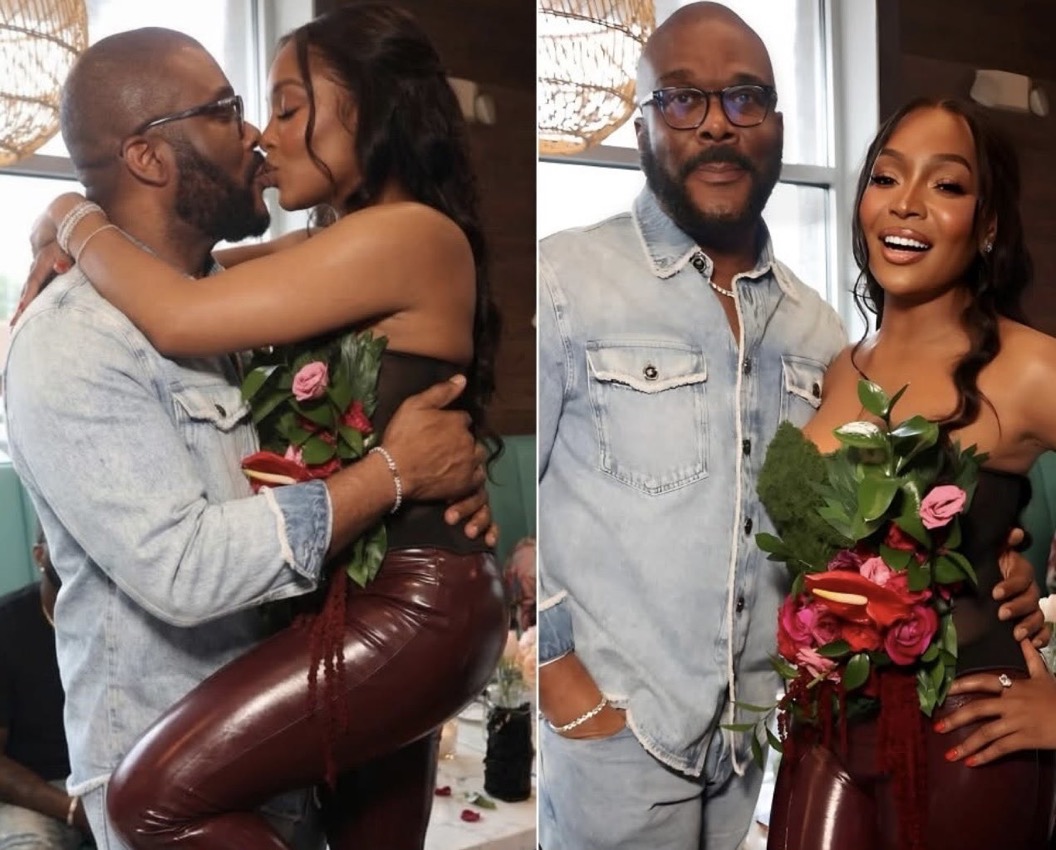
Sources close to the scene are whispering that Tyler Perry and Marlo Hampton have been getting very cozy lately, and last night’s viral pics have the entire timeline in a chokehold.
The photo circulating (you know the one — Tyler in that denim button-up looking dapper, Marlo glowing in leather pants with a bouquet that could pay somebody’s rent) shows the two locked in what can only be described as a moment.
One frame has him lifting her like she’s the prize at the end of a Madea movie, lips locked and everything. Atlanta, we see you! 👀✨
Word on the curb (and from that gospel brunch that had Kirk Franklin, T.I., Tiny, and half the Black elite in the building) is these two have been running in the same circles for years. Mutual friends, same events, same “I see you, king/queen” energy.
But are the pics real? There’s a lot of buzz that the photos are AI. One source says that FreddyO, the photographer, snapped the innocent pics but some fake ones surfaced hours later.
Here’s the tea:
One thing for sure is that Marlo, never one to bite her tongue, has joked on camera before about how she’d “absolutely” bag a billionaire like Tyler Perry. Well sis, the universe heard you loud and clear! Insiders tell AtlantaFi.com the two have been in the same circles more than once.
Tyler, who’s been notoriously private since his split with Gelila, hasn’t been this publicly smiley with anyone in years. And Marlo? She’s glowing different.
The woman who’s been serving looks, shade, and business on RHOA is suddenly out here looking like she’s got a secret — and honey, we think his name is Tyler.
The internet is already divided:
- Team “Go Marlo!” cheering the bag and the Black love
- Team “AI or PR stunt?” side-eyeing the pics harder than a shady reunion
- And the real ones just screaming “ATL power couple loading…”
Whether it’s a full-blown romance, a soft launch, or the most expensive friendship in Georgia history… one thing’s for sure: if Tyler Perry and Marlo Hampton are indeed turning up the heat, the weddings, the cameos, the joint empire, and the future RHOA storylines write themselves.
We’re camping outside the studio and the mansion gates, y’all.
Drop your hottest takes below — are we shipping #TyLo or is this just Sunday brunch tea that boiled over?
Stay locked on Peachtree Shade… because in the A, when two legends link up? We don’t spill the tea.
We serve the whole damn pitcher. -
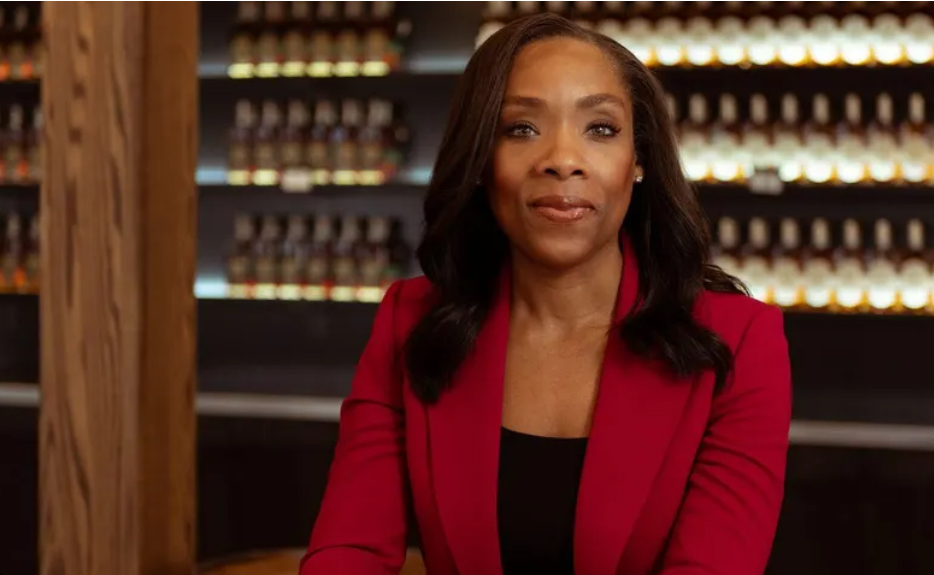
A federal judge has dismissed an unauthorized bankruptcy petition filed by Fawn Weaver, the founder and sidelined CEO of Uncle Nearest, the Tennessee-based whiskey brand she launched in 2017.
On March 19, 2026, U.S. Bankruptcy Judge Suzanne Bauknight ruled from the bench in Knoxville that Weaver lacked the authority to submit Chapter 11 filings on behalf of Uncle Nearest and its related entities (including Nearest Green Distillery and Uncle Nearest Real Estate Holdings).
Judge Rejects Uncle Nearest Bankruptcy Filing
The company has been under court-appointed receivership since last year, with receiver Phillip Young holding exclusive control while a major debt lawsuit proceeds.
The receivership stems from a lawsuit by primary lender Farm Credit Mid-America, which claims Uncle Nearest owes more than $100 million (approximately $99 million in unsecured debt per Young’s reports).
Judge Charles Atchley’s order limited Weaver’s role to marketing and managing the Uncle Nearest brand—actions that did not include filing for bankruptcy without Young’s permission or board approval (the board having been dissolved under the receivership).
Bauknight emphasized that Tennessee law also prohibits corporations from filing bankruptcy without board authorization, which was impossible here. She described the filing as outside the scope of Weaver’s permitted duties, effectively violating the district court’s receivership order.
Weaver’s petition, filed earlier in the week, listed about $13.4 million in unsecured debt across 264 creditors—a figure significantly lower than the debt reported under the receivership.
Her attorney argued the move aimed to stabilize the company’s value and sales, while Young’s counsel called it a “Hail Mary” attempt to circumvent the receivership and regain control.
Following the ruling, attorneys for both sides declined to comment. Young’s team has sought sanctions against Weaver, requesting $75,000 for the alleged violation of court orders.
Separately, Weaver filed a lawsuit against Farm Credit Mid-America in New York on March 13, accusing the lender of defamation and other wrongdoing. The suit disputes several claims by Farm Credit, including:
- Alleged commingling of $20 million through transfers with Grant Sidney (Weaver asserts this was a properly documented, legitimate loan).
- Claims that roughly $21 million in whiskey barrels went missing (Weaver says inventory and warehouse records confirm the barrels remained in storage).
- Accusations that loan funds were misused to purchase a Martha’s Vineyard home (Weaver states Farm Credit was aware of the property purchase).
One of Weaver’s attorneys described the defamation claims as needing accountability when contradicted by records already held by the lender.
The receivership remains in place under Phillip Young, with the bankruptcy attempt blocked and legal battles ongoing between Weaver, the company, and its major creditor.
Read more:
-

Buckhead’s favorite month-long walking adventure is back! buckheadWALKS! returns from April 1 to April 30, 2026, inviting residents, employees, and fitness enthusiasts across the neighborhood to lace up their shoes and get moving.
This free challenge, organized by Livable Buckhead, transforms everyday steps into an exciting competition for prizes. It’s one of many great activities to do in Buckhead.
buckheadWALKS Returns for Spring Activities
Participants can track their steps individually or form teams to climb the leaderboard using the Wellable platform.
Beyond daily walking, earn extra points by joining weekly activities such as scavenger hunts, guided walking tours, Thursday lunchtime strolls, and special experiences like bridge tours on the newest sections of PATH400.
“These events are a great opportunity for people to enjoy our incredible greenspaces, connect with neighbors and embrace a more active lifestyle,” said Denise Starling, executive director of Livable Buckhead. “This year’s Social Ride is particularly exciting since it will give everyone a firsthand look at the beautiful new section of PATH400.”
While buckheadWALKS! focuses on foot-powered exploration, the broader Livable Buckhead programming—including the popular Social Ride on PATH400—highlights the area’s growing network of trails and bike paths. (The Social Ride itself is scheduled separately, with a recent event held in late March 2026.)
Prizes up for grabs include a luxurious two-night stay at the Nobu Hotel or InterContinental Buckhead, gift cards to favorite local restaurants, and additional rewards to celebrate your commitment to health and community.
Now in its 9th year, buckheadWALKS! continues to promote wellness by encouraging participants to discover Buckhead’s parks, pathways, and neighborhoods while building healthier habits and stronger connections.
The program is sponsored by Tre Vele, Nobu Atlanta, Buckhead Theater, Lenox Mall, and Zakia.
Ready to join? Register now through the Wellable app via Livable Buckhead’s website at livablebuckhead.com/walk. Whether you’re walking solo, with coworkers, or rallying your family, every step counts toward a more activities to do in Buckhead!
When you’re done eating, if you want to check out some other food spots in the area, here are the best restaurants in Buckhead. Or you might like to read our Buckhead Steak Guide to find all the best eateries offering mouth-watering prime cuts.
-
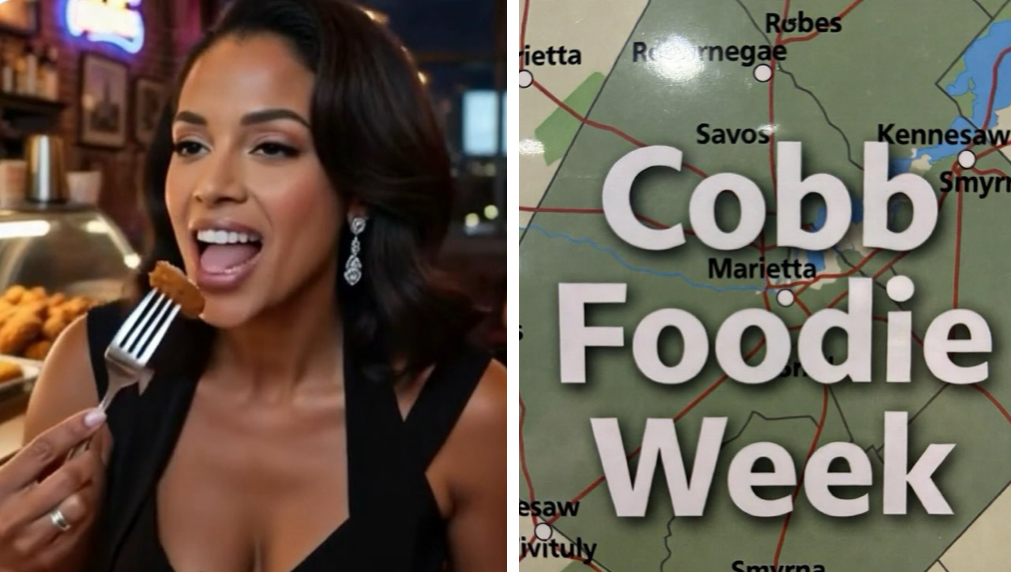
Cobb Foodie Week is returning in 2026 with an exciting twist: it’s shifting to summer dates for the first time, running from June 20–27.
Hosted by Cobb Travel & Tourism, this week-long celebration spotlights the vibrant and diverse dining scene in what many call Atlanta’s Sweet Spot—Cobb County.
Cobb Foodie Week: What To Know
The move to June aligns the event with one of the area’s peak tourism seasons and adds a global flair. It coincides with the 2026 FIFA World Cup, drawing international visitors who can pair their match-day excitement with unforgettable meals right here in Cobb.
Whether you’re a local resident or a traveler exploring metro Atlanta, this is the perfect opportunity to discover (or rediscover) the county’s top eateries while enjoying special savings.
During Cobb Foodie Week, food enthusiasts can unlock exclusive digital coupons and meal deals at dozens of participating restaurants countywide.
The offerings span a wide range—from authentic international flavors like Mexican, Asian fusion, Indian, and Mediterranean to classic Southern comfort food, upscale American fare, seafood spots, and hidden-gem casual dining.
Expect discounts on entrees, prix-fixe menus (multi-course meals at set prices), special bundles, and more. It’s a delicious way to support local restaurants, try new places, and save money without any hassle.
Best of all? Participation is completely free—no app download required, no tickets to buy. Simply head to cobbfoodieweek.com to sign up for your Meal Deals Pass.
Once registered, you’ll get instant access to the digital coupons and full list of participating spots. Redeem them directly at restaurants during the event week for instant savings.
Past editions of Cobb Foodie Week (which previously ran in the fall) have drawn huge crowds and set participation records, proving how much locals and visitors love celebrating the area’s culinary talent. With the 2026 summer timing and World Cup buzz, this year’s event promises to be bigger and more flavorful than ever.
Mark your calendars for June 20–27, 2026, grab your Meal Deals Pass at cobbfoodieweek.com, and get ready to eat your way through Cobb County.
Whether you’re craving a quick bite, a family dinner, or a special night out, Cobb Foodie Week has something to satisfy every palate.
For the latest updates, participating restaurants, and deal details, visit travelcobb.org or cobbfoodieweek.com. Bon appétit, Cobb!