-
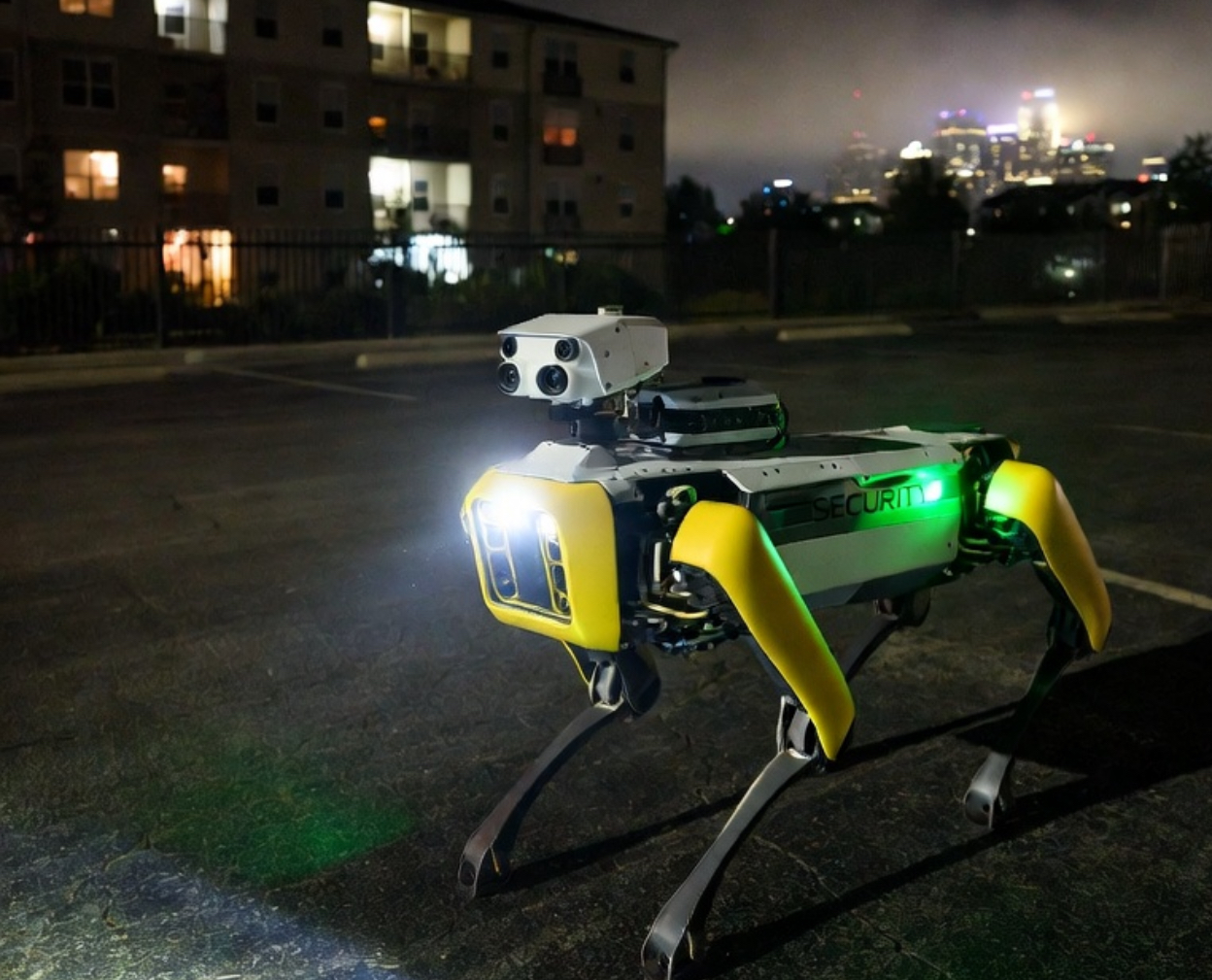
ATLANTA — A late-night encounter in an Atlanta apartment complex parking lot has gone viral, highlighting the growing presence of four-legged robotic security dogs across the city.
In the video, captured earlier this month and widely shared on social media, curious residents approach a sleek, white-and-yellow quadruped robot marked “SECURITY” as it patrols cracked asphalt amid rows of parked cars.
Robot Dogs Patrolling Atlanta: Viral Video Sparks Debate Over Privacy, Crime, and the Future of Local Security
The robot, equipped with bright headlights, green indicator lights, and what appear to be multiple cameras, stops and interacts with the group. One resident asks, “What y’all got the robot dog in here for?” A voice with a noticeable accent replies through the robot’s speaker: “To watch the people so they don’t take… I’m sorry, so we’re actually like the robotic security, you know.”
Another exchange includes the robot stating, “Everything is being monitored and recorded.” Residents react with a mix of shock, humor, and skepticism — one quipping about “AI s—t” in the “m—— hood.”
The footage has sparked heated online discussion about outsourcing security roles overseas, constant surveillance, and whether these machines represent progress or a step toward a dystopian future.
The Rise of Robot Dogs Patrolling Atlanta
This isn’t an isolated gadget. Robotic security dogs — often resembling Boston Dynamics-style Spot units but customized for private use — have quietly become a fixture in parts of metro Atlanta since early 2025.
Atlanta-based Undaunted Robotics Security, founded by Bryan Dinner and headquartered in Atlanta Tech Village, has deployed around 60 units citywide.
The company’s “Oppy” and similar models patrol apartment complexes, parking lots, and construction sites, using lidar, AI navigation, 360-degree cameras, thermal imaging, sirens, and two-way speakers.
Property managers say the robots are a cost-effective answer to rising theft, break-ins, and car break-ins.
In Castleberry Hill’s GE Lofts, two units now guard the gated community — one inside the perimeter and one outside — after residents grew frustrated with traditional security gaps. Video from one deployment showed a robot helping deter suspected burglars scoping out vehicles.
“These robots allow us to put a guard in the right place, at a safe distance from any possible harm,” Dinner has said in previous interviews.
They follow preset routes, stream live feeds to remote human operators (who can intervene in real time or summon police), and operate 24/7 without breaks or overtime.
Similar deployments have popped up in DeKalb County apartments and downtown sites struggling with occupancy and crime.
Some reports even mention Atlanta Police Department interest in “Hound Units” from another firm, Cobalt Robotics, for high-crime neighborhoods, though private property owners have led the rollout so far.
‘Kind of Dystopian’: Benefits, Backlash, and Big Questions
Supporters point to real results: fewer incidents, lower insurance claims for property owners, and a visible deterrent in areas where human patrols are stretched thin. “It was pretty cool,” one Castleberry Hill resident told FOX5 Atlanta after watching a robot chase off an intruder.
But the viral video has amplified concerns.
”I don’t know,” said Atlanta Beltline jogger Bridget Williams. “If it’s keeping people safe, but at the same time, it’s kind of dystopian to me.”
Residents in the clip express surprise at the foreign-accented operator, raising questions about who exactly is monitoring Atlanta’s streets and what data — license plates, faces, conversations — is being collected and stored.
Critics worry about privacy erosion, the normalization of 24/7 surveillance, and potential job losses for local security workers. Others question national security implications if remote operators are based abroad.
Undaunted and similar companies insist operators are trained professionals who only intervene when necessary and comply with all local laws.
Still, as these robots expand — with some industry voices already eyeing broader police contracts — Atlanta leaders face growing pressure to set clear rules on data use, transparency, and accountability.
City officials have not yet commented directly on the latest viral video, but earlier statements from Atlanta police officer described the technology as a “cost-effective way” to enhance safety. A six-month pilot monitoring period is reportedly underway in select areas.
Final Word
Whether you see them as high-tech heroes or Big Brother on four legs, robot dogs are no longer science fiction in Atlanta.
They’re here — patrolling parking lots, construction sites, and neighborhoods — and the conversation about their role in our city is just getting started.
What do you think? Have you spotted one in your apartment complex or on the street? Share your experiences in the comments below. AtlantaFi.com will continue following this story as robotic security evolves across the metro area.
-

Atlanta Beltline and city leaders are celebrating the grand opening of the final 1.2-mile segment of the Southeast Trail (formerly known as Southside Trail Segments 4 and 5).
The ribbon-cutting ceremony takes place at 3:30 p.m. at 905 Glenwood Ave SE, marking a significant step toward completing the ambitious 22-mile Beltline loop.
Atlanta Beltline Opens Southeast Trail, Adding 1.2 Miles of Connectivity to Southside Neighborhoods
This new paved multi-use trail runs from Boulevard to Glenwood Avenue, completing the full 2.5-mile Southeast Trail from the iconic Krog Street Tunnel to Boulevard Southeast.
It brings the total paved Beltline trail network to 14.8 miles, with more expansions on the horizon.
Connecting Communities and Enhancing Access
The Southeast Trail directly serves four vibrant Southside neighborhoods: Glenwood Park, Grant Park, Ormewood Park, and Boulevard Heights
It provides safer, more accessible routes for walking, biking, and commuting, including improved paths to Parkside Elementary and Maynard Jackson High School—the second Atlanta public high school located directly on the Beltline.
By improving connectivity between these areas and linking to the broader Eastside Trail network, the project promotes active transportation, recreation, and economic activity in historically underserved communities.
When did the Southeast Trail Open?
The Southeast trail opened Thursday, April 16, 2026.
What to Expect on the New Trail
Visitors can enjoy a scenic, well-designed path featuring:
- Vibrant public art, including colorful murals along Wylie Street.
- Proximity to attractions like the Stumpery Garden at the Atlanta Botanical Garden’s Arboretum.
- Easy access to retail, dining, and entertainment in Glenwood Park and along Memorial Drive.
- Nearby highlights such as Zoo Atlanta and Grant Park.
The trail is designed for all users—walkers, runners, cyclists, and families—offering a safe, multi-use corridor that reflects the Beltline’s vision of transforming old rail lines into vibrant public spaces.
Broader Impact and Future Plans
This opening advances the Beltline’s goal of creating a 22-mile loop of trails, parks, and future transit that will connect 45 neighborhoods. Construction was handled by Reeves Young, with design by Kimley-Horn.
Looking ahead, the completion of the remaining Southside Trail (expected by June 2026) will add even more continuous paved trail, pushing the network toward 17.9 miles total.
Additional projects, including lighting, cameras, and connections like the Westside Trail expansions, continue to progress.
A Milestone for Atlanta
Atlanta Beltline President and CEO Clyde Higgs, along with local officials including City Councilmember Jason Winston and representatives from Grant Park Neighborhood Association, highlighted the project’s role in fostering equity, health, and community pride.45
Whether you’re a longtime resident exploring new routes or a visitor discovering Atlanta’s urban renaissance, the Southeast Trail offers fresh opportunities to experience the city’s dynamic mix of nature, art, and culture.
Lace up your shoes, hop on a bike, or grab the family—the Beltline’s latest chapter is open and ready for adventure. For maps, directions, and updates, visit beltline.org.
More Content From AtlantaFi.com:
-

For more than 60 years, the Greater Atlanta Home Builders Association (GAHBA) has presented the Atlanta Parade of Homes, and this year’s event promises to be one of the most exciting yet.
Spanning this Atlanta weekend and more — April 18-19, April 25-26, and May 2-3—the 2026 Parade will transform Metro Atlanta into a massive open house.
Prospective homebuyers, real estate professionals, interior design enthusiasts, and inspiration seekers will have the opportunity to explore the region’s largest annual spring showcase of brand-new homes.
This year’s event is truly impressive in scale: it features 25 builders and more than 150 homes spread across 24 cities and 20 counties.
“Each year, the Atlanta Parade of Homes showcases the very best of what our builders have to offer—innovation, craftsmanship, and a commitment to quality,” said GAHBA Executive Officer Corey Deal. “The 2026 Parade is especially meaningful for buyers who are ready for their next chapter, highlighting homes designed with more space, better functionality, and the features that truly fit today’s lifestyles. It reflects not only the strength of our industry but also our dedication to meeting the evolving needs of Metro Atlanta families.”
What to Expect at the Parade
The Atlanta Parade of Homes offers free self-guided tours of a diverse selection of new model homes, spec houses, and available townhomes.
Visitor will discover a wide range of architectural styles, locations, and price points—all expertly crafted by GAHBA member builders, including notable names such as David Weekley Homes and Taylor Morrison, along with many others.
To make the experience even more rewarding, select builders will offer door prizes, giveaways, and special incentives throughout the event.
Event Details and Planning Your Visit
Parade Hours (all three weekends):
- Saturday: 11:00 AM – 5:00 PM
- Sunday: 1:00 PM – 5:00 PM
Attendees are encouraged to plan their route using the official interactive map available at atlhomesparade.com or through the Atlanta Parade of Homes mobile app, available for free download on the App Store and Google Play.
While touring, visitors can vote for their favorite homes and enter a exciting raffle by scanning a QR code at each stop. Prizes include Braves tickets, a Yeti cooler, and a pair of bicycles. Winners will be announced at the end of May.
The app also serves as a valuable resource, providing tools and information to help homebuyers make confident, informed decisions.
Whether you’re actively searching for a new home, gathering ideas, or simply enjoying a weekend of beautiful architecture and design, the 2026 Atlanta Parade of Homes offers an unparalleled opportunity to experience the very best new home construction Metro Atlanta has to offer.
-

As one of the host cities for the FIFA World Cup 2026™, Atlanta is set to become a global soccer destination this summer, with Mercedes-Benz Stadium hosting multiple high-stakes matches.
And no one is more ready to celebrate than Stella Artois, the #3 premium tap handle in the U.S., which is stepping up as a Proud Sponsor of the tournament.
Check Out This Stella Artois FIFA World Cup Atlanta Deal
While the world’s eyes will be on the pitch, Stella Artois is focusing on where the real roar of the tournament will be felt: inside Atlanta’s bars, pubs, and gathering spots where fans come together to watch, cheer, and savor every moment.
“Moments of great passion deserve to be savored,” said Chris Jones, VP of Marketing for Premium Brands at Anheuser-Busch. “The true roar of the game lives in the electric energy of fans celebrating in their local bars. That ritual of watching together with friends is a beloved tradition, and we’re inviting Atlanta fans to elevate their celebrations with a taste that’s truly worth it.”
Atlanta’s Bars Become the Ultimate Viewing Arenas
Throughout the World Cup, fans in Atlanta will find specially curated Stella Artois viewing experiences at bars across the city.
From Mercedes-Benz Stadium-adjacent spots in downtown to beloved neighborhoods like Virginia-Highland, Midtown, and the Westside, participating venues will transform into immersive soccer hubs complete with:
- Stella Artois- and FIFA World Cup 2026™-branded merchandise
- Limited-edition packaging and glassware
- Elevated game-day rituals designed to make every goal, save, and celebration feel unforgettable
The brand is also teaming up with global ambassador David Beckham for the #AllRoundsOnBeckham sweepstakes.
Beckham-Led Campaign Celebrates Shared Glory
The campaign launches with a new “Celebration” TV commercial starring David Beckham, debuting April 15. The spot beautifully draws parallels between the ritual of lifting a Stella chalice and the pure joy of celebrating a goal with friends—moments that will be happening in Atlanta bars all summer long.
“For every goal scored on the pitch, millions of fans celebrate around the world,” Beckham said. “That shared energy is what makes the World Cup unforgettable—and the most meaningful celebrations are the ones people experience together.”
Atlanta’s Soccer Legacy Meets Stella’s Tradition
This sponsorship builds on Anheuser-Busch’s deep commitment to soccer in the U.S., including support for the U.S. Men’s and Women’s National Teams and the Mexico Men’s and Women’s National Teams. For Atlanta specifically, it aligns perfectly with the city’s thriving soccer culture, anchored by Atlanta United FC and now elevated by World Cup hosting duties.
Whether you’re a lifelong supporter or just soaking in the atmosphere for the first time, Stella Artois is inviting Atlanta fans to honor the game the way it deserves: together, in your favorite local bar, with a perfectly poured Stella in hand.
This summer, the world comes to Atlanta. Make sure your celebrations live up to the moment.
Check Out Our Atlanta Travel Guide
-

Get ready for the ultimate day of family fun in Duluth. Massive Monster Jam trucks and world champion drivers are taking over for a weekend packed with high-flying stunts, big air, and nonstop excitement.
Monster Jam is one of the major events in motorsports, combining world-class athletes with 12,000-pound trucks — and it’s happening this weekend in the Atlanta area.
Monster Jam 2026 Atlanta: Everything You Want To Know
The show features high octane spontaneous entertainment and intense competition, featuring the most recognizable trucks in the world.
Get ready to rev your engines, Atlanta! The world’s most jaw-dropping motorsport spectacle, Monster Jam, is tearing into Gas South Arena in Duluth on September 12 and 13, 2026, for a weekend packed with heart-pounding action, gravity-defying stunts, and 12,000-pound monster trucks that’ll leave you screaming for more!
Whether you’re a die-hard gearhead or just looking for an unforgettable family adventure, this is the event to kick off your fall with a roar.
Bigger, Bolder, and As Big As It Gets™!
Monster Jam isn’t just a show—it’s an adrenaline-charged experience where the world’s most iconic monster trucks, driven by elite athletes, battle it out in a dirt-flying frenzy.
Picture this: massive trucks like Grave Digger, El Toro Loco, and Megalodon soaring through the air, pulling off backflips, standing on two wheels, and crushing everything in their path.
From high-speed races to jaw-dropping freestyle competitions, every moment is unscripted, unexpected, and totally unforgettable.This year’s Metro Atlanta event at Gas South Arena (6400 Sugarloaf Pkwy, Duluth, GA 30097) promises non-stop thrills across four electrifying shows:
- Saturday, September 12: 1:00 PM and 7:00 PM
- Sunday, September 13: 1:00 PM and 6:30 PM
Fans will be on the edge of their seats as top drivers, including Racing, 2 WheelSkills, and everyone’s favorite, Freestyle, compete in three epic competitions: Racing, 2 Wheel Skills, and the fan-favorite Freestyle, where drivers push their trucks to the limit with insane stunts. And here’s the kicker—YOU, the audience, help score the drivers in real-time to crown the Event Champion
More Than Just a Show: The Ultimate Fan Experience
Monster Jam is all about family fun, and the action starts long before the trucks hit the dirt. Kick off your day at the Monster Jam Pit Party (Saturday and Sunday, 10:30 AM–12:30 PM), where you can get up close to these mechanical beasts, snap selfies, meet your favorite drivers, and score autographs. Kids will love the Sand Box play area, inflatable slides, and Spin Master remote control truck course.
A Pit Party Pass is required (starting at $20), so grab yours with your tickets to join the pre-show funWant even more? Arrive early for Monster Jam Trackside, happening about an hour before each show.
It’s your chance to catch driver interviews, peek behind the scenes with the pit crew, and score some epic giveaways.
Plus, stick around after the show for the Post-Event Driver Meet & Greet (additional pass required), where you can mingle with the superstars, snap photos, and take home an official Monster Jam souvenir like a 3’x5’ checkered flag—perfect for autographs
Meet the Monster Jam SuperstarsThese aren’t just trucks—they’re 12,000-pound titans piloted by world-class athletes who’ve mastered the art of defying physics. Keep an eye out for fan favorites like.
Gravity-defying action, down-to-earth prices!
Tickets and Pit Party Passes are now available for purchase online at Ticketmaster.com or in-person at the venue box office.
With 12 top drivers vying for a spot in the Monster Jam World Finals in Salt Lake City next summer, the stakes are sky-high, and the action is fiercer than ever.
Here are more articles from AtlantaFi.com:
-
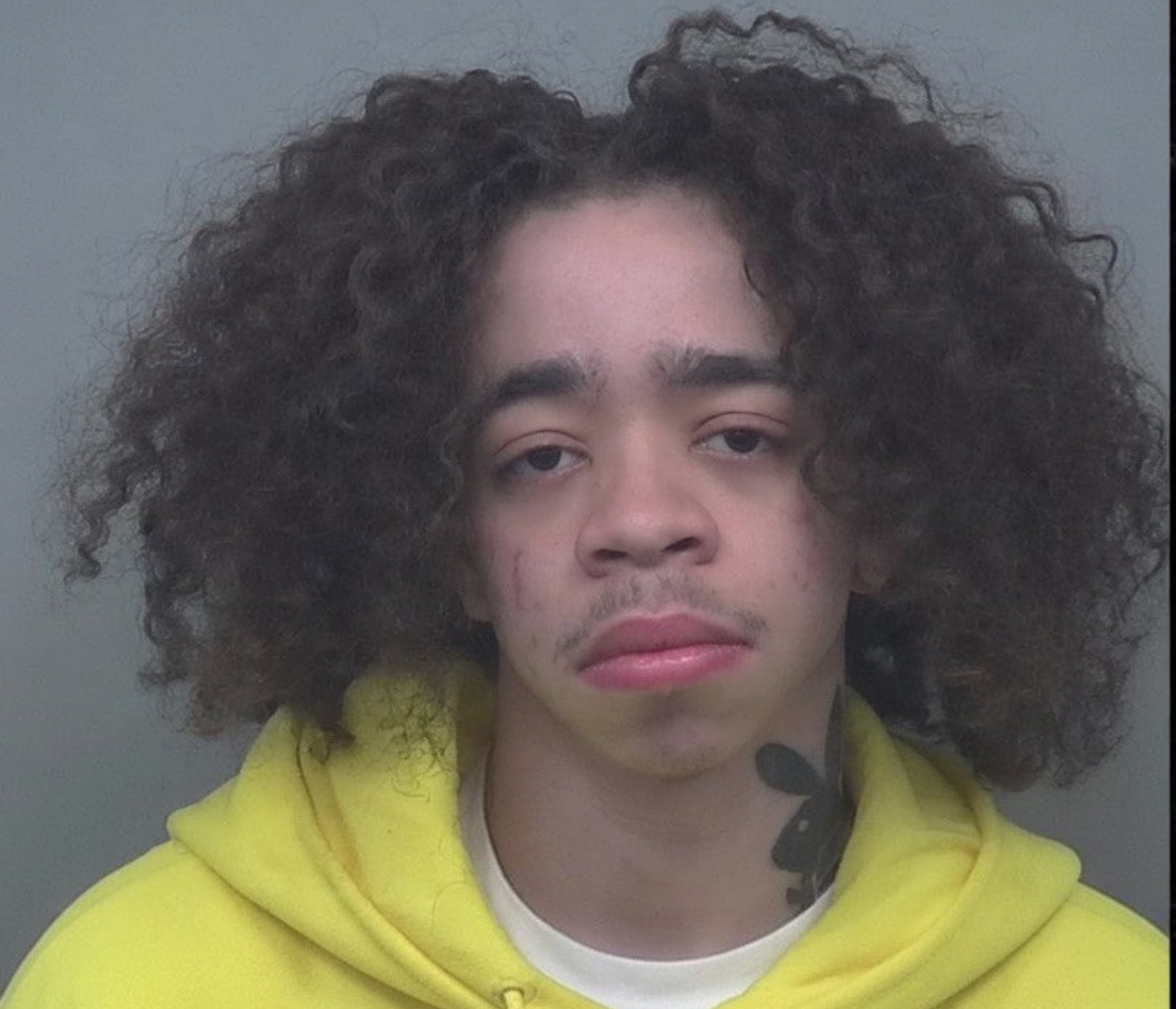
Gwinnett County, Ga. — King Harris, the son of Atlanta rapper T.I. (Clifford “T.I.” Harris) and singer Tameka “Tiny” Harris, was arrested early Sunday morning after a routine traffic stop escalated when he refused to exit his vehicle.
According to body camera footage obtained by TMZ and reports from local outlets, officers pulled over the 20-something aspiring rapper around 1 a.m. on April 12 while he was driving a Tesla Cybertruck on Holcomb Bridge Road near Peachtree Corners Circle.
King Harris Arrested After Trafficking Stop Escalates
Harris was clocked speeding — one report cited him traveling over 75 mph in a 45 mph zone, while another placed it at 60 mph in a 45 mph zone. He was also cited for not wearing a seatbelt.
During the stop, officers spotted a firearm on the dashboard and ordered Harris out of the vehicle to separate him from the weapon. Harris, who was wearing a bright yellow Pikachu onesie, remained seated and refused repeated commands to exit
He made calls to his lawyer while officers waited. The situation led to his arrest on a misdemeanor charge of willful obstruction of law enforcement officer.
A search of the vehicle turned up a THC vape pen containing 10 milligrams of THC, resulting in a felony charge for possession of a controlled substance (reported as Schedule II in some accounts). Harris was booked into the Gwinnett County Jail around 2:30 a.m. and released on bond approximately five hours later.
Body cam video released by Gwinnett County police shows the tense exchange, with Harris calmly but firmly declining to comply. His father, T.I., arrived at the scene shortly afterward to retrieve the Cybertruck and the firearm.
In the footage, T.I. is seen attempting to speak with officers and asking if the matter could be resolved without further action, but officers proceeded with the arrest and booking.20
Harris, who has pursued a career in music like his father, took to Instagram shortly after the incident with a series of lighthearted posts referencing his Pokémon-themed outfit.
One story featured his face with the caption, “Pikachu got pulled over THEY NOT CATCHING THIS PIKACHU TONIGHT.” A follow-up booking photo post read, “Welp guess you can say they caught da Pikachu wit a master ball.” He later shared a shirtless photo captioned “Fck dat police” and a video joking about his “good Pikachu life” being interrupted by “Team Rocket (F**IN POLICE).”
His mugshot, released by authorities, shows him still in the Pikachu onesie, which quickly went viral across social media.
This is not Harris’s first brush with the law. He has faced prior traffic-related charges, including a 2024 arrest tied to a failure-to-appear warrant stemming from an earlier speeding and suspended license case. T.I. and Tiny have not publicly commented on the latest incident as of Tuesday morning.
Gwinnett County police have not released additional statements beyond the body cam footage, citing the ongoing case.
Harris faces court dates on the felony drug possession, misdemeanor obstruction, and traffic citations.
The incident highlights the challenges faced by celebrity offspring navigating public scrutiny, even in seemingly routine encounters. As of now, no further updates on the legal proceedings have been announced.
-

If you’re headed to the busiest airport in the world, better stash your cash. U.S. Customs and Border Protection (CBP) officers at Hartsfield-Jackson Atlanta International Airport (ATL) have seized $372,264 in unreported currency from 24 travelers during the first three months of 2026.
The seizures stem from failures to declare amounts exceeding $10,000 in cash or other monetary instruments when departing on international flights, a mandatory requirement under U.S. law.
How Much Money Has Customs Seized From Atlanta Travelers?
Officials emphasize that travelers may carry any amount of money, but anything over the $10,000 threshold per person or group must be reported to the U.S. Treasury via the FinCEN 105 form (Report of International Transportation of Currency and Monetary Instruments).
How the Seizures Work
CBP officers enforce the regulation at departure gates and through screening processes. In each case, officers reportedly informed travelers of the currency reporting law and confirmed their understanding before seizing the funds.
The government retains the seized money unless the owners file a successful claim to reclaim it through official channels. Failure to report can lead to civil forfeiture, even if the funds have a legitimate source.
Notably, a cash-sniffing Belgian Malinois detection dog named “Pub” played a key role, helping uncover nearly $75,000—about 20% of the total seized amount—in two separate incidents.
The largest single seizure mentioned was $44,432 from a U.S. citizen traveling to San Salvador, El Salvador, on March 22.
Reporting Is Straightforward
Travelers can complete the FinCEN 105 form online in advance through the official CBP portal or request assistance from officers at the airport.
During the same period, CBP helped travelers properly declare and file forms for nearly $3 million in currency, showing that compliance is both possible and common.
Why the Rule ExistsThe requirement helps combat money laundering, drug trafficking, and other financial crimes by creating a paper trail for large cross-border cash movements. Undeclared large sums often raise red flags during outbound international travel from major hubs like Atlanta.
CBP reminds the public: “Travelers can travel with any amount of currency and other monetary instruments that they choose, but any amounts over $10,000 must be reported.”
- Count all cash, traveler’s checks, and certain monetary instruments carried by you and your travel group.
- If the total exceeds $10,000, file the FinCEN 105 form before or at the airport.
- Ignorance of the law is not a defense—seizures can occur even for honest mistakes.
- Those who have had money seized should consult an attorney experienced in civil asset forfeiture to explore options for recovery.
As international travel rebounds, CBP continues routine enforcement at ATL and other major U.S. airports. Travelers are urged to review the rules on the official CBP website to avoid unnecessary losses.
Want to learn more about your finances? Read our guide on how to find unclaimed money.
-
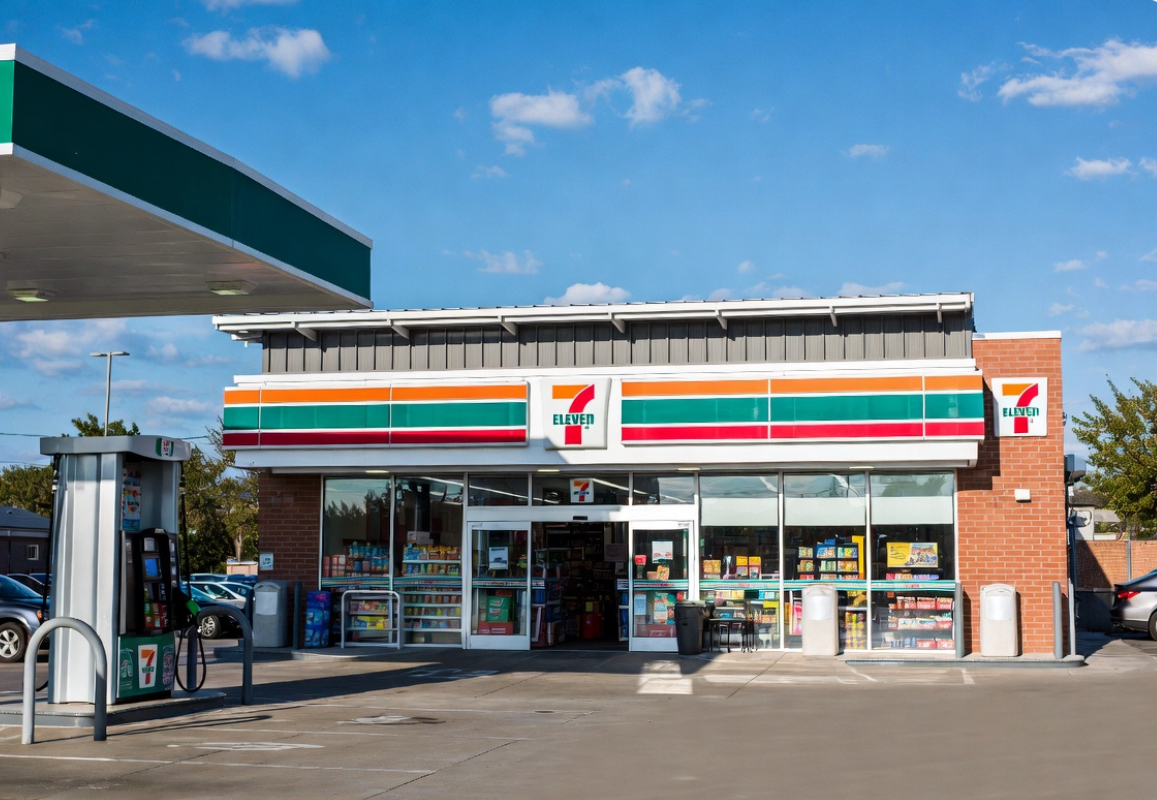
Atlanta — Parent company Seven & i Holdings announced that 7-Eleven plans to close 645 convenience stores across North America in fiscal 2026.
The move is part of an ongoing effort to optimize its portfolio by shedding underperforming locations, converting some sites to wholesale fuel operations, and focusing on larger, food-focused formats.
7-11 Store Closures: Hundreds of Locations Affected
While the national cutbacks are significant—the fifth straight year of net store losses for the chain—Georgia customers will see little to no change when it comes to 7-11 store closures.
The state has only a small handful of 7-Eleven locations (around 15, many operating under the Speedway banner), a tiny fraction of the chain’s roughly 12,000+ U.S. stores.
Why So Few 7-Elevens in Georgia?
Georgia’s convenience store market is dominated by strong regional players like QuikTrip, RaceTrac, and Circle K. Decades ago, many 7-Eleven locations in the Southeast were sold off (including to Circle K in the late 1980s), leaving the brand with a limited presence here compared to states like California, Texas, and Florida.
The few existing 7-Eleven/Speedway stores in the Atlanta metro area and North Georgia are unlikely to be heavily targeted in this round of closures, though the company has not released a state-by-state or location-specific list.
Broader Context for the Closures
- Net reduction: 7-Eleven expects to open more than 200 new locations while closing 645, for a net loss of about 440 stores.
- Strategy shift: Some “closures” involve converting sites to wholesale fuel models (which don’t count in the retail store tally) as the company moves toward bigger stores with enhanced fresh food offerings to compete with rivals like Wawa, Sheetz, and Buc-ee’s.
- Recent history: The chain closed hundreds of stores in 2024 and 2025 as part of the same portfolio optimization push.
What This Means for Georgia Shoppers
Georgia’s competitive c-store landscape—known for clean stores, fresh food, and excellent fuel pricing from local leaders—has long operated without heavy reliance on 7-Eleven.
The national shakeup at 7-Eleven is unlikely to disrupt local options.
For the small number of Georgia locations that could be affected, customers may see conversions to different formats or, in rare cases, full closures.
However, the state’s dominant players continue to expand aggressively, filling any potential gaps with new stores and upgraded experiences.
This latest announcement reflects broader industry trends: convenience retailers are consolidating weaker sites and investing in larger, higher-margin stores that emphasize foodservice over traditional quick-stop models.
In Georgia, that evolution is already well underway among the brands that dominate the market.
-
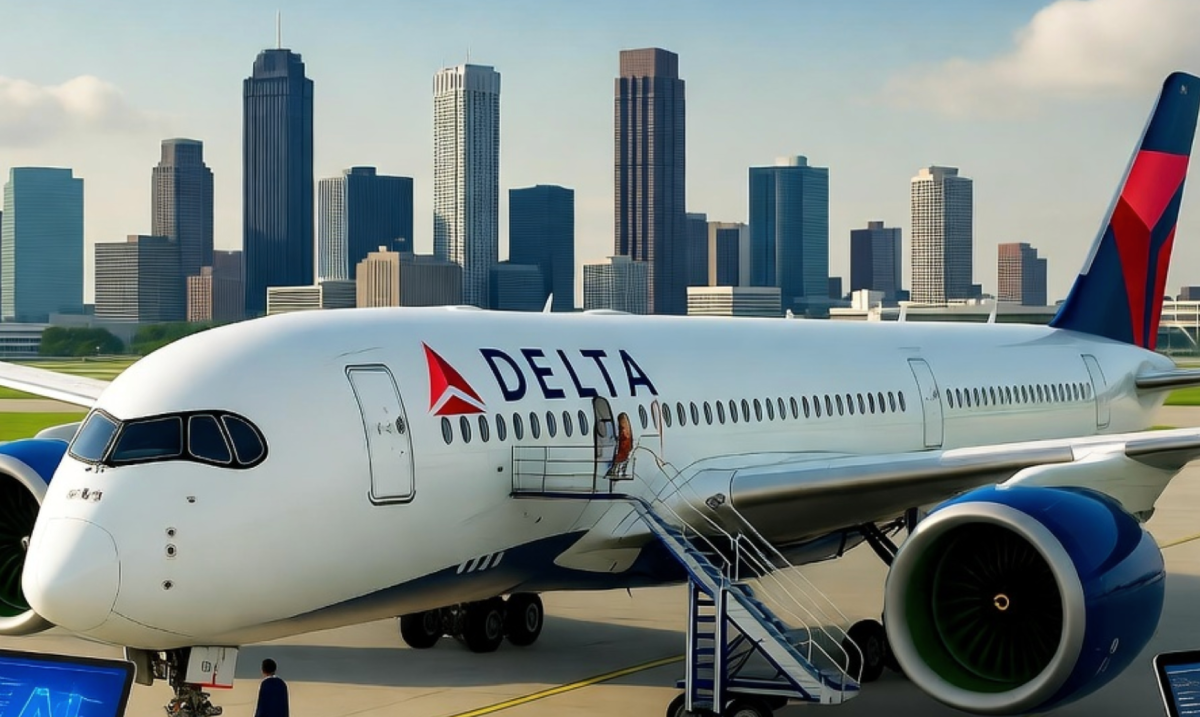
In a bold move to solidify its position as a leader in premium air travel, Delta Air Lines has announced sweeping upgrades to its upcoming Airbus A350-1000 fleet—the only U.S. airline operating the long-range widebody aircraft.
The announcement promises to deliver an even more luxurious experience for passengers, with enhanced Delta One suites, larger in-flight entertainment screens, and thoughtful amenities across every cabin class.
Delta’s New A350-1000 Cabins and Fleet-Wide Upgrades Unveiled
The promotional video accompanying the post opens with a sleek, dark aesthetic and the tagline “You’ve flown with us before,” before transitioning into highlights of the “New A350-1000s.”
It showcases intimate shots of the revamped cabins: plush Delta One suites with extended sleeping surfaces, built-in mattress pads for superior comfort, and a dedicated refreshment station stocked for on-demand snacks and drinks. Overlay
emphasize key improvements like “Stretch Further,” “Snack Again and Again,” and “Memory Foam Cushioning for Every Seat,” underscoring that premium isn’t confined to a single section—it’s an elevated experience throughout the aircraft.
The video closes with the exciting timeline: the A350-1000 is set to take flight in early 2027.0
What’s New on the A350-1000?
Delta’s announcement details a comprehensive refresh focused on space, comfort, and connectivity:
- Delta One Suites: All-new private suites featuring beds that are more than 3 inches longer, giving passengers extra room to stretch out on long-haul flights.
- Entertainment Upgrades: The largest screens yet—24-inch displays in Delta One—for an immersive in-flight experience.
- Power and Connectivity: Outlets and Bluetooth audio capabilities at every seat, ensuring devices stay charged and passengers can enjoy personal audio without hassle.
- Refreshment Station: A convenient onboard area for snacks and drinks, available anytime during the flight.
- Cabin-Wide Enhancements: More legroom and stretch space in every class, paired with premium memory-foam cushioning for greater overall comfort.
These features build on Delta’s previous premium cabin innovations, positioning the A350-1000 as a flagship for the airline’s long-haul international routes.0
Broader Fleet Investment
The excitement doesn’t stop with the new aircraft. Delta revealed that additional upgrades are coming to its existing fleet, beginning with the A330s.
The post frames these changes as part of a larger commitment: “All part of how we’re investing in a better experience for you ✈️.”
This multi-aircraft refresh signals Delta’s ongoing strategy to differentiate itself in a competitive market where carriers like United (with Starlink Wi-Fi) and international rivals are also elevating their offerings.
Passenger Reactions and the Road Ahead
Social media responses to the announcement have been largely positive, with travelers praising the focus on sleep quality, screen size, and thoughtful details like the refreshment station.
Many expressed eagerness to experience the new product, with some offering to “test” the aircraft personally.
However, a recurring theme in replies is a call for faster, more reliable in-flight Wi-Fi—specifically requests for Starlink integration, which several competitors have already adopted. Others noted that while the premium enhancements are impressive, affordability and economy-class improvements remain top priorities for frequent flyers.
Delta’s timing is strategic. As global travel demand rebounds and competition intensifies, these upgrades reinforce the airline’s reputation for innovation.
The A350-1000’s entry into service in early 2027 will mark a significant milestone, potentially setting new standards for U.S.-based long-haul premium travel.
Whether you’re a Delta loyalist dreaming of that extra three inches of bed length or a curious traveler eyeing the next big cabin upgrade, one thing is clear: Delta is betting big on making every flight feel exceptional.
Stay tuned for more details as the airline rolls out these enhancements across its fleet. Your next long-haul journey just got a whole lot more comfortable.
-
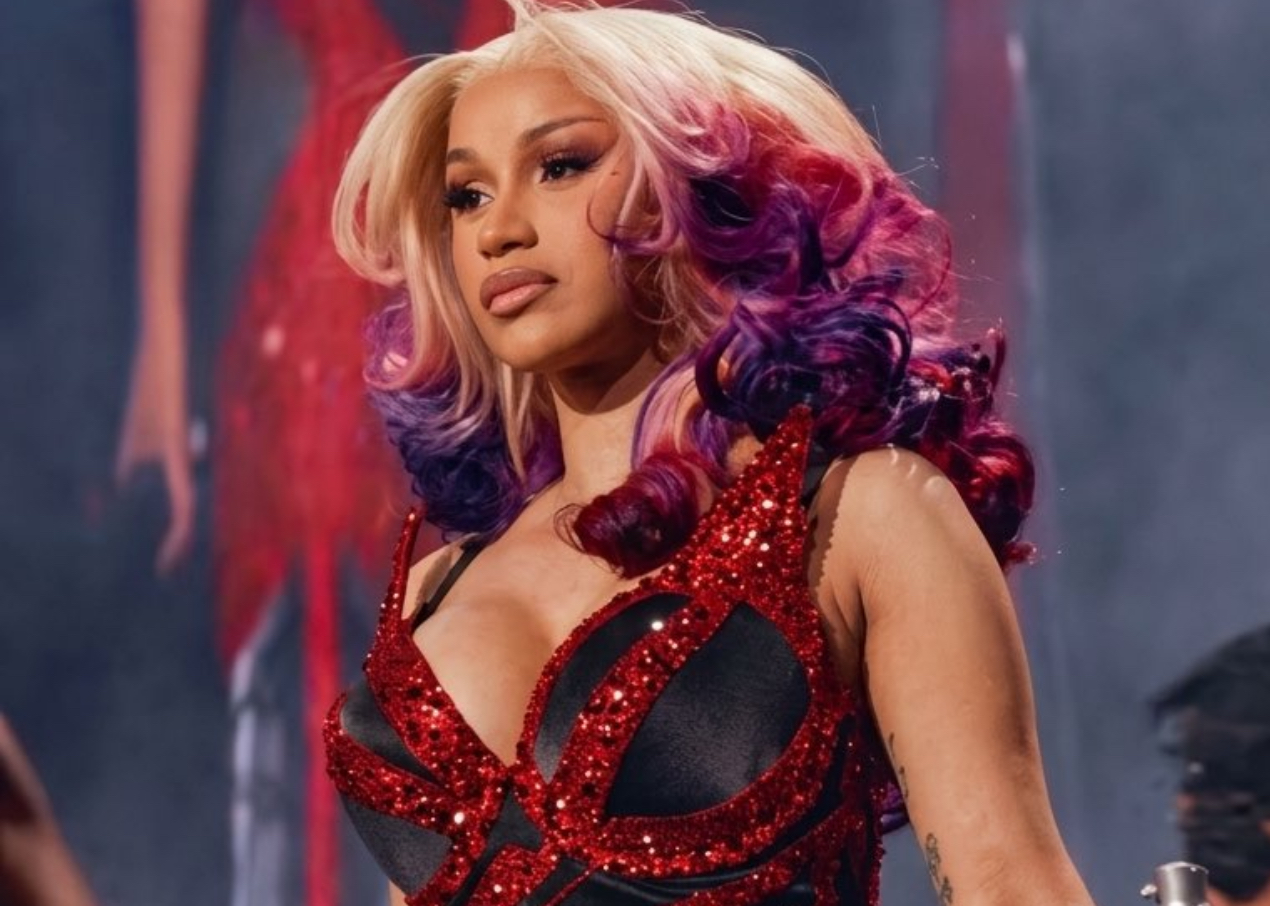
Atlanta, get ready — the Queen of Rap is closing out her highly anticipated arena tour right here in the A. Cardi B: Little Miss Drama Tour hits State Farm Arena on Friday, April 17, and Saturday, April 18, 2026, with shows starting at 7:30 PM (doors at 6:30 PM).
This marks the grand finale of her first headlining arena run in six years, supporting her second studio album Am I The Drama?, released last fall via Atlantic Records.
Why Atlanta Fans Are Hyped
Cardi has a special connection with Atlanta — from her early strip club roots in the city to countless collaborations with local legends and her massive Southern fanbase.
The Bronx rapper has called the tour her most energetic and theatrical yet, and wrapping it up in Atlanta means the final nights are likely to be extra charged with hometown energy, possible surprise guests, and that signature unapologetic Cardi energy.
Expect a high-octane production packed with hits old and new. Early tour setlists have featured over 30+ songs, blending bangers from Invasion of Privacy and Am I The Drama? including:
- “Bodak Yellow”
- “I Like It”
- “WAP”
- “Up”
- “Money”
- “Press”
- New tracks like “Hello,” “Magnet,” “Enough (Miami),” “Trophies,” and more. azcentral.com
Fans can look forward to her signature bold fashion moments, high-energy choreography, dramatic staging, and plenty of crowd interaction
Cardi B Atlanta Concert: What To Know Before You Go
- Tickets: Still available for both nights via Ticketmaster and the State Farm Arena site, but expect prices to climb as the finale approaches. VIP packages, floor seats, and club-level upgrades are options for a premium experience.
- Getting There: State Farm Arena is in downtown Atlanta. Use MARTA (Dome/GWCC station is steps away), rideshares, or parking garages. Traffic will be heavy both nights — arrive early.
- Afterparties: The celebration continues after the show. Official and fan-hosted afterparties are popping up at spots like The Bank and The Dome, some billed as “hosted by Cardi B” experiences with DJs spinning her hits late into the night.
Pro Tip: Pair your night with Atlanta vibes — grab pre-show bites in Midtown, Ponce City Market, or The Battery. Many local spots will have watch parties and Cardi-themed specials.
This is more than just a concert; it’s the culmination of Cardi B’s long-awaited return to the stage, and Atlanta gets the honor of hosting the last hurrah. Whether you’re a day-one Bardi or catching her live for the first time, these shows are set to be unforgettable.
Tickets and details: statefarmarena.com. Who’s going both nights? What’s your favorite Cardi song to hear live? Drop it in the comments, Atlanta!
Fortunately, there are other ways and venues to enjoy live music in Atlanta. Our Atlanta Live Music Guide lets you know every week and each fun-filled weekend who’s playing and where.
There are so many Atlanta events popping off every week it’s hard to keep up with it all. That’s why I suggest you subscribe to AtlantaFi.com to get all the freshest gatherings, Atlanta happenings, parties and more delivered to your inbox.
Things to do in Atlanta on a weekly basis can range from going golfing mid-week to checking out the latest restaurant openings. At AtlantaFi.com, we curate the city for you!
Read more AtlantaFi.com stories:
All the wonderful things to do in Midtown Atlanta