-
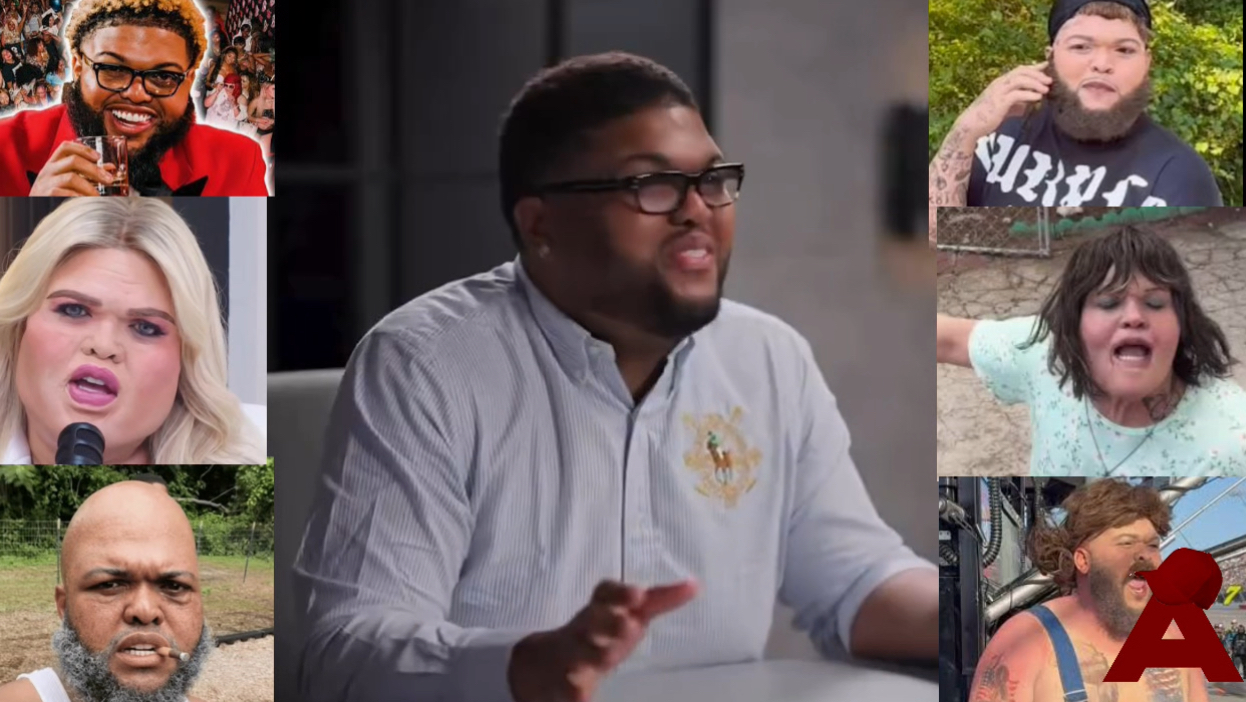
Drew “Druski” Desbordes turned a Gwinnett County childhood, a college dropout year, and years of posting phone videos from his mother’s house into one of the defining comedy careers of the social-media era. The Atlanta-area creator is now a multimillion-follower sketch artist, festival headliner, BET Awards host, Super Bowl commercial star, and self-funded producer whose “Coulda Been” universe spans YouTube series, tours, and a growing entertainment company.
The latest chapter of that story arrived this week. In a lengthy Diary of a CEO conversation, Druski spoke openly about the household that shaped his humor: an abusive father, a mother and brother he tried to protect with jokes, and comedy as a tool for making a tense home feel a little lighter. That origin story is not the usual “overnight viral” narrative. It is the through-line.
Druski Interview: Suburban Atlanta roots and a house that needed a ‘funny guy’
Drew Desbordes was born September 12, 1994, in Columbia, Maryland, and raised in Gwinnett County, Georgia—Snellville and the South Gwinnett High School area north of Atlanta. His mother, Cheryl, worked in public health (CDC and later Department of State). His father, David McLain Desbordes, was a United Airlines pilot, a former Air Force captain, and National Guard major. The family was not poor. Druski has been careful to say they were not a “broke home.” They were, in his words, a broken one.
In the recent interview he described watching his father beat his brother for wetting the bed and witnessing his mother being choked and locked out of the house. He did not claim he himself was the primary target of the worst physical violence, but he watched it happen.
His response, even as a kid, was to become the person who tried to reset the room. “I would always try to be, ‘Oh, the funny guy,’ maybe at dinner after or maybe after the next day goes by, and I’m trying to lift everybody’s vibe up,” he said. “My comedy comes from that place of healing, wanting to make our situation better at home.”
He has connected his brother’s later diagnoses of schizophrenia and bipolar disorder to that trauma. He has also said he has forgiven his father and now has a good relationship with him, reframing some of the harshness as inherited intensity from his father’s own upbringing. The hypervigilance that helped a child read a dangerous room later became professional skill: noticing tiny shifts in an audience, a co-star, or a host and adjusting in real time.
The nickname “Druski” itself is local and unglamorous. In middle school, classmates started calling him that after a character on the reality show College Hill. It stuck. At home his mother put him in front of the family camcorder to practice impressions. The dinner table was his first stage. Atlanta snap-era culture—big white T-shirts, Soulja Boy, the particular mix of suburban and street energy in Gwinnett—gave him a specific observational palette he still uses. “If I grew up anywhere else, I don’t know if I would be the same person,” he has said.
Dropout, depression, and the first Instagram videos
After high school he tried college the conventional way: Georgia Gwinnett College, then Georgia Southern University as a sports-analytics major who thought he might become a sportscaster. He was depressed, stopped going to class, sat in his dorm playing NBA 2K and watching YouTube (Steve Harvey and Gary Vaynerchuk were early influences), and dropped out after two semesters.
His mother cried when he told her. He moved back home and slept on the floor at times. He worked service jobs and, by his own later account, drifted toward Atlanta’s street-scam scene before a gun-to-the-head moment convinced him there was no Plan B. He wrote the line down: “Don’t have a plan B, your plan A will work.”
On October 2, 2017, he posted his first comedy skit on Instagram as @druski2funny. Early work was raw character comedy: the entitled frat brother Kyle Rogger, an angry high-school football coach, a power-tripping TSA agent, a ruthless fake record-label executive. The videos were anthropological—specific enough to feel like people you actually know, vulgar enough to travel. His mother at one point came home, saw him rearranging the living room for a sketch, and told him he needed a real job. That embarrassment, he has said, made him get serious.
For a few years almost nothing happened. He promoted other people’s music on his story for a couple hundred dollars a day. Friends recorded him at a gas station and told him to just be himself. Consistency, not a single video, is the part of the story he now emphasizes. Most people quit in years three and four, he says, when the numbers still look like failure.
2020: hip-hop co-signs and the celebrity bubble
The pandemic accelerated everything. People were stuck inside scrolling. Druski’s sketches were already there. Then the co-signs arrived. He and Jack Harlow, who lived minutes apart in Atlanta, started working together. Lil Yachty put him in the “Oprah’s Bank Account” video.
Drake, who had seen the Kyle Rogger bits, DMed him and put him in the “Laugh Now Cry Later” video. Odell Beckham Jr. let him stay at his place. Professional athletes started quoting the sketches. The “internet comedian who hangs with rappers” lane opened, and Druski occupied it without looking like he was forcing it.
He opened for J. Cole and 21 Savage. He toured with Chris Brown and Lil Baby. Brands noticed: Beats, Google, Nike, later Dunkin’ Super Bowl work, T-Mobile. He launched the satirical label Coulda Been Records in 2019 as an Instagram Live anti-talent show. It became a franchise—Coulda Been House, Coulda Been Love, Coulda Fest at State Farm Arena in his hometown, arena tours, and the production company 4Lifers Entertainment. When streamers passed on his ideas, he financed the shows himself on YouTube. Those same platforms later came back around.
He tried Los Angeles for six months and returned to Atlanta. The city is still the center of the work.
From living-room sketches to awards stages
By the mid-2020s the résumé looked like a traditional entertainment career that had skipped the traditional gatekeepers: acting roles (Praise This, Grown-ish, the upcoming The Catch with Emma Stone and Chris Pine), commentator on The Voice, youngest BET Awards host, ESPYs presenter, Forbes top-creators list, equity in products, a sports agency. Followers sit in the tens of millions across Instagram, TikTok, and YouTube. The numbers are large. The method stayed recognizably the same: characters pulled from real rooms, timing sharpened by years of reading a tense household, and an insistence on owning the IP.
Druski’s recent willingness to talk about the abuse and the brother’s mental-health struggles does not rewrite the jokes. It explains the reflex. The kid who tried to lift the vibe after dinner became the adult who can walk into a Super Bowl commercial, a Drake video, or a two-hour podcast and still feel like the same person his classmates called Druski. Atlanta did not just give him material. It gave him the audience that recognized the material first. The rest of the world caught up later.