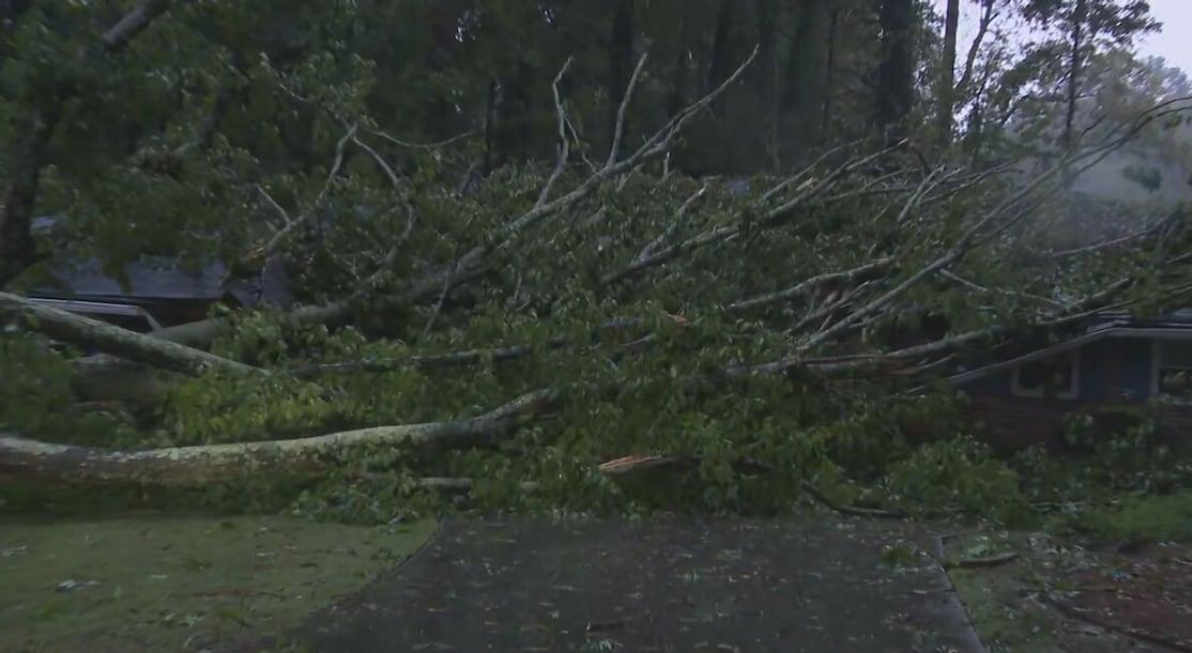

ATLANTA — A large Flash Flood Warning remains in effect for much of the Atlanta metro area through early this afternoon as one of the tropical rain bands associated with the remnants of Hurricane Isaias has set up over the region and is producing heavy, slow-moving rainfall.
As of the 9:30 a.m. update, the warning covers areas from Stonecrest to McDonough through 1:15 p.m., including the city of Atlanta. Two to three inches of rain have already fallen in this corridor in the past three hours. Many creeks in Atlanta are at their banks.
Flash Flood Warning for Much of Metro Atlanta as Isaias Dumps Heavy Rain
The National Weather Service in Peachtree City issued the Flash Flood Warning at 7:12 a.m. EDT for Clayton County, DeKalb County, central Fulton County, southwestern Gwinnett County, northwestern Henry County, and central Rockdale County.
It is in effect until 1:15 p.m. EDT due to Hurricane Isaias. Radar indicated thunderstorms producing heavy rain, with 1 to 3 inches already fallen and an additional 2 to 3 inches possible in the warned area. Flash flooding is ongoing or expected to begin shortly.
Locations that could experience flash flooding include Atlanta, McDonough, Decatur, Jonesboro, Peachtree Corners, Sandy Springs, Johns Creek, Dunwoody, East Point, Duluth, Stockbridge, Forest Park, Riverdale, College Park, Lilburn, Chamblee, Norcross, and Doraville.
With little movement in the rain band, totals can accumulate quickly. These are the tropical bands previously forecast, which should become less widespread through the afternoon but are likely to return this evening. A broader Flood Watch remains in effect for metro Atlanta and much of north and central Georgia through Sunday morning due to post-tropical Cyclone Isaias, which is expected to bring rounds of heavy rain with widespread totals of 1 to 4 inches and localized amounts up to 8 inches where the heaviest bands train.
The primary hazards are flash flooding of small creeks and streams, urban areas, highways, streets, underpasses, and other poor-drainage or low-lying spots. Officials urge residents to “turn around, don’t drown,” as most flood-related deaths occur in vehicles. Avoid flooded roads, monitor local conditions, and stay alert for rapidly rising water, especially near creeks already running high.