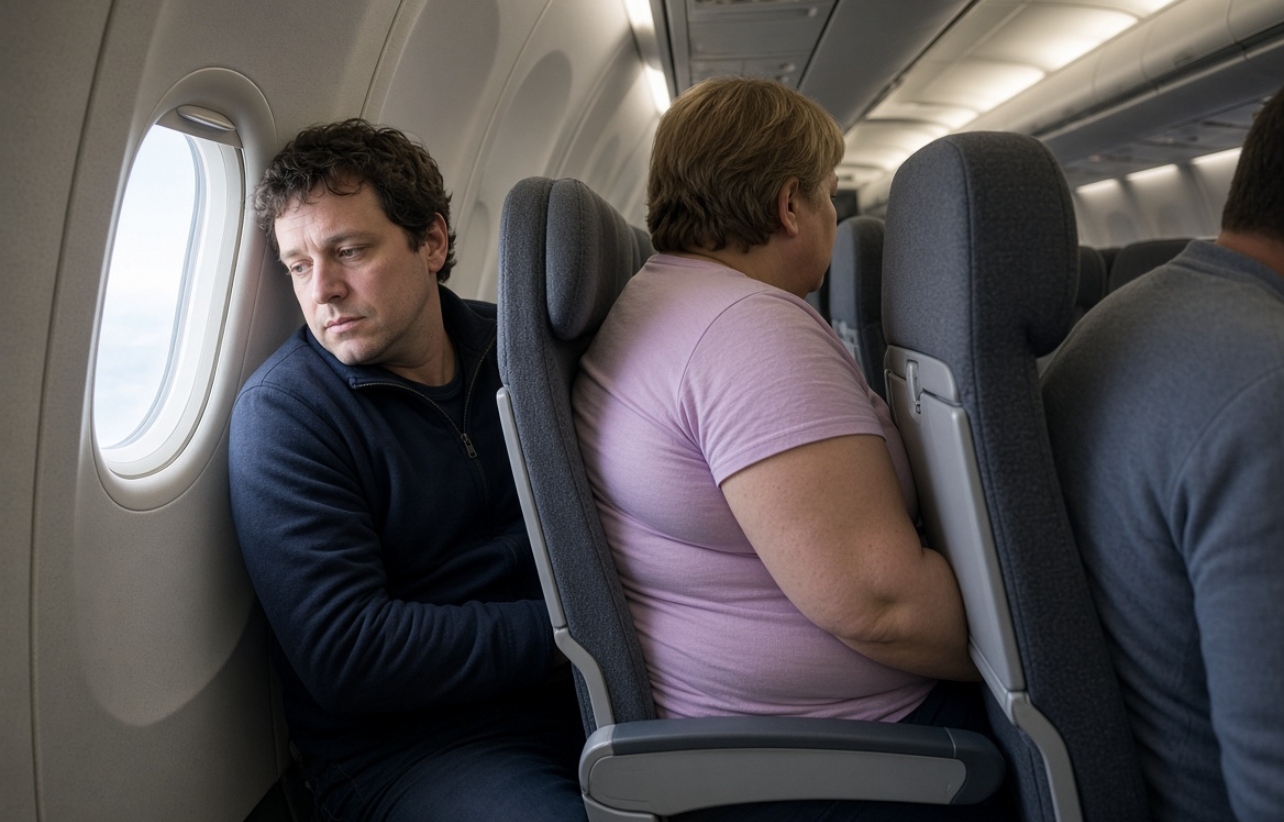

An Atlanta-to-Seattle Delta Air Lines flight that should have been a routine 5½-hour trip has become the subject of a personal-injury lawsuit after passenger Rolando Jimenez said he was forced to sit twisted against the cabin wall for the entire journey — and later needed emergency back surgery.
Jimenez filed suit in Gwinnett County State Court against Delta Air Lines, Inc., docketed as Rolando Jimenez v. Delta Air Lines, Inc., No. 26-C-09516-S6.
Delta lawsuit: Crowded Seat Led to Spine Problems
The complaint alleges that in October 2024 he was a fare-paying Main Cabin passenger in a window seat aboard an Airbus A321 when the larger passenger in the middle seat spilled into his assigned space. With no room to sit normally, Jimenez says he spent the flight in a “constrained and twisted posture” pressed against the aircraft wall.
He asked flight attendants to move him. The flight was full, the lawsuit says, and no alternative seat was offered.
When he stood after landing, Jimenez alleges he felt “immediate and severe pain radiating from his lower back down his left leg.” He sought urgent care within two days. In the weeks that followed, the pain worsened; walking, climbing stairs, bathing, and sleeping became difficult, and he eventually needed a cane.
On November 8, 2024, he underwent an L3-4 laminectomy. Symptoms later returned. He has since been diagnosed with chronic pain syndrome and may need a spinal cord stimulator, the complaint states. Medical bills to date are listed at $44,447.51, plus claims for pain and suffering, emotional distress, future care, punitive damages, and attorney’s fees. He has requested a jury trial.
The legal theory: seats, space, and duty of care
The lawsuit is not only about one neighboring passenger. Jimenez’s attorneys argue Delta configured its A321 Main Cabin with seats about 17.3 inches wide and 31 to 32 inches of pitch — dimensions they say leave a measurable share of adults unable to fit without overflowing into the next seat. The complaint alleges the airline increased density to maximize revenue and shifted the physical cost onto neighboring passengers.
Causes of action include negligence, common-carrier liability, and aggravation of a preexisting condition, along with a claim that Delta failed to enforce its own seating policies or provide a safe, usable seat.
Delta, based in Atlanta, told local media it does not comment on pending litigation.
What happens next
The allegations remain unproven. Airlines routinely defend seating configurations as industry-standard, and courts often treat passenger size, preexisting spinal conditions, and mid-flight posture as fact-intensive questions of causation. Still, the case puts a spotlight on a familiar complaint: economy seats have grown tighter while the flying public has not. A nonstop Atlanta–Seattle hop covers roughly 2,180 miles and typically lasts five to five-and-a-half hours — long enough, Jimenez’s lawyers say, for a cramped, twisted posture to become more than an inconvenience.1
Whether a Georgia jury will treat that as negligence — or as an unavoidable feature of packed air travel — is now a question for the court.
More From AtlantaFi.com: