-
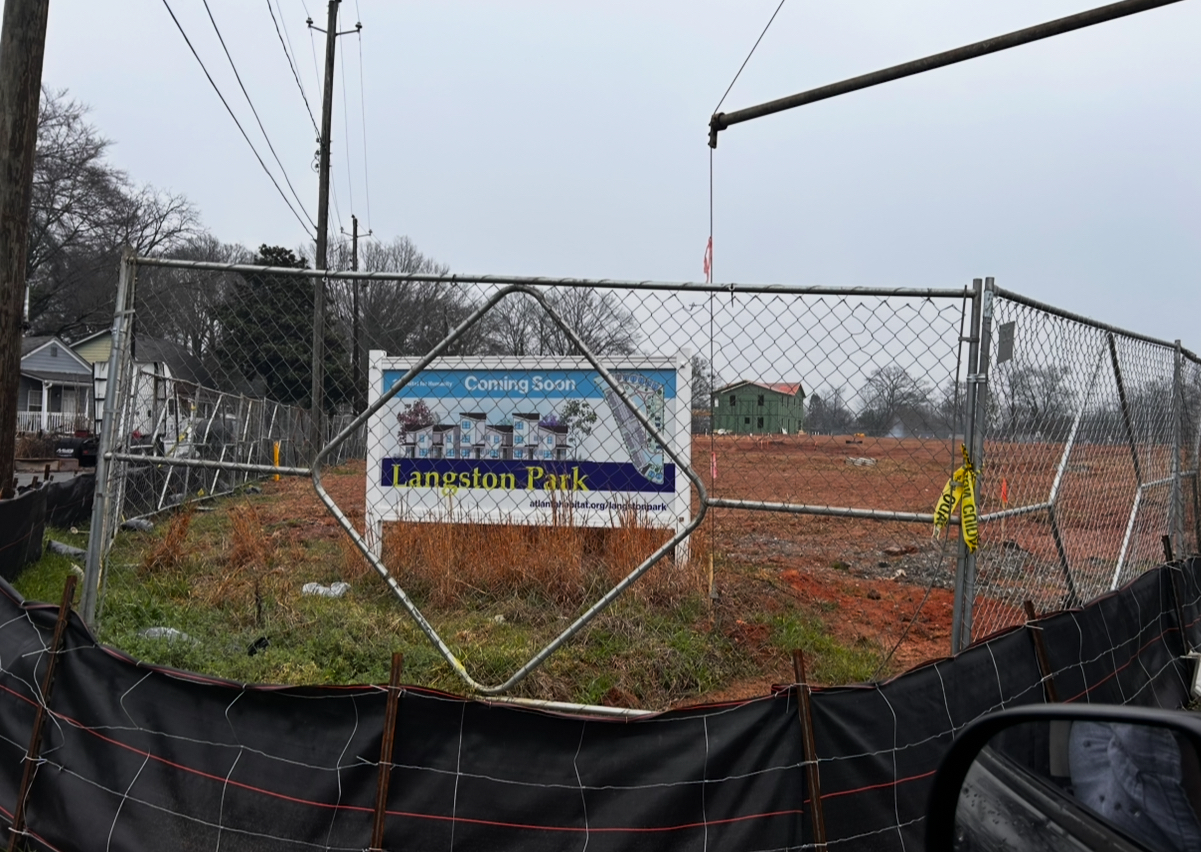
Atlanta Habitat for Humanity has cleared the land and has broke ground on Langston Park, a master-planned community in the historic Sylvan Hills neighborhood that introduces townhome-style homes for the first time in the organization’s 42-year history.
Announced in early 2025, Langston Park aims to expand homeownership opportunities by offering a more diverse mix of housing types that are modern, sustainable, and efficient.
Langston Park Being Built in Atlanta’s Sylvan Hills Neighborhood
The development will feature attached townhomes in configurations of 2-, 4-, and 6-unit buildings, designed with contemporary aesthetics similar to Atlanta Habitat’s popular two-story single-family homes but incorporating shared walls to maximize space and affordability.
Future phases of townhome construction are planned to include 2- and 3-story options with 3- or 4-bedroom layouts, providing flexibility for families of varying sizes.
Situated at 1579 Langston Ave. on the western edge of Sylvan Hills, the site offers strong connectivity: it’s near two MARTA stations (including the Oakland City station), the Westside Trail of the Atlanta Beltline, and nearby green spaces. This location supports easier access to transit, walking paths, and community amenities—key advantages for future residents.
Homebuyers who join Atlanta Habitat’s program starting in 2025 will have the chance to purchase these brand-new townhomes, marking a historic shift from the organization’s traditional focus on standalone single-family homes. Construction on the project is scheduled to begin in 2026.
Langston Park represents Atlanta Habitat’s second major planned development in Sylvan Hills and is envisioned as a higher-density community overall. Master plans call for up to approximately 68 homes across the roughly eight-acre site, including around 40 townhomes, 18 duplexes, and 10 single-family homes.
The project will gain national attention in May 2026 when it hosts the 40th Jimmy & Rosalynn Carter Work Project
From May 3-8, thousands of volunteers are expected to converge on the site to build 24 new homes—single-family units and townhomes—in just five days, kicking off broader construction efforts.
Atlanta Habitat encourages prospective homebuyers interested in Langston Park to apply through their monthly homebuyer program opportunities.
The organization also invites community members to support the initiative by donating, volunteering on construction or other teams, or contributing goods to its ReStores.
For more information on the Langston Park development, homebuyer applications, or ways to get involved, visit atlantahabitat.org.
More From AtlantaFi.com:
-
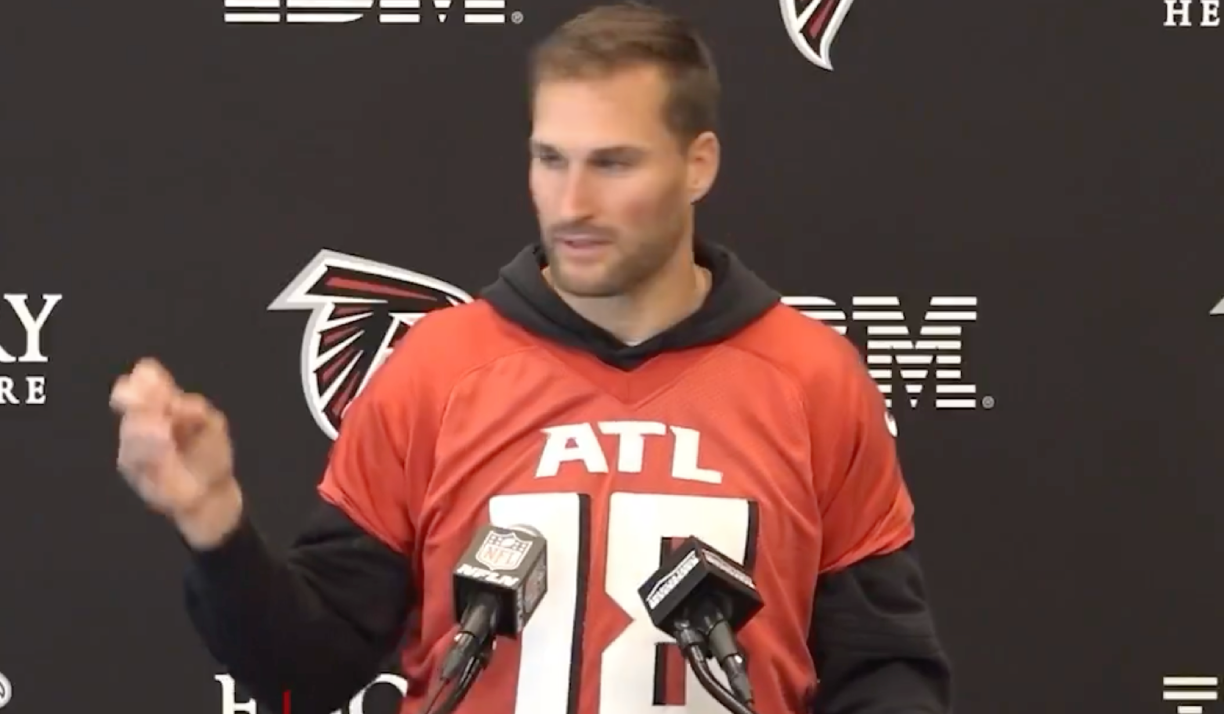
ATLANTA, Ga. – February 24, 2026 – In a move that marks the end of Kirk Cousins’ two-year chapter with the Atlanta Falcons, General Manager Ian Cunningham confirmed Tuesday that the team will release the veteran quarterback on the first day of the new NFL league year, March 11.
Speaking on 92.9 The Game from Indianapolis, Cunningham said he personally informed Cousins and his representatives of the decision, describing it as one made “out of respect” for both the longtime starter and the team’s young franchise quarterback, Michael Penix Jr.
Falcons GM Ian Cunningham: Team to Release Veteran QB Kirk Cousins on March 11
Cousins, 37, arrived in Atlanta in March 2024 as a proven, high-volume passer brought in to provide immediate stability at the most important position on the field. The Holland, Michigan native and Michigan State Spartan was originally a fourth-round pick (102nd overall) by the Washington Redskins in 2012.
After backing up Robert Griffin III early on, he blossomed into a starter, posting three straight 4,000-yard seasons (2015-17) — a franchise first — and earning Pro Bowl honors while setting Washington records for passing yards and 300-yard games.
He signed a groundbreaking fully guaranteed three-year, $84 million deal with the Minnesota Vikings in 2018, becoming one of the league’s most consistent quarterbacks over the next six seasons.
Cousins earned three more Pro Bowl nods with Minnesota, led multiple playoff runs, and authored memorable comebacks — most famously the largest in NFL history, erasing a 33-point deficit against the Indianapolis Colts in 2022.
Entering 2023, he had thrown for over 24,000 yards and 180 touchdowns with the Vikings before a torn Achilles in Week 8 ended his season.
The Falcons, coming off years of quarterback uncertainty, signed Cousins to a four-year, $180 million contract (with $100 million guaranteed) to anchor the offense while grooming Penix, whom they drafted eighth overall just weeks later.
Cousins delivered early flashes in Atlanta. He led a Monday Night Football upset in Philadelphia in Week 2 of 2024 and exploded for a franchise-record 509 passing yards in a Week 5 overtime thriller against the Buccaneers — the night Matt Ryan was inducted into the Ring of Honor.
But a mid-season slump followed: four straight games without a touchdown pass (a first in his career) and a career-high four interceptions in one outing against the Chargers. The Falcons benched him late in the year in favor of Penix.
Cousins finished 2024 with 3,508 yards, 18 touchdowns and 16 interceptions on 66.9% completion in 14 starts.
In 2025, he began as Penix’s backup but stepped in after Penix’s season-ending knee injury, sparking a four-game winning streak to close the year.
He went 5-3 as a starter in 2025, throwing for 1,721 yards, 10 touchdowns and five interceptions in eight starts.
This offseason the sides restructured his deal — dropping his 2026 base salary from $35 million to $2.1 million while shifting money to create a $67.9 million vesting guarantee that would have locked in shortly after the new league year.
Releasing him on March 11 allows Cousins to enter free agency immediately while giving the Falcons cap relief.
Throughout his time in Atlanta, Cousins remained a consummate professional, publicly embracing his role as mentor to Penix while repeatedly stating he still believes he can start and win in this league.
In June minicamp he said, “I’m just here to support [Penix] as he needs it… I also don’t need to be in his ear so much that I’m sort of another weight, another voice.”0
Cunningham made clear the organization is fully committed to Penix as the starter moving forward and will now turn its attention to building depth around him in the quarterback room.
For Cousins, a 14-year veteran with 44,700 career passing yards and 298 touchdowns (ranking among the all-time leaders in completion percentage and passer rating), the next chapter begins as one of the top available veteran signal-callers on the open market.
Falcons fans will remember the big arm, the record-breaking nights, and the steady leadership he brought during a transitional era in Atlanta. As the team looks ahead under new leadership, the focus shifts squarely to the future — with Michael Penix Jr. now firmly at the controls.
-

The Publix Atlanta Marathon Weekend kicks off this Saturday with the 5K and youth events, followed by the full marathon and half marathon on Sunday, March 1—marking the 20th running of this beloved Atlanta tradition organized by the Atlanta Track Club.
With the Georgia World Congress Center Expo in full swing today and tomorrow (Friday, February 27, and Saturday, February 28, from 9 a.m. to 6 p.m. in Hall C4), thousands of runners are picking up bibs, shopping gear, and attending sessions like course previews with In-Training Coach Bob Wells.
Many are also taking in stories from marathon founder Victoria Seahorn, and chats with “streakers” who’ve completed all 19 prior events.
The 5K starts bright and early Saturday at 7:15 a.m. from The Home Depot Backyard (1 Backyard Way, Atlanta, GA 30313), giving participants a fun, fast tour to kick off race weekend.
Note: The 5K is officially sold out, but limited spots may remain for Sunday’s longer distances—check atlantatrackclub.org for updates.
Runners are preparing to tackle a certified, rolling-hills course that winds through iconic Atlanta spots: past Martin Luther King Jr. National Historic Park, Piedmont Park, Grant Park, and campuses including Georgia Tech, Clark Atlanta University, Morehouse College, Spelman College, and Georgia State University.
It’s a true city showcase, and this milestone year has generated huge excitement.
Weather looks favorable for performance: Forecasts for Saturday, February 28, point to daytime highs around 60-64°F with partly cloudy skies—milder than a typical late-February chill, though overnight lows could dip into the upper 40s.
Sunday, March 1, should be similar or slightly warmer. Organizers advise layering up for early-morning starts and staying hydrated, as these conditions are ideal for PR attempts but can still feel brisk pre-dawn.
Road closures will impact Midtown, downtown, and surrounding areas both days—starting early Saturday morning for the 5K and expanding Sunday for the marathon and half.
Atlanta Track Club strongly recommends taking MARTA to avoid traffic delays; trains will run with increased frequency (every 10-20 minutes on key lines, with extras during peak times). Full closure maps and times are posted at atlantatrackclub.org/road-closures.
Local runners shared their prep vibes at the Expo: “This course hits all the heart of Atlanta—rolling but rewarding,” said one Midtown resident training for the half.
Elite athletes are expected to vie for top spots, and pace teams will help guide thousands chasing Boston qualifiers or personal milestones.
Whether you’re running, cheering, or just navigating the city this weekend, Publix Atlanta Marathon Weekend promises energy, community, and a celebration of 20 years of finish-line memories. Stay tuned for live updates, results, and post-race coverage from Atlanta News!
More From AtlantaFi.com:
-

ATLANTA — California Gov. Gavin Newsom’s book tour stop in Atlanta turned into a national flashpoint on Sunday after comments he made during a conversation with Mayor Andre Dickens drew accusations of racism from conservative critics.
The event, held at the Rialto Center for the Arts and hosted by A Cappella Books, was part of Newsom’s promotion for his new memoir, Young Man in a Hurry: A Memoir of Discovery.
Newsom Sparks Controversy in Atlanta with Remarks on Dyslexia and SAT Scores
During the onstage discussion, Newsom sought to connect with the predominantly Black audience by sharing personal anecdotes about his academic struggles, which he attributes to lifelong dyslexia. “I’m not trying to impress you. I’m just trying to impress upon you, ‘I’m like you. I’m not better than you.’ I’m a 960 SAT guy,” Newsom said, referring to his low score on the college entrance exam.
He added, “And I’m not trying to offend anyone; I’m not trying to act all there if you got 940 … You’ve never seen me read a speech because I cannot read a speech.”
The remarks quickly went viral after a clip was shared online, which framed the comments as Newsom telling a “black crowd” that he is “like you” because he “can’t read.”
The post garnered over 40 million views, igniting a firestorm of criticism from Republicans and right-leaning commentators who accused Newsom of perpetuating racist stereotypes about Black intelligence and literacy.
U.S. Sen. Tim Scott (R-S.C.), a prominent Black conservative, lambasted Newsom on X, calling the comments a “self-own” and implying they revealed underlying bigotry.
Florida Rep. Randy Fine echoed the sentiment, stating, “Gavin Newsom just said he is like a black person because he got a bad SAT score and can’t read.”
Outkick founder Clay Travis described it as “racist,” while rapper Nicki Minaj weighed in, accusing Newsom of “bonding with black ppl” by implying they are “stupid” and slowing down his speech.
Mayor Dickens, who moderated the event, appeared engaged during the exchange, nodding and laughing at points, according to video footage.
However, some observers noted a brief awkward reaction on Dickens’ face before he responded positively.
Dickens has not publicly commented on the controversy, but the event was billed as “An Evening with Gavin Newsom and Andre Dickens,” highlighting the mayor’s role in welcoming the California governor to Atlanta.
Newsom, who graduated from Santa Clara University in 1989, has long discussed his dyslexia publicly, framing it as a challenge that did not define his success.
In a heated response on X, he pushed back against the accusations, calling out critics for “fake f–ing outrage” and pointing to past instances of racism from Republicans, such as former President Donald Trump’s comments on African nations and an ape video involving Barack Obama.
“You didn’t give a s–t about the President of the United States of America posting an ape video of President Barack Obama or calling African nations s—holes — but you’re going to call me racist for talking about my lifelong struggle with dyslexia?” Newsom wrote.
Supporters argue the remarks were self-deprecating and taken out of context, emphasizing Newsom’s intent to inspire by showing that personal setbacks do not limit potential. “I have dyslexia, right. I mean, I—I struggled, uh, in school. I still struggle reading, to this day. But I didn’t let that define me,” Newsom elaborated in the full context of the discussion.
The incident comes amid Newsom’s multi-state book tour, which has fueled speculation about his ambitions for a 2028 presidential run. 0 Earlier that day, Newsom endorsed former Atlanta Mayor Keisha Lance Bottoms for Georgia governor, adding a political layer to his visit.
In his remarks, Newsom also urged Democrats to “fight fire with fire” against the Trump administration, positioning himself as a combative voice for the party.
Locally, the controversy has sparked debate among Atlanta residents about race, politics, and representation.
As a key figure in the event, Mayor Dickens’ involvement places Atlanta at the center of a broader national conversation on how Democratic leaders engage with Black voters in the South.
Critics on social media have called the moment a “major political misstep,” while others defend it as an honest attempt at relatability.
The Atlanta Daily News reached out to Mayor Dickens’ office for comment but has not received a response as of publication. Newsom’s team reiterated that the governor’s comments were about his personal experiences with dyslexia and not intended to offend.
-

Violent clashes erupted across parts of Mexico on Sunday after Mexican forces killed Nemesio “El Mencho” Oseguera Cervantes, the longtime leader of the Jalisco New Generation Cartel, during a military operation in Jalisco state.
Cartel members responded with road blockades, arson attacks on vehicles and businesses, and clashes with security forces in at least a dozen states.
How Atlanta Travelers Can Safely Fly Home from Mexico After Violent Clashes Following El Mencho’s Death
While Mexican authorities say they are restoring order with thousands of additional troops deployed, the unrest has disrupted air travel—especially in popular tourist hubs like Puerto Vallarta and Guadalajara—leaving many American visitors, including those who flew from Hartsfield-Jackson Atlanta International Airport on Delta and other carriers, temporarily stranded.
Current U.S. Government Guidance for Americans in Mexico
The U.S. Embassy and Consulates in Mexico issued updated security alerts urging U.S. citizens in affected areas to shelter in place and avoid unnecessary travel. U.S. government personnel are doing the same in:
- Guadalajara and Puerto Vallarta (Jalisco)
- Tijuana and other parts of Baja California
- Parts of Michoacán, Chiapas, Nayarit, Colima, Guanajuato, Guerrero, and several other states
Good news for many travelers: The situation has returned to normal in Quintana Roo state (Cancún, Cozumel, Playa del Carmen, Tulum), Sinaloa, and Tamaulipas. Flights and daily life there are operating as usual.
Flight Status and How to Get Out
- Puerto Vallarta (PVR): Significant disruptions due to flight-crew availability. Multiple U.S. carriers—including Delta (with direct flights from Atlanta), Southwest, American, United, and Air Canada—have canceled or suspended service through at least Tuesday. Some flights may resume as early as today or tomorrow.
- Guadalajara (GDL): Many cancellations, but some scheduled flights are still departing. Travelers whose flights are canceled are advised to rebook connections through unaffected Mexican cities such as Mexico City (MEX), Cancún (CUN), or Los Cabos (SJD).
- All other Mexican airports (including Cancún, Mexico City, Los Cabos, and Monterrey) are open and operating normally with no widespread security-related disruptions.2531
Practical Steps for Atlanta-Area Travelers
- Stay put and stay safe: Remain in your hotel or residence. Avoid roads, airports during peak unrest hours, and any areas with law enforcement activity.
- Check your flight immediately: Use your airline’s app or website (Delta, American, Southwest, United, etc.). Many carriers are offering flexible rebooking or refunds for affected routes.
- Rebook smartly: If your PVR or GDL flight is canceled, look for routings via Mexico City or Cancún—plenty of seats are still available on those routes. Ground transport between cities is not recommended right now due to blockades.
- Contact help lines:
- U.S. Department of State 24/7 crisis hotline: 1-888-407-4747 (from U.S./Canada) or +1-202-501-4444 (from Mexico)
- U.S. Embassy in Mexico City: (55) 2579-2000
- Enroll in STEP: If you haven’t already, register your trip at travel.state.gov so the Embassy can reach you with updates.
- Monitor official sources:
- U.S. Embassy Mexico security alerts: mx.usembassy.gov
- @TravelGov on X and Facebook
- Mexican road status: @CAPUFE on X
Delta Air Lines, Atlanta’s hometown carrier, has canceled several Puerto Vallarta flights from ATL but continues normal operations to Cancún and other unaffected destinations. Travelers booked on Delta should check the Fly Delta app for real-time rebooking options and waiver information.
Mexican President Claudia Sheinbaum stated that “peace, security and normalcy” are being restored, and authorities expect most flight disruptions to ease within 24–48 hours.
For Atlantans planning future trips: The State Department maintains a Level 2 “Exercise Increased Caution” advisory for most of Mexico, with higher warnings for certain states. Check travel.state.gov before booking.
Atlanta News will continue monitoring the situation and provide updates as flights resume and the security picture evolves. Stay safe, and safe travels home.
If you are currently in Mexico and need assistance, call the State Department hotline listed above.
Check Out Our Atlanta Travel Guide
-

Well-known fitness brand Barry’s is expanding its footprint in Atlanta with the official opening of its second studio in the heart of Midtown at the 1105 West Peachtree mixed-use development.
This new location joins the existing Barry’s Buckhead studio and underscores the brand’s strong commitment to Atlanta’s thriving fitness scene.
Barry’s Opening Second Atlanta Location in Midtown
Situated in one of the city’s most dynamic and walkable neighborhoods, the Midtown studio is poised to become a hub for locals, professionals, and fitness enthusiasts alike.
The studio introduces an innovative multi-room layout to accommodate a variety of training styles. It features the signature Red Room, where Barry’s iconic RUN x LIFT classes take place—blending treadmill sprints with floor-based strength exercises for a high-intensity, full-body burn.
More From AtlantaFi.com:
- The Top Yoga Studios in Atlanta
- Try These 4 Workouts for Beginners
- Dumbbell Dens; The Best Gyms in Atlanta
Classes rotate daily to target specific muscle groups, ensuring balanced progression and variety throughout the week.
Each session offers 45 spots, and for those who prefer to skip the cardio, a “double floor” option provides extra strength-focused time on the floor.
Complementing the Red Room is a dedicated LIFT studio with 18 spots per class. This 50-minute strength-only format emphasizes controlled movements, smart programming, and targeted rep schemes to build muscle, refine technique, and boost long-term performance. It delivers the same motivating structure and intensity Barry’s fans love, but in a lower-impact environment ideal for recovery days or strength-focused training.
Beyond the workouts, Barry’s Midtown is designed as a complete lifestyle spot. Members can refuel at the on-site Fuel Bar, which offers clean, nutritious protein shakes perfect for pre- or post-workout recovery. The spacious locker rooms come equipped with premium touches, including Dyson hair dryers and OUAI’s popular hair care products.
The studio’s prime location at 1105 West Peachtree provides convenient access for Midtown residents, nearby office workers, and commuters.
Barry’s partnered with Selig Development, the leasing arm of Selig Enterprises, to secure the space in this bustling mixed-use project.
Classes, packages, and memberships are available for purchase now. Here are the current options tailored for the Midtown location:
- Midtown Atlanta Originals Plus Membership (requires a 3-month commitment; includes exclusive perks like membership-specific retail gifts, complimentary guest passes, and more):
- 8 classes/month: $157
- 12 classes/month: $214
- 16 classes/month: $255
- 30 classes/month: $285
- Midtown Atlanta Originals Membership (no commitment required; pricing locked for 12 months from studio opening, valid only at Midtown):
- 8 classes/month: $157
- 12 classes/month: $214
- 16 classes/month: $255
- 30 classes/month: $285
- Midtown Atlanta Exclusive Offer: Welcome to Midtown Starter 5-Pack — $85 for 5 classes (valid at Midtown Atlanta only)
Fitness lovers in Midtown can now level up their routines with Barry’s signature high-energy vibe right in their neighborhood.
For the latest details, class schedules, or to book your spot, visit the Barry’s website or stop by the new studio at 1105 West Peachtree. Atlanta’s fitness community just got a major upgrade! -

Atlanta, GA – February 23, 2026 – Georgia’s rich agricultural heritage continues to thrive, and family farms across the state—including those in the metro Atlanta region and surrounding counties—are invited to apply for recognition through the Georgia Centennial Farm Program.
Applications are now open for qualifying farms, with a deadline of May 1, 2026.
Farms have long served as the foundation of Georgia’s economy, culture, and family traditions, passing down legacies from one generation to the next. Many properties have remained active for over a century, preserving the state’s farming history amid changing times.
The Georgia Centennial Farm Program highlights these enduring operations and promotes their ongoing preservation.
Launched in 1993, the program has honored more than 630 farms statewide over the past three decades. It celebrates properties that maintain active agricultural production while meeting strict historical criteria.
To qualify, farms must:
- Be working farms with at least 10 acres retained from the original purchase.
- Actively engage in agricultural production.
- Generate a minimum of $1,000 in annual farm-generated income.
- Have been continuously farmed for at least 100 years by members of the same family, or be listed on the National Register of Historic Places.
Recognized farms receive one of several award categories, including the Centennial Heritage Farm Award (for family-owned properties listed on the National Register), the Centennial Farm Award (for century-old farms on the Register without requiring continuous family ownership), or the Centennial Family Farm Award (for century-old family-owned operations not on the Register).
Each fall, qualifying farms are celebrated during a special awards ceremony at the Georgia National Fairgrounds and Agricenter in Perry, where owners receive a certificate of honor signed by the governor.
The program is a collaborative effort administered by the Historic Preservation Division of the Georgia Department of Community Affairs, in partnership with the Georgia Farm Bureau Federation, Georgia Department of Agriculture, Georgia EMC, Georgia National Fair and Agricenter, and University of Georgia Cooperative Extension.
Local farmers and landowners in Fulton, DeKalb, Gwinnett, Cobb, and other nearby counties who believe their property meets these standards are encouraged to apply.
This recognition not only honors family legacies but also helps document Georgia’s agricultural history for future generations.
For application details, eligibility requirements, and forms, visit the official program page at the Georgia Department of Community Affairs website or contact the Historic Preservation Division. Don’t miss the May 1, 2026, deadline—your family’s farm could be the next to join this prestigious list of Georgia treasures.
Interested in dining outside? Here are the best Atlanta restaurants for outdoor eating and here are those with great patios.
If you want to take your dog to the park, here are the best Atlanta parks for Fido.
More From AtlantaFi.com:
-

WWE Women’s Champion Jade Cargill is set to make a highly anticipated appearance in her Atlanta, as WWE Monday Night Raw returns to Atlanta’s State Farm Arena on Monday, February 23, 2026.
The powerhouse wrestler, who calls the Atlanta area home, will be on hand for a pivotal segment during the live broadcast, which streams worldwide on Netflix starting at 7:30 p.m. ET (doors open at 6:00 p.m.).
Cargill, the current WWE Women’s Champion, confirmed her plans during a recent appearance on SmackDown, where she declared her intention to be present when Women’s Royal Rumble winner Liv Morgan announces her choice of opponent for WrestleMania 42.
Morgan, who emerged victorious in the 2026 Women’s Royal Rumble, faces a major decision: challenge Cargill for the WWE Women’s Championship or pursue the Women’s World Championship held by Stephanie Vaquer.
The announcement is expected to be a marquee moment on Raw, building massive momentum toward WrestleMania—the biggest event on the WWE calendar.
Cargill has been dominating the women’s division since capturing the title, showcasing her unmatched strength and athleticism.
In a recent interview with CBS News Atlanta ahead of the event, the champion emphasized the importance of representation in her journey, inspiring fans across the city and beyond.
“I’m excited to bring this energy back home to Atlanta,” Cargill shared. “The city has always supported me, and stepping into State Farm Arena as champion feels special. Representation matters—seeing someone who looks like you succeeding at the highest level can change everything for the next generation.”
While no in-ring match for Cargill has been officially announced for the February 23 episode, her presence alone promises high drama, especially with tensions rising between the top women’s stars.
Other highlights on the card include a special tribute to Georgia’s own AJ Styles following his recent retirement, the return of Brock Lesnar ahead of Elimination Chamber, and additional matches building toward major storylines.
WWE’s return to Atlanta marks the first live Raw event in the city in 2026, and tickets remain available through Ticketmaster, AXS, and the State Farm Arena box office. Fans are encouraged to arrive early for the best seats and to catch all the pre-show excitement.
Don’t miss what could be a defining night on the Road to WrestleMania. Tune in Monday night—or better yet, grab your tickets and witness it live at State Farm Arena.
Atlanta’s own Jade Cargill is ready to remind the WWE Universe exactly who’s in charge.
For more updates, follow local wrestling coverage right here and check WWE.com for the latest card additions.
More From AtlantaFi.com:
-
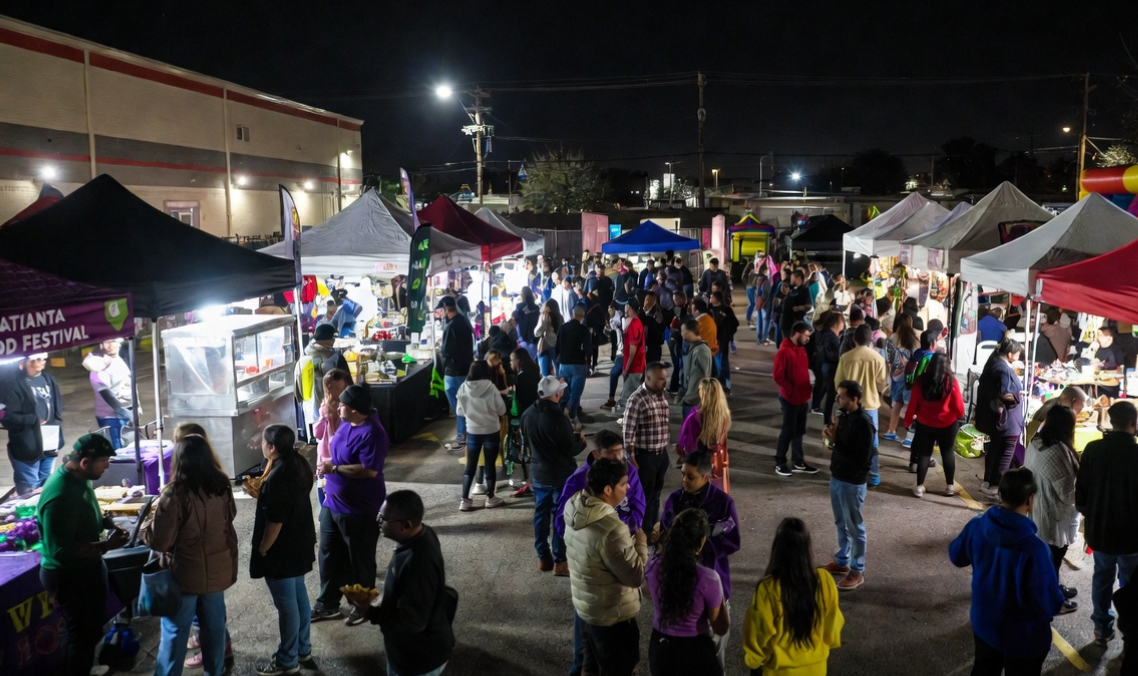
Norcross, GA – February 19, 2026 – With Ramadan approaching, metro Atlanta foodies and families are gearing up for one of the most anticipated late-night events of the season: the Atlanta Ramadan Food Festival, returning for its second year on Friday, February 27, into Saturday, February 28, from 9 p.m. to 6 a.m.
Atlanta Ramadan Food Festival: for a Vibrant Late-Night Celebration
Hosted at 2077 Beaver Ruin Rd. in Norcross, this overnight night market-style festival transforms the venue into a welcoming hub of halal eats, artisan shopping, and cultural experiences.
Featuring more than 60 carefully curated halal food vendors, the event promises diverse flavors from around the world with no menu overlap—ensuring every bite feels fresh and exciting.
Rooted in Ramadan traditions of iftar (breaking the fast) and suhoor (pre-dawn meal), the festival blends delicious food with community spirit, artisan markets, engaging cultural activations, and a dedicated kids’ area.
Indoor and outdoor spaces create a cozy, inclusive atmosphere designed for Muslims and non-Muslims alike to come together, enjoy the vibes, and celebrate the holy month.
This year’s event is intentionally limited in space and tickets to keep the experience intimate and high-quality.
Organizers from the Atlanta Muslim Festival Collective have highlighted special perks, including a custom waffle bar collaboration with Waffle House—where the first 500 ticket buyers score free waffles!
Co-Founder Hasnain Lakhani, a metro Atlanta restaurateur and community advocate, has been instrumental in bringing these inclusive food festivals to life, building on the success of previous events to foster cultural connection through cuisine.
Whether you’re craving global halal dishes, unique artisan finds, family-friendly activities, or simply a memorable night out, this festival offers something for everyone.
Event Details:
- When: Friday, February 27 – Saturday, February 28, 2026 | 9 p.m. – 6 a.m.
- Where: 2077 Beaver Ruin Rd., Norcross, GA 30071
- Tickets: $12 (plus fees), available online via cenvi.events (limited availability—grab yours soon!)
- More Info: Follow @atlramadanfoodfest on Instagram or visit the Atlanta Muslim Festival Collective website for updates, vendor previews, and high-res images.
The Atlanta Ramadan Food Festival is more than a food event—it’s a delicious way to welcome Ramadan, support local businesses, and experience the warmth of Atlanta’s diverse communities. Don’t miss out on this one-night-only extravaganza!
Stay tuned to your local source for Atlanta-area events, food news, and community spotlights.
More Content From AtlantaFi.com:
-

Stonecrest, GA – February 19, 2026 – Get ready to feel the beat! The City of Stonecrest is set to deliver an afternoon packed with high-energy performances as the second annual Battle of the Drumlines takes over Miller Grove High School Gymnasium on Saturday, February 28, 2026, from 2 to 5 p.m.
This crowd-pleasing event, which debuted in 2025, brings together the precision and power of drumlines from Historically Black Colleges and Universities (HBCUs) alongside talented high school programs.
At Stonecrest: A Celebration of Rhythm, Talent, and Black History Month Pride
It’s more than just a showcase—it’s a vibrant celebration of youth excellence, school spirit, cultural heritage, and community unity, perfectly timed to close out Black History Month.
The event aims to highlight the discipline, creativity, and teamwork of young performers while forging stronger ties between Stonecrest, local schools, HBCUs, and residents across the region. Following a successful inaugural year, organizers promise an even more electrifying experience this time around.
“This is such a dynamic showcase of extraordinary talent from our young people — their discipline, precision, and teamwork,” said Stonecrest Mayor Jazzmin Cobble. “When our high school students share the floor with HBCU band members who once stood in their shoes, it makes college aspirations feel tangible and within reach. It is moments like this second annual Battle of the Drumlines that make us truly Stonecrest PROUD!”
The lineup features powerhouse drumlines from several respected HBCUs, including:
- Albany State University
- Clark Atlanta University
- Fort Valley State University
- Talladega College
They’ll go head-to-head with standout high school drumlines from DeKalb County and neighboring areas, promising intense competition and unforgettable routines.
The Battle of the Drumlines is free and open to the public, making it an accessible way for families, students, alumni, and community members to come together and support local talent.
Mark your calendars and bring your energy—Stonecrest is about to get loud! For more details, visit the City of Stonecrest website or check official event pages on social media.
Event details: Saturday, February 28, 2026 | 2–5 p.m. | Miller Grove High School Gymnasium, Lithonia (Stonecrest area)
Stay tuned to your local source for Atlanta-area news, events, and community highlights.
More from AtlantaFi.com: