-
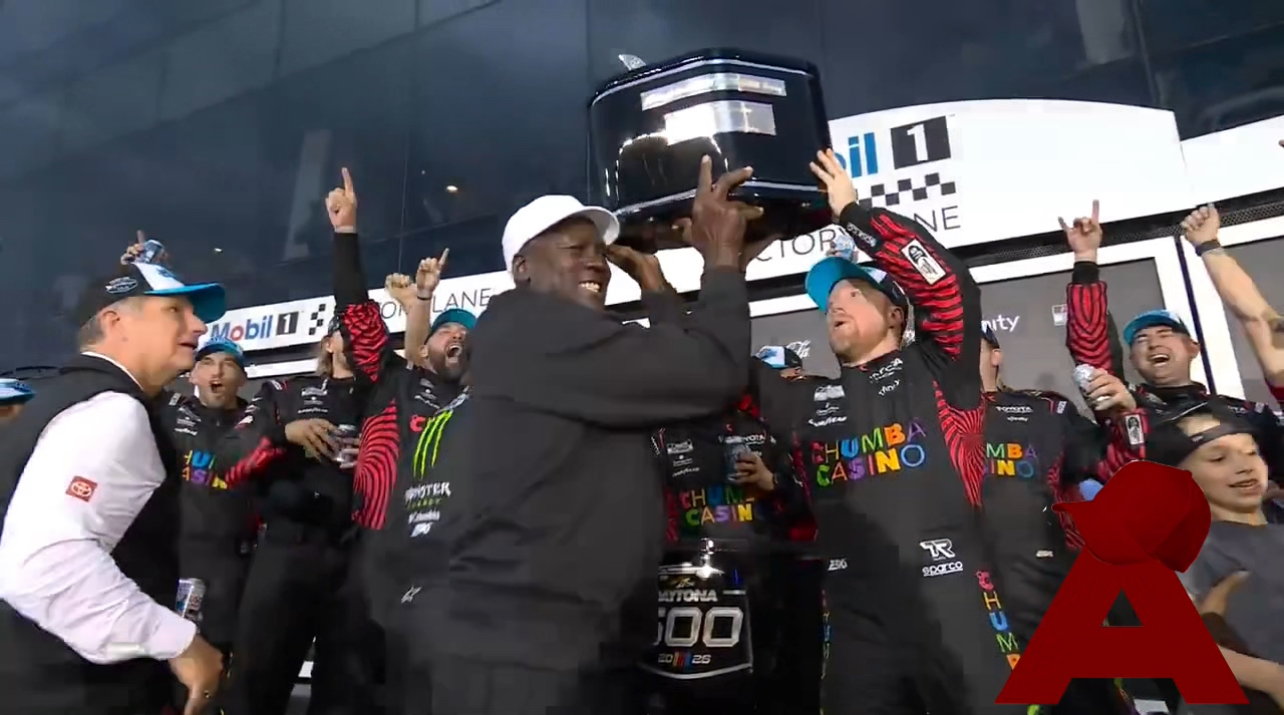
Michael Jordan added another championship to his trophy case on Sunday, February 15, 2026. Jordan is a co-owner of 23XI Racing (pronounced “twenty-three eleven”), a NASCAR Cup Series team he founded in 2020 with driver Denny Hamlin.
On this date, Tyler Reddick—driving the No. 45 Toyota for 23XI Racing—won the 2026 Daytona 500 in a dramatic, wreck-filled finish.
Jordan’s Racing Team Wins Daytona 500
Reddick led only the final lap, capitalizing on a last-lap crash involving Chase Elliott (who was battling for the lead) to take the checkered flag. This marked:
- 23XI Racing’s first Daytona 500 victory.
- Michael Jordan’s first Daytona 500 win as a team owner (often phrased as “Michael Jordan wins the Daytona 500” in headlines and commentary, despite not driving).
Jordan celebrated in victory lane, hugging Reddick, hoisting the Harley J. Earl trophy, and receiving a Daytona 500 winner’s ring (he jokingly mentioned his ring size 13).
He described the moment as feeling “like I won a championship.”
What’s Next for Jordan?
Atlanta Motor Speedway is in Hampton, GA (near Atlanta), and hosts NASCAR races, including the next event on the 2026 Cup Series schedule after this Daytona 500—the Autotrader 400 (or similar naming) on February 22, 2026.
This Daytona win positions 23XI Racing (and Jordan) strongly heading into that Atlanta race, where Atlanta is a key venue in the series Jordan now succeeds in as an owner.
-
Fast-food giant Wendy’s revealed this week that it plans to close between 298 and 358 underperforming restaurants across the United States during the first half of 2026.
The move represents approximately 5% to 6% of the chain’s domestic footprint and is part of a broader turnaround strategy amid ongoing sales challenges.
Wendy’s Closing Hundreds of Stores
The Dublin, Ohio-based company, which ended 2025 with 5,969 U.S. locations, disclosed the details in its fourth-quarter and full-year 2025 earnings report released on Friday.
This round of closures builds on previous efforts, including 240 restaurant shutdowns in 2024 and an additional 28 locations closed in the final quarter of last year.
Interim CEO Ken Cook emphasized that the decisions were made in collaboration with franchisees to eliminate “consistently underperforming restaurants” — often older, outdated facilities that drag on profitability
By streamlining its portfolio, Wendy’s aims to allow operators to concentrate resources on higher-potential sites and drive long-term growth.
The closures come after a difficult period for the chain’s U.S. operations. In the fourth quarter of 2025, same-restaurant sales (a key metric tracking locations open at least one year) dropped 11.3% domestically — the chain’s worst performance in at least two decades.
Overall U.S. systemwide sales declined significantly, reflecting broader pressures in the fast-food industry, including competition from value-focused promotions at rivals and economic strain on lower-income consumers.
While Wendy’s has not yet released a specific list of closing locations, the targeted sites are expected to include older units in various markets nationwide
Atlanta metro area residents may see some local impacts, given Georgia’s substantial number of Wendy’s outlets and the chain’s focus on removing less profitable, aging stores from high-density urban and suburban areas.
Despite the setbacks, company leadership remains optimistic about recovery. Wendy’s highlighted ongoing value initiatives like its popular Biggie Deals menu to attract budget-conscious customers. The chain also plans selective new openings in stronger markets while modernizing remaining locations to better compete.
For Atlanta-area customers, the news serves as a reminder of the evolving fast-food landscape, where chains are increasingly prioritizing efficiency and profitability over sheer expansion.
Wendy’s fans are encouraged to check their local spots for any service changes in the coming months, though no immediate widespread disruptions are anticipated beyond individual closures.
As the first half of 2026 unfolds, Atlanta Business Journal will continue monitoring updates on specific Georgia locations affected by Wendy’s restructuring plan. Company officials have indicated that more details on individual sites may emerge as the process advances.
More from AtlantaFi.com:
-

The past 125 years—from the dawn of the 1900s to the present day in 2025—represent a period of profound change for Georgia.
Emerging from the shadows of Reconstruction and Jim Crow, the state navigated racial upheaval, economic booms, global spotlights, and political realignments.
5 Most Significant Moments in Georgia’s History
At the urging of fellow scholars, I’ve revised my selection to incorporate the creation of the Federal Reserve in 1914, a landmark event with deep Georgia roots that reshaped national finance
What follows are the five most significant historical events (with one honorable expansion) that redefined Georgia, selected for their lasting impact on its society, economy, and identity.
1. The Atlanta Race Riot of 1906: Igniting Racial Tensions in the New South

In the sweltering heat of September 1906, Atlanta erupted in violence that exposed the fragility of the “New South” ideal promoted by figures like Henry W. Grady.
False newspaper reports of Black assaults on white women fueled mobs of white residents, who rampaged through Black neighborhoods for days.
At least 25 Black Georgians were killed, hundreds injured, and property destroyed, forcing thousands to flee the city.
This riot marked a grim pinnacle of early 20th-century racial terror, accelerating the Great Migration of Black Southerners northward and hardening Jim Crow segregation.
It underscored Georgia’s role in the national struggle for racial justice, setting the stage for future civil rights battles.
Most historians view the riot as the dark underbelly of Georgia’s push toward industrialization—progress built on exclusion.
Read about the Atlanta Race Massacre.
2. The Creation of the Federal Reserve in 1914: A Blueprint for Banking

Photo credit: Playhouse Media In November 1910, a secretive meeting unfolded on Georgia’s Jekyll Island, hosted by the exclusive Jekyll Island Club.
U.S. Senator Nelson Aldrich of Rhode Island, alongside bankers like J.P. Morgan representatives Paul Warburg and Frank Vanderlip, drafted the blueprint for a central banking system amid the club’s opulent hunting lodges and oceanfront cottages.
This “Duck Hunt” gathering addressed the Panic of 1907’s bank runs, proposing a national reserve to stabilize currency and credit.
The resulting Aldrich Plan evolved into the Federal Reserve Act, signed by President Woodrow Wilson on December 23, 1913, and operational by 1914.
Georgia’s secluded shores thus birthed the Fed, which has governed U.S. monetary policy for over a century—managing inflation, employment, and crises like the Great Depression and 2008 recession.
For Georgia, it elevated Atlanta as a Federal Reserve Branch hub in 1914, boosting the city’s financial stature and attracting institutions that fueled its growth into a banking powerhouse.
Want to take a deep dive? Check out how the Federal Reserve was created.
3. The Boll Weevil Devastation and the Agricultural Collapse of the 1920s

Georgia’s economy in the early 1900s was tethered to cotton, the “king” that employed much of the rural population. Then came the boll weevil, a tiny beetle that invaded from Mexico in 1915 and ravaged crops by the 1920s.
By 1921, infestations wiped out up to 50% of yields in some counties, plunging farmers into debt and triggering mass foreclosures.
Sharecroppers, both Black and white, faced starvation, leading to urban migration and the diversification of agriculture into peanuts, pecans, and poultry.
This crisis hastened the end of the plantation system and spurred New Deal reforms under Franklin D. Roosevelt, who drew inspiration from Georgia’s Warm Springs.
In my research, the boll weevil symbolizes nature’s role in dismantling an outdated economy, paving the way for Georgia’s mid-century industrialization.
4. The Civil Rights Movement and Atlanta’s Role as a Beacon (1950s–1960s)

Georgia stood at the epicenter of America’s moral reckoning with segregation. Atlanta native Martin Luther King Jr. led the Montgomery Bus Boycott in 1955–1956, then returned home to co-found the Southern Christian Leadership Conference (SCLC) in 1957.
Not only did he marry the elegant Coretta Scott King, but King Jr. added fuel to the civil rights movement by inspiring lunch counter sit-ins (1960), the Albany Movement (1961–1962), and the March on Washington (1963)—where King delivered “I Have a Dream”—drew global attention.
Atlanta’s pragmatic leaders, under Mayor William B. Hartsfield, adopted the slogan “the city too busy to hate” to avoid the violence plaguing Birmingham.
Read up on some key facts about MLK you might not know.
The movement culminated in the Civil Rights Act of 1964 and Voting Rights Act of 1965, dismantling legal Jim Crow.
As an early 1900s specialist, I see this as the fulfillment—and rejection—of the disenfranchisement my era entrenched in 1908. It transformed Georgia from a bastion of white supremacy to a hub of Black political power.
5. The 1996 Atlanta Olympics: Catapulting Georgia onto the World Stage

On July 19, 1996, Atlanta hosted the Centennial Olympic Games, the largest in history with 197 nations participating.
Over 2 million visitors flooded the city, generating $5 billion in economic impact and showcasing Georgia’s modernity through venues like Centennial Olympic Park.
Tragically, a bombing by domestic terrorist Eric Rudolph killed two and injured over 100, testing the state’s resilience.
The Games boosted infrastructure—expanding Hartsfield Airport (now the world’s busiest) and MARTA transit—and rebranded Atlanta as an international metropolis.
In the late 20th century, this event symbolized Georgia’s Sunbelt rise, attracting corporations like CNN and Coca-Cola headquarters. It marked the state’s transition from agrarian roots to global player.
These five events weave a narrative of resilience: from racial violence and financial innovation to economic ruin, triumphant activism, and global prestige.
The Jekyll Island meeting, in particular, highlights Georgia’s behind-the-scenes influence on national institutions.
Final Word
Georgia today is a diverse, booming state of 11 million, yet echoes of the early 1900s—disenfranchisement, agricultural shifts, and monetary reforms—linger in its challenges.
Many figures helped shape Georgia’s history and the world we live in right now. What they didn’t tell you about Rosa Parks.
As journalists, we document not just facts, but the human stories that propel change. The Peach State’s past 125 years remind us that history is not static; it is the foundation for tomorrow.
-
Atlanta is a city that is organized by zones. Knowing what zone you’re in can make quite a difference.
This article will tell you everything you need to know about Atlanta zones.
How Many Zones Does Atlanta have?
Atlanta is made up of six zones. The city’s planners came up with the idea to divide Atlanta into zones. Here are the zones that make up Atlanta:
Zone 1: Northwest Atlanta
The neighborhoods that make up Zone 1 include:
- Adamsville
- Bankhead
- The Bluff
- Collier Heights
- English Avenue
- Hunter Hills
- Vine City
- West Lake
Zone 2: Buckhead/Northeast Atlanta
The neighborhoods that make up Zone 2 include:
- Buckhead
- Garden Hills
- Lindbergh
- Morningside
- Piedmont Heights
Zone 3: Southeast Atlanta
The neighborhoods that make up Zone 3 include:
- Capitol View
- Lakewood Heights
- Mechanicsville
- Pittsburgh
- Peoplestown
- Polar Rock
- Summerhill
- Sylvan Hills
- Thomasville
Zone 4: Southwest Atlanta
The neighborhoods that make up Zone 4 include:
- Ben Hill
- Cascade
- Greenbriar
- Oakland City
- West End
Zone 5: Downtown And Midtown
The neighborhoods that make up Zone 5 include:
- Ansley Park
- Castleberry Hill
- Downtown
- Midtown
- Piedmont Park
Zone 6: East Atlanta
The neighborhoods that make up Zone 6 include:
- Old Fourth Ward
- Candler Park
- East Atlanta
- East Lake
- Edgewood
- Kirkwood
- Glenwood
- Little Five Points
- Grant Park
- Virginia Highlands
- Moreland Avenue
Here Is A Map Of Atlanta’s Zones

And there you have it. Those are all of Atlanta’s six zones. If you want to know what type of fod Atlanta is known for, here it is.
Georgia’s largest city continues to grow by leaps and bounds. Do you know how many people live here?
Final Word
If you’ve lived in Atlanta for any amount of time, perhaps you’ve heard about Zone 5 or Zone 6. This article is going to discuss Atlanta’s zones.
Atlanta is a great place and there’s a lot happening. To find all the good things happening in the city this week, all you have to do is take a look at downtown Atlanta. That’s where some of the best restaurants are as well as where the visitors, namely tourists, are. Downtown Atlanta or Midtown often has something cool going on!
The fun is just starting. Are you a beer drinker? You also may want to visit a craft brewery in the city.
Metro Atlanta’s food and drink scene continues to grow with no stops on the horizon. Ready to try something new?
-
Black0owned restaurants are continuously popping up in Atlanta — and the food is good. Do you want to know where to go?
This article will show you the very best black restaurants with top menu items in Atlanta.
Many of these eateries are owned by seasoned restaurateurs who have helmed some of the finest kitchens in America. Other restaurants are from well-known celebrities you’ve seen on the screen or heard on the radio.
Let’s take a culinary tour of Atlanta’s black restaurants.
Here Are The Best Black-Owned Restaurants In Atlanta
Aside from restaurateurs, some of these eateries are owned by celebrities. Let’s take a look at the best black restaurants in Atlanta.
3 Parks Wine Shops
880 Glenwood Ave, St. C Atlanta, GA 30316 (678) 349-7070

Located in the bottom of the Enso Building, just down from The Shed at Glenwood, 3 Parks Wine Shops has become a favorite neighborhood wine shop for Atlanta’s Grant Park area. Owner and Managing Partner Sarah Pierre has made sure 3 Parks Wine Shops is Atlanta’s destination for wine tastings, wine clubs and other special events.
9 Mile Station
675 Ponce de Leon Ave NE Atlanta, Georgia 30308

Entrepreneur Kelvin Slater and wife Mandy have a hit on their hands with 9 Mile Station. Described as an “elevated beer garden,” 9 Mile Station is located on the rooftop of Ponce City Market in Midtown Atlanta.
Menu favorites include Spring Linguine, Georgia Trout and Braised Pork Shank.
Applewhite’s Eatery
2620 Max Cleland Blvd, Lithonia, GA 30058 | (770) 482-5114

Here’s what one reviewer says about Applewhite’s Eatery: “I stop in to pick up a quick dinner on a Friday evening and was pleasantly surprised. It’s a cozy little shop.They offer many different dishes like burgers, beef, and turkey. They also have jerky chicken, barbecue chicken, pulled pork, and sides like french fries, Mac & cheese, etc. I order a honey barbecue chicken with Mac & cheese and it was very good. The food was hot and the serving size was adequate. The couple who run the place were very nice and service was quick. I will be returning to try out other dishes and desserts and would recommend to others.”
Top dishes on the menu: Fried Chicken, Pulled Pork and Mac N’ Cheese.
These Cast Iron Pots Are Great For Southern-Style Cornbread
Bankhead Seafood
1651 Donald Lee Hollowell Pkwy NW, Atlanta, GA 30318 | (404) 794-6904

Bankhead Seafood has been bought and re-imagined by two of Atlanta’s favorite sons, rappers and businessmen, Killer Mike and T.I.
They’re operating as a food truck for now, but will reopen soon, according to the new owners.
Blaze Steak & Seafood
3752 Cascade Rd Ste 110, Atlanta, GA 30331 | (404) 907-4700

Atlanta reality TV star couple and entrepreneurs Todd Tucker and Kandi Burruss of “Real Housewives of Atlanta” fame already have a hit with their Old Lady Gang restaurants. Now, they’ve opened Blaze Steak & Seafood, an upscale restaurant in Cascade.
Learn more about Blaze Steak & Seafood.
Here’s what one reviewer says about Blaze Steak & Seafood: “COVID-19 measures are in place. The decor inside is on point. Bar is huge and great selection of liquor and wine. Great menu selections as well. I had the seafood omelette and we had a peach mimosa carafe. This is the soft opening so a few kinks have to be worked out. I will say that customer service is pretty good as well.”
Busy Bee
810 M.L.K. Jr Dr SW, Atlanta, GA 30314 | (404) 525-9212

The Martin Luther King Boulevard staple has survived lean times in the 1990s and enjoyed a resurgence as gentrification combined with a loyal following from Atlanta University Center students — and a James Beard award — has kept the doors open for years.
Owner Tracy Gates started as an employee at Busy Bee Cafe in 1987. Since then the eatery in the shadow of Atlanta’s Mercedes-Benz Stadium has attracted college students, celebrities and dignitaries from around the world.
Read more: Here are the best soul food restaurants in Atlanta
Choice dishes include the Baked Chicken & Corn bread Dressing … a quarter of chicken smothered in its own gravy and served with cranberry sauce. And don’t sleep on the Pork Chops: Two 6 oz. chops marinated, hand breaded and fried in peanut oil to a crisp golden brown.
100 Southern Comfort Favorites — Buy
BQE Restaurant & Lounge
262 Edgewood Ave. NE, Atlanta, 404-996-6159

BQE Restaurant & Lounge just outside downtown Atlanta has quickly become a happening dining spot on the weekends. Owner and CEO Kenya Amos is a native of New York but knew that the downhome Southern palates of Atlantans would be perfect for a restaurant.
Menu favorites at BQE Restaurant & Lounge include the BQE Farmer’s Omelette, Crab Cake Hash and the Red Velvet Chicken & Waffle.
Che Butter Jonez

757 Cleveland Ave SW Suite E, Atlanta, GA 30315 | (404) 919-4061
Here’s what one customer says about Che Butter Jonez: “I gave it my own stars!! My first stop after landing in Atlanta! I read about it, saw the pictures and had to get there! The lamb burger was phenomenal!! The customer service was genuine! So down to earth. The music and smells from the back gave it such a vibe! This was well worth it! Awesome job!!”
Chicken+Beer
Concourse D, Gate D5, Atlanta, GA 30337

Travelers at Hartsfield-Jackson International Airport love them some Chicken+Beer. Co-owned by Jackmont Hospitality and rapper, actor and businessman Chris “Ludacris” Bridges, Chicken+Beer is helmed by Executive Chef Josh Lee with help from Culinary Director Chef Todd Richards.
Favorite menu items include Salmon, Croquette Sliders, Shrimp and Grits, Three Whole Wings and lots of beer.
Daddy D’z BBQ Joynt
2139, 264 Memorial Dr SE, Atlanta, GA 30312, (404) 222-0206

One of the most prominent barbecue restaurants in Atlanta is Daddy D’z BBQ Joynt in Midtown. The Memorial Drive eatery has been a favorite of nearby lawmakers at the Georgia Capitol as well as a neighborhood standby. With standout dishes like ribs and beef brisket, don’t get lost in the sauce at Daddy D’z.
Debbie’s Delights
1235 Chattahoocee Ave. NW Atlanta, GA 30138 | (404) 644-5040

Here’s what one reviewer says about Debbie’s Delights: “On a road trip and stopped in to have a bite to eat. It’s a small quaint little place. The coffee tasted wonderful. We had the chicken & waffles, shrimp and grits, and a vegetable omelette. One of the kids had a waffle. All were delicious! The chicken was perfectly cooked, not greasy, and the seasoning was delicious. The shrimp and grits were amazing and taste great. The omelette was delicious. The portions were good and prices are reasonable. The owner came out and tuned the TV to a show for the kids. She brought a chair out for the baby in carseat. They also have board games and big Jenga blocks. We enjoyed our meal very much.”
Delilah’s Everyday Soul
1235 Chattahoochee BLVD, Atlanta, GA 30318

Delilah’s Everyday Soul opened in November 2021 in the newly christened Chattahoochee Food Works development on Atlanta’s West Side.
Desta Ethiopian Kitchen

Atlanta Locations:
- 3086 Briarcliff Rd NE, Atlanta, GA 30329 | (404) 929-0011
- Westsude: 250 Marietta Blvd NW Suite 206, Atlanta, GA 30318 | (404) 929-0015
- Emory: 1520 avenue place ne B1 #140, Atlanta, GA 30329 (Temporarily Closed)
Here’s what one customer says about Desta Ethiopian Kitchen. “Surprisingly diverse and trendy restaurant! The demographics of this place was endless and wide ranging. You’ll have to see for yourself! Just know, There is a “place” at the table for everyone- literally! Get there before 6pm or make a reservation online to avoid the wait.”
Escobar Restaurant & Tapas
327 Peters St. SW, Atlanta, GA 30313 404-941-7907

Escobar Restaurant & Tapas Bar is owned by rapper and entrepreneur 2 Chainz. The 3,000-square foot space situated in the Castleberry Hill neighborhood near downtown Atlanta is helmed by Executive Chef DePhon Robinson. Decadent dishes such like lobster and jumbo shrimp dot the menu.
Fin & Feathers
360 Edgewood Ave SE, Atlanta, GA 30312 | (678) 705-5757

Here’s what one reviewer says about Fin & Feathers. “We got takeout to celebrate getting our marriage license today and Dante (I think, hard to hear over the phone and noise) took great care making sure we didn’t have any cross contamination that would endanger my partner. Folks were very sweet and helpful, and I think it’s impressive to make takeout a positive customer service interactions. All of the food was delicious but we especially liked the fried pickles!”
Frost Bistro
281 Peters St. SW, Atlanta, GA. 30313 | (404) 963-5495 Music and reaiity TV stars Kirk and Rasheeda Frost own Frost Bistro, an Atlanta restaurant in Castleberry Hill. Kirk and Rasheeda’s restaurant offers a hip alternative to the stuffy eateries scattered around downtown Atlanta. Here are more details about the restaurant.
Gocha’s Breakfast Bar
Atlanta Locations:
- 695 Cascade Rd SW STE 440 Atlanta, GA 30331 | (678) 927-9166
- 834 Glynn St S suite 244,248, Fayetteville, GA 30214 | (770) 629-7443

Leave it to a celebrity hairstylist to serve up exactly what the masses need. Gocha Hawkins, known for styling the coifs of mega-personalities like Beyonce, Nicki Minaj, Kandi Burruss and other stars, opened Gocha’s Breakfast Bar in January 2019 in the Cascade area of Atlanta.
Gocha’s Breakfast Bar is located at inside the Publix Shopping Center on Cascade and Fairburn Road. The hours are Monday – Friday 7 a.m. – 3 p.m. and Saturday and Sunday 7 a.m. – 4 p.m. Menu faves are Gocha’s Impossible Burger With Parmesan Truffle Fries. There’s also Gocha’s Krunch-Tastic French Toast, and “Better Than Yo Momma” Buttermilk Pancakes.
Grant Park Coffeehouse
753 Cherokee Ave SE, Atlanta, GA 30315 (404) 856-0433

Not just a coffee shop, Grant Park Coffeehouse serves delicious desserts and sandwiches as well. Rahel Belfield, owner of Grant Park Coffeehouse, has opened two locations.
Grips Good Eats & Sweets
1747 Metropolitan Pkwy SW, Atlanta, GA 30315 | (770) 870-9050

Here’s what one reviewer says about Grips Good Eats & Sweets: “The food portion was pleasing and has that home cooked taste n flavor.. I ordered the breakfast sandwich (sausage patties, sausage link) all was delicious..”
Harold’s Chicken & Ice Bar
349 Edgewood Ave SE, Atlanta, GA 30312

In one of the most lively and revitalized districts in all of Atlanta, Harold’s Chicken & Ice Bar stands out for its outstanding eats. This Atlanta outpost of a Chicago eatery is become known as a popular sports bar as well.
What’s on the menu at Harold’s Chicken & Ice Bar? Fried Chicken, lots of it. There’s also catfish, shrimp, perch and gizzards.
Healthfull Essence
875 York Ave SW, Atlanta, GA 30310 | (404) 806-0830

This vegan/vegetarian restaurant offers excellent raw and cooked food along with an expansive catering menu.
What to order: The Caribbean food, including fish cakes, plantains and more get rave reviews.
Here’s what one reviewer says about Healthfull Essence: “Oh my goodness! I’m not even vegan but the macaroni and un-cheese was delicious! Everything was delicious too be honest especially the greens. I definitely have to visit Atlanta again to get some more of this.”
Jamrock
Atlanta Locations:
- 381 Moreland Ave SE, Atlanta, GA 30316 | (404) 594-3307
- 111 M.L.K. Jr Dr SW, Atlanta, GA 30303 | (404) 577-4622
-
1232 Metropolitan Pkwy SW, Atlanta, GA 30310 | (678) 973-25326523 GA-85, Riverdale, GA 30274 | (470) 278-2848265 Jonesboro Rd, Jonesboro, GA 30236 | (678) 519-3952

This Jamaican restaurant encompasses everything we love about Caribbean cuisine: flavorful dishes, warm and inviting hospitality along with authentic Jamrock roots, mon! The counter-serve restaurant is small on dining space, but you can still get you a carryout of Jamaican jerk chicken, curry goat & other favorites.
Owing to its popularity, Jamrock Jamaican restaurant has three Atlanta locations: 111 M.L.K. Jr Dr SW, 381 Moreland Ave SE and 1232 Metropolitan Pkwy SW, Atlanta, GA 30310.
Jayida Ché Herbal Tea Spot
566 Fayetteville Rd SE, Atlanta, GA 30316 | (404) 348-0656

Jayida Ché Herbal Tea Spot in Atlanta is a modest tea spot that is big on serving you tea that does a body good. Owners Aleathia Saleem and Mariyah Sabir make sure Jayida’s specializes in sourcing organic, fair trade, and local ingredients to curate a tea blend that soothes your soul.
Johnny’s Chicken And Waffles
3725 Main Street, College Park, GA 30337

Atlanta celebrities Ne-Yo and wife, Chef Crystal Smith, along with reality TV star Karlie Redd have teamed up to open a new restaurant in College Park: Johnny’s Chicken & Waffles. The eatery opened its doors in December 2020, AtlantaFi.com has learned.
See what’s on the menu at Johny’s Chicken and Waffles.
Just Add Honey Tea Company

If you want to know who has cornered the market on intown tea, check out the Just Add Tea Company. The family-run business has two locations, at 209 Edgewood Ave NE, Atlanta and 684 John Wesley Dobbs. At the new spot, just off the Beltline Eastside Trail, owners Brandi and Jermail Shelton are set to solidify their hold on ATL tea and its accessories.
What’s on the menu at the Just Add Honey Tea Co? Herbal teas, black teas, fruit teas and all types of teas!
K & K Soul Food
881 Donald Lee Hollowell Pkwy NW, Atlanta, 404-685-1073

The original Bankhead Restaurant has been cooking home-style meals for the southwest Atlanta community since the 1960s. Now called K&K Soul Food, the eatery, which has been owned for the same family for 40 years, continues to be a standout spot for cafeteria-style soul food. Today the restaurant is run by Kimario Smith, who took over for his mother and grandmother. With its famed Pork Chop plate and Steak plate both priced at $6.99, K&K Soul Food is one of the cheapest — and best — square meals you can find in Atlanta.
One K & K Soul Food reviewer on Facebook said this: “Good SoulFood. Taste like somebody’s Auntie definitely in the kitchen.”
Kemper’s Cafe
1955 Metropolitan Pkwy SW, Atlanta, GA 30315
 Photo credit: Atlantafi.com[/caption]
Kemper’s Cafe has revitalized the Metropolitan Parkway food options with its Caribbean + soul food-inspired dishes.
The menu has plenty of island favorites such as Curry Chicken, Oxtails and BBQ Jerk Chicken.
Le Petit Marché
1984 Hosea L Williams Dr NE, Atlanta, GA 30317
 Le Petit Marché owner Marchet Sparks[/caption]
Le Petit Marché or The Little Market began in 2008 offering Atlantans fresh breads, locally sourced foods and soups and salads. After enduring some tough times, Le Petit Marché has become a bustling gourmet market for the Kirkwood community and many in East Atlanta.
Owner Marchet Sparks has made the venture a family affair. Visit Le Petit Marché and you’ll likely be greeted by “Pop” Sparks. You can also catch a glimpse of Mom in the back making a batch of your favorite soup.
Lickety Split Southern Kitchen & Bar
1155 Virginia Ave Suite F, Hapeville, GA 30354

Lickety Split is a soul food restaurant that serves traditional, homecooked southern food with a heaping helping of hospitality. It opened in late April 2019, but is making some sizable rumblings already.
The family owned and operated restaurant offers happy hour as well as brunch on the weekends. Delivery and catering services are also available. See more.
Local Green Atlanta
19 Joseph E. Lowery Blvd NW, Atlanta, GA 30314 (770) 883-8291

Local Green Atlanta started as a food truck but opened a brick-and-mortar restaurant after starring as a pop-ups in Monday Night Brewing. You can find owner Zachary Wallace serving delicious vegan and pescatarian fast food options at his eatery near Martin Luther King Boulevard and Joseph Lowery in Vine City.
Lov’n It Live
2796 E Point St, East Point, GA 30344, 404-765-9220

If you’re looking for good eats between Hartsfield Airport and downtown Atlanta, Lov’n It Live has want you need. Specializing in organic and vegan cuisine, the East Point restaurant is located at 2796 East Point Street about 10 minutes from Atlanta.
What’s on Lov’n It Live’s menu? You must try the Nubian Salad, Collard Rolls and BBQ Sage Wraps.
Mango’s Caribbean Restaurant
180 Auburn Ave. NE, Atlanta, GA, 404-698-3992

Matthew “True” Nelson was well known around Atlanta as a famed reggae club promoter. These days, Nelson, known in musical circles as Krushmore, is making culinary hits these days. He owns Mangos Caribbean Restaurant on Auburn Avenue next to the Royal Peacock, which he controls as well. As Mango’s jerk chicken grows in popularity, Nelson’s food empire is holding down he West End.
Historically, those with the best food have struggled to stay afloat, either due to business mistakes are trying to survive on bare-bones budgets. That being said, there are a few joints still keeping the soul food flame alive.
Soul food is a Southern tradition. Not every restaurant is worthy of the religion. Only those that adhere to the time-tested and working class code associated with the soulful dishes and recipes can rightfully hold the crown and be befitted with the moniker.
Are you ready to get down and eat? Here are some of the best soul food restaurants in Atlanta.
Marguerites Jerk Bistro
1039 Grant St SE, Atlanta, GA 30315 | (404) 941-9733

“I came here on a whim and the first thing I have to say is… WOW,” says one reviewer. “I came right at closing and the owner, who was a sweetheart, was nice enough to take my order just before shutting the door. I got the oxtail meal, and the person with me got the jerk wing meal, sub rice for fries.”Milk & Honey
5495 Cascade Road, Suite 100, Atlanta, 404-968-9266

Featuring the triumphant dishes of Chef Sammy Davis, winner of the Food Network’s hit show “Chopped,” and helmed by co-owner Monique Rose Simms, Milk & Honey at Cascade has a hit on their hands.
With signature dishes such as Rotisserie Chicken, Chef B.G.’s Turkey Meatloaf and more, this all-day brunch spot has become a must-dine for Atlantans and visitors in the know.
My Potato Factory
1521 Ralph David Abernathy Blvd SW, Atlanta, GA 30310 | (404) 343-1946

Here’s what one reviewer says about My Potato Factory: “WOW! After searching high and low and during disappointed, I decided to try this restaurant’s sweet potato pie. I was NOT disappointed as this was heavenly, worth the drive and every penny spent!
I discussed with the staff while picking up and was told if I did not like it, I could get my money back. That already made me feel like I was as in the right place.
Happy to have found this restaurant. EXTREMELY PLEASED!”
Ms. Icey’s Kitchen & Bar
1371 Clairmont Rd, Decatur, GA 30033

A relatively new soul food spot in Decatur comes from owner and restaurateur Sim Walker, whose New York City rearing comes through in the vibe. Ms. Icey’s, named after Walker’s grandmother, is Decatur’s best-kept secret even though it has quickly become a culturally hip gathering place for those in the know. When cornbread comes in an iron skillet, and oxtails do as well, you know you’re in a foodie’s dream. Not only are many of the dishes a nod to Southern and soul food culture, but the drinks are mostly handcrafted, giving the place an organic life. The sweet potato waffles are to die for.
Negril Village Atlanta
800 Forrest St NW, Atlanta, GA 30318 | (404) 464-7159

Situated in the on North Avenue in Midtown Atlanta, Negril Village is a well-known Caribbean restaurant that caters to intown city dwellers who crave island fare. Negril Village Atlanta is owned by Sim Walker, the mastermind behind Ms. Icey’s Kitchen & Bar in Decatur. Negril Village is located in a renovated 1907 firehouse. The eatery offers a full bar & Sunday brunch.
Nouveau Bar & Grill
3775 Main St, College Park, GA 30337 | (404) 343-6785
103 W Mill St, Jonesboro, GA 30236 | 770) 766-8425

Nouveau Bar & Grill owner Ebony Austin has a lot of things in the works when it comes to the eatery. Not only are other metro Atlanta locations on the horizon, but in Florida as well.
Here’s what one customer says about Nouveau Bar & Grill in College Park. “The restaurant is nice. I’m only rating 4 stars for now because I haven’t tried everything on their menu. However the lamb meal that I had as well as the spinach dip was good. I would go back. Apparently the most popular item is the seafood and grits so I’ll try that next time.”
Old Lady Gang Southern Cuisine
177 Peters St. SW, Atlanta | 404-692-4407
3650 Marketplace Blvd Suite 950, East Point, GA 30344
 via Instagram[/caption]
Known as the Kandi Burruss-Tucker spot, Old Lady Gang Southern Cuisine has quickly taken its position as both a sophisticated and downhome Southern food spot in downtown Atlanta. Yes, it is owned by Burruss-Tucker and husband Todd Tucker, but it pays homage to Kandi’s aunts, Joyce Jones, aunts Bertha Jones & Nora Wilcox, who make up the “Old Lady Gang.”
Favorites on the menu of Old Lady Gang, which also has a location in State Farm Arena, include Momma Joyce’s House Punch, Aunt Bertha’s Fried Chicken and Aunt Nora’s Fried Catfish Strip.
Paschal’s
180 Northside Dr SW #B, Atlanta, GA 30313
Intl Airport, Concourse B, Hartsfield-Jackson Atlanta, N Terminal Rd Suite T120, Atlanta, GA 30320

Known as the kitchen of the civil rights movement, Paschals has had the most continuous success of any soul food joint in the city.
Founded by the Paschal brothers, James and Robert in 1947, this CastleberryHill eatery has long enjoyed strong support from Atlanta’s black community. Since 1947, James and Robert Paschal, The Rev. Martin Luther King Jr., Ralph David Abernathy and Hosea Williams all planned protests in the back room while collard greens and corn bread baked only feet away from them. Today, Elby Marshall Slack is the only original member of the staff still there. Paschal’s has morphed into a mid-upscale eatery with a cosmopolitan clientele. But it still has some of the meanest soul food in the ATL. Best dishes include Gulf shrimp, chicken and Andouille as well as the Caribbean Fish Tacos.
Peach Cobbler Cafe
2221 Peachtree Rd NW Suite G, Atlanta, GA 30309 | (404) 351-0450

Here’s what one reviewer says about the Peach Cobbler Cafe. “1st time customer because of the radio commercial. I am completely satisfied! The food was EXCELLENT! Customer service good and ample parking in good location. We got the fried salmon OMG!…Fried shrimp NEVER had them that good, meatloaf I NEVER eat others meatloaf, and son got 1/2 slab rib. The mac&cheese, collards, and corn muffin was better than mine. Thank you, it feels good to spend my money on good food obviously made with love. Oh, the peach cobbler and red velvet cake was really good and not that sweet.”
Ponce Sports Lounge
3924 E Ponce De Leon Ave Clarkston, GA 30021

Ponce Sports Lounge has hookah, live music and pool tables, but the chef-prepared food is the best in all of Clarkston. Although it is not a restaurant, you can order food up until 3 a.m. on the weekends.
Purple Corkscrew Wine Shop & Tasting Room
32 N. Avondale Rd Avondale Estates, GA 30002 Since it opened in 2016, owner Steffini Bethea has made sure that the Purple Corkscrew & Tasting Room educates its patrons. LIke fine wine, Purple Corkscrew gets better with time.Bethea has assembled an all-star staff that knows all things wine, including a wine manager, wine consultants and a certified Sommelier.
Q Time Restaurant
1120 Ralph David Abernathy Blvd, Atlanta, GA 30310

Among the best of the Styrofoam plate eateries, Q Time Restaurant continues to impress. Run by the Crenshaw family after patriarch Fred Crenshaw threw his Alabama upbringing into his food, this West End gem remains a best-kept secret to those outside the community. Q Time sits in a strip mall a short distance from Willie Watkins Funeral Home, The Wrens Nest and even the Atlanta University Center. Q Time is known for its succulent turkey wings, collard greens and meatloaf.
Soul: Food And Culture
99 Krog St NE, Atlanta, GA 30307 | (678) 795-3158

Atlanta Chefs Todd Richards and Joshua Lee have teamed up again aside from their Lake & Oak Neighborhood BBQ to bring us Soul: Food and Culture inside Krog Street Market.
The new restaurant replaces Richards Southern Fried, which was sunset when the pandemic began.
Roc South Cuisine & Cocktail
3009 Buford Hwy NE, Atlanta, GA 30329 | (404) 481-5915

Chef Virgil Harper mans the kitchen at Roc South Cuisine, one of the best eateries in Brookhaven.
Here’s what one reviewer says about Roc South Cuisine: “A nice place for a socially distant meeting on the patio. Food was good comfort. Young vibe the day I went. Staff Covid-19 compliant with masks and wiping down tables. Can’t remember if they had cute disposable plates though.”
Rosie’s Coffee Cafe
2330 Sylvan Road, Atlanta, 404-684-1111
48 Northside Dr SW, Atlanta, GA 30313
819 Bankhead Hwy, Carrollton, Ga. 30117

Rosie’s Cafe opened in a quaint structure in 2017 on Sylvan Road in southwest Atlanta. Named after Alabama native Rosie Gail, the restaurant’s owners have created not one but two lasting tributes to her love. Its newest location on Northside Drive caters to fans streaming out of Mercedes-Benz Stadium in downtown Atlanta.
Menu favorites at Rosie’s include the the shrimp & grits, salmon croquettes and perch po’ boy.
879 Ralph David Abernathy Blvd SW, Atlanta, GA 30310

One of the West End’s most famous restaurants, Soul Vegetarian is just what the name implies, vegetarian, but don’t get it twisted. This is some of the best whole food in the city. Fave joints include the Garvey Burger, made from seasoned wheat gluten topped with special “Mierah” mushroom and onion sauce.
Sublime Doughnuts
535 10th St NW, Atlanta, GA 30318 (404) 897-1801

2566 Briarcliff Rd NE, Atlanta, GA 30329 (404) 315-6899
If you’ve got a sweet tooth, Sublime Doughnuts has become the perfect place. With two locations in Atlanta, Sublime has become quite popular with celebrities and politicians. Owner Kamal Grant comes with big credentials. In 2004, he graduated from the Culinary Institute of America.
Since then he’s given Atlantans a sugar rush with such favorites as Fresh Strawberry N Cream, Orange Star, Dirty D, A-Town Cream and Smores doughnuts.
Suite Food Lounge
375 Luckie St NW, Atlanta, GA 30313

Sure this place is a nightclub with a private rooftop and dance floor, but it has a serious full-scale kitchen. it is named Suite Food Lounge after all. Since 2013, sibling owners Terry Clark and Tory Thomas have made Suite Food Lounge a top and happening spot for Atlanta events.
What’s on the menu at Suite Food Lounge? How about Smoked Gouda Shrimp & Grits, Whole Red Snapper and Fried Airline Chicken, to name a few dishes.
Tassili’s Raw Reality Café
1059 Ralph David Abernathy Blvd, Atlanta, GA 30310

In southwest Atlanta, Tassili’s Raw Reality Café is a healthy food option in a sea of bad choices and junk food. Owned by Master Raw Chef Tassili Ma’at, this eatery subscribes to a dining experience full of nutrient-rich delectables that give your body life. Come for the food, stay for the Egyptian Yoga classes.
On the menu you’ll find “That Ish Wrap,” and some of the most beautiful and artfully crafted veggie wraps around.
The Breakfast Boys
3387 Main St, Atlanta, GA 30337 | (470) 312-2108
 Lonzo Wyche pictured with celebrity Rolonda Rochelle at The Breakfast Boys. Source: Instagram[/caption]
Atlanta restaurateur Lorenzo Wyche recently opened The Breakfast Boys, an all-day breakfast spot in College Park. The eatery is a partnership between Wyche and the proprietors of Virgil’s Gullah Kitchen, Juan and Gee Smalls.
Here’s what one customer says about The Breakfast Boys:”My experience here was great with TESHA as my server. The general manager was helpful and very accommodating as well. The food and ambiance here are amazing and I am happy to be spending my money with this brand new black owned business! The brunch food was so [good]. I had the catfish, shrimp and grits that has chicken sausage in it too! I will definitely be back again and again!”The Consulate
10 10th St NW, Atlanta, GA 30309

Interior designer Douglas Hines and his wife Mei Lin, a chef with global influences, teamed up to open The Consulate in 2016 in Midtown. Before that, the Atlanta power couple opened Honey Bubble Tea in Poncey-Highland.
If you want to experience different cultures through food, this couple has you covered. They plan to open as many as eight restaurants across the city.
The Corner Grille
3823 Main St, College Park, GA 30337 | (404) 767-1135
2341 Marietta Blvd NW, Atlanta, GA 30318 | (404) 891-5159
 Located on College Park’s main street, The Corner Grille is a welcome respite to airport travelers and locals looking for some casual American food. But the eatery with the handsome brick exterior also features some Cajun-inspired dishes. It’s clearly evident that owners Julian and Annette have some Louisiana in their background!What’s on the menu at The Corner Grille in College Park? Try the Seafood Gumbo, Cajun Pasta and for sweets, the Beignets are excellent.
Triple Jays Pizza
1020 Piedmont Ave NE, Atlanta, GA 30309 | (678) 712-8400

Here’s what one reviewer says about Triple Jays Pizza: “Everything was great! The Detroit style deep dish pepperoni pizza was literally the best pizza I’ve ever eaten. Really good wings too! Friendly staff and a fun environment! Can’t wait to sit outside this spring! There is even a fire place!”
Two Dough Girls

Two Dough Girls is a baked-to-order bakery based in Atlanta. All you have to do is have a craving and place your minimum $30 order. You can get many kinds of desserts and even some vegan versions.
You can find Two Dough Girls goods at Just Add Honey (209 Edgewood Ave and 684 John Wesley Dobbs) and Cafe CAFÉ Ulu at 2036 Sylvan Rd (Sylvan Plaza) Atlanta 30310.
Twisted Soul Cookhouse & Pours
1133 Huff Rd NW #D, Atlanta, GA 30318

This relatively new eatery has quickly stolen the hearts of soul food lovers in the city. Twisted Soul Cookhouse & Pours is run by Executive Chef and Owner Deborah VanTrece has become a culinary force in Atlanta. She also runs her own catering company Catering by VanTrece. Twisted Soul Cookhouse & Pours has become known as an eatery that offers creative versions of Southern classics such as Jack Daniels Pecan Honey Chicken Wings and Sweet Tea Baby Back Ribs. Their Blue Plate Specials are great.
The Spice House
2247 Cascade Road SW, Atlanta, 470-575-5999
375 14th St NW, Atlanta, GA 30318 | (404) 289-0116
2591 Piedmont Rd NE, Atlanta, GA 30324 | (404) 343-0086

The Spice House is a Caribbean-inspired restaurant owned by chef Leno Joseph. The Haitian eatery is located in one of the most visible area’s of Cascade. saw the need to do the exact same thing in the restaurant business.
Top menu items include Caribbean crab cakes, turkey in Creole sauce and Jerk stuffed burgers.
The Slutty Vegan
Westview 1542 Ralph David Abernathy Blvd SW. Atlanta, GA 30310. Old Fourth Ward 76 Edgewood Ave SE. Atlanta, GA 30312 Clayton County 164 N McDonough St. Jonesboro, GA 30236. Gwinnett County 2131 Pleasant Hill Road Duluth, Ga. 30096 Athens-Clarke County 700 Baxter Ste. 800, Athens, Ga. 30605 Georgia Tech 351 Ferst Dr. NW Atlanta, Ga. 30313 
Who says meat-based restaurants have all the fun? The Slutty Vegan restaurant, originally a food truck, had its grand opening for its brick-and-mortar location on Sunday, January 13, 2019 in Atlanta. Since then it’s been packing in the customers. See what’s on the menu & more.
This Is It! BBQ & Seafood
3430 Creek Pointe Ave, East Point, GA 30344
3620 Camp Creek Pkwy, Atlanta, GA 30331
6045 Old National Hwy, College Park, GA 30349
2776 Cumberland Blvd SE, Smyrna, GA 30080
4065 Memorial Dr, Decatur, GA 30032
1497 Mt Zion Rd, Morrow, GA 30260

This is It is the quintessential soul food joint in the heart of the South. Began by Butch Anthony and family, This Is It boasts a decades long tradition secured by a tight family, This Is It has expanded throughout metro Atlanta to become the premiere soul food brand in Georgia. If you’re in the mood for neck bones, this are the best in the country, bar none.
Tom, Dick & Hank

3807 East Main Street, College Park, GA 30337
191 Ralph David Abernathy Blvd SW, Atlanta, GA 30312
Hank Johnson is the proprietor of Tom, Dick & Hank, a fusion barbecue joint that has commandeered area taste buds near its original location on Ralph David Abernathy across from Georgia State University Stadium. A second location in College Park is sure to elicit the same feelings.
Top dishes at Tom, Dick & Hank include Beef Brisket Sandwich, BBQ dry rubbed wings and fried whiting.
Urban Grind Coffeehouse
962 Marietta St NW, Atlanta, GA 30318

Urban Grind is not just a hip Atlanta coffeehouse, they’re doing it for the culture. This West Midtown coffee shop regularly hosts film screenings, poetry slams & other arty events. Of course, you get killer coffee, desserts and free Wi-Fi.
Virgil’s Gullah Kitchen & Bar
3721 Main St, College Park, GA 30337 | (404) 228-4897
822 Marietta St NW, Atlanta, GA 30318 | (404) 228-4897

Virgil’s is on the main strip of College Park, where you can get authentic Gullah-inspired seafood dishes and desserts.
Walter’s Soul Food Cafe
394 Cleveland Ave SW, Atlanta, GA 30315 (404) 761-0001

This small restaurant is big on soul food and hospitality, but all of southwest Atlanta already know that. If you want fried chicken, collard greens and turnips, cornbread and the rest of the fixin’s, they give you a generous helping.
What’s on the menu at Walter’s Soul Food Cafe? Pork chops, brisket, Salisbury steak and more.
Who’s Got Soul Southern Cafe
3818 Covington Hwy, Decatur, GA 30032 | (404) 289-0116
1098 Herrington Rd #1098, Lawrenceville, GA 30044 | (770) 995-6544

Here’s what one reviewer says about Who’s Got Soul Southern Cafe: “My favorite soul food spot thus far in the area. Great prices and the food is always insanely good. The lines are long (sometimes) but that’s a good sign of course. I always get the oxtails and bbq rib tips. My favorite sides are the macaroni and cheese, collards, yams, and potato salad. Oh, the turkey wings and pork chops smothered in gravy is good as well. The peach punch is also pretty good and not too sweet. It’s also, my parents favorite go to when they are in town. I highly recommend…keep on keeping on!”
The southwest Atlanta restaurant’s menu includes The 640, which is two waffle cones, your choice of meat, veggie patty and eggs. Another fave is West Endians, grilled flat bread, shredded Cajun turkey, Chipotle Spread, tomato, spinach and purple onion.
656 Sports Bar & Grille
656 Pryor St SW, Atlanta, GA 30312

656 Sports Bar and Grille is situated in a prime spot for incoming traffic to downtown Atlanta. It’s also a great place to watch the game. 656 Sports Bar and Grille is located in downtown Atlanta, minutes from Georgia State University Stadium.
Here’s what one reviewer says about 656 Sports Bar & Grille: “My waitress Augustina had great customer service. Had some good hookah. The nachos were pretty good. Menu was diverse and ambiance was pretty decent for a sports bar. Chill spot overall. Would definitely attend again.”
Next: Best Black-Owned Coffee Shops In Atlanta
If you want to expand your palate a bit, check out our guide to the best new Atlanta restaurants to try in 2019. Bon apetit!
Got an event or know of something opening in and around Atlanta? Holla: CJ@AtlantaFi.com. See what’s poppin’ in the ATL! Subscribe to our news alerts here, follow us on Twitter and like us on Facebook.
Read more: Another Whole Foods is popping up in Midtown -
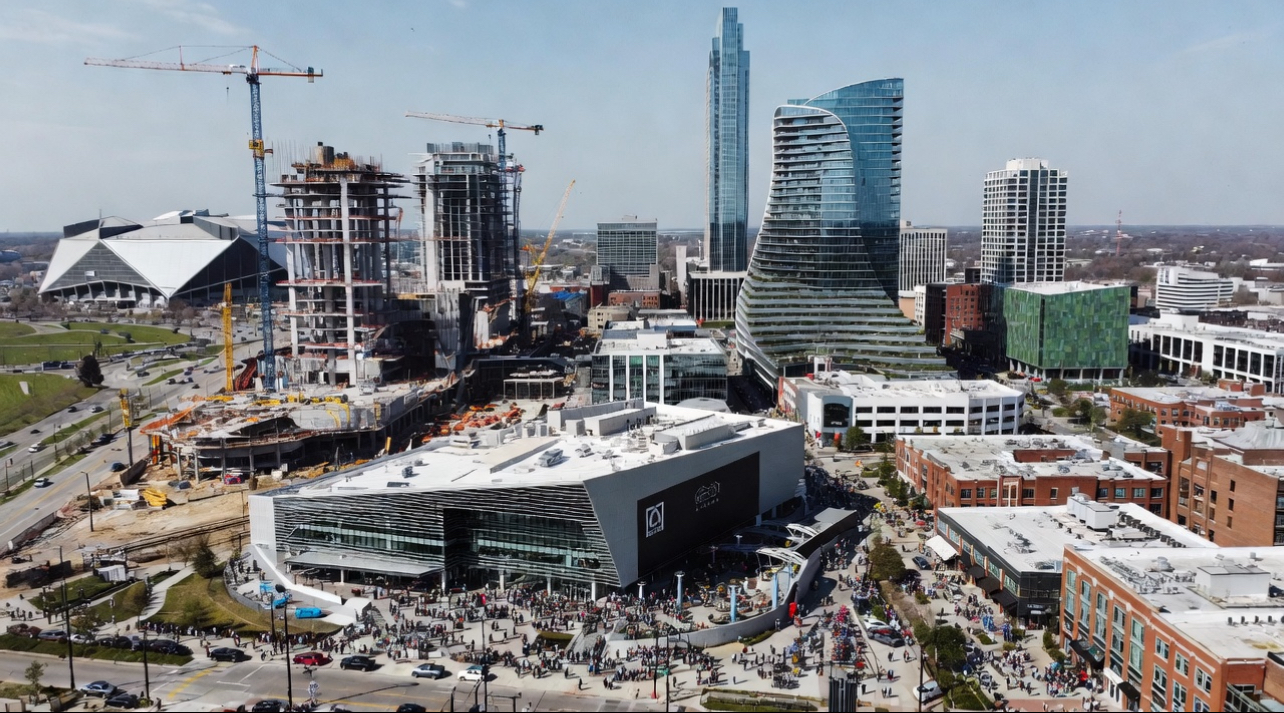
Downtown Atlanta is undergoing one of its most ambitious transformations in decades with Centennial Yards, a $5 billion mixed-use development rising from the long-dormant Gulch area adjacent to Centennial Olympic Park.
Once a sprawling network of railyards that fueled the city’s early growth, this 50-acre site—often called “the hole” in the heart of the city—is being reimagined as a vibrant district blending residential, commercial, entertainment, and hospitality spaces.
Centennial Yards Aims To Revitalize Atlanta’s Downtown Gulch
“If you want big, shiny and new, you come to Centennial Yards,” Brian McGowan, President of Centennial Yards, said in promotional material.
As Atlanta prepares to host eight matches of the FIFA World Cup 2026 at Mercedes-Benz Stadium, Centennial Yards is poised to become a central hub for locals and visitors alike, bridging the gap between the city’s historic core and its modern aspirations.
A Historical Foundation: From Railyards to Redevelopment
The story of Centennial Yards begins with Atlanta’s origins as a railroad terminus in the 19th century. The Gulch, located between Five Points MARTA station and Mercedes-Benz Stadium, served as a key hub for the Western & Atlantic Railway, earning the site the nickname “Mile 0.”

For much of the 20th century, it bustled with freight and passenger activity, but by the late 1900s, it had fallen into disuse, becoming a vast expanse of parking lots and underutilized land plagued by infrastructure challenges like active train tracks and elevation differences.
Efforts to redevelop the Gulch gained momentum in the 2010s, culminating in a landmark 2018 agreement between the City of Atlanta and Los Angeles-based developer CIM Group.
The Atlanta City Council approved a public financing package that included up to $1.9 billion in tax incentives, allowing the developer to tap into future sales and property tax revenues generated on-site to fund construction.
This deal, one of the largest in the city’s history, aimed to overcome the site’s complexities and spur economic growth. Groundbreaking occurred in 2024, marking the start of a multi-phase project expected to span until 2030.
The project’s name pays homage to nearby Centennial Olympic Park, built for the 1996 Summer Olympics, and reflects a vision to extend that legacy of urban renewal.
CIM Group, in partnership with the City of Atlanta and private investors, leads the development through Centennial Yards Company.
The Centennial Yards Project Today: A Mixed-Use Metropolis
At its core, Centennial Yards is designed to create a “city within a city,” adding several new blocks to downtown Atlanta.

The 50-acre development will feature over 4 million square feet of office space, more than 1,000 hotel rooms, around 1,000 residential units, and extensive retail, dining, and entertainment options.
Key components include:- Residential Spaces: Thousands of new apartments, starting with a 304-unit complex in the first phase. These aim to attract a diverse mix of residents, fostering an inclusive community with direct access to MARTA and nearby attractions.
- Hospitality: Two hotels are already underway, including the 292-key Hotel Phoenix, which opened in late 2025 and sets a new standard for luxury with rooftop views, a pool deck, and dining at Zephyr. A 14-story boutique hotel in the Entertainment District topped out in January 2026, with another four-story hotel progressing along Ellis Street.
- Entertainment District: This 8-acre, 470,000-square-foot centerpiece, designed by firms Gensler and SHAPE, anchors the project. It includes a 5,300-capacity music venue operated by Live Nation (leased in May 2025), a Cosm immersive technology experience set to open in 2026, a two-story food and beverage hall, and an expansive fan zone. The district balances high-rises with terraced green spaces, paying homage to Atlanta’s “City in the Forest” moniker, and all new buildings will be LEED-certified for energy efficiency.
- Retail and Dining: A growing roster of tenants highlights Atlanta’s cultural flair. Recent announcements include iconic soul food spot The Busy Bee opening a third location in 2027 with a fast-service format and full bar; Shake Shack’s 3,010-square-foot outpost; The Irish Exit, a modern Irish pub from the Dead Rabbit team, slated for summer 2026; and upscale steakhouse Chops Lobster Bar, set for late 2026. These join plans for 95,000 square feet of retail, emphasizing local and immersive “eatertainment” concepts.
The vision extends beyond buildings: public plazas, green terraces, and event spaces like the Steele Bridge for tailgates and pre-parties tie into nearby venues such as State Farm Arena and Mercedes-Benz Stadium, creating the Southeast’s largest sports and entertainment district.
Construction Updates: Rising Ahead of Schedule
As of early early 2026, construction is advancing rapidly. Cranes dominate the skyline, with the Entertainment District’s third-tallest structure—a cornerstone hotel—topping out in January.
Secondary buildings, including the Live Nation venue and Cosm, are taking shape, with the latter on track for a debut later this year.
The project has already restricted Gulch parking to focus on vertical development, and recent drone footage, shows significant progress across the site.
When Will Centennial Park Be Completed?
The developer aims to have two-thirds of the project ready for the 2026 FIFA World Cup, including entertainment venues and apartments, with further phases continuing beyond.
This pace aligns with Atlanta’s FIFA World Cup preparations, ensuring the Entertainment District serves as a culinary and social hub for the June matches.
The overall completion of this $5 billion development is expected to extend well past 2026, with some office components currently paused.
Economic and Community Impact: A Catalyst for Growth
Proponents hail Centennial Yards as a game-changer for downtown Atlanta, which has long lacked a true urban core. The project is projected to generate thousands of jobs, attract businesses, and boost tourism, especially with the World Cup drawing global attention.
By reconnecting east and west Atlanta, it addresses underutilized land and enhances walkability with MARTA integration.
Local residents and business owners express optimism. “Centennial Yards is clearly going to change that,” said one developer in reference to downtown’s past stagnation.
Events like SEC Championship tailgates and Peach Bowl pre-parties already activate the space, fostering community ties.
Economically, the $5 billion investment, supported by $557 million in bonds for the Entertainment District, is seen as a masterclass in urban revitalization.
Challenges and Criticisms: Tax Breaks and Housing Concerns
Not all views are rosy. The project’s tax incentives have sparked controversy, with critics arguing the $1.9 billion package represents an unnecessary giveaway to a profitable developer.
A 2025 report from the Private Equity Stakeholder Project highlighted ongoing debates over public subsidies. Legal challenges, including a case that reached the Georgia Supreme Court in 2020, questioned the deal’s structure.
Affordable housing is another flashpoint. Despite commitments to make 20% of units affordable, Centennial Yards opted out for its first apartment tower, paying $8 million in in-lieu fees—about $132,000 per unit—instead of providing 61 affordable apartments.
Alison Johnson, Executive Director of Housing Justice League, has been vocal about her dismay.
“As housing continues to become more and more unaffordable across the city, disappointment does not begin to describe how we feel about the recent decision to not provide any affordable units in the [new residential] development at Centennial Yards,” Johnson said.
Critics note these fees, based on outdated 2017 data, fall short of actual construction costs, shortchanging the city’s housing trust fund.
The in-lieu fee of about $132,000 per declined affordable unit “was probably too low… even when the contract was initially signed [in 2018],” said Dan Immergluck, Georgia State University urban studies professor. “Now… an appropriate per-unit in-lieu fee is probably over $400,000 per unit — maybe more.”
Additionally, there’s no plan for a multi-modal passenger rail terminal, missing an opportunity to enhance transit despite the site’s rail heritage.
Looking Ahead: A New Era for Atlanta
As Centennial Yards continues to rise—block by block, crane by crane—it promises to deliver the downtown Atlanta deserves: inclusive, energetic, and world-class.
With phases rolling out through 2030, the project could redefine the city’s urban landscape, much like the 1996 Olympics did.
For now, as the World Cup approaches, all eyes are on this transformative endeavor, balancing bold ambition with the need to address community concerns. AtlantaFi.com will continue monitoring developments as this mega-project unfolds.
-
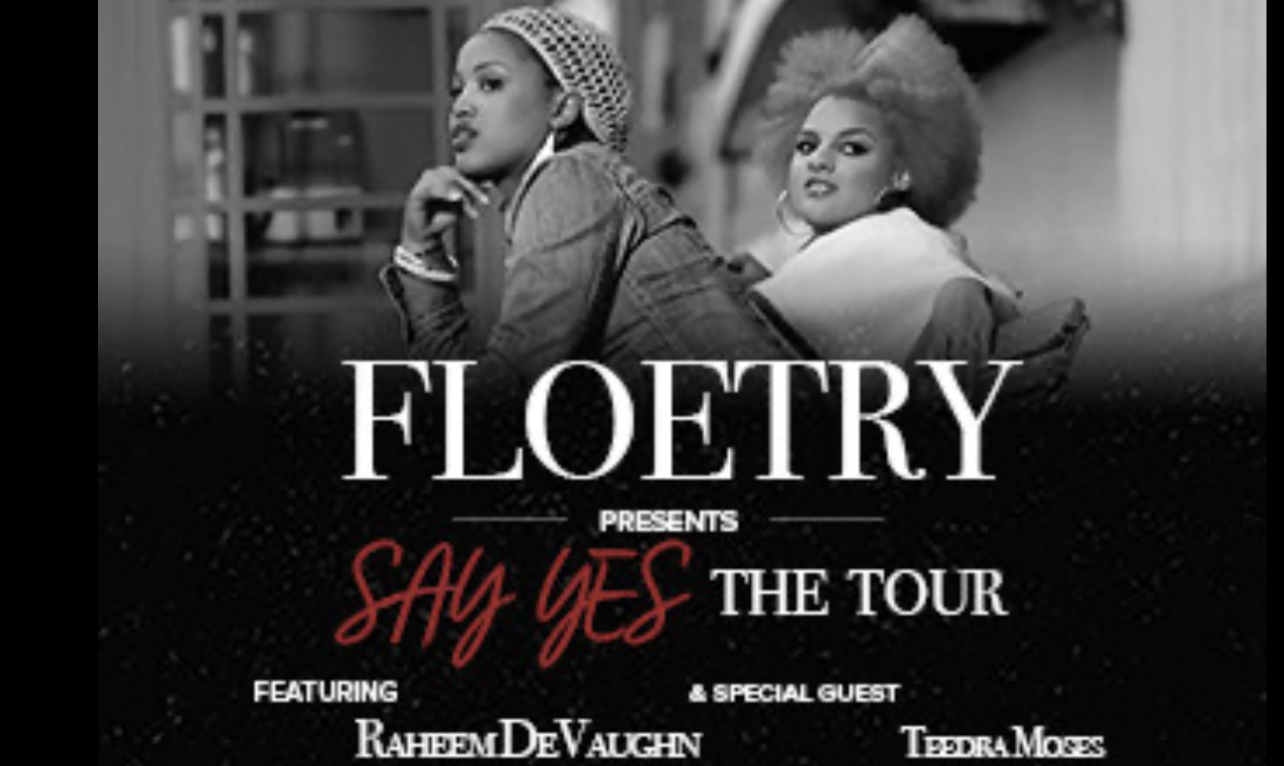
Atlanta R&B fans, get ready to say yes to a soul-stirring reunion: iconic neo-soul duo Floetry is bringing their highly anticipated 2026 The Say Yes Tour to metro Atlanta.
This marks Floetry’s first full national tour together in a decade—since 2016—celebrating their enduring legacy and the 25th anniversary of their groundbreaking work.
When Is the Floetry Tour Coming To Metro Atlanta?
The “Say Yes” tour stops through the city on Friday, May 1, 2026, at The Arena at Southlake
The tour, produced by the Black Promoters Collective (BPC), the leading Black-owned promoter ranked among the top in the industry, promises an intimate, emotionally immersive live R&B experience focused on musicianship, lyricism, and authenticity.
Floetry—comprised of Marsha Ambrosius (the Songstress) and Natalie “The Floacist” Stewart—formed in 1999 after bonding over their love of basketball while attending the same UK school.
Emerging from the underground poetry scene, they revolutionized R&B by blending spoken-word poetry, rap-inflected cadences, and soulful melodies.
Their debut album Floetic (2002) went platinum in the U.S. (over 788,000 copies sold domestically and more than a million worldwide), featuring timeless hits like “Say Yes,” “Getting Late,” and even a bonus demo track originally intended for Michael Jackson’s “Butterflies.”
Follow-ups included the live album Floacism (2003, recorded at House of Blues in New Orleans) and Flo’Ology (2005).
The duo earned seven Grammy nominations, three Soul Train Lady of Soul Awards, and penned songs for legends like Earth, Wind & Fire, Patti LaBelle, Jill Scott, Macy Gray, and Bilal.
Their music continues to soundtrack love, healing, self-reflection, and emotional truth across generations, influencing the genre’s evolution and proving why R&B remains timeless.
Joining Floetry on this 16-city U.S. run are special guests Raheem DeVaughn, celebrated for his romanticism, social consciousness, and powerful live performances, and Teedra Moses, renowned for her emotional honesty, vocal precision, and timeless songwriting.
The lineup delivers a rare gathering of soul powerhouses connected by purpose and genuine artistry.
The tour kicks off April 9, 2026, in Newark, NJ, at NJPAC and wraps May 17, 2026, in Oakland, CA, at Paramount Theatre. Atlanta’s stop on May 1 fits perfectly into the Southeastern leg, following Charlotte and Durham and leading into Jacksonville.
Presales for local, venue, and promoters began Thursday, February 12, 2026 (using code BPC), with general public tickets going on sale Friday, February 13, 2026, at 10 a.m. local time. Fans can secure tickets via blackpromoterscollective.com/floetry or official ticketing partners like Ticketmaster.
For Atlanta audiences who have long embraced Floetry’s poetic R&B—whether through classic spins on V-103 or memories of past visits—this return is a must-see event.
Expect an evening of healing vibes, signature harmonies, and the kind of soulful connection that only Floetry can deliver. Don’t miss your chance to experience “Say Yes” live in the A.
Final Word
Did somebody say live music? That’s what Atlanta has a lot of. From the small cubby holes you’ll find in the suburbs to the elegant stages of Midtown and Buckhead, ATL has music for your ears. Check out our Atlanta Live Music Guide to see who’s performing where.
You might also enjoy some spoken word or jazz brunches that Georgia’s largest city has to offer. We get down not just on fun-filled weekends, but through the week as well.
-
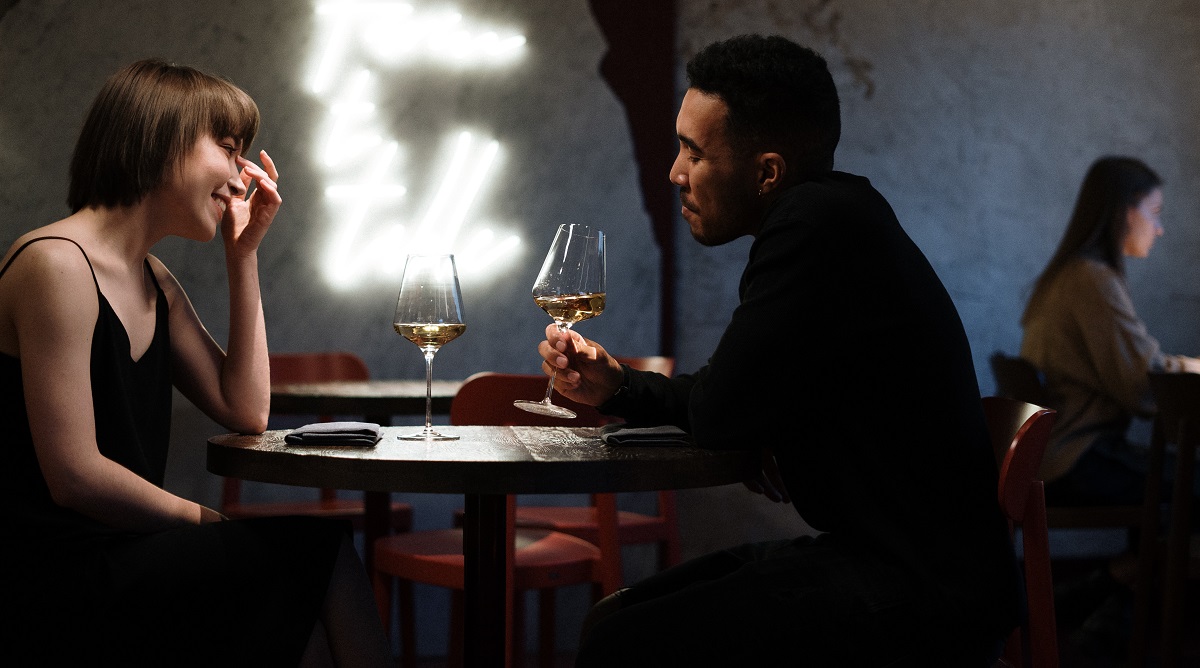
This Valentine’s Day, why not make it memorable by going to a new restaurant with your special someone? Atlanta, Georgia has several nice restaurants that you’ll love for Valentine’s Day.
We’re going to show you some of the best places in Atlanta to eat for Valentines Day this year. All of these eateries specialize in fine dining, with great executive chefs and top-notch beverage programs. You won’t be sorry.
Where To Eat For Valentines Day In Atlanta
Many of the city’s restaurants have designed special meals for the special day, but why not try some eateries that have proven to be a hit on any given day? If you’re spontaneous -(and she loves that about you) here are some of the best places to eat.
Varuni Napoli
1540 Monroe Dr NE, Atlanta, GA 30324 | (404) 709-2690

Looking to have a lovely night on Valentine’s Day? Check out Chef Luca at Neapolitan pizzeria Varuni Napoli this Feb. 14. Treat your Valentine + holiday gathering to a feast for lovers.
Varuni Napoli is offering heart-shaped Margherita pizzas upon request at both their Midtown and Krog locations.
LaGrotta Ristorante
2637 Peachtree Rd NE, Atlanta, GA 30305 | (404) 231-1368

Here’s what one reviewer says about LaGrotta: “This is a hidden gem in Atlanta. Located in the basement of an extremely unassuming condominium tower, La Grotta is a very authentic and tasty Italian restaurant. Everything in the menu seems to be well prepared and extremely tasty.”
Bone’s Restaurant
3130 Piedmont Rd NE, Atlanta, GA 30305 | (404) 237-2663

If you come for the king, you best not miss. This Buckhead institution is the defacto king of the city. With its succulent prime beef and seafood, it’s hard to beat. But you’d better get a reservation.
The Optimist
914 Howell Mill Rd, Atlanta, GA 30318 | (404) 477-6260

Here’s what one Google reviewer says about The Optimist: “Took my wife to dinner for date night and we had an excellent first experience. In short, everything was perfect. The service was outstanding, our waitress was personable and thorough. We had the calamari appetizer which was fantastic.”
Chops Lobster Bar
70 West Paces Ferry Rd NW, Atlanta, GA 30305 | (404) 262-2675

If Bones is the king, then Chops is the president: confident, immaculate and sure in its power. Don’t be surprised to see a who’s who of old-school Atlanta in this classic chophouse.
One reviewer says this about Chops: “The food was awesome! The service is very attentive without being overwhelming all the way from the host to waiters. Great ambience. It is important to point out that they’re two restaurants in one with one being on top of the other. I could myself upstairs searching for the rest of my dinner party when they were already downstairs. Upstairs has more of speak-easy vibes while downstairs (Lobster) is more focused on fine-dining.”
The Consulate
10 10th St NW, Atlanta, GA 30309

Interior designer Douglas Hines and his wife Mei Lin, a chef with global influences, teamed up to open The Consulate in 2016 in Midtown. Before that, the Atlanta power couple opened Honey Bubble Tea in Poncey-Highland.
Make a reservation at The Consulate
If you want to experience different cultures through food, this couple has you covered. They plan to open as many as eight restaurants across the city.
9 Mile Station
675 Ponce de Leon Ave NE Atlanta, Georgia 30308 | (770) 999-1532

Entrepreneur Kelvin Slater and wife Mandy have a hit on their hands with 9 Mile Station. Described as an “elevated beer garden,” 9 Mile Station is located on the rooftop of Ponce City Market in Midtown Atlanta.
Final Word
If you’re looking for a place to eat for Valentine’s Day in Atlanta, you’re in good company. There are quite a few nice eateries that are catering to lovers like you.
Some of the best places to take a date in Atlanta are places off the beaten path. Here are some more special places to dine.
More Food Coverage:
-
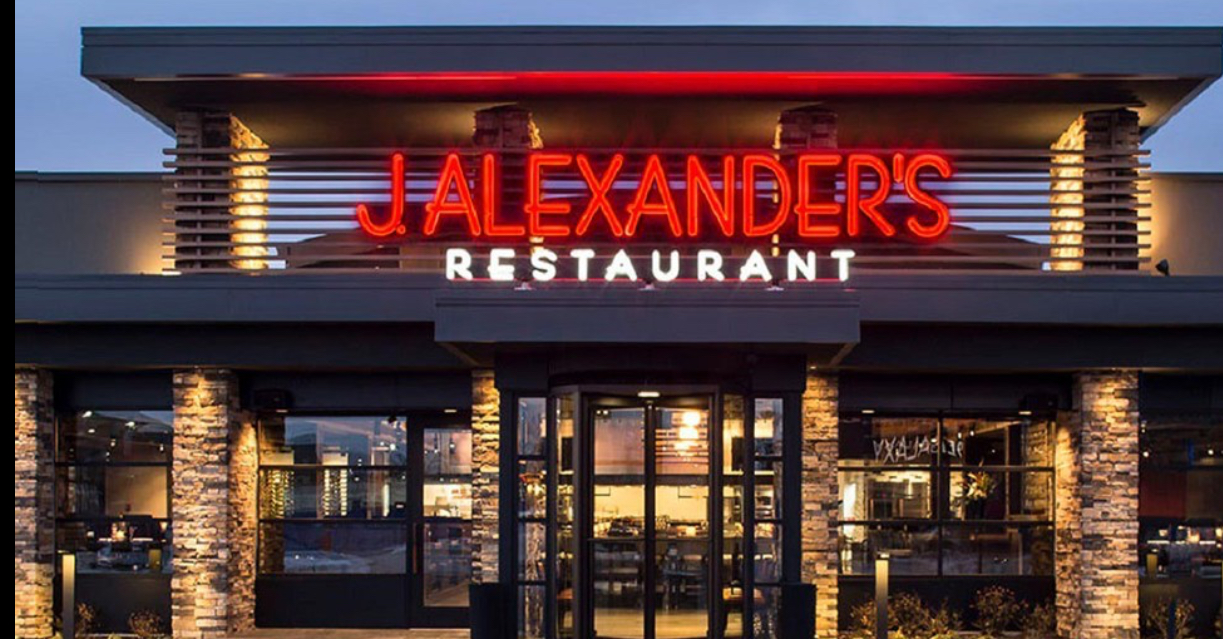
The Battery Atlanta is not only a prime spot to catch some MLB baseball, but it continues to solidify its reputation as a top dining and entertainment destination. Next up on the plate is J. Alexander’s, a beloved upscale casual restaurant chain known for its wood-fired cuisine and classic American fare.
The new location at 455 Legends Place, Suite 872, will mark the brand’s third outpost in the Atlanta metro area, joining established restaurants in Dunwoody and Peachtree Corners.
J. Alexander’s Set to Bring Upscale Casual Dining to The Battery Atlanta This Spring
Situated in the vibrant Cobb County complex adjacent to Truist Park—home of the Atlanta Braves—the spot is perfectly positioned for game-day crowds, business lunches, family celebrations, and romantic dinners alike.
J. Alexander’s has built a loyal following over the years for its commitment to quality ingredients, attentive service, and a welcoming atmosphere. Guests can expect signature dishes including:
- Hand-cut steaks cooked over an open wood fire
- Fresh seafood selections
- Prime rib specialties
- Signature salads and hearty sandwiches
- An extensive wine list and handcrafted cocktails
The restaurant will operate seven days a week, offering a menu that blends contemporary American cuisine with Southern hospitality touches.
With approximately 8,000 square feet of space, the venue promises a comfortable yet upscale vibe, complete with options for indoor dining and potentially a small outdoor patio area ideal for watching the energy of The Battery.
Announced last summer, the opening has generated buzz among local food enthusiasts eager for another reliable upscale option in the area.
The team is actively building its staff, with more than 90 positions available ahead of the grand opening. Interested applicants can apply online or visit the hiring site at 800 Battery Avenue SE, Suite 120.
When Is J. Alexander’s Opening at The Battery?
While an exact opening date hasn’t been finalized in recent announcements, the restaurant is targeting a spring 2026 debut—potentially as early as March—with some sources pointing to preparations ramping up now.
The official J. Alexander’s website lists the location as “Coming March 2026,” and The Battery’s dining page confirms the spring timeline.
This addition joins a growing lineup of dining options at The Battery Atlanta, from casual spots to innovative concepts, making the destination even more appealing for locals and visitors attending Braves games or simply enjoying the mixed-use development’s walkable vibe.
Stay tuned to AtlantaEatsLocal.com for updates on the exact opening date, menu previews, and our first look once J. Alexander’s welcomes guests. In the meantime, mark your calendars—spring dining at The Battery just got a whole lot tastier.
For more information, visit jalexanders.com or batteryatl.com.
-

Many communities across Georgia, especially suburbs around the Atlanta metro area, continue to stand out as exceptionally safe places to live, work, and raise a family.
According to the newly released 2026 report from SafeWise, a leading home safety and security research group, several familiar names and one newcomer top the list of the state’s safest cities based on the latest FBI crime data.
Atlanta Metro Areas Among Georgia’s Safest Cities for 2026
SafeWise’s annual ranking, updated as of January 29, 2026, analyzes violent crime rates (murder, rape, robbery, aggravated assault) and property crime rates (burglary, larceny, motor vehicle theft) per 1,000 residents.
The study draws from the most recent complete FBI reports—primarily 2023 city-level data and 2024 statewide figures—and includes only cities that submitted full crime statistics and met population reporting thresholds. A total of 94 Georgia cities qualified this year.
All of the top-ranked communities reported violent crime rates well under 1 per 1,000 residents, and notably, no murders occurred in any of Georgia’s safest cities. Many are suburbs tied to major metros like Atlanta, Augusta, and Savannah, highlighting how planned communities and strong local policing contribute to low crime environments.
Here are the Top 10 Safest Cities in Georgia for 2026, per SafeWise:
- Senoia (Population: 6,263)
Violent Crime Rate: 0.2 per 1,000 | Property Crime Rate: 2.1 per 1,000
Senoia holds strong as Georgia’s safest city for the second consecutive year. This charming Coweta County town, famous for its “Fried Green Tomatoes” history and film locations, maintains remarkably low crime across the board. - Auburn (NEW to the list; Population: 10,527)
Violent Crime Rate: 0.0 per 1,000 | Property Crime Rate: 4.0 per 1,000
A newcomer to the top rankings, Auburn earns a spot with zero reported violent crimes, making an impressive debut. - Grovetown (+7 spots; Population: 18,169)
Violent Crime Rate: 0.6 per 1,000 | Property Crime Rate: 2.0 per 1,000
Near Augusta, Grovetown saw dramatic improvements—a 62.5% drop in violent crime and 51% reduction in property crime year-over-year—jumping significantly in the rankings. - Holly Springs (-1; Population: 20,625)
Violent Crime Rate: 0.0 per 1,000 | Property Crime Rate: 4.8 per 1,000
Another community with zero violent crimes reported, Holly Springs (Cherokee County, northwest of Atlanta) remains a consistent performer. - Jefferson (+3; Population: 16,643)
Violent Crime Rate: 0.3 per 1,000 | Property Crime Rate: 4.6 per 1,000
This Jackson County city continues to show steady declines in crime. - Tyrone (-2; Population: 8,025)
Violent Crime Rate: 0.5 per 1,000 | Property Crime Rate: 4.7 per 1,000
A Fayette County suburb south of Atlanta, Tyrone offers small-town safety with easy metro access. - Johns Creek (-2; Population: 81,056)
Violent Crime Rate: 0.3 per 1,000 | Property Crime Rate: 5.5 per 1,000
The largest city on the list (and a key Atlanta suburb in Fulton County), Johns Creek impresses with its low rates despite a sizable population. - Rincon (-2; Population: 11,833)
Violent Crime Rate: 0.5 per 1,000 | Property Crime Rate: 5.3 per 1,000
Located near Savannah, Rincon maintains solid safety numbers. - Milton (-2; Population: 41,603)
Violent Crime Rate: 0.9 per 1,000 | Property Crime Rate: 4.7 per 1,000
Another north Fulton County gem, Milton is known for its equestrian culture and family-friendly vibe. - Peachtree City (+1; Population: 40,820)
Violent Crime Rate: 0.2 per 1,000 | Property Crime Rate: 8.0 per 1,000
Famous for its golf cart paths, this Fayette County planned community saw improvements and edged back up the list.
SafeWise notes that several top cities, including Grovetown, Jefferson, and Peachtree City, achieved year-over-year reductions in both violent and property crime categories.
These rankings reflect ongoing community efforts, effective law enforcement, and resident vigilance in keeping neighborhoods secure.
While Atlanta itself faces higher urban crime challenges, many surrounding suburbs demonstrate that safety remains a hallmark of Georgia living in 2026.
Residents in these areas enjoy peace of mind alongside proximity to big-city amenities.
For the full report, including methodology details and more cities, visit the SafeWise website. Stay safe, Atlanta!
Final Word
The Atlanta real estate market has its share of nice neighborhoods — and all of them deal with rising pricetags, crime and gentrification.
For example, Buckhead is not only a great place to eat and to see and do things, but the affluent enclave is a great place to live as well, among other parts of the city.
- Senoia (Population: 6,263)