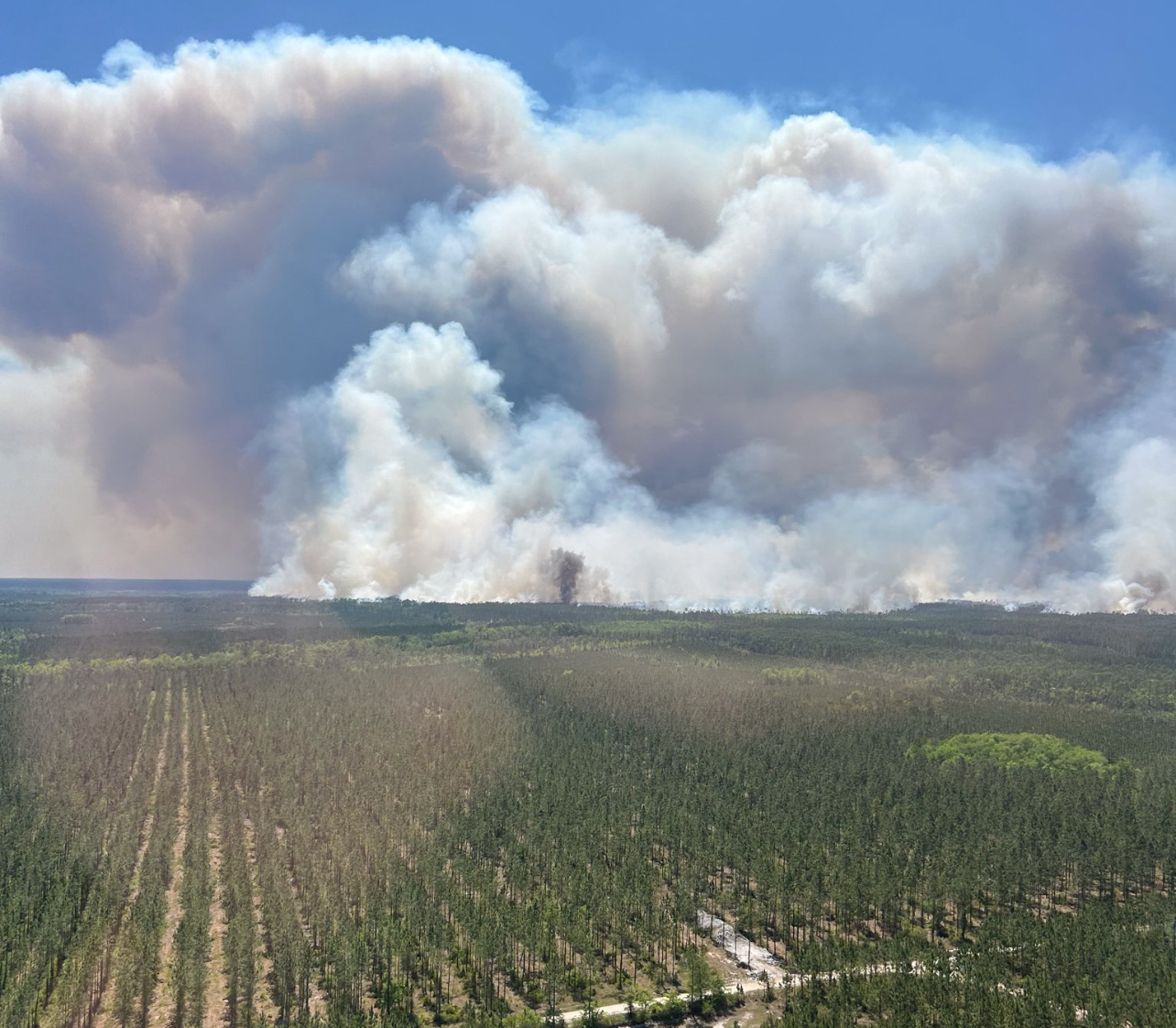

May 4, 2026 — The Georgia Forestry Commission (GFC) reported encouraging signs of progress in the state’s ongoing wildfire battle, even as two historic fires in south Georgia continue to burn.
In its daily update posted Sunday, May 3, the agency said crews responded to just one new wildfire the previous day, which burned only 0.1 acres statewide.
This low level of new activity does not include the two major incidents still dominating response efforts:
- Pineland Road Fire (Clinch County): Holding steady at 32,575 acres and 44% contained.
- Highway 82 Fire (Brantley County): Now at 22,532 acres and 64% contained.
Background on the 2026 Georgia Wildfires
In April 2026, Georgia experienced a severe outbreak of wildfires, driven by extreme drought conditions across much of the southeastern U.S. While the state saw dozens of fires, two large blazes in south Georgia—the Pineland Road Fire and the Highway 82 Fire—became the most significant, burning tens of thousands of acres, destroying homes and structures, forcing evacuations, and prompting a statewide emergency response.
Timeline and Scale
- Pineland Road Fire: Ignited on April 18, 2026, in Clinch County (near the Florida border), primarily on private forest land. It rapidly expanded into Echols County as well. By late April, it had burned over 31,000–32,000+ acres with containment initially as low as 10%. As of early May updates, it stood at approximately 32,575 acres with improving containment (around 40–44% in recent reports).
- Highway 82 Fire: Started on April 20, 2026, in Brantley County. It grew quickly, reaching over 20,000–22,000+ acres. Containment also started very low (around 6–10%) but showed notable progress by early May, reaching 64% in the latest GFC update.
Combined, the two fires exceeded 50,000 acres at their peak growth phases and were described by officials, including Gov. Brian Kemp, as among the most dangerous and problematic wildfires in the United States at the time. They destroyed or damaged over 120 homes and other structures in sparsely populated, heavily wooded rural areas, with hundreds more threatened at various points.
Causes
Investigators with the Georgia Forestry Commission (GFC) determined human-caused ignitions for both:
- Pineland Road Fire: A stray spark from a welding operation on a gate that fell to the dry forest floor and ignited vegetation.
- Highway 82 Fire: A Mylar (aluminum-coated) party balloon contacted a power line, creating an electrical arc that sparked the blaze. Officials noted this is a documented (though uncommon) ignition source in dry conditions.
These causes occurred amid exceptional drought—the most severe drought category—with dry vegetation, low humidity, and gusty winds fueling rapid spread, spotting (embers jumping ahead), and wind-driven runs.
Response and Impacts
On April 22, 2026, Gov. Brian Kemp declared a State of Emergency for 91 counties (covering much of south and central Georgia). This mobilized state resources and was paired with a 30-day burn ban (prohibiting outdoor burning, including yard debris and prescribed burns) issued by the State Forester.
Firefighting involved hundreds of personnel from state, federal, and local partners working around the clock on containment lines, with support from air operations (when safe). Mandatory evacuations were issued in affected areas, particularly in Echols and surrounding counties, alongside curfews and road closures in some spots. Smoke impacted air quality regionally, with health warnings issued even as far as Atlanta.
Rain in early May helped slow the fires and aided containment efforts, allowing crews to shift toward more offensive strategies, though both remained active into May.
Broader Context
The 2026 fires were part of a larger pattern of elevated wildfire activity across the Southeast U.S. (including Florida, South Carolina, and Alabama) due to prolonged dry weather. Georgia officials emphasized prevention, noting that human-caused ignitions dominate many wildfires. The GFC continues to provide daily updates, maps, and resources via their website (gatrees.org).
These events highlight the intersection of drought, human activity, and forest management in fire-prone regions. Containment and full suppression efforts were expected to continue for weeks, with full containment projections extending into late May or beyond for the largest fires.
For the most current status, refer to official sources like the Georgia Forestry Commission (gatrees.org/current-wildfire-information-and-resources/) or local emergency management.
More From AtlantaFi.com: