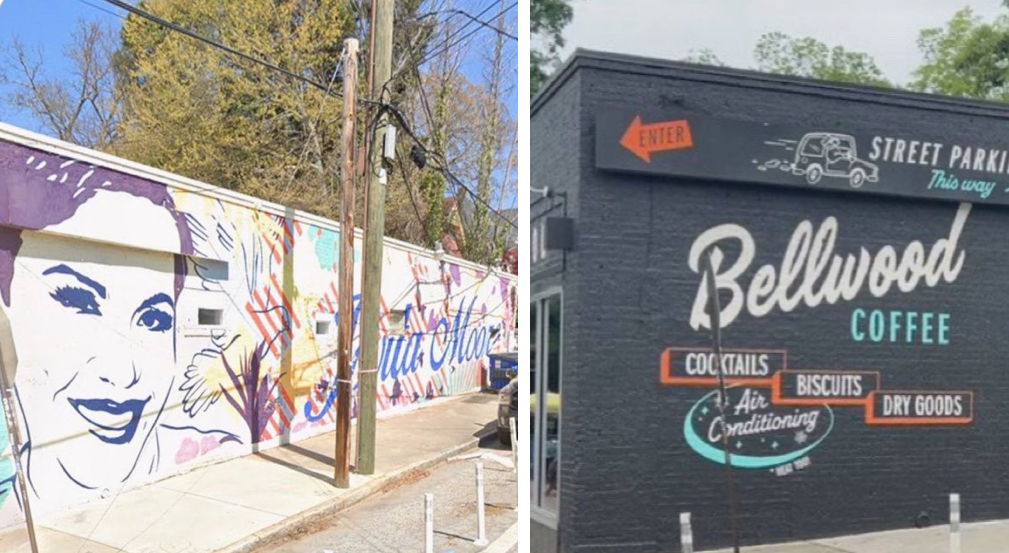

ATLANTA — A popular local coffee chain is under fire after painting over a prominent mural of the late WSB-TV Channel 2 anchor and reporter Jovita Moore at its new Grant Park location.
The decision has sparked widespread outrage on social media, highlighting tensions around community memory, gentrification, and public art in Atlanta.
Atlanta Coffee Shop Faces Backlash for Painting Over Jovita Moore Mural
The mural, located on the side of the building at 568 Boulevard SE that now houses Bellwood Coffee, was created shortly after Moore’s death in 2021.
She had been diagnosed with glioblastoma, an aggressive form of brain cancer, just seven months earlier. Moore joined Channel 2 in 1998 and became a beloved figure in Atlanta for her journalism and community presence.
Neighbors and residents noticed the mural’s removal after the coffee shop’s buildout, which included new windows that significantly altered the wall.
Social media quickly filled with disappointment and anger, with many viewing the act as disrespectful to Moore’s legacy and emblematic of broader changes in the neighborhood.
Bellwood Coffee initially addressed the issue on social media, acknowledging they knew Moore’s story but underestimated the mural’s deep significance to the Atlanta community. “Unfortunately, the windows in our buildout cut into the mural significantly,” the company posted.
In a follow-up Instagram statement, the owners issued a fuller apology: “The truth is, the reasons aren’t good enough. We made a mistake and acted without enough consideration… We want to make this right by commissioning another mural. We want to be better, to listen well to our community, and to slow down before making impactful decisions.”
The company has pledged to commission a new mural and seek community input, aiming to rebuild trust after the incident.
Context and Community Reaction
Jovita Moore was more than a news anchor—she was a local icon whose battle with cancer inspired the #JovitaStrong campaign, which included public displays of support across the city.
Murals like hers play a key role in Atlanta’s vibrant street art scene, with the city now boasting over 2,000 such works that honor icons, commemorate losses, and shape neighborhood identities.
The backlash reflects sensitivities in areas like Grant Park, where new businesses can sometimes clash with longstanding community symbols. Comments online ranged from calls for boycotts to expressions of sadness over the loss of a visible tribute.
Bellwood Coffee, which has operated in Atlanta for seven years with a focus on community-building, now finds itself in a position to demonstrate that commitment through action.
Many in the community say they will be watching to see how the replacement mural develops and whether it appropriately honors Moore’s memory.
As of this writing, the coffee shop remains open, and discussions continue on local forums. This episode serves as a reminder of the power of public art in preserving cultural memory in a rapidly evolving city.