-

A viral social media post from early May 2026 claimed Atlanta saw 20,000 new HIV cases in just eight months.
The clip features a woman stating she contracted HIV in the city and warning viewers to “keep your legs closed,” get tested, and use PrEP.
The post racked up hundreds of thousands of views, sparking heated replies about promiscuity, immigration, vaccines, and “DL” (down-low) behavior.
That number is not real.
The Actual Data (From Official Sources)
Official HIV surveillance data from the CDC, Georgia Department of Public Health (DPH), and AIDSVu show no such spike:
- Atlanta (city proper): 1,585 new HIV diagnoses in 2023 (latest full-year city-level data available). Annual rate: 31 per 100,000 people.
- 20-county Atlanta metro area: Roughly 1,500–1,700 new diagnoses per year in recent data. In 2021 (most recent detailed metro comparison), it recorded 1,562 new cases at a rate of 25.4 per 100,000—third-highest among U.S. metro areas.
- Georgia statewide: 2,442 new diagnosed in 2023 and 2,485 in 2024. Georgia ranks among the top 5 states for new HIV diagnoses and people living with HIV.14
- People living with HIV (prevalence): ~44,756 in Atlanta (2023) and ~40,931–43,000 in the broader metro area. Statewide: ~65,000–67,000.
For context: The entire United States reports about 39,000 new HIV diagnoses per year (2023 data). A single city reporting 20,000 new cases in eight months would represent over half the national total—something that would trigger national emergency alerts, massive CDC investigations, and wall-to-wall media coverage. None of that has happened.
Fact-checks from local outlets (11Alive, Atlanta Journal-Constitution) and HIV physicians in Atlanta have repeatedly called the 20,000 figure an unsubstantiated rumor with zero supporting evidence from public health departments.
Why Atlanta’s HIV Burden Is Still Serious
While the viral claim is false, Atlanta does face one of the highest HIV rates in the country:
- The Atlanta metro has consistently ranked in the top 3–5 U.S. metros for new diagnosis rates.
- The South accounts for ~51–52% of all new U.S. HIV diagnoses despite comprising only 38% of the population.
- Disparities are stark: Black/African American people represent ~33–38% of Atlanta’s population but a far higher share of diagnoses (nationally, Black individuals have a diagnosis rate of 41.9 per 100,000 vs. 13.7 overall).
- Transmission is overwhelmingly via male-to-male sexual contact (MSM), followed by heterosexual contact. Clusters have been identified in specific communities, including among Hispanic/Latino MSM in recent years.
These patterns are long-standing and driven by factors like higher rates of undiagnosed cases in some communities, variable PrEP access, stigma, and socioeconomic barriers—not a sudden 2025 “outbreak.”
Bottom Line
Atlanta has a real and persistent HIV epidemic that demands attention, testing, PrEP uptake, and care linkage. Public health officials track it closely through surveillance systems, and progress has been made nationally (new infections down 12% from 2018–2022).
But 20,000 new cases in eight months is simply not supported by any credible data. It’s a rumor that spread faster than the virus itself. Know your status, protect yourself, and rely on verified public health sources like the Georgia DPH or CDC—not viral TikToks.
More from AtlantaFi.com:
-
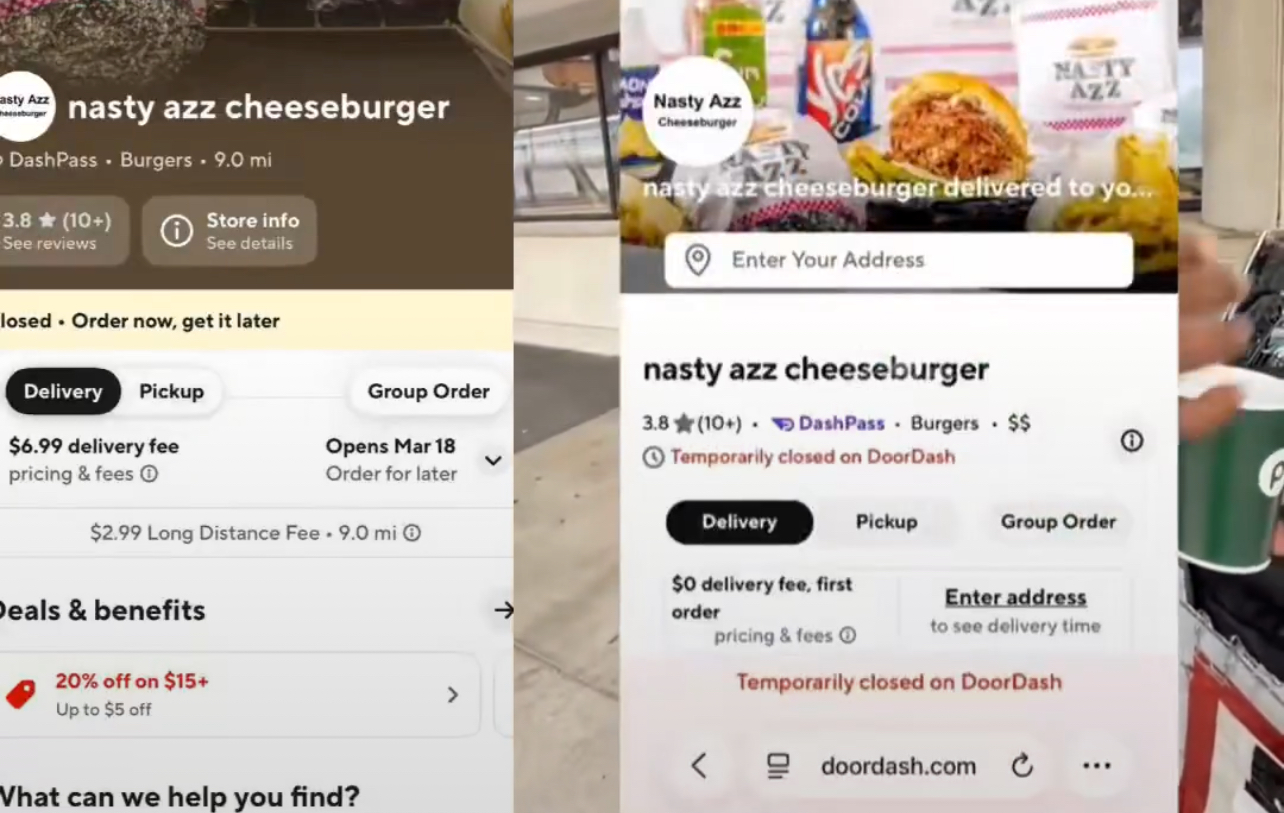
Atlanta, GA — A homeless entrepreneur’s unlikely burger business in Atlanta has been yanked from DoorDash after customers bombarded the platform with reports over unsanitary conditions — and the whole saga is captured in a now-viral social media video.
The operation, cheekily named “Nasty Azz Cheeseburger,” somehow landed a listing on the delivery app despite running out of what multiple eyewitness accounts and earlier clips describe as a shopping-cart setup on Atlanta streets.
Viral ‘Nasty Azz Cheeseburger’ Deleted From DoorDash After Food-Safety Complaints
The video shows the makeshift “restaurant” in action: a street-level cart operation complete with the man’s own “special sauce,” basic grilling setup, and branding that somehow passed initial platform checks long enough to generate orders — and a respectable 3.8-star rating before the backlash hit.
DoorDash has since removed or marked the listing as “temporarily closed,” according to users who tried to order and the timing of the removal matching the surge in complaints.
No official statement has been issued by the company, but the move came after “countless users” flagged hygiene and safety issues tied to the openly improvised street-cart conditions.
The clip has ignited a firestorm of reactions online. Some viewers are cheering the hustle: “Can’t knock someone’s grind,” one commenter wrote, noting the man had clean clothes and was clearly trying to make legal money.
Others pointed out the honesty in the name itself — “If you order from a place called Nasty Azz Cheeseburger, what did you expect?” — while a wave of horrified responses joked about ghost kitchens gone wrong and compared the setup to a scene from an old In Living Color skit.
Earlier videos and posts from the past few days had already made the story a meme magnet, with users sharing images of dasher reaction faces and Cat-in-the-Hat-style contraptions to mock the pickup locations. One social media user quipped, “This is exactly why I avoid the ‘try something new’ section on DoorDash.”
The saga highlights the wild west of gig-economy food delivery, where unconventional vendors can briefly slip through the cracks before public scrutiny — and health concerns — catch up. Whether the operator will rebrand, relocate, or find another avenue remains to be seen, but for now, Atlanta’s most candidly named cheeseburger joint is off the menu.
Would you have risked the “Nasty Azz”? The internet is split — but DoorDash just voted no.
Here Are The Best New Restaurants In Atlanta