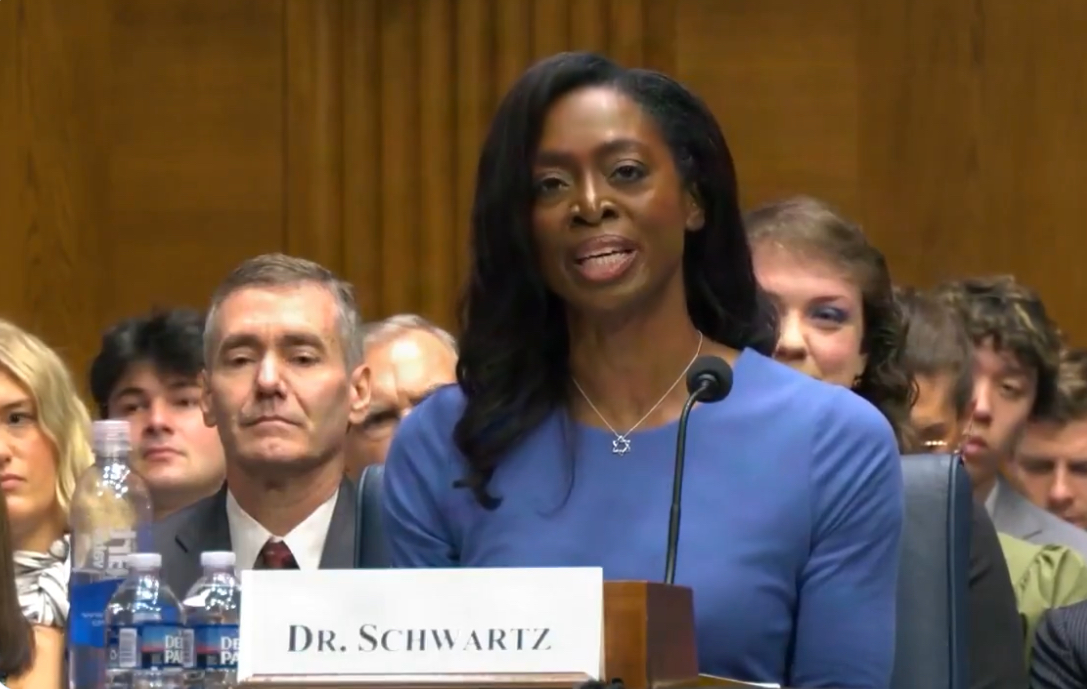

The U.S. Senate on Wednesday confirmed Dr. Erica Schwartz as director of the Centers for Disease Control and Prevention in a 51-44 vote, giving the nation’s leading public health agency its first Senate-confirmed permanent leader in nearly a year.
Schwartz, a retired rear admiral in the U.S. Public Health Service Commissioned Corps and former deputy surgeon general during President Donald Trump’s first term, assumes the role amid ongoing challenges at the CDC.
Senate Confirms Dr. Erica Schwartz as CDC Director, Ending Yearlong Leadership Vacuum
These include a resurgence of measles, a multi-state cyclosporiasis outbreak, an Ebola outbreak in Africa, significant staff reductions through layoffs and resignations, and lingering questions about the agency’s independence under Health and Human Services Secretary Robert F. Kennedy Jr.
The vote largely followed party lines, with only one Democrat, Sen. Tim Kaine of Virginia, joining Republicans in support. Five senators did not vote. Schwartz becomes the first Black woman to lead the CDC.
A board-certified preventive medicine physician, Schwartz holds degrees in biomedical engineering and medicine from Brown University, a master of public health, and a law degree from the University of Maryland. She previously served as the U.S. Coast Guard’s chief medical officer and has experience responding to outbreaks including Ebola and H1N1, as well as standing up COVID-19 testing sites.
Schwartz has publicly supported childhood vaccines. During her confirmation process, she affirmed that vaccines are safe and effective, noted that she has personally administered thousands of vaccines for military force health protection, and described vaccines as a cornerstone of prevention. She has also emphasized restoring trust in public health institutions through transparency and scientific integrity.
Her nomination and confirmation come after a period of instability. The previous confirmed director, Susan Monarez, was removed in August 2025 after less than a month in the role following reported clashes with Kennedy over vaccine policy. Acting leadership, most recently by NIH Director Jay Bhattacharya, followed.
Senators, including Health, Education, Labor and Pensions Committee Chairman Bill Cassidy (R-La.), pressed Schwartz during her hearing on her willingness to resist political pressure on scientific matters. Cassidy ultimately supported her confirmation after additional conversations, expressing confidence in her ability to lead.
Schwartz takes the helm of an agency that has faced morale challenges and workforce reductions of nearly a quarter in recent years. Public health observers will be watching closely how she navigates ongoing disease threats and the broader policy environment surrounding vaccines and chronic disease prevention.