-
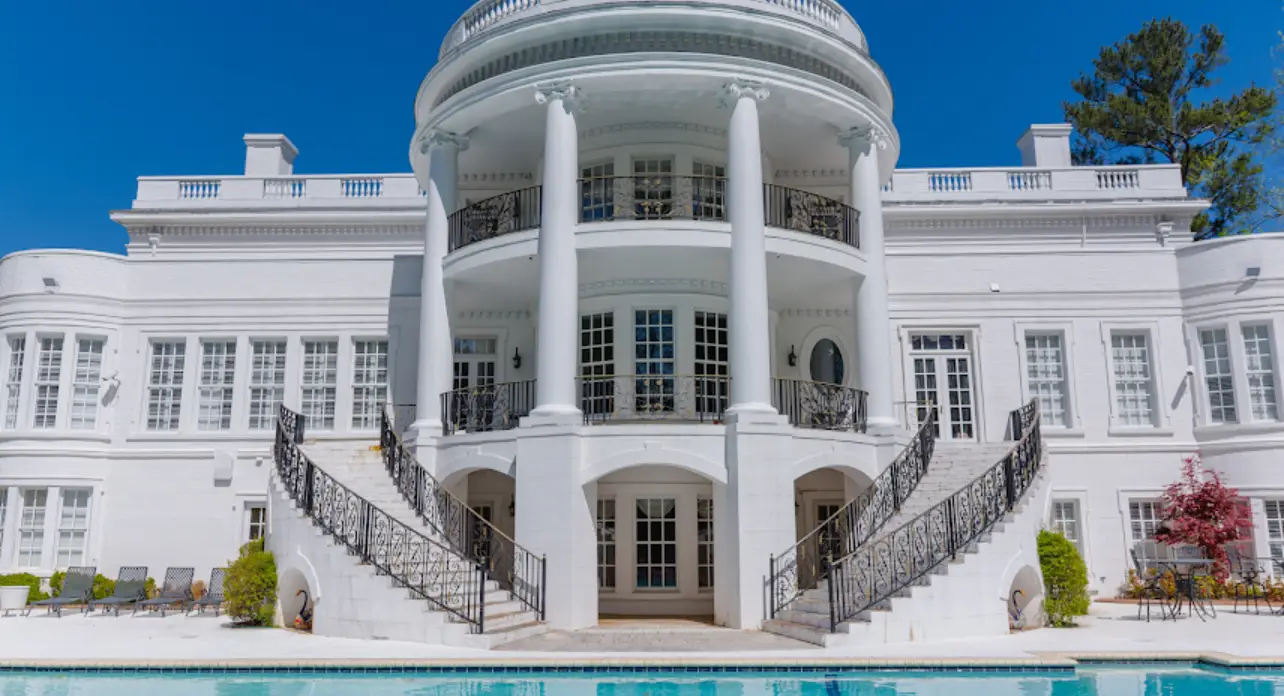
If you’ve ever dreamed of living like the president without leaving Georgia, now’s your chance — for a cool $35 million.
The famous “Atlanta White House,” a three-quarters-scale replica of the actual White House in Washington, D.C., is on the market, making it the most expensive residential listing in metro Atlanta.
Atlanta’s White House Replica for Sale
Located at 3687 Briarcliff Road NE in DeKalb County’s Oak Grove area, the neoclassical estate spans nearly 3 acres and includes two full residences totaling more than 20,000 square feet of living space.
Built in 2001 by Iranian-American developer Fred Milani, the property was designed as a tribute to American democracy.

Milani sent designers to the nation’s capital to study the original 1600 Pennsylvania Avenue, resulting in a striking facade complete with Corinthian columns and iconic architectural details.
The main house, approximately 16,500 square feet, features presidential touches like a replica Oval Office with the Presidential Seal on the ceiling, a Lincoln Bedroom, and a Truman-inspired balcony.
Inside, buyers will find a grand foyer with a sweeping staircase, muraled ceilings, custom chandeliers, and an elevator for easy access to all levels.

The estate also includes a separate 7-bedroom guest house — dubbed a nod to the “West Wing” — along with amenities such as manicured gardens, an oversized swimming pool and jacuzzi, a pool house with outdoor kitchen, a banquet hall seating up to 250, a theater, game room, and meditation spaces.
Current owner Thuy Ai Kathy Lam, who purchased the home in 2013, has called it a symbol of her own American dream.
Lam immigrated from postwar Vietnam in 1995 and built a successful beauty business in Atlanta. She raised her family in the mansion until her children went off to college, prompting the decision to sell.
After Milani faced financial challenges during the 2008 housing crisis, the home was used for events, film shoots, and gatherings before Lam made it her private residence.
Real estate experts note that a sale at the full asking price would shatter metro Atlanta’s record for the priciest home sale, far exceeding previous highs around $18 million.
The property is listed with agents from SERHANT. Georgia, including Tiffany Powell and Tuy Dewey Luong.
National interest has surged recently, with CNN featuring a tour of the home highlighting its unique presidential replicas.
For more details or to schedule a viewing, contact the listing agents. In the meantime, drive-by sightings on Briarcliff Road continue to turn heads — just don’t expect Secret Service at the gates.
Final Word
Atlanta has some of the most prime real estate in the Southeast. Not to mention that the city’s dining scene is the best in the Southeast. Looking for a home? Check out our Real Estate Resource Page.
Keep up with what’s going on in Atlanta’s real estate scene here with our Apartment Guide.
See The Latest Atlanta Real Estate News At AtlantaFi.com.
More Articles From AtlantaFi:
-
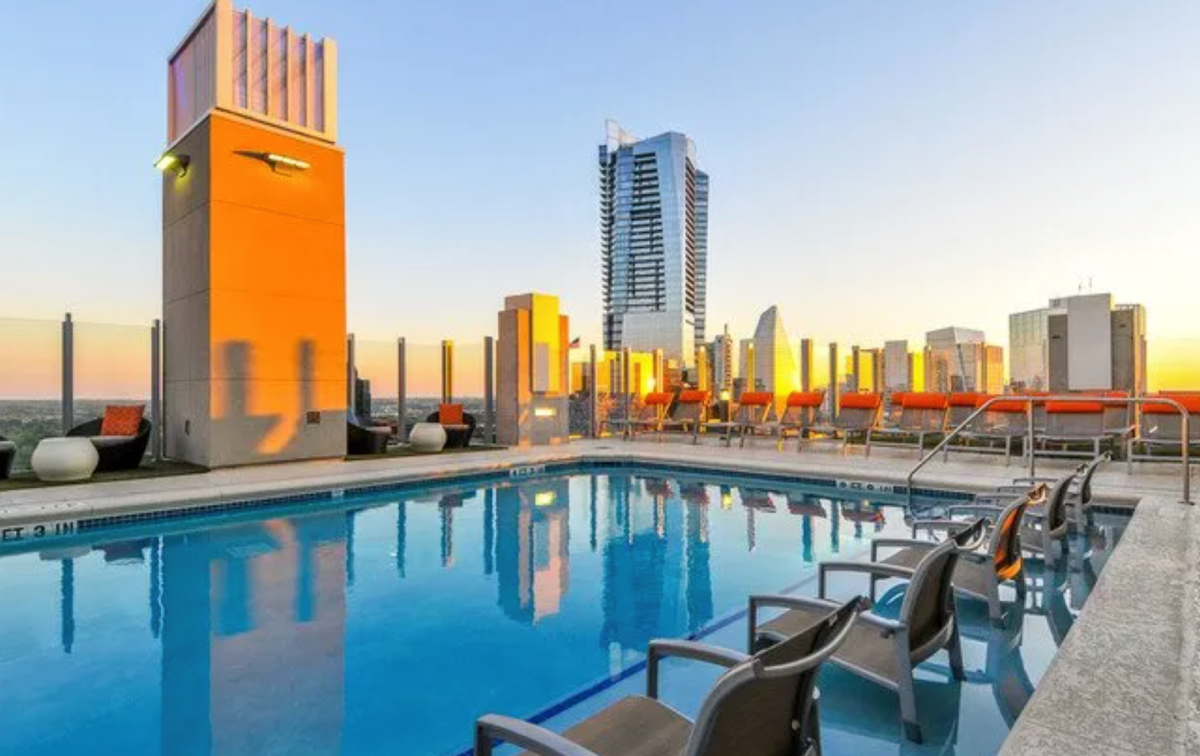
Buckhead is Atlanta’s premier upscale neighborhood—often called the “Beverly Hills of the South.” It’s a hub for luxury shopping, fine dining, high-end nightlife, corporate offices, and elegant living.
Home to iconic spots like Lenox Square, Phipps Plaza, the Buckhead Village District, and the Atlanta History Center, this area attracts professionals, executives, and those seeking a sophisticated urban lifestyle.
While it’s one of Atlanta’s priciest areas, it offers unmatched amenities and convenience. This 2026 guide covers rents, top apartments, lifestyle, and essential tips for renters.
Average Rent Prices in Buckhead Atlanta
Buckhead commands premium rents, reflecting its luxury status and prime location. As of late 2025:
- Studio: $1,700–$2,200
- 1-Bedroom: $1,900–$2,600 (average around $2,000–$2,200)
- 2-Bedroom: $2,700–$3,800
- Overall Average: $1,950–$2,500 per month
Prices have seen slight increases (around 1-2% YoY), but newer buildings often offer incentives like free months or waived fees. Sub-areas like Buckhead Village trend higher due to walkability and vibe.
Popular Apartment Communities in Buckhead
Buckhead is synonymous with luxury high-rises boasting rooftop pools, concierge services, and skyline views. Standouts based on recent reviews and listings include:
- Hanover Buckhead Village: Glamorous units in the heart of the Village District; rooftop amenities, pet spa, near shopping and dining.
- The Huntley: Ultra-premium with exclusive events, penthouses, and top-tier finishes.
- AMLI Buckhead: Modern mid-rise with green space access, high ceilings, and EV charging.
- Camden Buckhead Square: Resident-favorite for value luxury; pool, gym, and proximity to MARTA.
- Elle of Buckhead and The Bryant at Buckhead Village: Newer builds with upscale interiors, sky lounges, and walkable location.
Most are pet-friendly, with in-unit washers/dryers, quartz counters, and smart home features.
Lifestyle: Pros and Cons of Renting in Buckhead
Pros:
- Shopping & Dining: World-class malls (Lenox, Phipps), Buckhead Village for boutiques, and restaurants from steakhouses to global cuisine.
- Nightlife & Entertainment: Bars, clubs, and venues like Buckhead Theatre.
- Green Spaces: Paths at Chastain Park, nearby nature preserves. Read our guide on Buckhead parks.
- Job Access: Corporate headquarters, easy commutes via GA-400.
- Walkability in Key Areas: Buckhead Village scores high; overall upscale vibe.
Cons:
- Cost: Highest rents in Atlanta; parking and utilities add up.
- Traffic & Parking: Congested on Peachtree Road; garage spots often $150–$300/month extra.
- Noise: Busy streets and nightlife can mean urban sounds.
- Density: High-rises dominate; less “neighborhood feel” than greener suburbs.
Transportation and Parking Tips
- Public Transit: Excellent MARTA access (Buckhead and Lenox stations); quick to Midtown, Downtown, or airport.
- Driving: GA-400 and I-85 nearby, but rush hour is heavy.
- Parking: Scarce and expensive on-street; prioritize buildings with included or valet options. Many garages in Village District.
- Alternatives: Rideshares abundant; some areas bike-friendly with PATH400 trails.
- Cost Saver: Choose MARTA-adjacent buildings to reduce car dependency.
Safety in Buckhead
Buckhead is one of Atlanta’s safer neighborhoods, with low violent crime rates compared to the city average. Areas like North Buckhead and Chastain are particularly secure.
Property crimes (e.g., car break-ins) occur, especially near nightlife—use gated parking and building security. Overall crime has continued to decline in 2025, bolstered by private patrols and APD.
Tips for Renting in Buckhead
- Prioritize location: Village for walkability, North Buckhead for quieter residential feel.
- Tour extensively—amenities and views vary greatly.
- Negotiate perks: Free parking or rent concessions common in competitive market.
- Check management reviews for responsiveness.
- Budget for extras: Utilities $150–$250, valet/garage fees.
- Lease in off-season (winter) for better deals.
Buckhead delivers luxury Atlanta living at its finest—elegance, convenience, and excitement. If you’re drawn to upscale urban energy and don’t mind the price tag, it’s unbeatable. Explore listings on RentCafe, Apartments.com, or Zillow today.
Related Articles:
-

Atlanta’s rental market continues to evolve, blending Southern charm with urban energy. While the city’s popularity has driven up prices in recent years, there’s still plenty of value to be found for budget-conscious renters.
Whether you’re a young professional, student, or family starting out, affordable apartments under $1,500 for a one-bedroom are available—especially if you’re open to neighborhoods just beyond the core downtown area.
How To Find Cheap Apartments in Atlanta
In this updated guide, we’ll cover current median rents, spotlight top picks based on recent reviews and listings, and share tips for scoring the best deals. (Note: Prices fluctuate; always verify with property managers.)
Since you already know how to find an affordable apartment, this article will show you some prices in Atlanta.
You should already have in mind how many bedrooms you want and some must-have amenities. You may not know what part of town you want to live in (close to the job?) and that’s OK.
How Much Is Rent in Atlanta?
As of late 2025, Atlanta’s rental landscape has seen modest increases due to ongoing development and demand, but it’s still more accessible than many major metros. According to recent data:
- Studio Apartment: Around $1,500 per month rent.com
- One Bedroom: $1,600–$1,800 per month apartments.com +1
- Two Bedrooms: $1,800–$2,100 per month
- Three Bedrooms: $2,000+ per month, with single-family homes averaging $1,898 atlantaagentmagazine.com
These figures are citywide medians; venturing into affordable pockets like the westside or eastside can shave off 20–30%. Pro tip: Off-season moves (winter months) often yield discounts.
Top Affordable Apartment Picks in Atlanta
We’ve refreshed our list with current favorites, drawing from resident reviews, availability, and value. These standouts offer modern amenities without breaking the bank, focusing on spots under $1,600 for starters. Many are pet-friendly and transit-accessible.
Peachtree Park Apartments

- Location: 1000 Peachtree Park Dr NE, Atlanta, GA 30309 | Phone: (678) 949-5307
- Sample Prices: Starting at $1,450 for 1BR; $1,650 for 2BR (updated from 2020 lows)
- Details:
- Tuscan floorplan: 1BR/1BA, 753 sq ft
- Maple floorplan: 2BR/2BA, 900 sq ft
- Amenities/Features: Resort-style pool, fitness center, gated parking, in-unit laundry. Close to Midtown’s vibrant scene.
- Resident Review: “The location is unbeatable—walkable to everything. Staff like Ruqayyah and Grant go above and beyond for quick fixes.” yelp.com (Yelp, 2025)
Venue Brookwood Apartments

- Location: 1000 Marietta St NW, Atlanta, GA 30318 | Phone: (404) 814-4550
- Sample Prices: From $1,350 for 1BR
- Details:
- Studios and 1BR units around 650–800 sq ft
- Amenities/Features: Rooftop lounge, dog park, EV charging, stainless steel appliances. West Midtown vibe with easy BeltLine access.
- Resident Review: “Affordable luxury without the hassle—quiet yet central. Maintenance is responsive, and the amenities make it feel premium.” yelp.com (Yelp, December 2025)
Camden Buckhead Square Apartments

- Location: 2819 Buford Hwy NE, Atlanta, GA 30329 | Phone: (404) 276-3355
- Sample Prices: $1,299–$1,499 for 1BR
- Details:
- 1BR/1BA: 700–850 sq ft
- Amenities/Features: Resort pool, 24-hour gym, coffee bar, pet spa. Near Brookhaven’s shops and MARTA.
- Resident Review: “Great bang for your buck in Buckhead—modern units and friendly community events keep it lively.” yelp.com (Updated Yelp, 2025)
Link Apartments® Grant Park

- Location: 450 Seminole Ave NE, Atlanta, GA 30312 | Phone: (470) 408-4840
- Sample Prices: From $1,200 for studios; $1,400 for 1BR
- Details:
- Studios: 500 sq ft; 1BR: 650 sq ft
- Amenities/Features: Bike storage, grilling areas, co-working space, in-unit W/D. Steps from Grant Park’s trails and farmers market.
- Resident Review: “Perfect for first-timers—affordable, eco-friendly, and in a walkable, green neighborhood.” rentcafe.com (RentCafe, November 2025)
Briarcliff Apartments

- Location: 2660 Briarcliff Rd NE, Atlanta, GA 30329 | Phone: (404) 523-4848
- Sample Prices: $1,100–$1,300 for 1BR
- Details:
- 1BR/1BA: 750 sq ft
- Amenities/Features: Renovated kitchens, pool, laundry facilities, near Emory University.
- Resident Review: “Quiet, clean, and super value-driven. Close to everything but feels tucked away.” rentcafe.com (RentCafe, 2025)
Fulton Pointe Apartments

- Location: 3080 Godby Rd, College Park, GA 30349 (near Atlanta) | Phone: (404) 765-0400
- Sample Prices: From $999 for 1BR (one of the lowest in the metro)
- Details:
- 1BR/1BA: 650 sq ft; 2BR: 900 sq ft
- Amenities/Features: Clubhouse, playground, basketball court, pet-friendly. Airport-adjacent for commuters.
- Resident Review: “Budget goldmine—spacious and maintained well for the price.” rentcafe.com (RentCafe, November 2025)
What Are the Cheapest Places to Rent in Atlanta?
Affordability shines in Atlanta’s diverse quadrants. Head south or west of I-20 for the best deals—rents can dip below city averages by 15–25%. Top budget neighborhoods in 2025 include:
Neighborhood Avg. 1BR Rent Why It’s Affordable & Appealing Cascade Heights $1,200 Family-friendly, green spaces, below-average rates apartments.com Campbellton Road $1,150 Quiet, residential vibe with easy highway access zumper.com Pittsburgh $1,100 Historic charm, revitalizing with low entry costs apartments.com Ashview Heights $1,250 Proximity to downtown, rising but still value-packed zumper.com Cabbagetown $1,300 Artsy, safe (top 78% for security), median home $244K extraspace.com Eastside spots like Candler Park ($1,110 avg. 1BR offer eclectic vibes. For ultra-low (under $800), check low-income programs via Atlanta Housing
If you want to find some Atlanta apartments for under $600, here are several of the best rentals.
Final Thoughts
Finding a cheap apartment in Atlanta shouldn’t intimidate you. The key is to do your research. Look up the different school districts and amenities in the various neighborhoods to see if they are places you would like to live.
Finding an apartment to rent in Atlanta is not a small accomplishment. Although the city is huge, don’t think that means that you have to overpay for a place to live.
Remember when dealing property managers to list your must-haves and stick to them.
Atlanta has one of the best real estate markets in the country, with affordable housing in every quadrant of the city. Large backyards, manicured parcels and strong neighborhoods with ample dining amenities make it one of the top places for transplants.
Keep up with what’s going on in Atlanta’s real estate scene here with our Apartment Guide.More Articles From AtlantaFi:
-
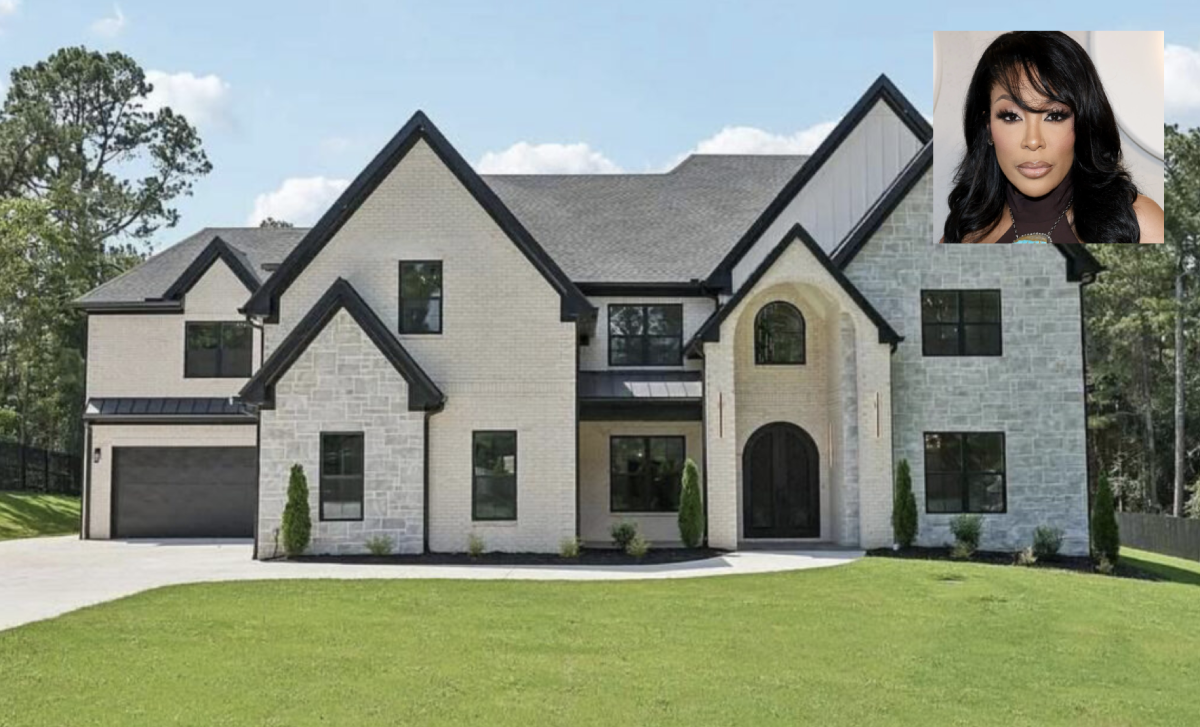
Singer and reality TV star K. Michelle is making big moves in the ATL, both on and off screen.
The Love Em All hitmaker recently shared glimpses of her stunning new 6,000-square-foot Buckhead estate, purchased for $1.5 million alongside her husband, Dr. Kastan Sims.
With 5 bedrooms and 6 bathrooms, the sprawling property offers plenty of space for the couple as they gear up for exciting new chapters and add to the celebrity homes in Atlanta.
K. Michelle Buys $1.5 Million Home in Atlanta
K. Michelle, known for her powerhouse vocals and unfiltered personality from stints on Love & Hip Hop: Atlanta, has been spotted filming with the Real Housewives of Atlanta cast, fueling confirmation that she’ll be joining season 17.
Fans are buzzing about how her bold energy will mix with the current peaches, especially as she settles into this upscale home perfect for hosting dramatic dinners and confessional-worthy moments.
The modern estate boasts elegant interiors and ample luxury, reflecting K. Michelle’s elevated lifestyle as she transitions into country music and reality royalty.
Inside K. Michelle’s Mansion
Here are exclusive glimpses into the singer’s new Atlanta haven:

Elegant living spaces in K. Michelle new Atlanta estate.
Modern kitchen perfect for entertaining.

Spacious bedrooms with luxurious finishes.

Stunning exterior of the $1.5M property.

Cozy and chic interiors reflecting K. Michelle vibe.

Has K. Michelle Been Confirmed To Be on RHOA?
Bravo executive and show host Andy Cohen seemingly made an accidental confirmation during an event in November 2025, which was then widely reported by multiple sources as an official announcement.
Additionally, K. Michelle has been spotted filming with other cast members, providing further visual confirmation.
Final Word
K. Michelle recently purchased a lush estate in Atlanta, something big enough to entertain in — and film in.
- The Home: A luxurious 6,000 sq ft estate with 5 bedrooms, 6 bathrooms, marble floors, and a bold decor, reflecting her vibrant personality.
- The Timing: The purchase and move-in happened just before her official debut on RHOA, aligning with her new life chapter.
- Her Role on RHOA: K. Michelle is set to bring her authentic, unfiltered energy and drama to the series, with fans excited to see her and her husband’s storyline unfold.
With her RHOA debut on the horizon and this dreamy new home, K. Michelle is poised to dominate Atlanta’s scene. Stay tuned for more updates as the season unfolds!
AtlantaFi.com – Your source for celebrity real estate and Bravo buzz in the city.
More From AtlantaFi.com:
-
Industry analysts and major real estate platforms are already pointing to metro Atlanta as one of the hottest housing markets to watch heading into 2026.
A new report released this week by the Urban Land Institute (ULI) in its annual “Emerging Trends in Real Estate 2026” ranks Atlanta No. 4 nationally for overall real estate prospects, trailing only Nashville, Dallas-Fort Worth, and Austin.
Realtor.com went further in its latest forecast, naming Atlanta the No. 2 market in the country for expected home-price appreciation and sales growth combined next year, behind only Miami.What’s driving the optimism?
1. Continued Job and Population Growth
Metro Atlanta added more than 78,000 new jobs in the 12 months ending October 2025, according to the latest Georgia Department of Labor figures.
Major expansions and relocations — including Rivian’s ongoing build-out east of the city, multiple new film and TV production facilities, and Microsoft’s planned 1-million-square-foot campus in Midtown — are bringing thousands of high-wage workers who need housing.
2. Relative Affordability Still an Edge
While the median existing-home price in metro Atlanta has climbed to approximately $415,000 (October 2025 data from Georgia MLS), it remains well below coastal gateway cities. That price gap continues to pull buyers and investors from New York, California, and South Florida.
3. Inventory Finally Loosening
After years of severe shortage, active listings in the 28-county metro area are up 28% year-over-year as of November. Many homeowners who were previously “rate-locked” at 3% mortgages have decided to move up, move out, or cash in on equity, giving buyers more options for the first time since 2021.
4. Investor and Institutional Interest Surging
Build-to-rent communities broke ground on more than 6,200 new units in metro Atlanta in the first three quarters of 2025 alone, according to RealPage Analytics.
Institutional investors purchased $4.8 billion worth of multifamily and single-family rental properties in the region this year — the highest total since 2021.
Local experts are cautiously optimistic.“
Atlanta is hitting that sweet spot where job growth, population growth, and new supply are starting to find balance,” said Jennifer Koach, president of the Atlanta Realtors Association. “We’re not expecting the crazy double-digit price spikes we saw in 2021 and 2022, but 5-8% appreciation in 2026 looks very achievable across most of the metro.”
Not every submarket will move at the same pace. Analysts highlight these areas as ones to watch:
- South Fulton & Clayton County – Still the most affordable intown-adjacent counties; new BeltLine-style trail projects and the coming Southside BeltLine are drawing first-time buyers and investors.
- Gwinnett County (especially Peachtree Corners and Duluth) – Benefiting from the new Rivian plant and continued tech expansion along the I-85 corridor.
- Paulding & Bartow Counties – The fastest-growing counties west and northwest of the city, fueled by remote workers and new industrial parks.
- Intown neighborhoods (Old Fourth Ward, Reynoldstown, West Midtown) – Luxury condo and townhome developments are absorbing quickly as empty-nest buyers downsize from the suburbs.
Challenges remain. Mortgage rates are expected to hover in the low-to-mid 6% range through much of 2026, and insurance costs continue to rise sharply in Georgia.
Still, most forecasts agree: Atlanta’s combination of economic momentum and relative value will keep it near the top of national watch lists for another year.If you’re thinking of buying, selling, or investing in 2026, the message from analysts is clear — Atlanta isn’t cooling off anytime soon.
Final Word
When it comes to real estate for the new year, the metro area is once again one of the top housing markets in the United States.
With so much economic pressure on Americans, it’s understandable that many would be concerned about affording a home right now. But the key is that you can get in the home you want and need for the most part.
One thing you’ll have to do is get pre-approved by a lender of your choice, who will consider the income you take in annually as well as your debt and credit.
You can gauge how much you can comfortably spend on a new mortgage in a really simple way. See our home affordability calculator.
More Articles Like This:
-

Kenya Williams, 26, has been looking for an affordable home in Atlanta for eight months now. “Still nothing,” the IT professional says, adding that her preference is Midtown or somewhere on the eastside near Old Fourth Ward. “I’ve thought about getting a roommate at this point.”
Maybe she should get a little older.
According to the National Association of Realtors’ (NAR) 2025 Profile of Home Buyers and Sellers (covering transactions from July 2024 to June 2025), the median age of all home buyers—first-time and repeat combined—reached an all-time high of 59 years old.
Nationwide, 59 Is Median Homebuying Age
This is up from 56 in 2024, 49 in 2023, and a far cry from the 31 recorded in 1981 when NAR began tracking the data.
For context:
- First-time buyers’ median age hit a record 40 (up from 38 in 2024).
- Repeat buyers’ median age rose to 62 (up from 61 in 2024).
This aging trend reflects broader housing market challenges, including high prices, elevated mortgage rates, and low inventory, which have sidelined younger buyers and boosted the share of older, cash-flush repeat buyers (now 79% of the market).
The first-time buyer share also fell to a historic low of 21%. These figures are based on NAR’s survey of over 173,000 recent buyers, weighted for geographic representation.
Median Homebuying Age in Atlanta
Drawing from the latest data released by the National Association of Realtors (NAR) and local analyses, the median age of homebuyers in the Atlanta metro area has reached an estimated 56 years old in 2025—mirroring a national surge to 59 but underscoring unique local pressures like soaring prices and limited inventory.
This trend, fueled by high mortgage rates and economic barriers for younger residents, is reshaping the Peach State’s real estate landscape and raising alarms about the American Dream slipping further out of reach for millennials and Gen Z.
A National Crisis Hits Home in Atlanta
The NAR’s 2025 Profile of Home Buyers and Sellers, based on surveys of over 173,000 recent buyers nationwide, paints a stark picture: the overall median buyer age hit a record 59, up from 56 in 2024, while first-time buyers—now just 21% of the market—skew even older at a median of 40.
Repeat buyers, who dominate at 79% of purchases, clock in at 62 on average.
”We’re seeing a market dominated by equity-rich boomers and Gen Xers trading up or downsizing, while younger buyers sit on the sidelines,” said Jessica Lautz, NAR’s deputy chief economist.
High interest rates, lingering around 6.7% for a 30-year fixed mortgage, have locked many into their current homes, exacerbating the inventory shortage.
Zillow data shows that in metro Atlanta, aspiring owners must sock away about 10% of median household income monthly to hit that 10% down payment threshold, a far cry from the late-20s entry point common in the 1980s.
Can you afford a home in Atlanta? Read this.
Local Factors Amplifying the Age Gap
Atlanta’s market, while more affordable than coastal hotspots like New York or San Francisco, is no stranger to these pressures. The metro area’s population swelled to 6.4 million in 2024, driven by in-migration and job growth in sectors like tech and logistics, yet housing supply lags.
Racial and generational disparities add layers to the story.
Spurred by gentrification and inflation, Black homeownership rates in Georgia trail the national average, with affordability challenges hitting minority buyers hardest—despite a median first-time buyer age of 35 for some groups entering the market.
Meanwhile, older buyers, often cash-flush from equity gains, snap up 30% of properties all-cash nationwide, a trend echoed locally where 37.6% of April sales were cash deals earlier this year.
In Atlanta’s diverse suburbs like Fulton County, where prices averaged $426,727, this cash wave favors repeat buyers over novices.
Glimmers of Hope and Calls for Action
Not all signs are grim. Forecasts from NAR’s chief economist Lawrence Yun predict a 6% uptick in existing home sales nationally in 2025, with Atlanta poised for a 9-13.5% local rebound as inventory balances and rates potentially ease.
The Atlanta Regional Commission anticipates 1.8 million new residents by 2050, spurring investments in mixed-income developments and infrastructure to boost affordability.
Final Word
Atlanta has one of the best real estate markets in the country, with affordable housing in every quadrant of the city. Large backyards, manicured parcels and strong neighborhoods with ample dining amenities make it one of the top places for transplants.
Not to mention that the city’s dining scene is the best in the Southeast. Looking for a home? Check out our Real Estate Resource Page.
Keep up with what’s going on in Atlanta’s real estate scene here with our Apartment Guide.
See The Latest Atlanta Real Estate News At AtlantaFi.com.
More Articles From AtlantaFi:
-
As the leaves turn and the holiday season approaches, a sobering economic chill is settling over Atlanta’s vibrant neighborhoods—from the bustling streets of Midtown to the family homes in Decatur.
New data from ATTOM, a leading provider of land and property data, reveals that U.S. foreclosure activity has climbed for the eighth consecutive month, with a 9% year-over-year increase in September 2025.
U.S. Foreclosure Surge Hits Home in the Peach State
This persistent uptick signals growing financial strain for homeowners nationwide, and Georgia’s capital city is feeling the pinch more acutely than most.
The report, released this week, shows that one in every 3,456 U.S. housing units received a foreclosure filing during the third quarter of 2025, up 5% from the same period last year.
Defaults—the initial stage of foreclosure, often a lender’s first notice to a delinquent borrower—jumped 21% year-over-year, while scheduled auctions rose 7% and bank repossessions increased 3%.
Experts attribute the trend to lingering inflation, rising interest rates, and uneven job recovery in sectors like hospitality and logistics, which are staples of Atlanta’s economy.
For Atlantans, the numbers hit close to home. Metro Atlanta ranked among the top 10 markets for foreclosure starts in the quarter, with a rate of one in every 2,145 homes facing some form of filing—more than double the national average.
This places Fulton County at the epicenter, where filings spiked 15% from Q2, driven by underwater mortgages in areas like East Atlanta Village and parts of Clayton County.
The broader picture underscores Atlanta’s vulnerability.
Georgia as a state saw a 12% increase in foreclosure activity, outpacing the national figure and reflecting the region’s reliance on service industries battered by post-pandemic shifts.
While the city’s tech boom in areas like Buckhead offers some buffer, lower-income suburbs such as South Fulton are bearing the brunt, with repossessions up 18% year-over-year.
Nationally, the heat map of foreclosures paints a stark portrait of Rust Belt and Southern struggles.
The top five metropolitan statistical areas (MSAs) for foreclosure rates in Q3 2025 are dominated by cities grappling with deindustrialization and housing affordability crises. Here’s a breakdown:
Rank Metropolitan Area Foreclosure Rate (Q3 2025) Year-over-Year Change 1 Columbia, SC 1 in 1,456 homes +14% 2 Indianapolis, IN 1 in 1,678 homes +11% 3 Virginia Beach, VA 1 in 1,789 homes +9% 4 Atlanta, GA 1 in 1,945 homes +12% 5 Detroit, MI 1 in 2,012 homes +16% Source: ATTOM Q3 2025 U.S. Foreclosure Market Report
These figures highlight a troubling concentration: Southern and Midwestern markets like Atlanta are seeing filings at rates far exceeding coastal powerhouses such as New York or San Francisco.
In Columbia, the top-ranked city, economic fallout from manufacturing layoffs has fueled a 14% surge, while Detroit’s long-standing auto industry woes continue to erode homeownership stability.
Local leaders are responding with urgency. Mayor Andre Dickens is doubling down on affordability initiatives across the city, offering low-interest loans and counseling for at-risk borrowers.
As 2025 draws to a close, the foreclosure wave serves as a stark reminder of the fragility beneath Atlanta’s phoenix-like rise.
With federal aid programs set to expire next year, residents are urged to check resources like Georgia’s Department of Community Affairs for early intervention.
What Atlanta Is Doing To Promote Housing Affordability
Mayor Dickens launched a comprehensive plan to build or preserve 20,000 units of high-quality, affordable housing across Atlanta by 2030, targeting legacy residents, low-income households, and the unhoused.
As of late 2024, over 3,000 units have been delivered, with nearly 5,000 more in development, and 11,000 total completed or under construction. This includes using federal funds like ARPA for direct investments.
In another example, Mayor Dickens secured a $60 million bond—the largest single investment in homelessness in Atlanta’s history—to create up to 700 new deeply affordable units by the end of 2025.
This includes 200 permanent supportive housing units with on-site services and 500 quick-delivery modular units on city-owned land, aimed at rapidly housing the unhoused.
Final Word
In a city that’s always reinvented itself, the question now is: Can Atlanta forestall the next chapter of hardship?
For help with a pending foreclosure, read our guide on how to stop foreclosures in Georgia.
Stay tuned to AtlantaFi.com for updates on economic recovery efforts.
More Articles From AtlantaFi:
-
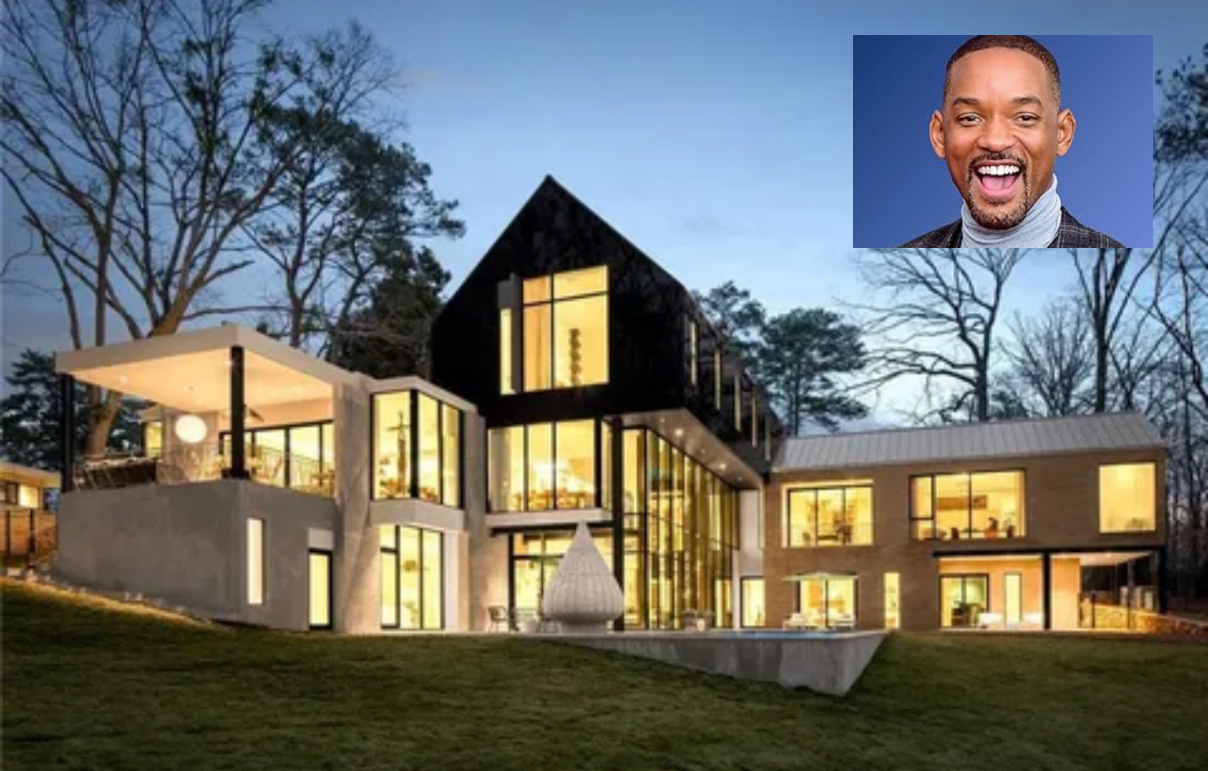
A sprawling glass-themed Buckhead mansion that served as a high-octane backdrop in Will Smith’s blockbuster Bad Boys for Life is now up for sale, offering buyers a chance to own a piece of Hollywood glamour in the heart of Atlanta.
Listed at $5.25 million, the 6,995-square-foot estate boasts five bedrooms, 6.5 bathrooms, and a host of luxury amenities that blend opulent living with cinematic flair.
Atlanta is no stranger to celebrity homes, but this one is special.
Atlanta Mansion in Will Smith’s ‘Bad Boys for Life’ Hits the Market for $5.25M
The property, built in 2019, gained fame as the lavish home of Will Smith in the 2020 action-comedy sequel, where stars Smith and Martin Lawrence filmed explosive scenes amid its grand interiors and manicured grounds.

Key features include:
- A resort-style pool with waterfalls and a spa, surrounded by lush landscaping.
- A state-of-the-art home theater, gourmet chef’s kitchen, and wine cellar.
- An elevator serving all three levels, plus a four-car garage.
- Expansive outdoor entertaining spaces, including a covered terrace and fire pit.
The open-concept main level seamlessly connects living areas, featuring a full bar, game room, floor-to-ceiling fireplaces, and two guest suites with direct pool access. The private primary wing includes dual dressing rooms and an adjoining study.
Upstairs, two additional bedrooms provide ample space for family or guests.

The Design Galleria kitchen boasts custom Kingdom Woodworks cabinetry, Sub-Zero and Wolf appliances, a concealed walk-in pantry, and marble finishes with expansive views of the surrounding forest.
The mansion’s European-inspired architecture and high-end finishes made it a perfect fit for the film’s over-the-top villain lair, with production crews transforming parts of the property for chase sequences and showdowns.
Smith, who reprised his role as Detective Mike Lowrey, reportedly spent several days on-site during filming.
Located in one of Atlanta’s most exclusive enclaves, the home sits on nearly two acres and offers privacy behind gated entry while being minutes from top shopping, dining, and schools in Buckhead.

Architect Robert Tretsch III of Tretsch Architecture designed the estate, which David Adams of Adco Properties built as the official showhouse for the Atlanta Symphony Orchestra’s 75th anniversary.
Real estate experts note that celebrity-tied properties in Atlanta often command premium prices, especially with the city’s booming film industry – nicknamed “Hollywood of the South” – drawing major productions like the Bad Boys franchise.
For more details or to schedule a private viewing, contact Atlanta Fine Homes Sotheby’s International Realty. Photos and virtual tours are available on the listing at realtor.com.
Final Word
Atlanta has one of the best real estate markets in the country, with affordable housing in every quadrant of the city, especially in Buckhead, Atlanta’s priciest area. Large backyards, manicured parcels and strong neighborhoods with ample dining amenities make it one of the top places for transplants.
Not to mention that the city’s dining scene is the best in the Southeast. Looking for a home? Check out our Real Estate Resource Page.
Keep up with what’s going on in Atlanta’s real estate scene here with our Apartment Guide.
See The Latest Atlanta Real Estate News At AtlantaFi.com.
More Articles From AtlantaFi:
- How To Rent An Apartment In Atlanta
- Most Expensive Homes in Atlanta Right Now
- Apartment Resource Guide: Atlanta
AtlantaFi.com – Your source for Buckhead real estate and entertainment updates.
-
As Atlanta’s housing market heats up—with median home prices around $400,000 citywide but plenty of value spots for savvy buyers—focusing on neighborhoods that balance affordability, safety, growth potential, and lifestyle is key.
Atlanta’s Top Neighborhoods Based On Schools
Based on the latest data from trusted sources like Niche and U.S. News & World Report, we’ve curated the top 10 neighborhoods ideal for first-time buyers, families, and investors.
These picks emphasize up-and-coming areas with strong community vibes, access to the BeltLine, MARTA, and amenities, while keeping costs under the city average.
We prioritized spots with median prices under $500K, high safety ratings (safer than 50%+ of Atlanta neighborhoods), and features like parks, schools, and walkability.
Prices are medians as of October 2025 and can fluctuate—click our search links to explore current listings!
Neighborhood Median Home Price Why It’s Great for Buyers Key Amenities & Safety Search Listings Cabbagetown $244,000 Ultra-affordable entry into historic charm; perfect for young professionals seeking artsy, walkable vibes near Downtown without breaking the bank. High appreciation potential from BeltLine proximity. Safer than 78% of Atlanta; parks, theaters, local eats like Agave; community gardens. Search Cabbagetown Sylvan Hills $275,000 Budget-friendly suburban feel close to city action; ideal for first-timers wanting space and value in a revitalizing area with quick equity growth. Safer than 70%+; Perkerson Park trails, breweries at Lee + White; family events via neighborhood assoc. Search Sylvan Hills East Atlanta Village $320,000 Eclectic, diverse energy at accessible prices; great for creative buyers loving festivals and nightlife, with strong community support for long-term living. Safer than 65%; Brownwood Park, The Earl venue; East Atlanta Strut events. Search East Atlanta Kirkwood $350,000 Historic bungalows with modern perks; commuter-friendly for CDC/Emory workers, offering tree-lined streets and events that build instant community ties. Safer than 75%; Spring Fling Festival, protected forests; MARTA access. Search Kirkwood Reynoldstown $385,000 Trendy yet attainable mix of old and new; walkable to BeltLine for active lifestyles, with rising values making it a smart investment for urban enthusiasts. Safer than 60%; Eastside Trail, local shops/eateries; civic engagement hubs. Search Reynoldstown Grant Park $410,000 Classic Victorian gems near the zoo; family-focused with green space galore, appealing to buyers prioritizing schools and historic appeal over flash. Safer than 80%; Zoo Atlanta, Summer Shade Festival; walking trails. Search Grant Park West End $290,000 Cultural heritage at low costs; revitalized with BeltLine trails, drawing buyers who value diversity, local shops, and easy downtown commutes. Safer than 55%; Wren’s Nest museum, West End Park; development corp. initiatives. Search West End Underwood Hills $474,000 Friendly, tree-lined haven with parks; suits families/retirees seeking safety and convenience near Midtown, with solid resale potential. Safer than 66%; Underwood Hills Park tennis, The Works campus; block parties. Search Underwood Hills Midtown $378,000 Vibrant urban core for all-in-one living; condos and bungalows for young pros/LGBTQ+ buyers, with cultural hubs ensuring steady demand. Safer than 53%; Piedmont Park, Fox Theatre; MARTA Gold/Red lines. Search Midtown Candler Park $519,000 Ultra-safe, event-rich enclave; premium for families wanting top schools and green spaces, but worth it for the low-crime, high-community return. Safer than 97%; Candler Park pool/golf, Music Festival; Little Five Points access. Search Candler Park Pro Tip: Atlanta’s market favors buyers who act fast—interest rates are stabilizing, but inventory is tight in these hotspots. Factors like school ratings (e.g., A-grade in North Buckhead areas.
Not to mention that the area’s dining scene is the best in the Southeast. Looking for a home? Check out our Real Estate Resource Page.
Keep up with what’s going on in Atlanta’s real estate scene here with our Apartment Guide.
See The Latest Atlanta Real Estate News At AtlantaFi.com.
More Articles From AtlantaFi:
-
Atlanta’s housing market continues to show signs of a buyer’s shift, with elevated pending home sale cancellations, rising inventory, and modest price growth, based on the latest available data as of October 2025.
Mortgage delinquency rates remain low nationally but are slightly higher in Atlanta compared to pre-pandemic levels.
’People Just Don’t Have the Money’
Kimberly Jordan, a loan officer at Regions Bank, told AtlantaFi.com that local job losses and a tightening economy have put many Atlanta homeowners in the red.
“People just don’t have the money,” Jordan said. “And if you can’t pay your mortgage — your most important bill — what does that say about your other bills?”
Another thing she’s seeing in Atlanta is that many pending home sales are falling through — buyers are pulling out.
When pressed for a reason why, she said: “It’s all about the money. Income.”
Below, I’ll break down key metrics relevant to the Atlanta homebuying trends and mortgage performance, from metrics compiled by Zillow, Redfin and Realtor.com.
Pending Home Purchase Cancellations
Atlanta has consistently ranked among the top U.S. metros for the highest share of pending sales falling through in 2025, driven by high prices, elevated mortgage rates (around 6.8% as of late summer), inspection issues, and buyer remorse in a more balanced market.
This is far higher than the national average of ~15% for recent months.
Month/Quarter Cancellation Rate Key Notes Source January 2025 19.8% Highest in the nation; up from 16.6% in Jan 2024. Redfin April 2025 20.0% Led all major metros; national rate was 14.3%. Redfin June 2025 19.6% Third-highest among 44 metros (behind Jacksonville and Las Vegas). Redfin July 2025 19.7% Fourth-highest; ~730 cancellations in metro area. Redfin August 2025 21.0% Highest among analyzed metros; 1,532 cancellations. National rate hit 15.1%. Redfin - Trend: Rates have hovered around 20% through mid-2025, up from ~14-16% in 2024. No full September/October data yet, but seasonal patterns suggest persistence into Q4.
- Reasons: Buyers are leveraging longer inspection periods (average days on market: 66-84) to negotiate repairs or walk away for better options amid 4.6 months of supply (June data).
Mortgage Delinquency Rates
Actual mortgage delinquencies (borrowers missing payments on existing loans) are low in Atlanta, reflecting strong home equity (median loan-to-value ~60%) and no widespread “walking away” from mortgages.
Rates are higher than the national average but well below 2008-2010 crisis levels (which exceeded 10%).
Period Overall Delinquency Rate (30+ days past due) Serious Delinquency Rate (90+ days) Key Notes Q1 2025 ~4.04% (national; Atlanta slightly higher at ~4.5%) ~2.0% (national) Up 6 bps from Q4 2024; Atlanta ranked 5th-highest nationally for serious delinquencies. April 2025 3.22% (national) 4.5% (Atlanta-specific for 90+ days) Up 1 bp from March; still below pre-pandemic norms. Q2 2025 3.93% (national) ~2.13% (GSE loans nationally) Down 11 bps from Q1; no Atlanta-specific Q2 breakdown, but trends stable. Q3 2025 (prelim) ~3.4% (national estimate) ~1.6% (serious national) Slight uptick expected; resilient due to job growth in tech/finance sectors. - Trend: Atlanta’s rates are ~0.5-1% above national averages, tied to affordability pressures from rising prices, but foreclosures remain at record lows (0.20% initiation rate in Q1).
- Context: No evidence of 15% defaults; strategic walkaways are negligible with positive equity.
This bar chart tracks overall delinquency rates (30+ days past due), showing Atlanta’s rates running ~0.5–1% above national figures but remaining low historically. The slight uptick in Q1 2025 reflects seasonal factors and local affordability pressures, with no signs of widespread defaults.
Broader Housing Market Stats (Latest as of August/September 2025)
- Median Home Sale Price: $400,000 (up 2.6% YoY as of August); Zillow typical value: $379,911 (down 2.3% YoY). Forecasts: +1.5-3% growth in 2025.
- Inventory: 20,582 active listings (June; +36.8% YoY); 9,122 for sale (July; +9.9% MoM). Months of supply: 4.6 (balanced market).
- Sales Volume: 5,277 closed (June; +8% YoY); 4,272 (October 2024 data, +4.1% YoY). Pending sales: Down 9% YoY in March.
- Days on Market: 66 days average (up from 55 in early 2024); hot homes pending in 27 days.
- Market Competitiveness: Somewhat competitive (Redfin score ~50/100); homes sell 2-3% below list; 13% sell above list (down YoY).
- Forecast for Q4 2025/2026: Sales up 6-11% nationally; Atlanta prices +3-4%; rates to 6.0-6.5% by year-end, boosting affordability.
Final Word
Atlanta’s market is transitioning to more buyer-friendly conditions, but strong in-migration (metro population ~6.4M, +4.7% since 2020) and job growth (266K in business/finance) support steady demand. For personalized advice, consult local realtors or recent MLS reports.
Atlanta has one of the best real estate markets in the country, with affordable housing in every quadrant of the city. Large backyards, manicured parcels and strong neighborhoods with ample dining amenities make it one of the top places for transplants.
Not to mention that the city’s dining scene is the best in the Southeast. Looking for a home? Check out our Real Estate Resource Page.
Keep up with what’s going on in Atlanta’s real estate scene here with our Apartment Guide.
See The Latest Atlanta Real Estate News At AtlantaFi.com.
More Articles From AtlantaFi: