-
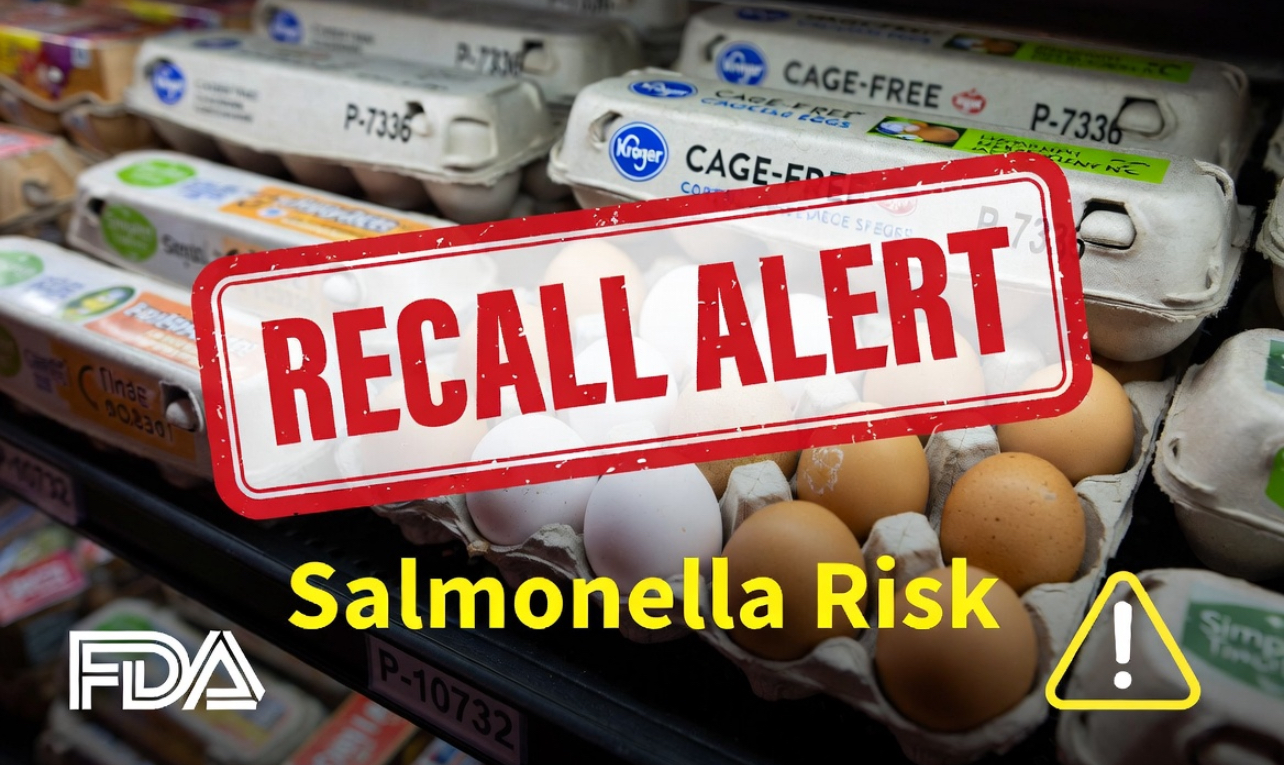
It’s time to check the eggs in your fridge. Midwest Poultry Services, L.P. (also known as MPS Egg Farms) has voluntarily recalled approximately 1,589,577 dozen white-shell and brown cage-free shell eggs due to potential contamination with Salmonella Enteritidis. The U.S. Food and Drug Administration (FDA) announced the recall on July 22, 2026.
Egg Recall: Nearly 1.6 Million Dozen Cage-Free Eggs Pulled Over Salmonella Concerns
The company identified the issue through routine environmental monitoring and root cause analysis at two of its farms in Texas. It has halted distribution of fresh eggs from those facilities. As of the initial announcement, no illnesses were reported in connection with the recalled eggs, though public health officials continue to investigate potential links to reported cases.
Affected Products and Identification
The eggs were produced between June 6 and July 3, 2026, and carry sell-by or best-by dates from July 20 to August 17, 2026. They were packaged under several brands and sizes, including retail cartons (from 6-count to 60-count) and bulk foodservice packs.
Key identifying codes (printed on the side of the carton in date-coding ink):
- Plant codes: P-1950 or 0840962
- Julian dates: 157 through 184
Only products matching these codes and date ranges are affected. No other Midwest Poultry Services products are part of the recall.
Brands and examples of recalled products include:
- Kroger — Large, Medium, Extra Large, and Jumbo eggs in various counts (e.g., 12-count, 18-count, 60-count).
- Simple Truth Cage Free — Medium Brown and Large Brown eggs (12-, 18-, and 24-count).
- Brookshire’s — Various Large, Extra Large, and Jumbo sizes.
- Country Morning and SunUps.
- Additional bulk and foodservice packs.
Where the Eggs Were Sold
The eggs reached consumers primarily through:
- Kroger stores in Texas and Louisiana.
- Brookshire Grocery stores (including Brookshire’s) in Texas, Oklahoma, Arkansas, Louisiana, New Mexico, and Mississippi.
- Smaller retail outlets and foodservice customers in these states.
What Consumers Should Do
- Check your refrigerator: Inspect egg cartons for the specific plant codes, Julian dates, and best-by dates listed above.
- Do not consume any matching products. Throw them away or return them to the place of purchase for a full refund.
- Clean thoroughly: Wash any surfaces, containers, or utensils that may have contacted the eggs with hot soapy water.
- Monitor for symptoms: Salmonella can cause fever, diarrhea, nausea, vomiting, and abdominal cramps. Symptoms typically appear 6 hours to 6 days after exposure and last 4–7 days. Young children, older adults, and people with weakened immune systems face higher risks of severe illness. Contact a healthcare provider if symptoms develop.
For questions, contact Midwest Poultry Services at 574-405-9531.
The Truth About Food Safety
Eggs can become contaminated with Salmonella on the shell or internally. Proper cooking (to an internal temperature of 160°F/71°C) kills the bacteria, but raw or undercooked eggs, or cross-contamination, pose risks. This recall underscores the value of proactive monitoring in the egg supply chain.
Shoppers in the affected states should remain vigilant in the coming weeks as stores complete removals. For the latest updates, check the FDA’s recall page or local health department announcements.
This is a developing situation based on FDA and news reports as of July 2026.