-
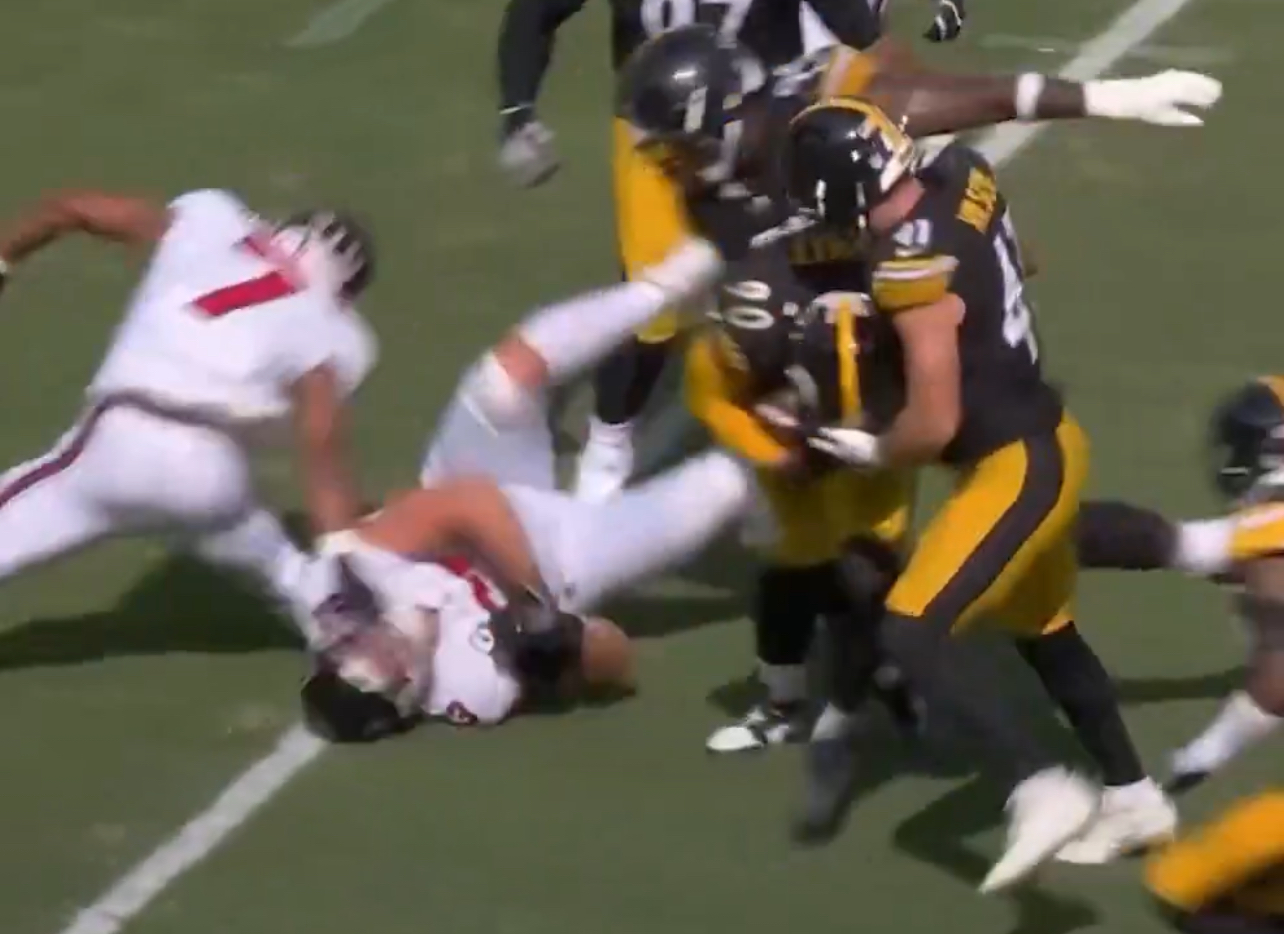
T.J. Watt jumped a checkdown intended for Bijan Robinson and returned it 35 yards for the decisive score in Pittsburgh’s 20-13 Week 1 win. It could have been much worse for Robinson.
The Atlanta Falcons were down three early in the fourth quarter when Cooper Rush, starting on short notice after Tua Tagovailoa’s back issue, tried to dump the ball to his best player. Watt anticipated it, snatched the pass out of the air just after release, stumbled, popped up, and scored. That sequence was the difference in a game where Robinson produced 173 of Atlanta’s 238 total yards.
This Play Could Have Ended Bijan Robinson’s Season
“Invited on this play” is a useful way to think about it. The design asked Robinson to be the easy outlet. Watt simply declined the invitation and took the ball himself.
The Design That Put Robinson in the Flat
The Falcons used Robinson as a receiver far more than a traditional between-the-tackles back. He finished with eight catches on 10 targets for 90 yards and the team’s only touchdown—a 23-yard swing pass earlier in the game on which he split defenders.
On the pick-six, the concept was similar: a short throw to Robinson in the flat as a safety valve against pressure or a covered downfield progression. Rush had been sacked four times and was never comfortable. A quick flip to the league’s most productive running back from 2025 was the logical, low-risk answer. Robinson’s vision, elusiveness, and ability to turn short throws into chunk gains made him the obvious “invitation” target. The Falcons motioned him and used blockers (including tight end Charlie Woerner) on similar concepts throughout the afternoon.
Watt, playing his tenth season, read the dump-off immediately. He was not fooled by the protection or the initial look. He closed the throwing window, leaped, and took the ball at the Atlanta 35. The return itself was messy—he lost his footing mid-stride—but he recovered before anyone could touch him.35
Why the Invitation Failed
Two things went wrong at once. First, Rush’s throw was late and predictable against a veteran edge who had already been disruptive. Second, the Steelers’ coverage and rush timing left Robinson as the only available option rather than a true designed mismatch. Watt simply occupied the space the checkdown was supposed to occupy.
Robinson still did almost everything else asked of him. He averaged 4.7 yards after contact on 21 carries, forced 12 missed tackles, and moved past Devonta Freeman on the Falcons’ career rushing list. The offense just could not generate enough complementary production or avoid the two interceptions that became Pittsburgh touchdowns.6
Kevin Stefanski’s first game as Falcons coach showed the same pattern many teams have against elite edge rushers: when the quarterback is under duress, the star running back becomes the default outlet. That default is usually a strength. Against Watt on that snap, it became the game’s turning point.
The play was not a mystery. It was a standard hot or checkdown concept that elite defenses exist to punish. Robinson was invited into the play because he is the Falcons’ most reliable playmaker in space. Watt simply RSVP’d first.