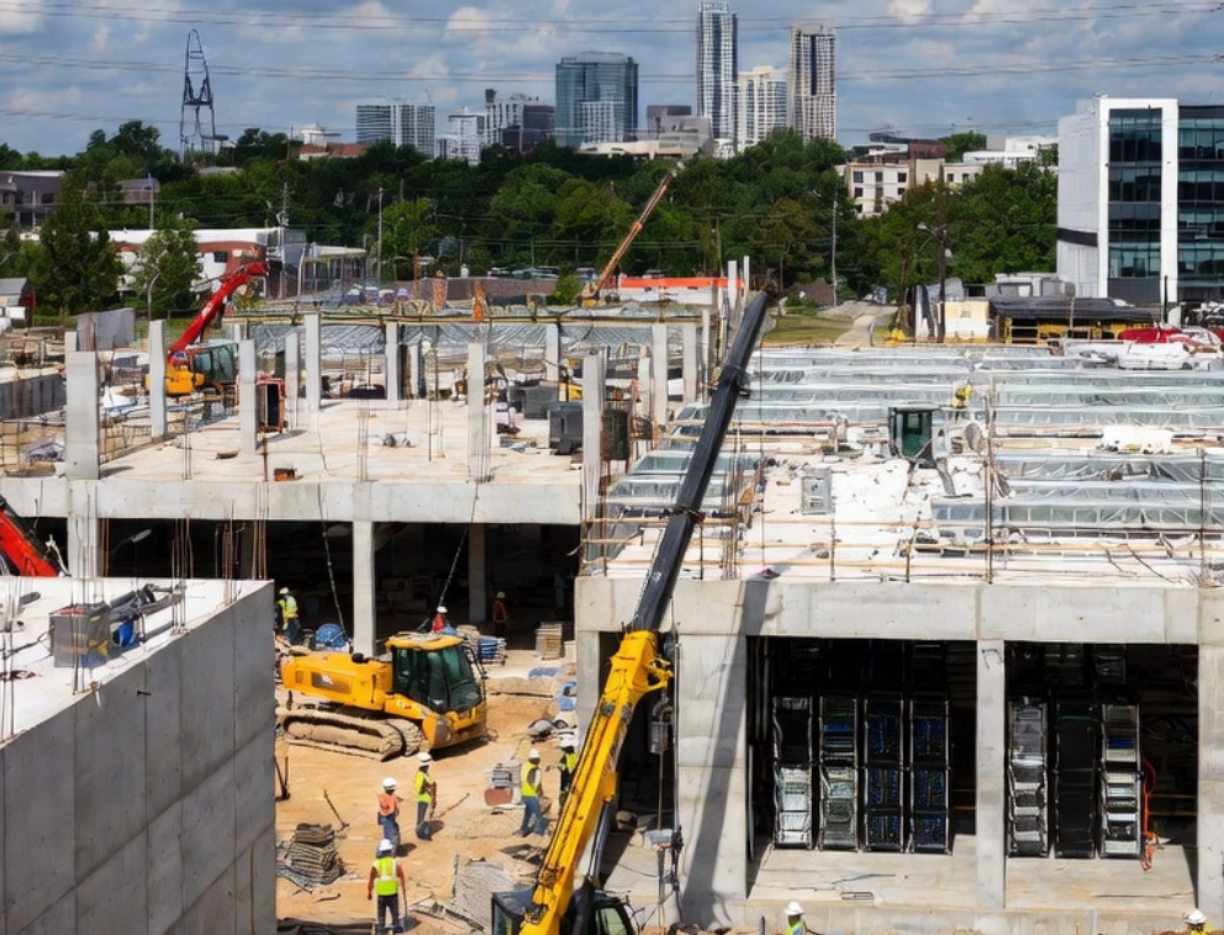

As metro Atlanta kicks off 2026, the region’s construction sector finds itself in a peculiar position: bullish on one massive segment while bracing for broader headwinds.
Data centers, fueled by the relentless demand for artificial intelligence (AI) infrastructure, continue to dominate project pipelines and builder optimism. Yet, lingering concerns over tariffs, labor shortages, energy costs, and overall economic uncertainty are tempering expectations for the rest of the industry.
Inside Metro Atlanta’s Data Center Boom
According to recent surveys from construction industry groups and reports in the Atlanta Journal-Constitution, Georgia’s builders remain highly confident in data center projects heading into the new year. A striking 65% of contractors expect the data center market to expand in 2026, with only a small fraction anticipating any slowdown.
This enthusiasm stems from the explosive growth driven by AI adoption, where hyperscalers and tech giants require vast amounts of computing power, high-density servers, and reliable infrastructure.
Metro Atlanta has solidified its status as one of the fastest-growing—and now second-largest—data center markets globally, trailing only Northern Virginia.
Notable Data Centers in Metro Atlanta
Here are the major existing/operational campuses and significant planned/proposed ones as of early 2026 in metro Atlanta.
| Location / County | Developer / Operator | Status | Key Details / Capacity (approx.) | Notes / Timeline |
|---|---|---|---|---|
| Atlanta 1 Campus (various sites, e.g., Jefferson St NW) | QTS Data Centers | Operational | 278+ MW, 99 acres, multiple buildings | Major established campus in metro Atlanta |
| Lithia Springs / Douglas County | STACK Infrastructure (ATL02), others (e.g., T5@ATL III) | Operational & Planned | Varies; T5 planned 300 MW | Key western cluster; ongoing expansions |
| Douglas County (various, e.g., Echo Road, Jason Industrial Pkwy) | AWS, Stream Data Centers, others | Operational & Planned | AWS multi-billion investment; 9-building proposals | $11B+ AWS commitment; multiple sites |
| Butts County (various, e.g., River Park area) | AWS, others (e.g., planned River Park 250 MW) | Planned / Under development | Significant AWS portion of $11B investment | Southeast of Atlanta; power-intensive |
| Rockdale County (Conyers, Atlanta East campus) | DC BLOX | Under construction / Planned | 144+ MW, 1M+ sq ft, 68 acres; 216 MW planned | Hyperscale-ready; broken ground recently |
| Union City / South Fulton (Fulton County) | Microsoft (Fairwater 2), Atlas Development (Project Sail), others | Planned / Proposed | Microsoft 350 MW; Atlas $17B+ multi-building | Southwest; heated local debates |
| Spalding County (Griffin area, Wallace Jackson) | Wallace Jackson LLC | Proposed / Approved | $3.7–$3.9B, 10 buildings, ~5M sq ft, 190 acres | Massive 2026 proposal; along I-75 south |
| Coweta County (near Newnan) | Atlas Development (Project Sail) | Proposed | $17B+, 13 buildings, large acreage | One of the largest pitched; rezoning sought |
| Fayette County | QTS (Fayetteville) | Planned | Expected online 2026 | Emerging southern site |
| Various (metro clusters: Alpharetta, Suwanee/Norcross, Downtown) | Multiple (e.g., CoreSite AT1/AT2, Digital Realty, others) | Operational | Hundreds of facilities; colocation & hyperscale | Traditional hubs; 1,280+ MW inventory total in market |
What’s Fueling Metro Atlanta’s Data Center Industrial Complex
The surge began accelerating in 2023 and shows no signs of abating. In early January alone, a mammoth proposal emerged in Spalding County south of Atlanta: the Wallace Jackson Data Center Campus, a $3.7–$3.9 billion project spanning nearly 5 million square feet across 10 buildings on 190 acres—larger than three Lenox Square malls combined.
Similar large-scale developments are in the pipeline across counties like Douglas, Butts, Union City, and Rockdale, with companies like Amazon Web Services, Microsoft, and others committing billions.
The AI boom is the primary catalyst. Facilities designed for AI workloads demand specialized construction, including advanced cooling systems (often liquid-based), massive power allocations (hundreds of megawatts per campus), and rapid build timelines.
Georgia’s advantages—abundant land, favorable business climate, robust fiber connectivity, and proximity to major markets—have made it a magnet for these investments. In 2025 alone, the state attracted over $40 billion in data center commitments in just the first seven months, pushing total announced projects into the tens of billions.
But this dominance comes amid growing caution elsewhere in construction. Builders cite multiple risks: potential tariffs on imported materials, persistent labor shortages (especially skilled trades critical for data center builds), supply chain strains, and uncertainty from federal policy shifts.
Broader economic indicators, including slower job growth projections and mixed signals on inflation, have led to dampened outlooks for non-data-center projects like commercial offices, retail, and traditional industrial developments.
Local debates add another layer of complexity. While data centers promise significant capital investment and short-term construction jobs, revised audits have shown their long-term economic impact—particularly permanent employment—may be overstated.
A recent correction from state analysts slashed earlier estimates of job creation and economic value by more than two-thirds, highlighting that operations jobs often number in the dozens per facility rather than hundreds.
Energy demands are also under scrutiny: Georgia Power’s approved plan for 10 additional gigawatts (largely fossil-fuel-based) is tied directly to data center growth, raising concerns about grid strain, water usage, and ratepayer costs.This has sparked pushback.
At least 10 Georgia municipalities have imposed local moratoriums on new data centers, and bipartisan legislation introduced in the 2026 session aims to rein in incentives.
Bills propose sunsetting or eliminating sales-and-use tax exemptions for data centers earlier than planned (originally set for 2032), requiring more transparency on energy consumption, or even a temporary statewide pause until 2027.
Critics Concerned About Data Center Proliferation
Proponents argue these “mega installations” consume resources disproportionate to their job creation and community benefits, while opponents warn that curbing incentives could drive investment elsewhere.
Daniel Hubbard, a former Georgia Public Service Commission candidate and energy policy advocate, highlighted the economic and community burdens: “Georgia voters see data centers receiving tax breaks as their power bills go up. They see local communities struggle with competition for water supplies and high voltage transmission lines that reduce property values… This is why opposition to data centers is growing in Georgia; because Georgians oppose being treated as collateral damage by the unregulated growth of data centers that will push their power bills even higher.”
Despite these challenges, data centers remain the bright spot in an otherwise cautious construction landscape. Experts note that Atlanta’s market benefits from pre-leased capacity, strong hyperscaler demand, and ongoing infrastructure expansions that could support completions through 2027 and beyond. For now, the AI-driven frenzy continues to propel Georgia’s construction sector forward—even as builders and policymakers grapple with the trade-offs.
Wanda Mosley, founder of Black Voters Matter and a South Fulton resident organizing against data centers, criticized the lack of transparency in development processes: “They’re holding these town halls but they’re only having people who benefit from the data centers speaking at the town halls.”
She further emphasized building resistance: “They don’t understand what they have started. They don’t understand the coalition that we’re about to build, because all of us have high electricity bills.”
Atlanta’s role as a digital infrastructure powerhouse is unlikely to fade soon, but 2026 will test whether the data center boom can sustain momentum amid rising scrutiny and economic pressures. Stay with AtlantaFi.com for the latest developments in this evolving story.
More Articles From AtlantaFi: