-
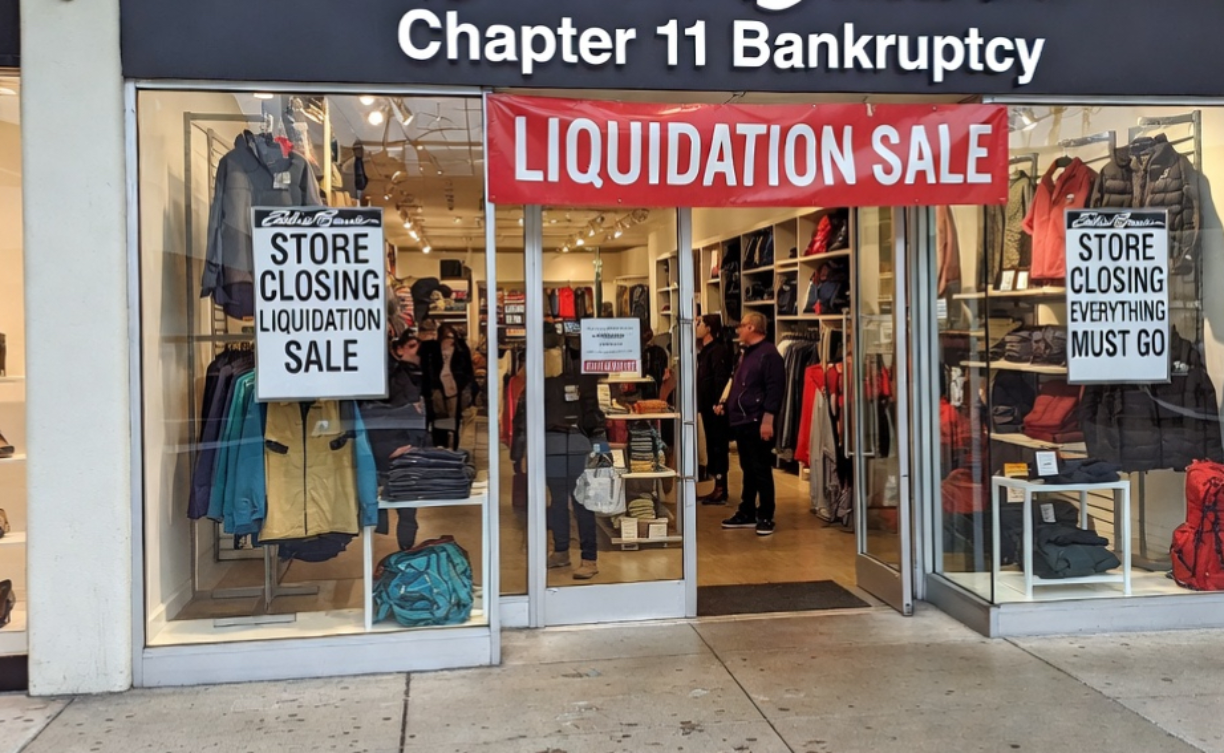
The iconic outdoor apparel brand Eddie Bauer is reportedly preparing to file for Chapter 11 bankruptcy protection, a move that could lead to the closure of all approximately 200 of its brick-and-mortar stores across North America.
According to multiple sources cited in recent reports from outlets like Women’s Wear Daily (WWD), Business Insider, and others, the impending filing involves the entity operated by Catalyst Brands, which holds the licensing rights to run Eddie Bauer retail locations in the United States and Canada.
Eddie Bauer Bankruptcy: What To Know
Catalyst Brands, a retail holding company formed through partnerships including Simon Property Group, Brookfield Corp., Authentic Brands Group, and others, is said to be gearing up for the restructuring process, with the bankruptcy potentially occurring in February 2026.
It’s not the only retailer shrinking its footprint in retail.
This development follows a January announcement from Authentic Brands Group (ABG), the current owner of the Eddie Bauer intellectual property and brand rights worldwide, that it would transition manufacturing, e-commerce, and wholesale operations in the U.S. and Canada to Outdoor 5, LLC (a global brand development and licensing platform).
That shift began taking effect in early February. A Chapter 11 filing by the Catalyst-operated retail entity would primarily impact physical stores, while online sales, wholesale channels, manufacturing, and international operations (such as stores in Japan) are expected to remain unaffected.
Eddie Bauer, founded in 1920 and known for its durable outerwear, down jackets, and adventure-focused gear, has a long history of navigating financial challenges.
The brand previously filed for Chapter 11 protection in 2009 amid the global financial crisis (after an earlier filing by its then-parent company, Spiegel Inc., in 2003).
It emerged from bankruptcy both times through acquisitions and restructurings, including a sale to private equity firm Golden Gate Capital in 2009 and later integration under Authentic Brands Group in 2021.
The current situation reflects broader pressures facing traditional mall-based retail, including shifting consumer preferences toward online shopping, economic headwinds, and competition in the outdoor apparel sector from brands like Patagonia, The North Face, and Columbia.
Reports indicate that while most—if not all—of the roughly 180–200 North American locations face closure, there may be interest from potential buyers in acquiring rights to operate a limited number of stores post-bankruptcy.
As of early February 2026, no official filing has been confirmed, and plans could still change. However, sources familiar with the matter describe the Chapter 11 preparation as advanced, with legal representation from Kirkland & Ellis already in place for the store-operating entity.
For shoppers, this could mean liquidation sales at many Eddie Bauer locations in the coming weeks or months, as the company seeks to wind down its physical retail footprint in North America while preserving the brand’s legacy through digital and wholesale channels.
Final Word
The development marks yet another chapter in the ongoing transformation of American retail, where heritage brands increasingly pivot away from traditional storefronts to survive in a digital-first era.
Here are more articles from AtlantaFi.com:
-

Atlanta has earned a spot among the top 10 most neighborly cities in the U.S. for 2026, coming in at No. 6 according to a new ranking from Redfin, the real estate brokerage.
The report, released January 28, highlights cities where residents actively build community through volunteering, helping neighbors, charitable giving, civic discussions, and participation in social organizations.
What Are the Most Neighborly Cities in America?
Salt Lake City, UT, took the top spot, followed by Portland, OR, and Kansas City, MO.Atlanta’s strong showing reflects the city’s vibrant neighborhood spirit and high number of civic organizations.
The metro area ranks No. 3 nationally for civic organizations per capita, underscoring how Atlantans stay engaged through local groups, events, and initiatives.
Key Atlanta Highlights from the Report:
- Median home-sale price: $385,000 (down 2.3% year-over-year), offering relative affordability despite expensive housing amid strong community ties.
- Volunteerism: 29% of residents volunteered in the last year (ranking No. 11 among analyzed metros).
Neighborhoods like Candler Park, with its local businesses, festivals, and walkable vibe, and Grant Park, home to community gatherings, an annual summer festival, and a popular farmers market, exemplify the neighborly feel that helps boost Atlanta’s ranking.Redfin analyzed major U.S. metros using metrics such as:
- Share of residents who volunteered recently
- Frequency of helping neighbors (e.g., at least monthly)
- Charitable donations
- Discussions of civic issues with neighbors
- Social clubs and civic organizations per capita
- Proximity to parks (share living within half a mile)
“Atlanta’s diverse neighborhoods foster real connections—whether through block parties in Grant Park or volunteer efforts across the city,” local real estate experts note, aligning with the report’s emphasis on community as a key factor in where people choose to live and stay.
America’s Most Neighborly Cities
The full top 10 most neighborly cities of 2026 per Redfin:
- Salt Lake City, UT
- Portland, OR
- Kansas City, MO
- Denver, CO
- Nashville, TN
- Atlanta, GA
- San Diego, CA
- Austin, TX
- Raleigh, NC
- Tampa, FL
For Atlantans, this ranking is a reminder of what makes our city special: tight-knit communities that look out for one another in neighborhoods from Midtown to the eastside and beyond. In a fast-growing metro, that neighborly spirit remains a big draw for newcomers and longtime residents alike.
Final Word
Atlanta is a top real estate city, with affordable housing in every quadrant of the city. Large backyards, manicured parcels and strong neighborhoods with ample dining amenities make it one of the top places for transplants.
Not to mention that the city’s dining scene is the best in the Southeast. Looking for a home? Check out our Real Estate Resource Page.
Keep up with what’s going on in Atlanta’s real estate scene here with our Apartment Guide.
See The Latest Atlanta Real Estate News At AtlantaFi.com.
More Articles From AtlantaFi:
-

When you think of your local library, it may conjure up analog memories of funny-smelling books with brown pages and quiet spaces of stillness.
Well, a lot of that is still true, but the library is also filled with free resources, including the latest streaming options and fresh educational content.
Want Free Stuff? Visit Your Local Library
In this article, we’ll highlight the incredible array of free resources available through the Fulton County Library System (commonly known as the Atlanta-Fulton Public Library System). We’ll also show you all the Atlanta library locations.
With a valid library card, residents across Atlanta and Fulton County can access an impressive suite of educational, entertainment, and practical tools at no additional cost.
Take Advantage of These Free Resources at Your Atlanta Library
Whether you’re a student, job seeker, family, or lifelong learner, your local library branch has something for you.
1. Getting Started: Your Free Library Card

A library card from the Fulton County Library System is completely free for residents, workers, or students in the area.
Apply online or visit any of the system’s 34 branches, including the iconic Central Library in downtown Atlanta. Once you have your card, a world of resources opens up—both in-person and digitally.
2. Digital Library: E-Books, Audiobooks, and More

The system’s Digital Library provides free access to thousands of e-books, audiobooks, magazines, and streaming media through platforms like Libby/OverDrive and others.
No waiting lists for many popular titles with “instantly available” collections. Residents can download bestsellers, classics, and series directly to phones, tablets, or e-readers—all at no charge.
Need to learn a new skill? The library offers free online learning tools, language courses, test prep materials, and research databases for homework, genealogy, or professional development.
3. Academic Support for Students

For K-12 students, the library partners with Paper.co to provide unlimited, on-demand free online tutoring. Available 24/7, this service connects students with live tutors for homework help, essay review, test prep, and more—perfect for busy families in Atlanta’s schools.
4. Computers, Wi-Fi, and Tech Access

Photo credit:
JÉSHOOTS / PexelsAll branches offer free public computers with internet access, productivity software (ideal for resumes, job applications, and school projects), printing, and scanning.
High-speed Wi-Fi is available throughout libraries for those bringing their own devices. Digital literacy classes help patrons build confidence with technology.
5. Partnership Passes and Take-Home Kits

Photo credit: Playhouse Media One of the most popular perks: free admission passes to local attractions through partnerships with the Georgia Public Library Service and other organizations. Check out passes for places like:
- Breman Jewish Heritage Museum (free admission for up to 4 people) and other museums
- Georgia State Parks & Historic Sites (free parking and admissions)
- Zoo Atlanta, cultural sites and other places to show visitors around the Atlanta metro area
Additional take-home kits include radon detectors and energy-monitoring tools like the Kill-A-Watt meter—great for home improvement and sustainability efforts.
Community and In-Person Programs

Dr. Sean Arthurs, senior manager of education initiatives for the National PTA, talks to kids Monday, April 23 at the Google workshop. Beyond materials, branches host free events such as storytimes for children, author talks, job search workshops, computer classes, and community resource sessions.
The Central Library and other locations regularly feature programming for all ages, including summer reading challenges and special exhibits.
More Ways to Explore
- Access to premium resources like the Atlanta Journal-Constitution newspaper archives (free online with your card).
- Community service information, including referrals for IDs, housing assistance, and more.
- Meeting rooms and study spaces available at many branches.
Where Are the Fulton County Libraries Located in Atlanta?
The Fulton County Library System branches located in Atlanta number approximately 21 branches within Atlanta city limits as part of the total 34 in the system. Here are their locations:
Branch Name Address Phone Number Central Library One Margaret Mitchell Square NW, Atlanta, GA 30303 404-612-8700 Auburn Avenue Research Library 101 Auburn Ave NE, Atlanta, GA 30303 404-613-4001 Adams Park Branch 2231 Campbellton Rd SW, Atlanta, GA 30311 404-612-9200 Adamsville-Collier Heights Branch 3424 Martin Luther King Jr. Drive SW, Atlanta, GA 30331 404-613-7330 Buckhead Branch 269 Buckhead Ave NE, Atlanta, GA 30305 404-613-7350 Cleveland Avenue Branch 47 Cleveland Avenue SW, Atlanta, GA 30315 404-613-6850 Dogwood Branch 1838 Donald Lee Hollowell Pkwy NW, Atlanta, GA 30318 404-612-3900 East Atlanta Branch 400 Flat Shoals Ave SE, Atlanta, GA 30316 404-613-7320 Evelyn G. Lowery Library at Cascade (formerly Southwest) 3665 Cascade Road SW, Atlanta, GA 30331 404-613-7000 Kirkwood Branch 11 Kirkwood Road NE, Atlanta, GA 30317 404-613-7200 Louise Watley Library at Southeast Atlanta 1463 Pryor Road, Atlanta, GA 30315 404-613-5771 Martin Luther King Jr. Branch 409 John Wesley Dobbs Ave, Atlanta, GA 30312 404-613-9890 or 404-730-1185 Mechanicsville Branch 400 Formwalt St SW, Atlanta, GA 30312 404-613-6820 Metropolitan Branch 1332 Metropolitan Parkway, Atlanta, GA 30310 404-613-5722 Northside Branch 3295 Northside Parkway NW, Atlanta, GA 30327 404-613-6870 Northwest Branch (at Scotts Crossing) 2489 Perry Boulevard NW, Atlanta, GA 30318 404-613-4364 Peachtree Branch 1315 Peachtree Street NE, Atlanta, GA 30309 404-613-9990 or 404-885-7830 Joan P. Garner Library at Ponce de Leon 980 Ponce de Leon Avenue NE, Atlanta, GA 30306 404-613-7310 Washington Park Branch 1116 Martin Luther King Jr. Drive, Atlanta, GA 30314 404-612-0110 West End Branch 525 Peeples Street SW, Atlanta, GA 30310 404-613-8000 Wolf Creek Branch 3100 Enon Road, Atlanta, GA 30331 404-613-4255 The Fulton County Library System continues to serve as a vital community hub in Atlanta, bridging access to information, education, and culture.
With branches conveniently located throughout the city and county—from Buckhead to East Point—there’s a library near you ready to help.
Final Word
Visit fulcolibrary.org to get started, explore the full A-Z list of resources, or find your nearest branch. Your library card is truly one of the most valuable (and free!) assets in Atlanta—don’t miss out!
To take advantage of this great city, stay tapped in on all the cool things happening in Atlanta this weekend. Downtown Atlanta or Midtown Atlanta always offer something cool to see and do! Check out these events in Atlanta today and this week and this weekend:
Here are more articles from AtlantaFi.com:
-
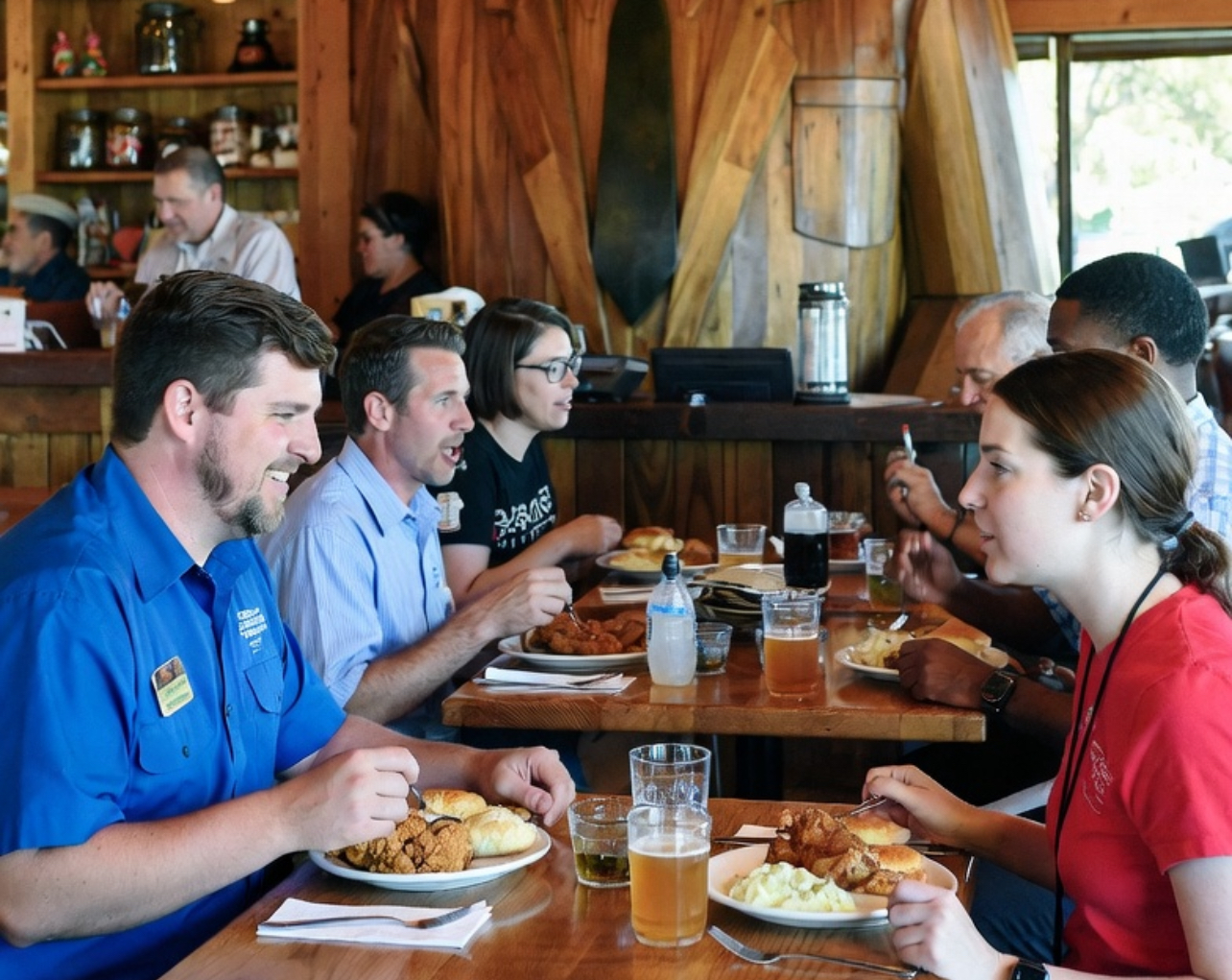
Cracker Barrel has introduced a strict new policy requiring corporate employees to primarily dine at its own restaurants during business travel, while also cracking down on alcohol reimbursements.
The changes were revealed through a leaked internal memo, originally reported by the Wall Street Journal.
Leaked: Cracker Barrel’s New Dining Rule
The directive states that “employees are expected to dine at a Cracker Barrel store for all or the majority of meals while traveling, whenever practical based on location and schedule.”
In the past, employees on company trips typically used a corporate card to cover meals and other expenses.
Under the updated rules, staff who opt to eat elsewhere may need to cover those costs personally, with no reimbursement for non-Cracker Barrel meals unless exceptional circumstances apply.
Additionally, alcohol purchases during travel will no longer be reimbursed unless employees pay out of pocket or obtain rare pre-approval from senior leadership for special occasions.
The cost-cutting measures come amid broader efforts by Cracker Barrel to tighten expenses following recent challenges, including a sales slowdown and backlash over previous branding decisions.
Last year, the company attempted to modernize its image by removing the Uncle Herschel mascot from its logo and updating store designs—moves that drew heavy criticism from customers who felt it eroded the brand’s traditional Southern appeal. CEO Julie Felss Masino faced significant pushback, with some accusing the company of going “woke.”
The rebranding attempt was quickly reversed. Masino later told investors that the company had “pivoted quickly” to restore the classic logo and refocus marketing on nostalgia, Uncle Herschel, and the brand’s heritage, with additional initiatives planned.
Cracker Barrel has also signaled internal restructuring and menu updates for 2026 as part of its recovery strategy.
The new travel policy appears aimed at reinforcing brand loyalty internally while reducing discretionary spending on employee expenses.Here Are The Best New Restaurants In Atlanta
-

The iconic 90s sitcom A Different World is making a triumphant return, and it’s bringing the spotlight right here to Atlanta.
Netflix has greenlit a reboot of the beloved series, set once again at the fictional Hillman College, and production is ramping up with an open casting call for background actors – particularly targeting HBCU students and alumni to infuse authentic campus vibes into the show.
Filming is slated to kick off this month, transforming parts of the city into the vibrant world of Hillman.
For those who grew up watching Denise Huxtable navigate college life or Dwayne Wayne’s unforgettable flip-up glasses, this reboot promises to revisit the themes of Black excellence, social issues, and HBCU culture that made the original a cultural touchstone.
The show, which originally aired from 1987 to 1993 as a spin-off of The Cosby Show followed students at Hillman, highlighting everything from Greek life to activism.
Now, under the guidance of executive producers including industry veterans, the series aims to update these stories for a new generation while honoring its roots.
Casting Call: A Different World
Central Casting Georgia is leading the charge for extras, posting calls on social media and casting sites for individuals 18 and older to portray college students.
No acting experience is required – just reliability, punctuality, and a professional attitude.
The roles are paid, with filming dates starting as early as February 3, 2026, and extending through mid-2026 in the Atlanta area.
Applicants are encouraged to bring their real-life HBCU energy, whether from local institutions like Spelman, Morehouse, or Clark Atlanta University, to help recreate the bustling campus atmosphere.
This isn’t the first time “A Different World” has tapped into HBCU talent – earlier development phases included partnerships with organizations like the NAACP for student auditions – but this Atlanta-focused call underscores the city’s growing status as a Hollywood hub.
With Georgia’s film incentives drawing major productions, Atlanta has become synonymous with Black storytelling, from Tyler Perry Studios to recent hits like “The Walking Dead” and “Stranger Things.”
The reboot’s choice to film here aligns perfectly with the show’s emphasis on Black education and community, potentially boosting local economies and providing opportunities for emerging talent.
Interested in joining the Hillman crew? Head over to ProjectCasting.com or Central Casting’s Instagram for application details.
Spots are filling up fast, so don’t miss your chance to be part of television history. As one casting post put it, this is about celebrating “authenticity, community, and the next generation of voices shaping culture.”
Final Word
With more than 900 movie and TV projects just in the last few years, the film industry has generated more than $9 billion for the state of Georgia.
There are so many movies filmed in Atlanta these days that it’s hard to keep up with it all. That’s why I suggest you subscribe to AtlantaFi.com to get all the freshest movie casting calls, celeb sightings and Atlanta happenings delivered to your inbox.
See Atlanta Casting Calls And Auditions Available Right Now
Want to work in Georgia film & TV? Here are the latest Atlanta casting calls
Read More From AtlantaFi.com:
- Here Are The Movies That Are Filming In Atlanta
- 5 Easy Steps To Becoming An Extra
- How To Rent Your Home To A Film Company
Stay tuned to AtlantaFi.com for more updates on the “A Different World” reboot, including potential lead cast announcements and behind-the-scenes scoops.
In a city where film and culture collide, this project is set to remind us why Atlanta is the new epicenter of entertainment.
-

Atlanta fans of steamy Southern drama, rejoice: P-Valley is officially making its grand return to the strip club stage in 2026 on Starz.
After a lengthy hiatus since Season 2 wrapped up back in 2022, the network has confirmed that the hit series from creator Katori Hall will premiere sometime next year—no exact date yet, but the Pynk is definitely reopening.
The official P-Valley Instagram account dropped the news with a teasing post featuring clips from the show, simply captioned: “See y’all in 2026. 😉 #PValley.” Cast favorite Brandee Evans (Mercedes) joined in, posting in character: “If you’re not for updates… It’s almost time… Love, Mercedes 😘 #PValley coming in 2026.”
Production on Season 3 actually wrapped back in November 2024, but industry strikes and post-production work pushed the timeline.
Actress Gail Bean (Roulette) recently shared an encouraging update at an event, saying the season is fully complete and “in the can” at Starz: “If they wanted to put it out tomorrow, they could. So it’s all in their hands.” She also hinted at a special standalone episode diving into Roulette’s family backstory.
The core cast is back, including Nicco Annan as Uncle Clifford, Brandee Evans as Mercedes, J. Alphonse Nicholson as Lil’ Murda, Shannon Thornton as Miss Mississippi, and more.
Gail Bean, Bertram Williams Jr., and Thomas Q. Jones have been bumped up to series regulars. New faces include Mea Wilkerson as dancer Haiku, plus several recurring additions.
While plot details remain under wraps, the cast has described the new scripts as intense, emotional, and full of twists—picking up after Season 2’s dramatic finale and expanding the world of Chucalissa.
Final Word
The long wait—nearly four years for fans—has only built anticipation for more of the raw, vibrant storytelling that made P-Valley a standout.
Stay tuned for an official premiere date from Starz as 2026 approaches. The Pynk Posse is ready to strut again.
-

As the new year takes hold, the American landscape of work continues to evolve, shaped significantly by the lasting impacts of the COVID-19 pandemic.
There’s no doubt that remote work, once a niche perk, has become a mainstream expectation for many professionals. While some companies push for return-to-office mandates, employee preferences lean heavily toward flexibility.
List: High-Paying Remote Jobs Hiring Right Now
This article explores remote jobs that pay $100,000 a year or more. As Atlanta’s go-to source for job market updates, AtlantaFi.com is back with an enhanced guide to high-paying remote opportunities.
“Finding a job is especially difficult today,” says Jessica Jackson, a retired job counselor who lives in Fulton County. Before moving to Georgia, she oversaw workforce opportunities for a county in Virginia. “People need more than skills and even a good network. They need to know about high-paying opportunities.”
Salaries reflect national medians and trends as of early 2026, with many roles offering flexibility ideal for Georgia residents. Search filters for “remote” on these sites to find the latest postings—opportunities update daily!
Table of Remote Jobs Paying $100K+
I’ve selected a variety of active postings with explicit high-salary indications.
Job Title Company Salary Range Job Link Senior Amazon Brand Manager GNO Partners $100,000+ USD Apply Here Director of Revenue Yoko Co $100,000+ USD Apply Here Senior Growth Marketer (Product-Led, Full-Funnel) Positive Intelligence $100,000+ USD Apply Here Account Executive, Enterprise Zapier $100,000+ USD Apply Here Senior Cloud Infrastructure Engineer Digioh $100,000+ USD Apply Here Senior Software Engineer – Backend/Python (USA Only) Close $100,000+ USD Apply Here Senior Director, Data Engineering Autodesk $210,800 – $341,000 Annually Apply Here (via Remote.co) Staff Product Designer, Core UX Design GitHub $140,400 – $372,300 Annually Apply Here (via Remote.co) Chief Engineer – Software Eaton $137,000 – $201,000 Annually Apply Here (via Remote.co) Staff Product Manager Kraken $127,200 – $254,400 Annually Apply Here (via Remote.co) These are examples from reliable remote-focused sources like We Work Remotely and Remote.co. Salaries are as listed in postings (base or range; total comp may be higher with bonuses/equity). Availability can change quickly—click the links to apply or view full details, requirements, and to confirm remote status.
Pro tip for Atlanta job seekers: Use location-agnostic searches (e.g., “remote” filter) on these platforms, and highlight your local advantages like cost of living and timezone alignment in applications.
The remote job market remains strong in 2026, especially in tech, healthcare, and sales. If you’re in the Atlanta area and eyeing a transition, focus on certifications or portfolios that stand out in virtual interviews. Check back with AtlantaFi.com for more tailored updates, salary trends, and local networking tips. Your next six-figure remote role could be just a click away!
-

In 2026, becoming a virtual assistant (VA) is one of the most accessible, flexible, and in-demand remote career paths. Being a virtual assistant is one of the best work-from-home jobs there is.
The global VA market has exploded—valued at billions and growing at over 20% annually—driven by AI integration, specialized niches, subscription models, and businesses treating VAs as essential team members rather than temporary help.
Table of Contents:
- Should You Be A Virtual Assistant?
- Pros And Cons
- Is Virtual Assistant A Good Job?
- Should I Become A Virtual Assistant?
- What Skills Do Virtual Assistants Need?
- How Much Do Virtual Assistants Make?
- How Do I Find Virtual Assistant Jobs?
What started as basic admin support has evolved into high-value roles where human VAs augmented by AI handle strategy, workflows, client relationships, and complex execution.
Whether you’re starting from zero, shifting careers, or scaling a side hustle, 2026 offers unprecedented opportunities for location-independent work, solid earnings, and real career growth.
This updated guide walks you through everything you need to get hired today: deciding if it’s right for you, building skills, positioning yourself, finding clients, and thriving in the modern VA landscape.
Should You Become a Virtual Assistant in 2026?

Photo by Anna Shvets from Pexels When deciding whether becoming a virtual assistant is the job for you, you need to review the benefits. What are you trying to achieve in your career by being a virtual assistant?
Becoming a virtual assistant and controlling your own schedule, being your own boss can be one of the most rewarding jobs you’ll ever have.
Ask yourself: Do you thrive on flexibility, organization, and helping others scale their businesses? VAs enjoy freedom to set schedules, work from anywhere, and often build long-term partnerships.
Virtual Assistant: Pros And Cons
Pros to Consider:
- Fully remote / location-independent (digital nomad friendly)
- Set your own hours and rates (especially as a freelancer or specialist)
- High demand across niches—many businesses outsource 1+ tasks
- AI tools multiply your output → higher rates & less burnout
- Potential for stable retainers or full-time agency roles
- Scalable income: top specialists earn $50K–$100K+ annually
Cons to Consider:
- Income can start inconsistent (gig-based at first)
- Requires self-discipline and strong client communication
- Competition is high on generalist platforms—specialization wins
- Managing multiple clients or tools can feel overwhelming without systems
Believe it or not, there are some pros and cons to becoming a virtual assistant. Let’s talk about some of them.
Pros Cons Typically work from home Work can be sporadic You can set your own hours You may not like what you’re doing You can pick and choose your assignments Get along with various clients If you value autonomy and are ready to treat it as a professional business (not just a side gig), VA work is excellent.
Is Virtual Assistant A Good Job?

Yes—especially now. Over 40% of VAs integrate AI for massive efficiency gains, and subscription-based models provide predictable income.
Most virtual assistants will tell you that they enjoy their jobs, but what you should understand is that it’s essentially a contract position. As a freelancer, you have a lot of freedom, but there may be work lulls you’re not comfortable with.
Many transition from freelance gigs to full-time “Executive Assistant” roles or nearshore team positions with career paths. It’s rewarding for organized, proactive people who enjoy variety and building relationships.
Should You Be A Virtual Assistant?
You’ll also need to consider what you’ll charge, but we’ll talk more about that later.
Being a virtual assistant is a good job for those with either a steady and consistent client base or a plan to space out their work equally. With that said, you may be thinking if becoming a virtual assistant makes sense for you.
You can become a virtual assistant by marketing yourself on the web and on social media. Here are some things you’ll need to get your business going:
Once you’ve positioned yourself to become a virtual assistant, you’ll need to attract clients.
The key to being a successful virtual assistant is by building business relationships. Remember, when you start off, your prices may need to be low to attract business. As your clientele grows, so will your budget.
Read more on what clients look for in How To Hire A Virtual Assistant.

What Skills Do Virtual Assistants Need?
When it comes to expertise, virtual assistants need to have a basic skillset to be successful. At the top of the list is a collaborative spirit. After all, you’re going to be working in tandem with a founder, owner or support staff.
You’ll also need to be communicative. Some who start their virtual assistant businesses have found it beneficial to overcommunicate with their clients. That way, there’s no ambiguity about what’s needed or expected.
Here are some of the skills that a virtual assistant should be familiar with:
- Great Listening Ability
- Basic Computer Skills (Data entry / Typing)
- Microsoft 365 (Word, Excel, Powerpoint, etc.)
- Google Services (Gmail, Google Doc, Sheets, etc.)
- Ability to schedule meetings
- Book travel and accommodations
- Create presentations
How Much Does A Virtual Assistant Make?
When it comes to making money, a virtual assistant has a wide range of profitability. Because you can work full- or part-time, the rate of pay can vary greatly.
As an example, if you’re tasked with creating a Powerpoint presentation for a client, if the going rate for a graphic designer is $35 an hour, then you could bill them for how much time it takes based on that.
There really is no ceiling when it comes to how much a virtual assistant can make. For that reason, many business owners choose to partner with them or make them equity partners to cut down on the loss of capital.
How Do I Find Virtual Assistant Jobs?
In addition to networking on social media sites and asking your circle of friends and family, you need to take advantage of technology.
Search for job posts that specify the kind of help they want. Go to sites like Craigslist and NextDoor and offer your services to business owners. You’d be surprised how many of them could use some help with their endeavors.
Need client leads? Read our guide on where to find virtual assistant jobs.
What To Know Before Becoming a Virtual Assistant (Step-by-Step)
1. Decide Your Services & Niche
General admin is saturated—specialize to stand out and charge more.
High-demand 2026 niches:- Social media / content management
- E-commerce ops (Shopify, Amazon)
- Executive / CEO support
- AI workflow automation & no-code tools
- Marketing (email, SEO, funnels)
- Real estate / property management
- HR/recruitment admin
- Bookkeeping or light finance
Research demand on Upwork/Indeed and match to your strengths/interests.
- Build Essential (and Modern) Skills
Core foundations remain, but AI changes everything:- Excellent communication & over-communication
- Organization & time management
- Proficiency in: Google Workspace, Microsoft 365, Asana/Trello/Notion, Slack/Teams
- AI tools: ChatGPT/Claude for drafting, Zapier for automation, Canva AI for visuals
- Niche tools (e.g., CRM like HubSpot, project tools)
Bonus: Prompt engineering, basic data analysis, Loom for SOPs
No formal degree needed—online courses (Coursera, LinkedIn Learning, VA-specific programs) accelerate progress.
- Create Your Professional Presence
- Build a simple website/portfolio (Carrd, Notion, or WordPress) showcasing services, testimonials, tools
- Strong LinkedIn profile—optimize headline/bio with keywords (“AI-Augmented Virtual Assistant | E-commerce Specialist”)
- Professional branding: logo, consistent visuals across platforms
- Gather testimonials—even from small early gigs or volunteer work
- Set Your Rates & Structure
- Entry-level/generalist: $15–$30/hour
- Experienced/specialized: $30–$75+/hour (or monthly retainers $2K–$8K+)
- Use value-based pricing or packages (e.g., “10-hour social media package”)
- Start lower to build reviews, then raise as you specialize
- Find & Land VA Jobs
Top platforms & strategies:- Upwork & Fiverr — Great for building portfolio/reviews; propose tailored offers
- LinkedIn — Network, join VA groups, post value content, direct outreach
- Indeed / Remote.co / FlexJobs — Filter for remote VA roles
- Managed agencies — MyOutDesk, BELAY, Wishup, Prialto (stable pay, vetted clients)
- Niche sites — OnlineJobs.ph, Virtual Latinos (global talent pools)
- Direct outreach: Cold email/DM businesses on LinkedIn or via referrals
Pro tip: Apply strategically—tailor proposals, show AI/tool proficiency, offer a free audit or trial task.
Common Tips to Stand Out & Get Hired Fast
- Specialize early—clients pay more for experts
- Master AI to 2–5× your efficiency (clients love this)
- Build systems: SOPs via Loom, contracts/templates
- Network relentlessly—referrals beat applications
- Start small: Take gigs to gain reviews/testimonials
- Stay ethical: Always verify AI outputs for accuracy
- Prepare for interviews: Highlight reliability, tools, and client results
Final Words
Getting hired as a VA in 2026 isn’t about luck—it’s about positioning yourself as an indispensable, AI-savvy partner in a remote-first world.
The market rewards specialists who deliver results, communicate clearly, and embrace tools that make clients’ lives easier.
Start today: Pick your niche, update your profiles, learn one new AI tool, and send your first proposal or outreach message. The opportunities are massive—flexibility, income potential, and impact await those who take action.
Getting a job is not necessarily easy right now, but it doesn’t have to be excruciatingly difficult either. The big thing now is teleworking and work-from-home jobs.
If you need help finding a job in Atlanta, here is a great resource.
We currently have job articles that show you high-paying jobs, those close to downtown and even side hustles you might like.
If you’re looking to get hired in Atlanta right now, there’s a very real possibility that you can land your dream job.
Read more: Best Work From Home Jobs In Atlanta, Georgia
-

The demand for virtual assistant (VA) roles continues to surge in 2026, fueled by the enduring shift toward remote and hybrid work models, the rise of AI-augmented workflows, and businesses seeking cost-effective, scalable support.
If you’re looking to learn more about the occupation, read our Ultimate Guide on How To Become A Virtual Assistant.
What began as a flexible side gig has evolved into a professional career path with specialized niches, higher earning potential, and global opportunities. Whether you’re a beginner or experienced professional, finding VA jobs is easier than ever through dedicated platforms, job boards, and agencies.
This updated guide (originally focused on earlier trends) highlights the best ways to land virtual assistant positions in 2026, including top platforms, in-demand skills, salary insights, and emerging trends.
Why Virtual Assistant Jobs Are Booming in 2026
The global virtual assistant market is experiencing explosive growth, projected to reach around $44 billion by 2027 with a compound annual growth rate (CAGR) exceeding 20%.
Demand for remote talent has risen sharply—up 29% year-over-year in recent reports—driven by small and medium businesses (SMBs) that now view VAs as essential infrastructure rather than optional help.Key drivers include:
- AI integration: Human VAs augmented by tools like ChatGPT, Zapier, and automation platforms handle higher-level strategy while AI manages repetitive tasks.
- Specialization: Niches like e-commerce, social media, executive support, AI/automation, healthcare (HIPAA-compliant), and tech/SaaS onboarding command premium rates.
- Flexibility and cost savings: Businesses save 60-70% on labor costs compared to in-office hires, while VAs enjoy location independence and often better work-life balance.
Remote work remains dominant, with many roles fully remote and subscription-based models gaining traction.(Imagine a vibrant illustration here of a person working remotely on a laptop with digital tools and global connections floating around—symbolizing the modern VA workspace.)
Essential Skills for Virtual Assistants
Employers still prioritize core competencies, but 2026 adds a tech-forward twist:
- Strong communication and prompt responsiveness (emails, calls, Slack/Teams)
- High-speed internet and reliable tech setup
- Deadline management and organizational prowess
- Excellent writing and attention to detail
- Proficiency with tools like Google Workspace, Microsoft 365, Asana, Trello, Notion, Canva, and AI platforms (ChatGPT, Jasper)
- Bonus: Niche expertise (e.g., social media algorithms, e-commerce platforms like Shopify, CRM systems, or basic data analysis)
With so many people working from home it’s easier than ever to become a virtual assistant to another person or company. The position pays well and comes with plenty of flexibility — if that’s what you want.
Specialized VAs who integrate AI into workflows stand out and earn more.
Top Platforms and Websites to Find Virtual Assistant Jobs
The landscape has matured since earlier lists. While some classic sites persist, new agencies and specialized boards dominate for quality matches. Here are the most effective options today:
- Upwork — Ideal for freelancers and one-off projects. Post gigs or browse thousands of VA listings; great for building a portfolio. Rates often start at $15–$45/hour, with specialists earning more.
- Indeed.com — Features a dedicated virtual assistant category with easy filters for remote roles. High volume of postings from small businesses and startups.
- MyOutDesk — Ranked among the best overall VA companies; focuses on dedicated, long-term support for businesses.
- BELAY — Excellent for specialized, U.S.-based support; managed service with experienced VAs.
- Fancy Hands — Perfect for on-demand, task-based work; quick gigs for beginners.
- Prialto — Strong for small businesses needing consistent administrative help.
- Virtual Latinos or similar region-focused platforms — Great for Latin American talent connecting with U.S. companies.
- OnlineJobs.ph — Popular for Filipino VAs; large pool and affordable rates for employers.
- Remote.co, FlexJobs, and We Work Remotely — Curated remote job boards with VA-specific filters; fewer scams and vetted listings.
- LinkedIn — Network directly, join VA groups, and search for “virtual assistant remote” postings.
Other rising options include agencies like Wishup, Wing Assistant, and Athena for managed, subscription-based hires
Salary Expectations for Virtual Assistants in 2026
Pay varies widely by experience, location, specialization, and whether freelance or agency-based:
- Average U.S. hourly rate: $24–$26 (annual equivalent ~$50,000–$53,000 for full-time)
- Entry-level/generalist: $15–$25/hour
- Experienced/specialized (e.g., executive, e-commerce, AI-savvy): $30–$75+/hour
- Top earners: $65,000–$100,000+ annually, especially in niches like healthcare admin or tech support
Freelancers on platforms like Upwork often set their own rates, while agency VAs may have more stable monthly retainers. Global talent (e.g., from the Philippines or Latin America) can access U.S.-level pay while enjoying lower living costs.Tips to Land VA Jobs in 2026
- Build a strong profile: Highlight tools, niches, and AI experience on platforms.
- Specialize early: Focus on high-demand areas like social media, e-commerce, or AI automation for better pay and stability.
- Network: Use LinkedIn and VA communities; many jobs come through referrals.
- Start small: Take on gigs to build reviews and testimonials.
- Stay current: Learn emerging tools—AI proficiency separates top VAs.
Who Hires A Virtual Assistant?
You may be wondering what type of business can benefit from a virtual assistant. Actually the question is what kind of business can’t use one?
A client that needs clerical work done, such as bookkeeping, payroll and even HR can use a virtual assistant. Not only can the business save money by hiring a virtual assistant on a project-by-project basis, but they can also use them to perform different tasks for the business.
Do Virtual Assistants Work From Home?
You may be surprised to know that the term “virtual” in virtual assistant is relative. You may find a client that requires you to make occasional appearances in the office while some businesses are 100% remote.
The truth is that virtual assistants have a flexibility that many jobs simply don’t have. Best of all, you typically are able to work from home and pick a schedule that works for you.
There’s so much more to know about the role of virtual assistants and how to hire one.
Ultimate Guide on How To Become A Virtual Assistant.
Final Word
In 2026, virtual assistant roles offer unprecedented opportunity: flexibility, solid income, and growth potential in a remote-first world.
The industry isn’t just surviving—it’s thriving with AI as a collaborator, not a competitor. Whether you’re seeking part-time gigs or a full career, start exploring the platforms above today.
For more on becoming a VA or related remote careers, check resources like industry reports from Wishup or There is Talent. The future of work is virtual—get in position now!
If you’re a virtual assistant, this is the perfect time to find a local entrepreneur or small business to help out.
More Atlanta Jobs from AtlantaFi.com:
-

The Home Depot, one of Atlanta’s largest employers, confirmed Wednesday, Jan. 28 that it is eliminating approximately 800 corporate positions tied to its Vinings headquarters.
The announcement came in a company-wide message from Chair, President, and CEO Ted Decker, who informed employees of the workforce reduction on Wednesday.
Home Depot To Shed 800 Jobs at Atlanta Area Support Center
The cuts primarily affect roles within the company’s technology organization and other corporate teams at the Atlanta-based store support center.
According to reports, roughly 150 of the affected employees were based at the Vinings location, with the remainder working in remote or hybrid arrangements.
In the same communication, Home Depot revealed a significant shift in its work policy: all corporate employees will now be required to return to the office five days a week, effective the week of April 6. This ends the company’s previous hybrid work model for corporate staff.
Decker described the changes as necessary to enhance the company’s operational efficiency. “We are announcing changes designed to increase our speed and agility,” he wrote in a letter to employees. “To extend our industry-leading position, we must position the company to move faster and stay even more closely connected to our customers and frontline associates.”
Read up on how to navigate a layoff.
A company spokesperson emphasized that the moves are intended to ensure the right structure for future growth, amid ongoing challenges in the home improvement sector, including a slowdown tied to the housing market.
The Vinings headquarters, located just northwest of downtown Atlanta in Cobb County, serves as the central hub for Home Depot’s corporate operations.
The retailer has been investing in its local campuses, including a $140 million expansion project announced last year for the Vinings site and renovations at other nearby facilities.
This announcement follows a broader trend of corporate restructuring across major companies, though Home Depot has not detailed severance packages or other support for affected employees in public statements.
The Home Depot employs hundreds of thousands globally, with a significant presence in the Atlanta metro area. The company has not indicated any impact on store-level or frontline positions.
For more details on the announcement, visit the official Home Depot corporate site or local business coverage.
More From AtlantaFi.com: