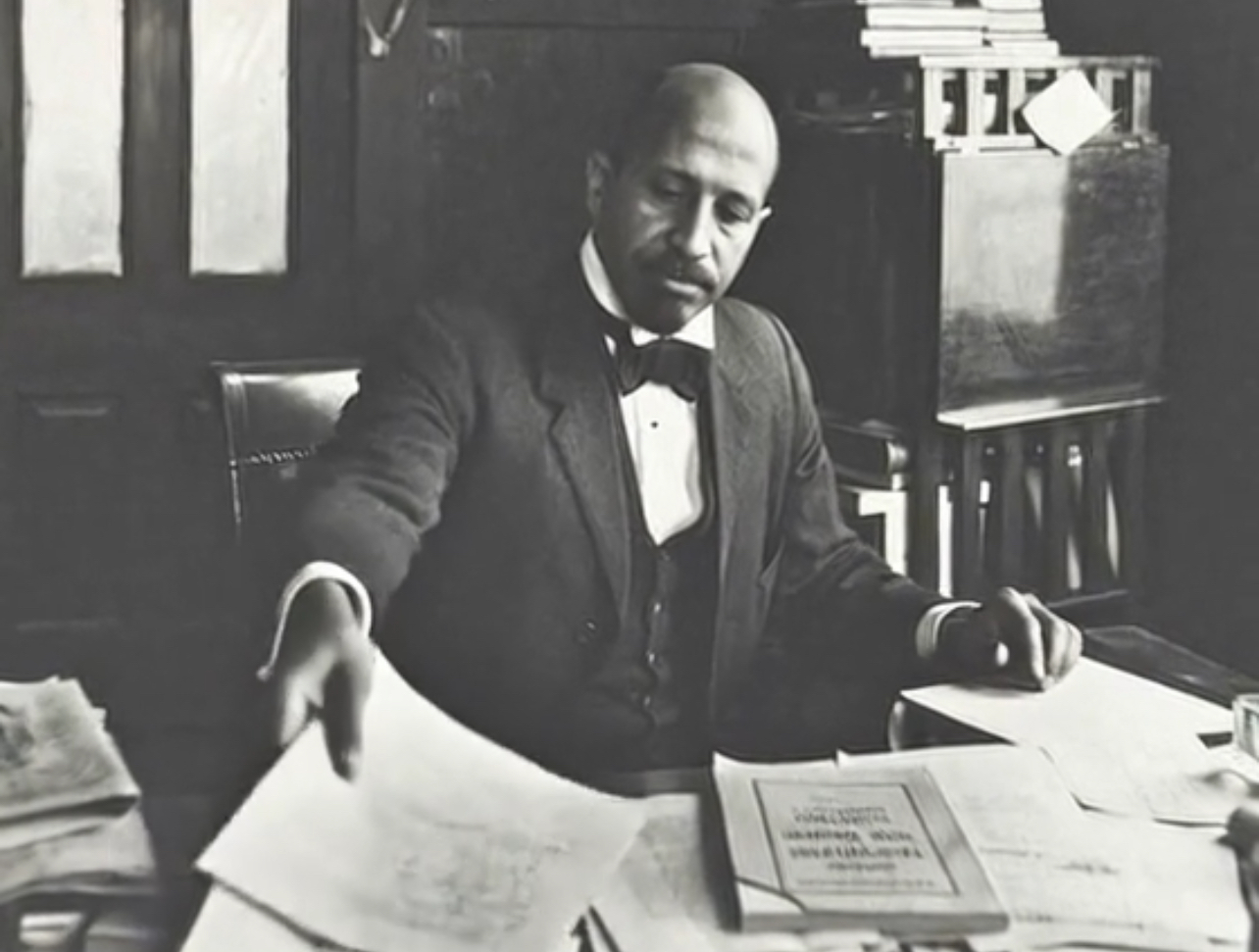

W.E.B. Du Bois remains one of the towering figures in American history: the brilliant scholar who co-founded the NAACP, edited The Crisis magazine for decades, authored the landmark The Souls of Black Folk, and helped define the fight against racial injustice.
In Atlanta, his legacy feels especially close—he spent formative years here as a professor at (Clark) Atlanta University, where he produced some of his most influential sociological work on Black urban life.
But even lifelong students of history might be surprised by these lesser-known facets of Du Bois’s remarkable life:
He Wrote Science Fiction and Speculative Stories

Beyond his essays and histories, Du Bois penned imaginative fiction, including the striking short story “The Comet” (1920), a post-apocalyptic tale set in New York where a Black man and white woman believe they are the last survivors on Earth—until racial terror reemerges.
Scholars have recently uncovered more of his unpublished speculative works, ranging from utopian visions to crime and intrigue plots during the McCarthy era.
This “weird” side of Du Bois reveals a creative mind exploring upheaval, race, and human possibility far beyond his better-known nonfiction.
He Created Pioneering Data Visualizations to Fight Racism

In 1900, Du Bois curated an exhibit for the Paris Exposition Universelle featuring hand-drawn charts (pictured above), graphs, and maps documenting African American life, progress, and economic achievements—particularly in Georgia.
These colorful, proto-modernist infographics were designed to refute racist stereotypes with hard data on literacy, population growth, and business ownership. Today, they’re celebrated as early masterpieces of information design.
He Grew Up in a Surprisingly Integrated Small Town

Born in 1868 in Great Barrington, Massachusetts, where his sculpture resides, Du Bois was raised in a community with relatively little overt segregation compared to the post-Reconstruction South.
He attended school with white children and felt accepted by many neighbors, which shaped his early optimism about racial integration—before he encountered the harsher realities of Jim Crow while studying at Fisk University in Nashville.
He Taught and Conducted Groundbreaking Research in Atlanta

Du Bois joined the faculty of Atlanta University in 1897 and again in the 1930s–40s.
His Atlanta Studies (1896–1914) produced some of the first rigorous sociological surveys of Black urban life, examining housing, family, crime, and education in the city’s Black neighborhoods.
These works laid foundational stones for urban sociology in America—and gave him an intimate, firsthand view of Atlanta’s racial dynamics.
The 1906 Atlanta Race Massacre Deeply Scarred Him

While living in Atlanta, Du Bois witnessed the horrific 1906 race riot (also called the Atlanta Race Massacre), in which white mobs killed dozens of Black residents amid false rumors.
He later described a related earlier lynching—that of Sam Hose in 1899—as a turning point: seeing body parts displayed in a shop window left him profoundly shaken. “Something died in me that day,” he wrote, hardening his resolve against accommodationist approaches to racism.
He became a Citizen of Ghana at Age 93

WEB Du Bois (L) celebrating his 95th birthday with Ghana’s President Kwame Nkrumah in 1963. — Photo credit: WEB DuBois Centre.
In his final years, disillusioned with Cold War-era America and facing passport restrictions, Du Bois moved to Ghana in 1961 at the invitation of President Kwame Nkrumah to work on an Encyclopedia Africana.
He took Ghanaian citizenship that year and died in Accra in 1963—at age 95—the day before the March on Washington. A moment of silence honored him during the event.
He Had a Bitter Public Feud with Marcus Garvey

The rivalry between Du Bois and Jamaican activist Marcus Garvey was intense and personal. Du Bois criticized Garvey’s Back-to-Africa movement and Black Star Line finances in The Crisis, while Garvey attacked Du Bois’s mixed heritage and called him a “mulatto monstrosity.”
The clash highlighted deep ideological divides within Black leadership—integration versus separatism, elite leadership versus mass mobilization—that still echo today.
Du Bois’s life bridged the post-Civil War era to the modern civil rights movement, and his time in Atlanta gave him a front-row seat to both progress and profound injustice.
As we continue reckoning with our city’s—and our nation’s—racial history, his fearless scholarship and unyielding vision remain as relevant as ever.
What’s your favorite Du Bois story or lesson? Share in the comments below—we’d love to hear from our Atlanta readers.
More from AtlantaFi.com: