-
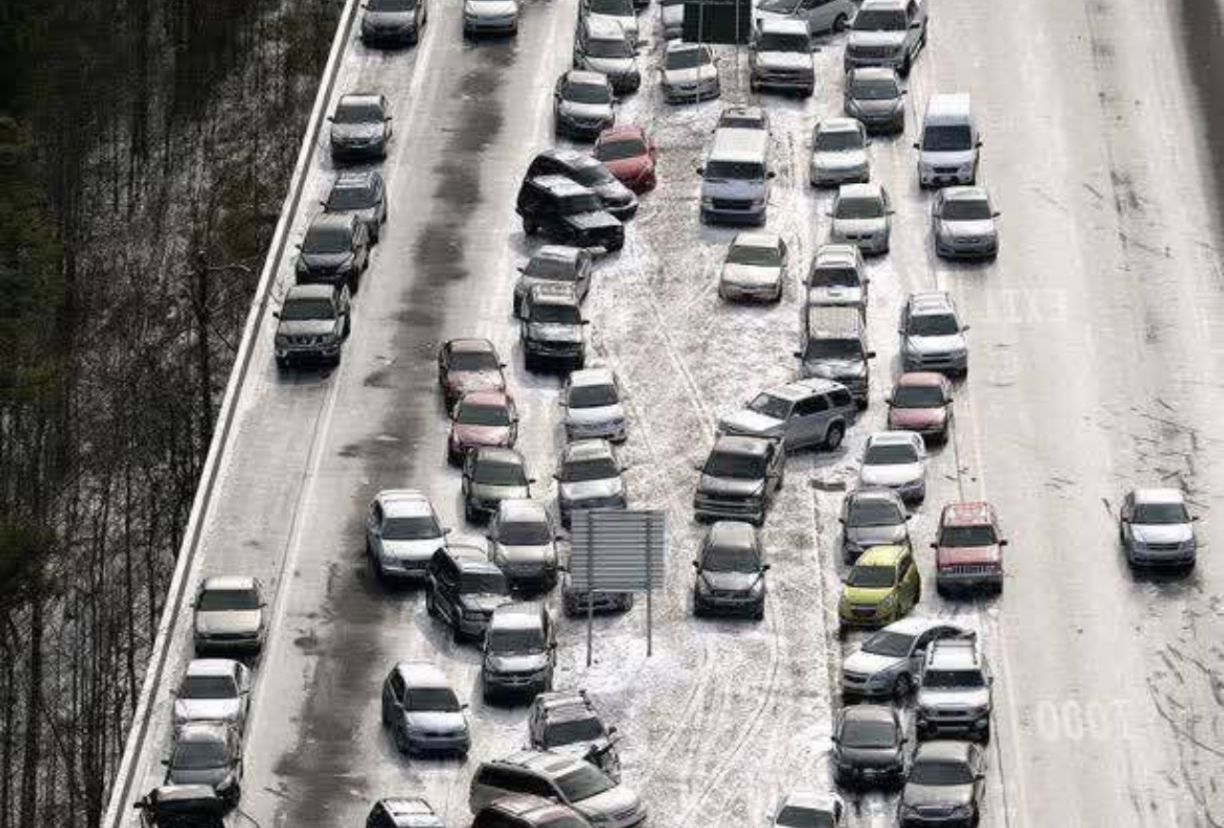
It’s not often, but when snow or ice forms in Atlanta, it often brings chaos, stranding drivers, knocking out power, and reminding us all why we cherish our mild climate.
To be sure, winter storms have hit metro Atlanta before. The one in 2018 left snow everywhere — but we’re talking about the worst ice storms in recent memory.
With a winter storm making its way to metro Atlanta once again, a possibility, let’s revisit the five most impactful winter storms in Atlanta’s history, based on their disruption to daily life, economic toll, and sheer memorability.
5 Biggest Winter Storms in Atlanta History
These events, drawn from local records, highlight how even modest accumulations can paralyze the Peach State’s capital.
1. Snow Jam ’82 (1982)

The infamous Snow Jam of 1982 kicked off Atlanta’s modern era of winter woes. Striking in mid-January, this storm dumped about 4 inches of snow across the metro area, catching the city off guard.
What started as a typical workday quickly devolved into gridlock, with thousands of commuters stranded on major highways like I-285 and I-75.
Many abandoned their vehicles altogether, trekking home on foot or hunkering down in nearby buildings. The city ground to a halt for days, with schools and businesses shuttered, marking one of the first times Atlantans truly grappled with snow-induced mayhem.
Georgia Governor George Busbee declared a state of emergency and mobilized the National Guard to assist stranded motorists and clear roadways, marking one of the first major state-level interventions for a winter event in Atlanta.
In the aftermath, Atlanta Mayor Maynard Jackson directed the city’s public works department to install snow plow mounts on garbage trucks to better prepare for future storms.
2. Blizzard of ’93 – The Storm of the Century (March 1993)

Often called the “Storm of the Century,” this massive blizzard slammed into Atlanta on March 13, 1993, after unusually warm temperatures in the preceding days lulled residents into complacency.
The National Weather Service (NWS) Atlanta office reported: “Total snowfall by late evening averaged 18 to 24 inches from Rome to Clayton with near 30 inches from Fannin to Union Counties.”
The city saw over 4 inches of snow, but the real devastation came from high winds, heavy accumulations in North Georgia (up to 3 feet), and widespread power outages affecting more than half a million Georgia Power customers—some without electricity for up to two weeks.
Here’s how the 1993 blizzard looked and felt via video footage:
Atlanta Journal-Constitution staff writers Scott Marshall and Dennis McCafferty described it as: “A snowstorm for the ages crippled much of the state.”
Tragically, the storm claimed 15 lives in Georgia alone, with hundreds more nationwide, and left thousands of motorists stranded on I-75 into the following week. Economic losses in North Georgia topped $48 million, making this one of the deadliest and costliest winter events in state history.
3. Super Bowl Ice Storm (January 2000)

Just as Atlanta was gearing up to host Super Bowl XXXIV at the Georgia Dome, Mother Nature delivered a one-two punch with an ice storm in late January 2000.
David Ratcliffe, CEO of Georgia Power (1993–2003), stated: “It was one of the worst ice storms we ever had.”
The initial wave hit on January 22, followed by more during the big game weekend.
While snowfall was minimal, the ice coating roads and power lines led to catastrophic conditions: over half a million people in North Georgia lost power, some for more than a week, and metro Atlanta reported hundreds of wrecks, including a massive 47-car pileup on I-20 westbound.
Ratcliffe further noted: “We had close to 500,000 people without power, some for over a week.”
Fortunately, the Super Bowl itself went off without a hitch, but the storm’s $48 million in damages underscored the vulnerability of the region’s infrastructure to freezing rain.
4. The 2011 Blizzard (January 2011)

On January 9, 2011, another blizzard blanketed Atlanta with nearly 4 inches of snow, transforming the city into a slippery nightmare.
A day later, Atlanta Mayor Kasim Reed was vocal about the response. He stated: “Last night, the City of Atlanta experienced a significant snowstorm with rapid accumulation and freezing rain, and we continue to experience below-freezing temperatures.
Police departments were overwhelmed, eventually stopping responses to non-injury accidents amid countless crashes.
A 15-mile stretch of I-285 was shut down, stranding truckers who slept in their cabs, while thousands of flights were canceled at Hartsfield-Jackson Atlanta International Airport—leading many passengers to camp out overnight rather than brave the roads.
The storm’s timing on a Sunday evening amplified the disruption, keeping schools closed and workers homebound for days.
Fulton County Commission Chairman John Eaves defended limited investments in equipment: “You’ve got to weigh the cost versus the need… The reality is, this kind of snowstorm happens every 10 or 15 years.”
5. Snowpacalypse 2014 – Snowmageddon (January 2014)

Echoing the chaos of 1982, Snow Jam 2014—dubbed “Snowmageddon”—struck on January 28 with just 2.6 inches of snow, but its timing was disastrous.
Atlanta Mayor Kasim Reed tweeted pre-storm: “Atlanta, we are ready for the snow.”
This event elicited strong accountability from officials. Georgia Governor Nathan Deal admitted: “We don’t want to be accused of crying wolf,” explaining hesitation in early declarations.
“We are certainly ahead of the game this time, and that’s important,” Deal said. “We are trying to be ready, prepared and react as quickly as possible.”
As flurries began midday, schools, businesses, and government offices released everyone simultaneously, jamming over a million people onto the highways. Cars were abandoned en masse on I-75, I-85, and I-285, with some commuters stuck for up to 24 hours.
Ninety-nine Fulton County school buses were trapped until midnight, forcing 2,000 students to spend the night at school, while others sought refuge in stores like Kroger and Home Depot.
Charley English, head of the Georgia Emergency Management Agency, confessed: “I got this one wrong,” regarding delayed activation of the emergency center.
Amid the turmoil, one heartwarming story emerged: a father delivered his baby girl in his car on I-285. The event prompted statewide reviews of emergency preparedness.
Reflecting later, Reed said: “We made an error in the way that we released our citizens.”
These storms serve as stark reminders that in Atlanta, it’s not always the depth of the snow but the unpreparedness that amplifies the impact.
Final Word
As we navigate the 2026 winter season, local officials urge residents to stock up on essentials, avoid unnecessary travel during forecasts, and heed warnings from the National Weather Service.
Stay safe out there, Atlanta—better to be overprepared than snowed under. For more local weather updates, check back with us regularly.
As the city lights up with yet another special event this weekend, remember: Safe driving is the real treat. For more tips on navigating safely around the city, read our Atlanta Traffic Guide.
More from AtlantaFi.com:
-

With a big winter storm forecast to bring freezing rain, sleet, and potential heavy ice accumulation across metro Atlanta, power outages are a real threat as ice weighs down trees and power lines.
Utility crews are mobilized and ready to respond, but restoration can take time—sometimes days—during widespread winter events.
How To Stay Safe and Warm If You Lose Power During an Ice Storm
If your lights go out during an ice storm, here’s a practical guide to stay safe, warm, and prepared. These tips draw from Georgia Power recommendations, Ready.gov, and local emergency guidelines.
Before or Right When Power Goes Out
- Report the outage immediately — Call Georgia Power at 888-891-0938 or report online at GeorgiaPower.com/Outage. Sign up for free Outage Alerts via text for personalized updates on your neighborhood.
- Stay informed — Use a battery-powered or hand-crank radio for weather updates from NOAA or local stations. Avoid unnecessary travel; ice makes roads extremely hazardous, and downed lines can be hidden under snow or ice.
- Turn off or unplug appliances — Switch off lights and unplug sensitive electronics to prevent damage from power surges when electricity returns. Leave one light on to signal when power is restored.
Staying Warm Safely
Heat is the top priority in freezing temperatures. Never take risks with carbon monoxide (CO)—an invisible, odorless killer.
- Do NOT use ovens, gas stoves, charcoal grills, or propane heaters indoors to heat your home. These produce deadly CO.
- Use generators correctly — Only operate portable generators outdoors, at least 20 feet from windows, doors, and garages. Follow manufacturer instructions exactly, and never refuel while running or hot. Read up on the best generators to buy.
- Conserve body heat — Close off unused rooms and stuff towels under doors to block drafts. Cover windows with blankets, curtains, or shades at night (open during sunny days for passive solar warmth). Dress in layers, wear hats and socks, and gather in one central “warm room” with family members—shared body heat helps.
- Alternative heat sources — If you have a fireplace, use it only if properly vented with dry wood. Battery-powered or approved indoor-safe portable heaters can help, but never leave them unattended.
- Prevent frozen pipes — Let faucets drip slowly (both hot and cold) to keep water moving. Open cabinet doors under sinks to allow warmer air to circulate around pipes. Know your main water shut-off valve in case a pipe bursts. Or call a plumber.
Food and Water Safety
- Keep refrigerator and freezer doors closed as much as possible. A full freezer can stay cold for 24–48 hours; a refrigerator about 4 hours.
- Use coolers with ice blocks if needed, and monitor food temperatures with a thermometer. Discard perishable food that reaches 40°F or higher for 2+ hours, or shows odd odor, color, or texture.
- Stock non-perishable food, bottled water, and manual can openers. Eat balanced meals to maintain body heat; drink warm (non-alcoholic, non-caffeinated) beverages.
Lighting and General Safety
- Use flashlights, battery lanterns, or headlamps instead of candles to reduce fire risk. Keep extra batteries handy.
- Install and test battery-backup CO detectors on every level of your home.
- Never touch downed power lines—assume they’re live, even if covered in ice. Stay far away, warn others, and call Georgia Power immediately.
- Check on neighbors, especially elderly residents or those with medical needs. If anyone relies on electric medical devices, have backup plans or head to a warming center if needed.
After Power Returns
- Wait a few minutes before plugging in appliances to avoid overloading circuits.
- Inspect food carefully—when in doubt, throw it out.
- Check pipes for leaks if temperatures dropped significantly.
Atlanta rarely sees major ice events, but when they hit, they can cause significant, long-lasting outages. Georgia Power prioritizes safety and won’t work in dangerous conditions, so patience is key while crews clear ice and restore lines.
For the latest updates, visit GeorgiaPower.com/Storm or follow local news. Stay safe, Atlanta—hunker down, stay warm, and look out for each other.
If conditions worsen or you have a life-threatening emergency, call 911. For non-emergency outage info, use Georgia Power channels.
-

It’s a fact that big winter storms often cause power outages and other headaches. When that happens, having a portable generator can keep essential appliances running, such as refrigerators, medical equipment, and heating or cooling systems.
When preparing for a storm, having a reliable generator can be crucial.
In this article, we’ll show you some of the best portable generators on the market. Here are some of the best types of generators to consider:
Portable Generators

- Honda EU2200i: Known for its reliability and quiet operation, it’s great for powering essential appliances.
- Yamaha EF2000iSv2: Lightweight and fuel-efficient, this model is ideal for small power needs.
Inverter Generators

- Champion 4000-Watt Ultralight: Offers quiet operation and is easy to transport, suitable for camping and emergency use.
- Westinghouse iGen4500: Provides a higher wattage output and features a remote start, making it user-friendly.
Standby Generators

- Generac Guardian Series: These are permanently installed and automatically turn on during power outages, providing peace of mind.
- Briggs & Stratton 40445: Another reliable standby option with a good reputation for performance.
Dual Fuel Generators

- DuroMax XP12000EH: Runs on both gasoline and propane, offering flexibility and extended run time.
- Champion 100263: Features a powerful output and can also use both fuel types, making it versatile for emergencies.
Solar Generators

- Jackery Explorer 1000: A portable solar generator that’s eco-friendly and perfect for small electronics and appliances.
- Goal Zero Yeti 500X: A robust solar generator that provides reliable power and can be charged with solar panels.
Where to Buy:
- Home Improvement Stores: Home Depot and Lowe’s often have a variety of generators in stock.
- Outdoor and Sporting Goods Stores: Retailers like Cabela’s and REI may carry portable and inverter generators.
- Online Retailers: Amazon, Walmart, and specialty websites often have a wide selection, sometimes with competitive prices.
Tips for Buying:
- Check Wattage Needs: Determine how much power you’ll need for essential appliances.
- Read Reviews: Look for customer feedback on reliability and ease of use.
- Consider Fuel Type: Think about what’s most accessible for you (gasoline, propane, solar).
- Look for Warranty and Support: A good warranty can offer additional peace of mind.
Buying a generator before a storm can help ensure you have the power you need when you need it most.
Here are more articles from AtlantaFi.com:
-
It’s getting cold in Atlanta, Georgia right now, which means you’re going to have to stay warm the best way you know how. With such arctic weather, homeowners across the city need to be concerned about frozen pipes in our homes.
One of the worst feelings a homeowner can have is when their pipes freeze due to cold weather. That’s why it’s super important to not let it get to that point if you can help it.
And regardless of the weather, you can help it. But you’re going to need to take some precautions.
How To Prevent Frozen Pipes At Your Home
You’ve probably heard the old saying that an ounce of prevention is worth a pound of cure. Well, that’s certainly the case when it comes to preventing frozen pipes at your residence.
When doing these steps, if you don’t feel comfortable, make sure to contact a licensed plumber for your needs. On the other hand, if you can handle these simple tasks, you will be able to keep your home safe and dry and your bank account intact.
Let’s get started with the first of many steps:
1. Find Out Where Your Shutoff Values Are
Just in case you need to turn off your water, you should know where all your shutoff values are adjacent to your plumbing pipes. Look under the sinks and go outside next to the spigots and check out your shutoff values.
The reason this is so important is because in case of a burst pipe, you’ll need to quickly shut off water to that pipe.
2. Disconnect Your Garden Hose From The Spigots
While you’re at your spigots outside, go ahead and tighten them and disconnect them from any garden hoses so that any trapped water can’t expand and burst the piping.
Many homeowners skip this step, but if you leave a garden hose attached, there’s the possibility that water could be trapped between the spigot and the water house connector, which could freeze and create an issue. Be safe, not sorry!
3. Adjust Your Thermostat
The second thing you should do is look to get your home suitable to withstand the inclement weather outside. To do this, make sure your thermostat is set to at least 55 degrees. That way, you won’t have to worry about any interior freezing.
4. Open Your Sink Cabinet Doors
Another thing that many homeowners neglect to do is open their cupboards and sink cabinet doors. You want to encourage the free flow of warm air throughout your home. Opening the cabinet doors under your sink will help keep them warm and stave off the chill from outside.
5. Let Your Faucets Drip
For any faucets inside your home, turn them on so that they can drip throughout the night. This will allow water to continuously flow through the pipe and stop it from freezing.
You’ll want to make sure you check for any frozen pipes in your home. If you notice that a pipe is frozen, you’ll want to warm it with a hair dryer or by wrapping a warm towel around it that has been heated in hot water on the stove.
If you’re uncomfortable with doing any of these steps, don’t hesitate to make an appointment with a licensed plumber.
Final Word
Whatever you do, stay warm this winter. Perhaps you’ll need to invest in a new winter coat to do the job. Whatever you decide, make your safety a priority this season.
Here are more articles from AtlantaFi.com you might like: