-
On a February Saturday in 2024, State Farm Arena was doing what downtown Atlanta does best: filling up, lighting up, and hosting an NBA night.
Eric Schmitt, Jack Smith Spar Over Atlanta Hawks Game
The Hawks were home against the Golden State Warriors. The city that had already become the backdrop for one of the most closely watched election cases in the country was, that evening, just a basketball town.
Atlanta Was the Scene of the Crime That Never HappenedTwo years later, that same Atlanta night walked into a Senate hearing room and nearly became a perjury case.
The Atlanta theory
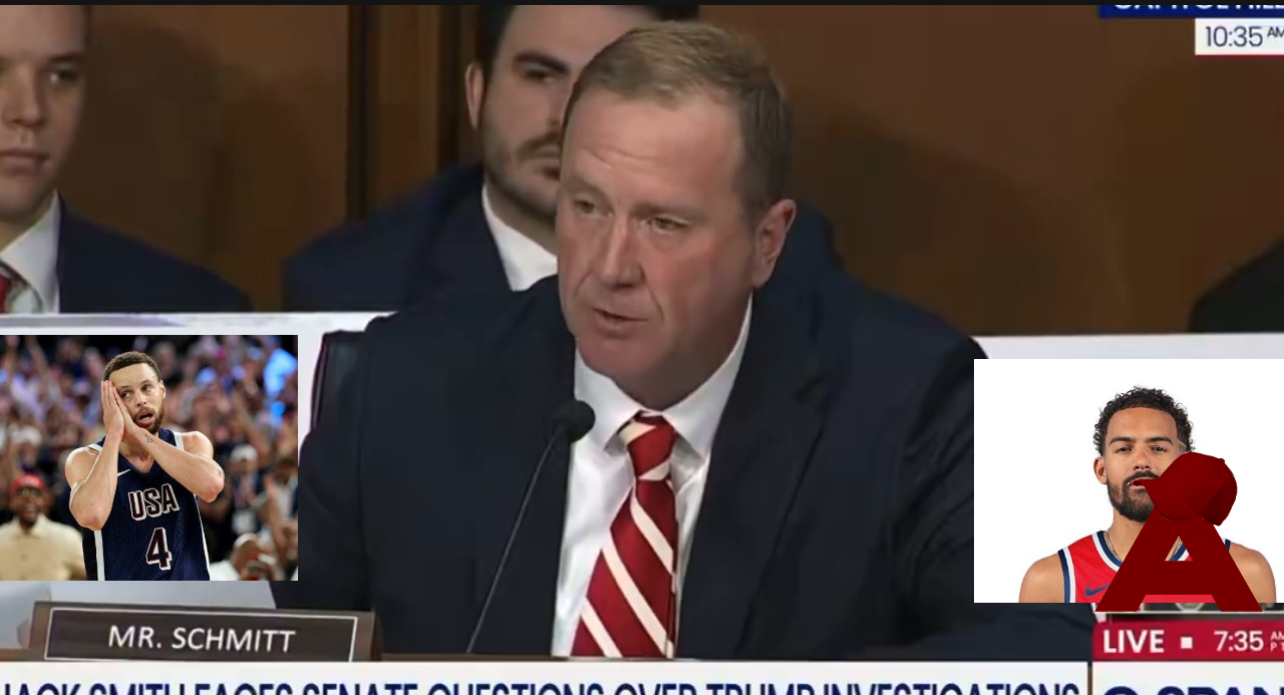
Sen. Eric Schmitt, R-Mo., spent part of Tuesday’s Senate Judiciary Committee hearing trying to place former special counsel Jack Smith in Georgia on Feb. 3, 2024. The timing was the point. The day before, Fulton County District Attorney Fani Willis and special prosecutor Nathan Wade had publicly addressed their relationship — a scandal that had already scrambled Atlanta’s Trump election-interference case. Schmitt’s suggestion was that Smith’s presence at a Hawks game would put him in the city at a politically charged moment, close enough to imply coordination.
Schmitt asked Smith whether he had gone to the Warriors-Hawks game in Atlanta. Smith said no. He said he did not recall being in Atlanta during his time as special counsel, except perhaps connecting through the airport. He said he had not met Willis.
Then came the trap.
Schmitt said he had text messages from Smith’s team placing him at a Warriors-Hawks game in Atlanta that night. A poster board went up, then quickly came down. Schmitt told Smith he would give him a second “so you don’t perjure yourself,” then declared that Smith already had. Later in the exchange he called Smith a “dirtbag.”
For a few minutes, Atlanta was the alleged meeting place of two prosecutions.
The city that wasn’t there
Atlanta’s role in the Trump cases is real. Fulton County’s indictment was filed here. The hearings, the recusal fights, the local politics — all of that happened in this city. State Farm Arena sits a short ride from the courthouse world that defined that chapter. It is easy to see why a senator looking for a Georgia connection would reach for a Hawks ticket stub.
The problem was the ticket.
Smith, after finally getting a look at the texts, said the game in his memory was not the Atlanta Hawks. It was the Iowa Hawkeyes. The date lined up. The sport lined up. The nickname was close enough to cause the wreck. The city did not. He recalled going to a University of Maryland women’s basketball game where Caitlin Clark was playing, with the U.S. Marshals Service along. That game was in College Park, Maryland, not downtown Atlanta. Iowa beat Maryland 93-85. Clark scored 38 points with 12 assists in a sold-out XFINITY Center.
Sen. Amy Klobuchar, D-Minn., made the correction in the room: people should have their facts straight before calling someone a dirtbag, and they should not get the teams wrong. The Hawks were in Atlanta. The Hawkeyes were in Maryland. Same calendar day. Different league, different mascot spelling, different state.
Why Atlanta still sits at the center
The mix-up only works as a story because Atlanta already occupies the map. Schmitt was not fishing in a random city. He was trying to stitch Smith’s federal work to Willis’s local case, and the Hawks — Atlanta’s NBA team, playing in Atlanta’s downtown arena — looked like the perfect cover story for a trip to Georgia. The texts apparently mentioned “Hawks.” Someone saw an arena graphic. The city filled itself in.
That is how Atlanta functions in national politics now: as both a real legal venue and a convenient stage. When Washington needs a Southern conspiracy, it often reaches for this city first. On Tuesday, the city was asked to play host to a meeting that the witness said never happened and that the calendar, once checked, put 600 miles away.
Smith denied the Atlanta trip. Schmitt claimed a bust. Smith, vexed, named the other birds. The Senate had its phenomenal moment. Atlanta kept the Hawks, and not the special counsel, on Feb. 3, 2024.
-

ATLANTA — Republican gubernatorial nominee Rick Jackson on Friday signaled his interest in leveraging state resources to keep Invest Fest, one of Atlanta’s major annual financial literacy and entrepreneurship events, rooted in Georgia, as part of a broader push to expand his appeal among Black voters.
In a post on social media site X late Friday, Jackson praised the event’s track record and economic impact after five years in the state.
Georgia GOP Candidate Rick Jackson Courts Invest Fest
“The world just witnessed what was possible in Georgia when the state works with its local partners to ensure important events are able to be held safely and to the benefit of our economy,” Jackson wrote. “Invest Fest has proven for five years to be of great benefit to not just those who attend and learn how to start or grow a business, but also to the local vendors who feed, house, and support our visitors from across the country. I would be very interested in learning how, as governor, the state would be able to work to help keep Invest Fest here in Georgia.”
Invest Fest is returning to Atlanta for a sixth year but that its long-term future in the city is uncertain.
Invest Fest, organized by the Earn Your Leisure platform founded by Rashad Bilal and Troy Millings, is scheduled for Aug. 7-9 at the Georgia World Congress Center.
Read up on Invest Fest: What to know about the Atlanta event.
The three-day event blends investing education, entrepreneurship panels, a large vendor marketplace, performances and networking, drawing tens of thousands of attendees focused on wealth-building, real estate, crypto, AI, stocks and business growth. It has become a significant draw for Black entrepreneurs and professionals.
Jackson’s comments come amid recent public friction between the event’s organizers and city leadership. In a recent interview, Bilal and Millings said Atlanta had not provided the level of support they expected over the years and acknowledged they had “flirted with the idea” of moving the conference, while emphasizing its grassroots roots and economic value.
Mayor Andre Dickens pushed back against the criticism, defending the city’s record of supporting Black businesses and announcing a $50,000 investment in organizations that mentor young creatives.
Jackson, a self-made healthcare staffing billionaire who rose from foster care and Atlanta public housing, won the GOP nomination in a June runoff after defeating Trump-endorsed Lt. Gov. Burt Jones. He faces former Atlanta Mayor Keisha Lance Bottoms, the Democratic nominee, in the Nov. 3 general election.
The Invest Fest statement fits a pattern of deliberate outreach by Jackson’s campaign to Black voters, a traditionally Democratic-leaning bloc in Georgia. Shortly after securing the nomination, one of his early stops was at Barber’s Inc. on Old National Highway in College Park, a majority-Black city, where he met with dozens of residents.
Georgia Governor candidate Rick Jackson visits soul food spot on Old National Highway.
Attendees said Jackson discussed improving access to capital for Black business owners and expressed openness to grants and loans targeted at Black entrepreneurs. His campaign later clarified that he would “consider” such a program while emphasizing a broader commitment to resolving capital access barriers.

Campaign spokesperson Garrison Douglas has described the outreach as central rather than secondary: “His outreach is not an afterthought, but a significant part of the campaign’s efforts to ensure Georgia voters who have felt left behind and ignored by the status quo know that Rick Jackson is going to fight and win big for them, no matter their ZIP code.” The team includes several Black Republicans, among them former Kemp press secretary Douglas, who previously worked on Black outreach for the Republican National Committee.
Jackson has also visited other Black-owned businesses, drawing both support and criticism. Some Black Republicans have praised his personal story of overcoming hardship as resonant, while others have cautioned that close alignment with President Trump’s agenda could limit gains among Black voters, particularly women.
Invest Fest’s organizers have not publicly responded to Jackson’s post. The event remains scheduled for Atlanta this year, and tickets are on sale. Whether state-level engagement under a potential Jackson administration would materialize—or prove decisive in retaining the conference long-term—remains to be seen. With early voting months away, both campaigns are expected to intensify efforts in metro Atlanta’s diverse communities.
-
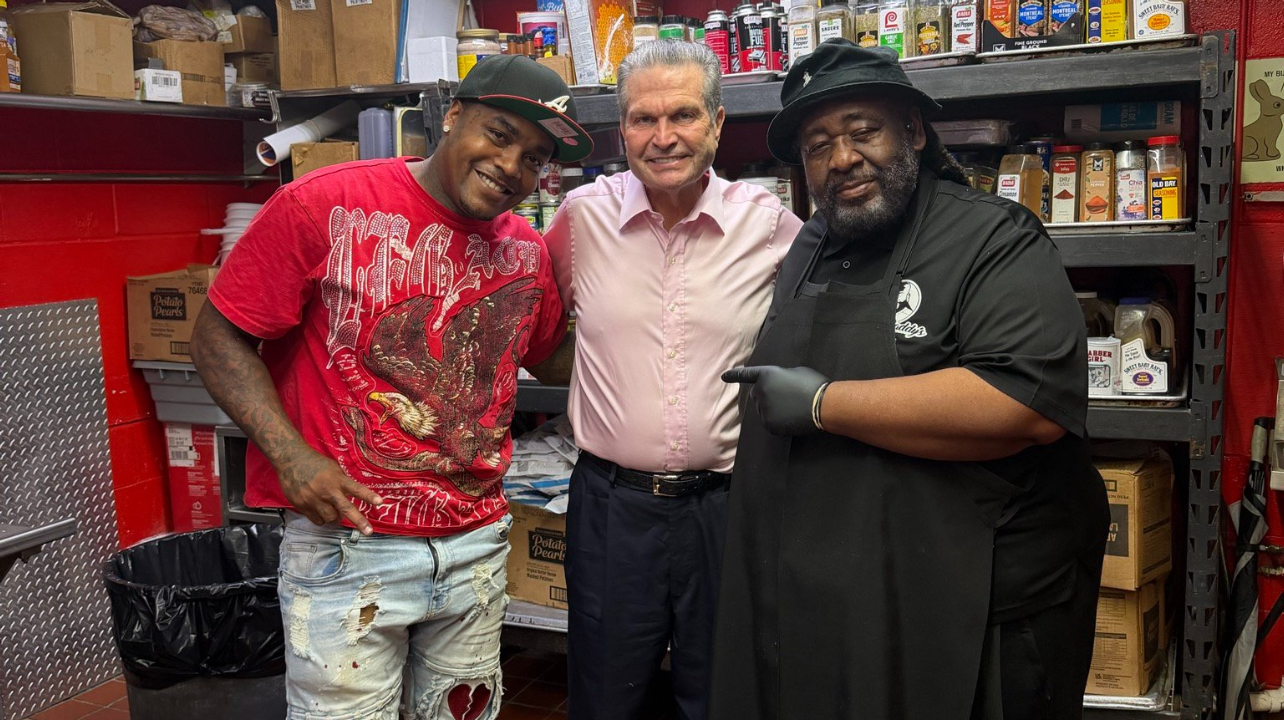
Georgia Republican gubernatorial nominee Rick Jackson visited The Original Big Daddy’s, a popular soul food restaurant on Old National Highway in the College Park area, this weekend.
Stopping by after church, Jackson posting photos of the stop and thanking the establishment for the meal and conversation.
Jackson, the self-funded healthcare executive and political outsider who defeated Trump-endorsed Lt. Gov. Burt Jones in the June 2026 GOP primary runoff, shared images showing him at the restaurant.
One observer noted him interacting warmly with the owner. The Original Big Daddy’s (also referred to as Big Daddy’s Dish or similar) is a well-known local spot for Southern comfort food—including large portions of wings, BBQ, meats, sides like mac and cheese and potato salad—located at around 5595 Old National Hwy in a predominantly Black South Fulton/College Park area.
This stop aligns with Jackson’s broader general-election outreach efforts targeting Black voters ahead of the November 2026 matchup against Democratic nominee and former Atlanta Mayor Keisha Lance Bottoms.

News reports documented similar stops, including a June 30 meet-and-greet at a barbershop on Old National Highway in College Park where he discussed shared experiences (Jackson grew up in Atlanta’s Techwood Homes public housing and foster care) and expressed openness to supporting access to capital for Black entrepreneurs.
Toast & Lenox Backlash
Jackson, the Republican nominee for Georgia governor, posted (and later deleted) an Instagram photo with a co-owner of Toast on Lenox, a popular Black- and woman-owned restaurant in Buckhead, after dining there.
The image quickly drew online backlash, with some commenters calling for a boycott of the restaurant and framing the visit as support for Jackson, whom critics labeled a “Trump 2.0” figure. Toast on Lenox responded promptly, clarifying that it does not endorse Jackson and that his stop was unrelated to any campaign activity.
Campaign officials have framed such visits as intentional, not afterthoughts, aiming to reach voters who feel overlooked.
Jackson has highlighted his rags-to-riches story—from foster care to founding the large Jackson Healthcare staffing firm—as a bridge to working-class and minority communities. He has pledged policies focused on affordability (freezing property taxes, cutting state income taxes), healthcare cost reduction, and economic opportunity.
Black Republican supporters and some community members have noted his personal background as resonating, though broader Black voter support in Georgia has historically leaned heavily Democratic, and some have expressed caution over national Republican agendas.
The visit comes amid Jackson’s post-primary shift to the general election. He has been endorsed by figures including President Donald Trump (after initially backing Jones), Georgia Attorney General Chris Carr, and others. Polls in mid-to-late July 2026 have shown a competitive race, with Bottoms often holding a narrow lead among likely voters.
Local reactions on social media mixed appreciation for the outreach with partisan skepticism typical of a high-stakes statewide contest. Jackson’s campaign has continued emphasizing direct community engagement across metro Atlanta as he seeks to expand beyond traditional Republican bases in the battleground state.
More from AtlantaFi.com:
-

he public backlash over the proposed data center in Coweta County, Georgia, has escalated into the courtroom as 17 residents filed a formal appeal last week to overturn the county’s approval of the massive $17 billion Project Sail hyperscale data center campus.
Opponents, led by the grassroots group Citizens for Rural Coweta, argue that county commissioners ignored zoning rules, state law, and residents’ constitutional rights when they narrowly approved rezoning 829 acres of protected rural conservation land in western Coweta County in April.
The lawsuit, filed May 5 in Coweta County Superior Court, claims the 3-2 vote amounted to an abuse of power and violated due process for the more than 1,200 homes located within a mile and a quarter of the site.
What Is Project Sail? The $17 Billion Data Center Proposal Fueling Outrage in Coweta County
Project Sail, initially advanced by Atlas Development LLC and now backed by San Francisco-based industrial giant Prologis, calls for nine massive buildings totaling 4.34 million square feet, plus two substations, on land near Wagers Mill Road and Welcome to Sargent Road—just outside Newnan.
The 900-megawatt facility would rank among Georgia’s largest data centers, clearing hundreds of acres of wooded rural land to meet surging AI and tech demand. Proponents highlight potential tax revenue for schools, roads, and emergency services.
Read: Data centers are popping up everywhere in Georgia.
However, the public backlash over the proposed data center in Coweta County has centered on its location in a rural conservation zone explicitly protected under the county’s comprehensive plan. Residents say the project would permanently alter the character of one of metro Atlanta’s last remaining rural pockets.
Why Coweta County Residents Are Fighting Back: Key Concerns Driving the Backlash
Since the proposal surfaced in late 2024, thousands of Coweta County residents have mobilized under the banner of Citizens for Rural Coweta. An 8,000-signature petition, overflowing commission meetings (many attendees wearing red shirts in protest), and a dedicated “Stop Project Sail” Facebook group reflect the intensity of local opposition.
Steve Swope, co-founder of Citizens for Rural Coweta, has been a vocal leader. “This isn’t about rejecting technology,” Swope stated in earlier public comments. “It’s about where industrial-scale development belongs. This site is surrounded by families and farms—it goes against everything in our comprehensive plan.”
Primary concerns cited in the lawsuit and public hearings include:
- Loss of protected forest and rural character – The site sits on conservation land near the Chattahoochee River corridor.
- Environmental and infrastructure strain – Fears of increased noise, traffic, water usage, and power demands in an area already facing growth pressures.
- Impact on nearby homes and property values – More than 1,200 residences are within close proximity.
- Procedural violations – Opponents allege the county bypassed its own rules during rezoning, even after a 180-day moratorium and adoption of a new data center ordinance in December 2025.
The controversy mirrors broader tensions across Georgia, where dozens of data center projects are advancing with limited statewide oversight.
Lawsuit Seeks to Reverse Rezoning: What Happens Next?
The appeal asks the court to declare the rezoning invalid and block all construction and operation of Project Sail. Plaintiffs—described as longtime farmers, landowners, and neighbors—say they were effectively shut out of the decision-making process.
Coweta County officials and Atlas Development have not commented publicly on the pending litigation. Prologis has previously emphasized that the project follows standard procedures and would bring significant economic benefits.
Citizens for Rural Coweta leaders have also formed a PAC and launched fundraising efforts, signaling plans to hold accountable the three commissioners who voted in favor during the 2028 election cycle.
Atlanta-Area Residents Watching Closely
As one of metro Atlanta’s fastest-growing counties, Coweta’s data center controversy is drawing attention from neighboring communities concerned about similar proposals. The outcome of the lawsuit could set a precedent for how local governments balance tech infrastructure growth against rural preservation.
Stay tuned to AtlantaFi.com for the latest developments on the Coweta County data center backlash, Project Sail updates, and public opposition to data centers in Georgia. We’ll continue covering how this fight affects Newnan, Sargent, and the broader metro Atlanta region. Have thoughts on the Project Sail data center in Coweta County? Share them in the comments below.
-
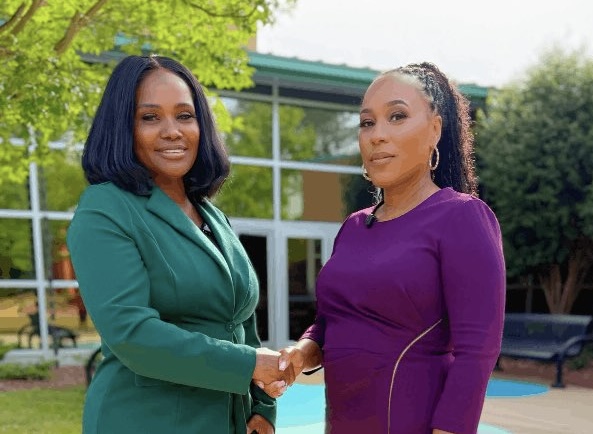
In a strategic move just days into early voting for Georgia’s 2026 Democratic primary, reality television star, dentist, and congressional candidate Dr. Heavenly Kimes unveiled a powerful new campaign video highlighting a major endorsement from Fulton County District Attorney Fani Willis.
The 48-second clip shows Kimes standing side-by-side with Willis in an outdoor setting in front of a modern building with glass doors, trees, and landscaped grounds—symbolizing unity and strength.
Fulton County DA Fani Willis Endorses Heavenly Kimes in Georgia’s 13th District Race
The video opens with bold on-screen text declaring: “Fani Willis, Esq. Fulton County District Atty Endorses Dr Heavenly Kimes For Congress District 13.”
Dr. Kimes, dressed in a purple top with braided hair and large hoop earrings, speaks directly to the camera with conviction while Willis, in a green blazer and bob haircut, stands supportively beside her, nodding and listening attentively. The clip ends with Instagram branding and the same endorsement graphic fading out.
In the accompanying post and video narration, Kimes expresses gratitude for the endorsement: “I am truly honored to have the endorsement of Fani Willis, District Attorney of Fulton County. That means something—because she fights for justice, and she knows a fighter when she sees one.” She then pivots to her platform, vowing to “fight for healthcare… affordability… criminal justice and environmental justice.” Kimes pledges to build on the legacy of longtime Democratic Rep. David Scott by supporting HBCUs and expanding on prior investments.
She also calls for increasing SNAP benefits, making the Affordable Care Act permanent, and expanding Medicare and Medicaid, framing the race around everyday struggles: “Gas is high. Groceries are high. Families are struggling. People are hungry—not just for food, but for leadership.”
Kimes closes with a direct appeal to voters: “I’m Dr. Heavenly Kimes—and I’m not just asking for your vote… I’m ready to be your voice in Washington.” She urges supporters to vote early, linking to her campaign site.
Who Is Dr. Heavenly Kimes?
Dr. Heavenly Kimes is best known as a cast member on Bravo’s Married to Medicine, where her no-nonsense personality, entrepreneurial spirit, and dental practice have made her a fan favorite for over a decade.
A licensed dentist and small business owner, she positions herself as a “mother, wife, doctor, leader” bringing real-world experience to Washington.
She launched her bid for Georgia’s 13th Congressional District in September 2025 and has centered her campaign on healthcare access, economic relief, and “unbought, unbossed” representation for working families in the Atlanta-area district.
Watch Dr. Heavenly Kimes hold her own in debate.
The primary election is set for May 19, 2026, with early voting already underway.
Kimes is one of several Democratic contenders in what has become a competitive race following Rep. David Scott’s decision not to seek re-election. Other candidates include state Sen. Jasmine Clark and former state Rep. Emanuel Jones.
The Significance of the Fani Willis Endorsement
Fani Willis, who gained national prominence as the prosecutor in the Georgia election interference case involving former President Donald Trump, is a polarizing yet influential figure among Democrats in Fulton County—one of the district’s key population centers.
Her public appearance alongside Kimes signals strong backing from progressive and justice-focused voters. In the video, Willis’s silent but visible support reinforces Kimes’s message of bold, fearless leadership.
The endorsement comes at a pivotal moment. With early voting active and the primary less than three weeks away, Kimes is using the high-profile moment to energize her base and differentiate herself in a crowded field. Her campaign website emphasizes building “a healthier, wealthier, stronger Georgia District 13.”
Voters React—and the Race Heats Up
The endorsement has already begun generating buzz across the spectrum. While some reactions are enthusiastic, others reflect the partisan divide surrounding both Kimes and Willis.
Regardless, the video marks a clear escalation in Kimes’s visibility as she positions herself as the fighter ready to carry forward progressive priorities in Congress.
As Georgians head to the polls, this endorsement video underscores a central theme of Kimes’s campaign: leadership that is unafraid to stand up, speak out, and deliver results for everyday people. Whether it propels her to victory remains to be seen—but one thing is certain: Dr. Heavenly is in the fight.
-

ATLANTA — Dr. Heavenly Kimes, the Atlanta-based cosmetic dentist, entrepreneur, and “Married to Medicine” star, delivered a confident and energetic performance Monday evening in the Democratic primary debate for Georgia’s 13th Congressional District, impressing observers with her poise under pressure and sharp focus on the issues facing the district.
The debate, held as early voting kicked off across metro Atlanta, featured several candidates vying to represent the heavily Democratic district that stretches from parts of southwest Atlanta into Clayton and Fayette counties.
Dr. Heavenly Kimes Holds Her Own in Georgia primary debate
With the May 19 primary just weeks away, the forum gave voters a chance to see the contenders address key topics including healthcare access, affordability, education, and economic opportunity in the “heart of Georgia.”
Kimes, who launched her bid for Congress earlier this year after initially exploring a state House run, stood out for her direct style and personal connection to the issues.
A practicing dentist for more than 25 years and founder of Heavenly Dental Associates, she repeatedly tied her professional experience to the need for better healthcare affordability and preventive care.
“I’ve been taking care of families in this community for decades,” Kimes said during the exchange on healthcare. “People are struggling with rising costs, and we need leaders who understand both the medical side and the real-life financial pressures families face every day.”
Supporters and neutral watchers noted that Kimes held her own against more seasoned political figures, refusing to shrink from pointed questions and pivoting quickly to her platform of building a “healthier, wealthier, stronger” District 13.
She emphasized practical solutions on lowering prescription drug costs, expanding access to dental and medical services, investing in workforce training, and making housing and everyday essentials more affordable for working families.
Her background as a wife, mother, and small business owner resonated with many in the audience, who saw her as a fresh voice bringing real-world perspective to Washington. Kimes also highlighted her embrace of innovative approaches, including the thoughtful use of technology and AI to improve efficiency in government services and healthcare delivery.
The debate came at a pivotal moment for the race. Longtime incumbent Rep. David Scott, who had held the seat since 2003, passed away unexpectedly on April 22, just days before early voting began.
While votes cast for Scott will not be counted, his sudden absence has reshaped the dynamics, leaving an open field that includes Kimes, state Rep. Jasmine Clark, Emanuel Jones, Everton Blair Jr., and others.
In the days following Scott’s passing, Kimes issued a statement honoring his long service while stressing the need for “strong, accessible, and present leadership” moving forward.
Her performance Monday appeared to reinforce that message, with several attendees afterward praising her preparation and ability to connect with voters on a personal level.
Kimes has built a grassroots campaign centered on door-knocking, community events, and direct outreach in District 13.
Her campaign website highlights priorities of affordability, healthcare, and education, with a clear call for “real representation” from someone embedded in the community rather than career politicians.
Critics have sometimes questioned whether her reality TV fame from “Married to Medicine” translates to serious political qualifications, but Kimes has leaned into her story as a self-made professional who balances family, business, and now public service.
Supporters argue her success in building a thriving dental practice demonstrates the kind of results-oriented leadership the district needs.
Early voting continues through May 15, with Election Day set for May 19. Political observers say the race remains fluid in the wake of Scott’s death, and strong debate performances like Kimes’ could help consolidate support among voters looking for a candidate who combines professional expertise with fresh energy.
Whether Dr. Heavenly can translate her debate showing and celebrity recognition into primary votes will be tested in the coming weeks.
For now, many in metro Atlanta are taking notice of the dentist-turned-candidate who refused to back down on the stage.
For more information on the candidates and how to vote, visit the Georgia Secretary of State’s website or the individual campaign sites. Early voting locations are available through your county election office.
-

For the second time in five years, Georgia lawmakers came tantalizingly close to ending the twice-yearly ritual of springing forward and falling back — only to watch the effort die on the final day of the legislative session.
House Bill 154, the latest attempt to lock the state’s clocks and spare Georgians the biannual disruption, never received final approval before the House and Senate adjourned sine die on Friday, April 3, 2026.
Georgia Daylight Savings Bill Ends in Another Dead End
The measure would have directed Gov. Brian Kemp to petition the Trump administration’s Department of Transportation to shift Georgia out of the Eastern Time Zone and into the Atlantic Standard Time Zone.
Had it succeeded, the state would have observed a permanent UTC-4 year-round — the functional equivalent of keeping daylight saving time (DST) in place 365 days a year without ever having to “fall back.”
Sen. Ed Setzler (R), one of the few opponents in the 45-5 Senate vote, has said it wouldn’t work from the jump.
“If Georgia made the move on its own it would be highly disruptive to business and logistics… By moving us to the Atlantic time zone, if Alabama didn’t move, we would have a two-hour separation from Alabama.”
The bill’s demise marks the latest chapter in a decade-plus saga of Georgia lawmakers trying — and failing — to escape federal rules that keep most of the country toggling between standard and daylight time.
A Persistent Push Since 2019
The modern campaign began in earnest in 2019 when Rep. Wes Cantrell, R-Woodstock, filed legislation to exempt Georgia from DST and stay on permanent standard time.
He followed up in 2020 with a resolution urging Congress to let states choose permanent DST instead. Neither went anywhere.
In 2021, the debate reached a fever pitch on the final day of session. The Senate first passed a bill for permanent standard time, then reversed itself and voted 45-6 to adopt permanent daylight saving time — provided Congress ever gave the green light.
The so-called Georgia Sunshine Protection Act passed both chambers but has sat dormant ever since because federal law still prohibits states from unilaterally choosing permanent DST. Only permanent standard time is currently allowed without Washington’s blessing.
Fast-forward to 2025-2026. Frustrated by congressional inaction, sponsors tried a creative workaround. HB 154 — originally an unrelated ambulance-services bill — was stripped and rewritten in the Senate to request the time-zone shift to Atlantic Standard Time. The Senate passed the amended version 45-5 in late March.
Supporters, including Sen. Bo Hatchett, argued the change would eliminate confusion for families, schools, and businesses while delivering the health and safety benefits long associated with year-round later sunsets.
“Every time we change the clock, we create confusion for families, for businesses, for schools, and for anyone trying to maintain a consistent routine,” Hatchett said. And for what? The evidence that this system does what it was originally intended to do is weak at best. But the evidence that it disrupts people’s lives, that is overwhelming.”
Why It Matters — and Why It Keeps Failing
Georgia is far from alone. Nineteen states, including several in the South, have passed similar “trigger” bills waiting on Congress to allow permanent DST nationwide.
The federal Uniform Time Act of 1966 (updated in 2005) still ties states’ hands: they can opt out of DST entirely and stay on standard time, but they cannot choose permanent daylight without explicit congressional approval.
That legal reality has forced Georgia into repeated procedural gymnastics — resolutions, referendums, trigger bills, and now the Atlantic Time Zone petition — all of which have ultimately stalled.Critics of the status quo point to peer-reviewed studies linking the spring-forward change to spikes in heart attacks, traffic accidents, workplace injuries, and lost productivity.
Supporters of the current system counter that permanent DST would mean dark winter mornings for children heading to school and farmers starting their day in pitch blackness.
Whatever the merits, the practical result for Georgians remains the same: on the first Sunday in November they will once again “fall back” an hour, and next March they will “spring forward” again — just as they have for decades.With the 2026 session now over and the bill dead, the question is whether lawmakers will resurrect the effort in 2027.
History suggests they probably will. Georgia has shown remarkable persistence on this issue; what it has not yet shown is success.
Final Word
But the clock literally ran out. The rewritten bill never returned to the House for concurrence before lawmakers packed up and headed home for the year.
-

ATLANTA — In a move aimed at eliminating the biannual ritual of adjusting clocks, the Georgia State Senate has passed legislation that would petition the federal government to move the state from the Eastern Time Zone to the Atlantic Time Zone, effectively placing Georgia on permanent daylight saving time.
House Bill 154, known as the Georgia Sunshine Protection Act, passed the Senate on Monday by a vote of 45-5.
Georgia Senate Passes Bill to Shift State to Atlantic Time Zone, Ending Clock Changes
The bill directs the governor to request that the U.S. Department of Transportation reclassify Georgia into the Atlantic Time Zone.
Some Atlanta residents have mixed feelings about a permanent Daylight Savings Time.
”I’m all for more sunlight,” said Tammy Jones of Smyrna. “But how dark is it going to be in the morning when I take my two kids to catch the school bus?”
If approved by Transportation Secretary Sean Duffy, the state would observe Atlantic Standard Time year-round — meaning no more “spring forward” or “fall back” adjustments.
This approach represents a creative workaround to longstanding federal restrictions on permanent daylight saving time.
Current U.S. law under the Uniform Time Act generally prohibits states from observing daylight saving time outside the standard March-to-November period without congressional approval.
Georgia already passed a law in 2021 expressing support for year-round daylight saving time, but it remains contingent on federal action.
By shifting to the Atlantic zone (currently used by parts of Canada and the Caribbean), Georgia could achieve the equivalent of permanent DST while staying within existing federal time zone rules.
Why This Bill?
Supporters argue that ending clock changes would bring health, safety, and economic benefits by avoiding the disruptions linked to sleep schedule shifts, such as increased heart attacks, traffic accidents, and workplace errors in the days following time changes.
The bill builds on years of debate in the Georgia General Assembly, where lawmakers have repeatedly considered both permanent standard time and permanent daylight saving time options.
The amended version of HB 154 now heads back to the House for concurrence on the Senate’s changes. It previously passed the House overwhelmingly in an earlier form.16
Potential Impacts
- Daily Life: Georgians would no longer reset clocks twice a year. In winter months, sunrises would occur later (potentially near 8 a.m. or later in some areas), while evenings would stay lighter longer — a key appeal of extended daylight saving time for many.
- Regional Alignment: Georgia would become the only U.S. state in the Atlantic Time Zone, creating a one-hour difference with neighboring states like Florida (which stays on Eastern Time) and Alabama (Central Time). This could affect business, broadcasting, and travel across state lines.
- Federal Hurdle: The change still requires approval from the U.S. Department of Transportation. Without it, the bill would have no effect.
Critics, including some public health advocates and groups favoring permanent standard time, have raised concerns about later winter sunrises, which could mean darker mornings for school commutes and early workers.
Opponents have urged amendments to keep the state on Eastern Standard Time year-round instead.
Broader Context
Georgia is one of many states exploring ways to end the twice-yearly clock changes. While Congress has considered bills to make daylight saving time permanent nationwide, no such legislation has passed.
In the absence of federal reform, states like Georgia are pursuing creative solutions through time zone adjustments or conditional laws.
The bill reflects ongoing public frustration with daylight saving time transitions.
Polls and legislative debates across the country show divided opinions: many prefer more evening light in winter, while others worry about darker mornings or misalignment with neighboring regions.
As the legislation moves forward in the Georgia House, Georgians will be watching closely to see if the Peach State becomes the first to “spring forward” permanently by changing its time zone altogether. If enacted and approved federally, the days of losing an hour of sleep in March could finally be over.
More From AtlantaFi.com:
Atlanta’s Black-Owned Restaurants in Midtown
-
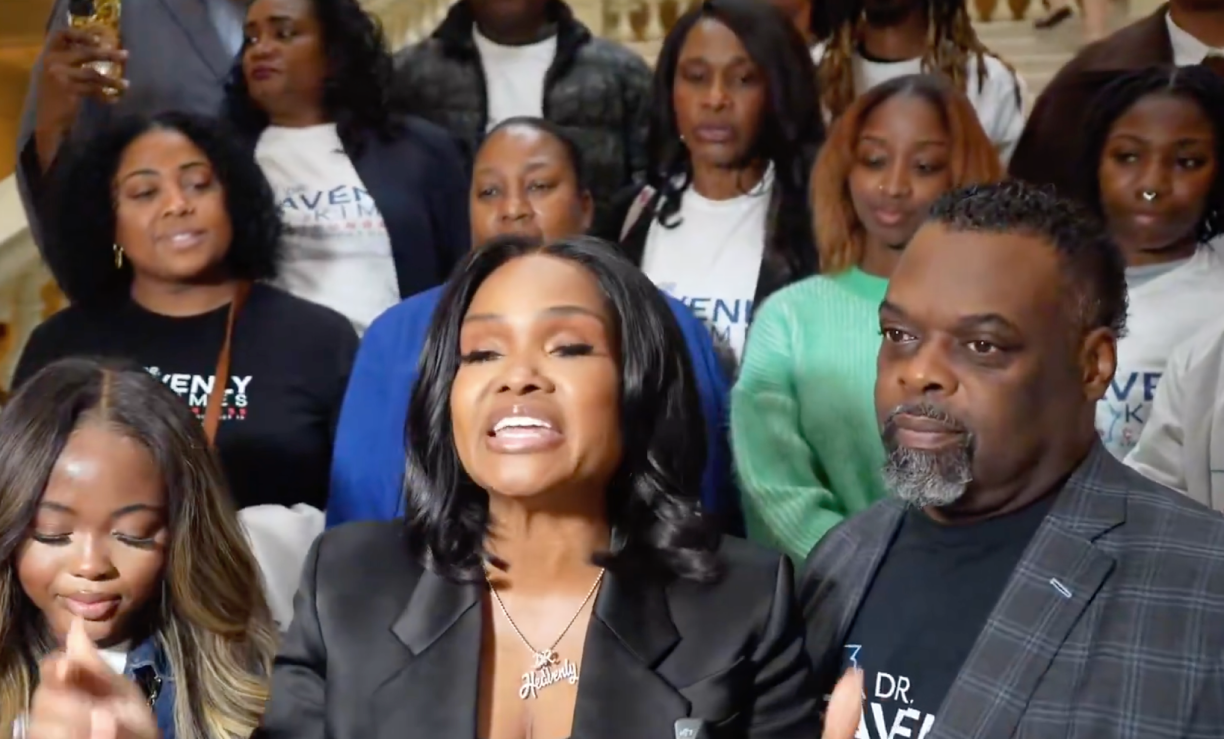
Dr. Heavenly Kimes, the outspoken dentist and reality TV personality known for her role on Bravo’s “Married to Medicine,” has taken a significant step toward transitioning from the small screen to the halls of Congress.
On March 4, Kimes submitted her qualifying paperwork to run as a Democrat for Georgia’s 13th Congressional District, a move that positions her to challenge longtime incumbent Rep. David Scott in the upcoming May primary.
Dr. Heavenly Kimes Qualifies for Congress
Kimes, 55, who has built a successful dental practice in Atlanta and become a fixture in the city’s social and entrepreneurial scenes, announced her congressional bid earlier this year after initially planning to run for state representative.
Her campaign emphasizes grassroots momentum, drawing on her experiences as a business owner, mother, and community advocate to address key issues affecting families in the district, which spans parts of Atlanta and its southern suburbs.”Initially, I was running for state representative. I’ve been giving back to my community for years and felt that was the next transition,” Kimes said in a recent interview.
“But once I actually announced, everybody said, ‘You can do something bigger for your community.’” She shifted her focus to Congress amid concerns over healthcare policy and a perceived lack of engagement from current leadership.
Kimes’ platform centers on affordable healthcare, economic opportunity, safe communities, and direct constituent engagement.
As detailed on her campaign website, she aims to expand access to healthcare by prioritizing patients over profits, promote community wealth through homeownership and entrepreneurship programs, ensure quality education for all children, support families with safer neighborhoods, and boost the local economy via small businesses and job creation.
Her entry into politics has not been without controversy. Some critics, including those associated with the incumbent, have questioned her use of the “Dr.” title in campaign materials, though Kimes, a licensed dentist with over 25 years of experience serving patients in the district, has dismissed such attacks as distractions.
“Titles matter. Integrity matters more. I worked for mine. Earned it. Built on it,” she stated in a social media post addressing the issue.
Kimes’ fame from “Married to Medicine,” where she has appeared for 12 seasons, has been both an asset and a point of discussion. Supporters argue her visibility and relatability make her a strong voice for the district, while detractors question whether her on-screen persona aligns with the seriousness of congressional duties.
Kimes counters that her real-life experiences as a healthcare provider and entrepreneur equip her to fight for lower prescription drug prices, protections for pre-existing conditions, and broader economic stability.
The Democratic primary is set for May 19, 2026, with voter registration closing on April 20. Early voting runs from April 27 to May 15, and absentee ballots will be available starting April 20.
If no candidate secures a majority, a runoff will occur on June 16.As Kimes ramps up her campaign, she continues to balance her political ambitions with her ongoing role on the Bravo series, proving that her drive extends beyond entertainment. “This is real, I’m very serious,” she affirmed recently.
For Atlanta residents in the 13th District, her bid represents a fresh perspective in a race that could reshape local representation in Washington.For more information on Kimes’ campaign, visit drheavenlyforgeorgia.com.
-
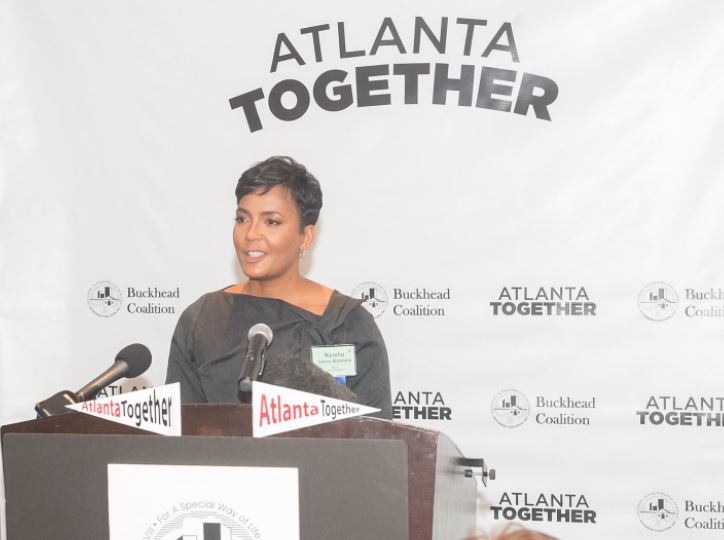

Mayor Keisha Lance Bottoms preached unity as she addressed a room of influential Wednesday, Jan. 31 at the Buckhead Coalition’s annual meeting.
“We now that when Buckhead is strong, we know that the South Side is strong. We know that when the South Side is strong, we know that the North Side is strong.”
“I am committed to making sure that we continue to work together to make sure that our entire city is as strong as it can possibly be,” she said to a room packed with Atlanta’s elite. “It’s so incredibly important that we remember we really are one Atlanta,”
The theme of the invitation-only event was “Atlanta Together.”
Bottoms’ speech was a salve for business leaders looking for guidance from the new mayor as the city courts Amazon for arguably its biggest power move since the Olympics. Bottoms said that she was all on-board to lure Amazon, but cautioned that there were smaller players she had to cater to as well.
After the event, she tweeted: “t was my pleasure to deliver the keynote address at the 2018 #BuckheadCoalition Annual Luncheon. A reminder that we need all of our diverse communities to come together and move forward as #oneAtlanta to ensure our collective success. Thank you for having me.”
Led by former Mayor Sam Massell, the Buckhead Coalition is a powerful business group made up of the region’s movers and shakers.