-

Surrogate McKenna West vows Supreme Court fight for baby she refused to abort, declaring “She is the mother” — a case with echoes for Georgia families
An Alaska nurse who served as a gestational surrogate and refused the biological parents’ request to abort a fetus diagnosed with a severe but treatable heart condition is vowing an all-out legal battle for parental rights after giving birth this week, her lawyer says.
The high-profile dispute spanning Alaska, California, and Texas raises questions that resonate in Georgia, where gestational surrogacy is practiced widely without a specific governing statute and abortion is tightly restricted.
McKenna West gave birth Wednesday in the Dallas area to a boy she calls Gabriel, about three weeks early. The infant was diagnosed around 20 weeks with hypoplastic left heart syndrome (HLHS), a congenital condition in which the left side of the heart is underdeveloped and typically requires a series of surgeries beginning shortly after birth for survival.

The Los Angeles-based intended parents, Nausheen Gilkar and Omar Ahmed, sought termination under a clause in their surrogacy contract allowing abortion for a fetal “anomaly.” West, a nurse and single mother of two, refused.
She has said she wanted the child to have a chance at life and treatment. After legal skirmishes in Alaska and California, she traveled to Texas—where abortion is largely banned—to give birth and seek care for the baby. Texas Attorney General Ken Paxton intervened, and a Dallas court ordered that the newborn receive medically indicated life-sustaining care and remain in the state pending further proceedings.
On Thursday, West’s attorney, Lincoln Wilson, told the New York Post that she intends to fight for legal parentage all the way to the U.S. Supreme Court if necessary. “She is seeking parentage of the child because she gave birth in Texas, and in Texas, if you give birth to a child, it’s your child,” Wilson said. He argues a California parentage order favoring the intended parents is “void” and that once it is set aside, West is the mother under Texas law. “We are taking that challenge up through the California courts, and we’ll take it up to the US Supreme Court if we have to.”
Wilson has likened certain forced-abortion clauses in surrogacy contracts to “hitman contracts” that courts should not enforce, arguing that even under a broad view of abortion rights, the right to choose includes the right not to abort.
A temporary restraining order currently bars West from seeing or holding the baby, presenting herself as a parent, or making medical decisions; the intended parents have physical custody while the child receives care. The first of the planned surgeries (the Norwood procedure) was expected soon at a facility with a strong track record for the operation. The biological parents have said their focus is the baby’s health and that they are following medical advice; they have disputed aspects of West’s account of the pressure to terminate.
The case sits at the intersection of surrogacy contracts, parental rights, fetal anomaly diagnoses, and state abortion laws—issues familiar in Georgia. Gestational surrogacy (in which the carrier has no genetic link to the child) is practiced in the state and is not prohibited by statute. Georgia courts commonly issue pre-birth parentage orders establishing the intended parents as legal parents, though practices can vary by county and judge.
Compensated arrangements have been carried out for decades, and Atlanta-area fertility clinics (including programs affiliated with Reproductive Biology Associates, CCRM Atlanta, and others) support a regional industry that serves local and out-of-state intended parents.
Georgia’s abortion landscape is far more restrictive than California’s or Alaska’s. Under the state’s LIFE Act framework, most abortions are banned after roughly six weeks of pregnancy (when cardiac activity can be detected), with limited exceptions that include cases involving a lethal fetal anomaly, threats to the pregnant person’s life or physical health, and certain instances of rape or incest reported within specified timeframes.
A diagnosis such as HLHS—serious and requiring major intervention but not invariably classified as immediately lethal—could place intended parents and a surrogate in a similar contractual and ethical bind if a termination were sought later in pregnancy.
Legal observers note that well-drafted surrogacy agreements and independent counsel for both sides are standard practice in Georgia precisely to reduce the risk of the kind of multi-state conflict now playing out with West. Yet the absence of a comprehensive surrogacy statute means outcomes still depend heavily on judicial discretion and the specific terms of the contract. West’s refusal, her relocation for protective laws and specialized care, and the subsequent custody fight illustrate how quickly private arrangements can become public legal battles when medical findings, personal convictions, and state rules collide.
As baby Gabriel begins treatment in Texas and the competing claims of parentage move through the courts, the dispute underscores the unresolved tensions in American family law. For Georgia residents considering or involved in surrogacy—whether in Atlanta’s established fertility network or elsewhere in the state—the case serves as a high-stakes reminder that contracts, diagnoses, and differing state policies on abortion and parentage can produce outcomes no one fully anticipated.
West’s lawyers say she is prepared to press the issue as far as necessary; the biological parents maintain their parental rights and focus on the child’s care. Further hearings are expected in the coming weeks.
-

Atlanta, GA — July 10, 2026 — Georgia health officials are urging residents to stay vigilant as a seasonal surge in cyclosporiasis cases linked to the microscopic parasite Cyclospora cayetanensis affects the state and multiple others across the U.S. this summer.
People hear the term explosive diarrhea parasite outbreak and their minds immediately think out of the box.
This article will tell you what you need to know about the cyclospora outbreak in Georgia and how you can stay safe.
“Cyclospora is a parasite, not a bacteria, not a fungus,” said Dr. Jasmine Clark, a Ph.D. microbiologist and nominee for Georgia’s 13th District. “The incubation period is about a week, which means it takes about a week from when you actually ingest it to when you actually start feeling sick.”
The Centers for Disease Control and Prevention (CDC) is monitoring domestically acquired cases that began rising in May. As of mid-June 2026, officials had confirmed 145 cases across 17 states, with 20 hospitalizations and no deaths reported in that surveillance period. Georgia is among the affected states, with 1–10 cases documented.
Cyclospora Outbreak in Georgia: What You Should Know
Local reporting indicates the national picture continues to grow, with significant clusters in states like Michigan (nearly 1,000 cases in some reports) and Ohio, alongside investigations in dozens of others. Georgia Department of Public Health (DPH) data shows cases in the state have trended upward since 2015, largely due to improved laboratory testing, with the majority occurring during the peak summer months of June and July.
What is Cyclospora and How Does It Spread?
Cyclosporiasis is an intestinal illness caused by the parasite Cyclospora cayetanensis. People become infected by consuming food or water contaminated with the parasite—most often fresh produce such as cilantro, basil, leafy greens, raspberries, or other fruits and vegetables exposed to contaminated irrigation water or handling.
The parasite is not typically spread directly from person to person. Outbreaks tend to occur in late spring and summer.
Symptoms to Watch For
Symptoms usually appear about a week after exposure (though the range can vary) and may include:
- Frequent, watery diarrhea (sometimes described as “explosive”)
- Loss of appetite and weight loss
- Stomach cramping and bloating
- Increased gas
- Nausea
- Fatigue
Without treatment, symptoms can persist for weeks or longer than a month. The illness is generally not life-threatening but can be debilitating, especially for vulnerable groups. Diagnosis requires a specific stool test.
Cyclosporiasis is a notifiable disease in Georgia, meaning labs and healthcare providers must report confirmed cases to the Georgia DPH.
Prevention Tips from Georgia DPH and CDC
While washing produce thoroughly is recommended, it may not completely eliminate the risk:
- Wash hands with soap and water before and after handling fresh produce.
- Rinse fruits and vegetables under running water.
- Consider buying whole heads of lettuce instead of pre-bagged mixes; remove and discard outer leaves and wash the rest thoroughly.
- Cook vegetables when possible.
- Avoid any food or water that may have been contaminated with fecal matter.
Affected States

Here are the affected states based on CDC data as of mid-June 2026, with ongoing reports):
AK, CO, CT, FL, GA, IL, LA, MA, NJ, NY, NC, OH, PA, TN, TX, VA, WI (17+ states total; case counts vary, with higher clusters in states like NY, IL, TX, MI, and OH).What to Do If You’re Sick
If you experience prolonged watery diarrhea that doesn’t improve within a few days, see a healthcare provider promptly. Mention the possibility of cyclosporiasis, especially if you’ve recently eaten fresh produce. Treatment typically involves antibiotics.
Georgia DPH and the CDC continue to investigate potential sources and clusters. No single nationwide source has been identified for the current seasonal increase.
For the latest updates, check the Georgia Department of Public Health website or the CDC’s cyclosporiasis surveillance page. Stay safe this summer by practicing good produce hygiene.
More From AtlantaFi.com:
-
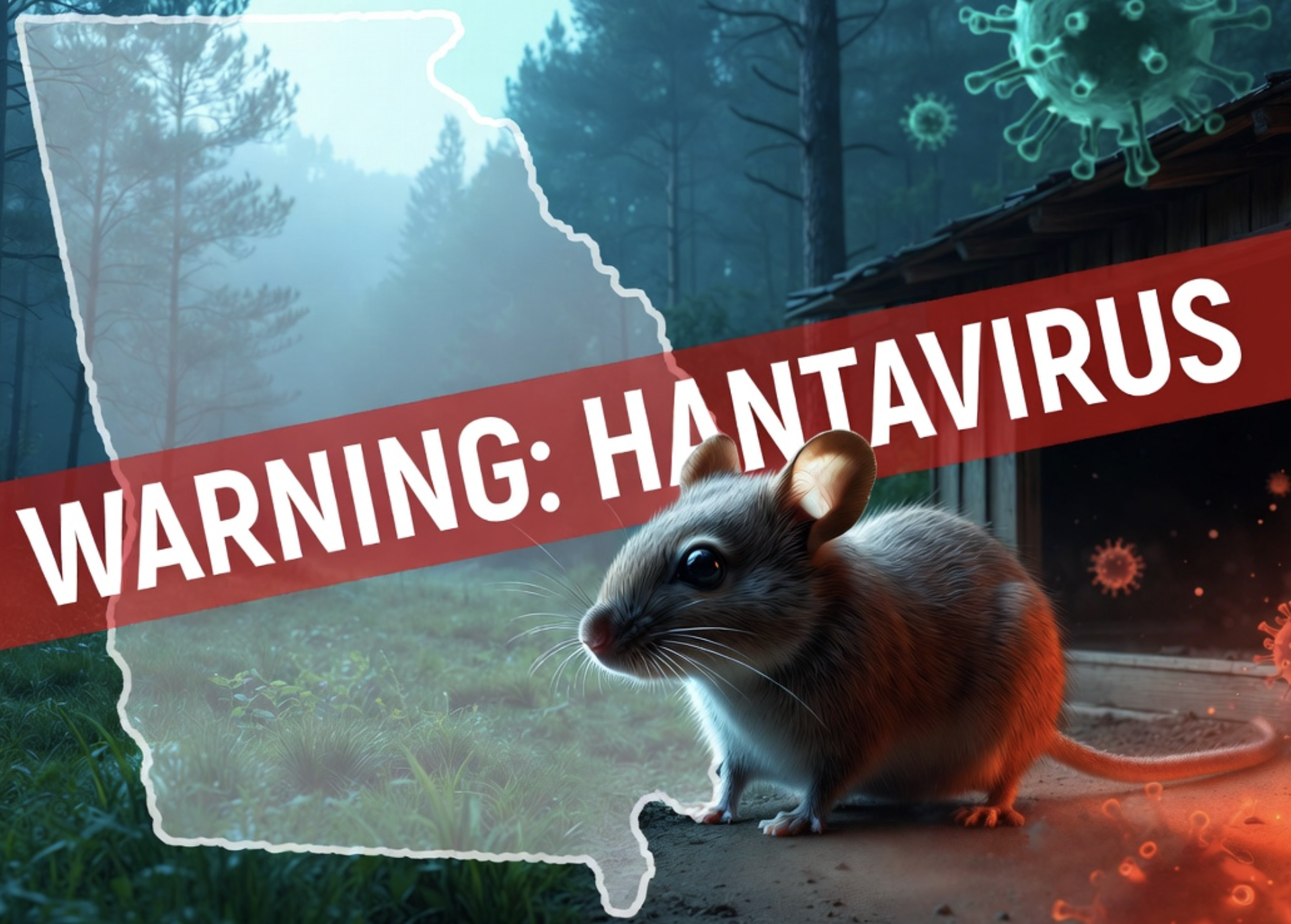
A new virus has emerged in Georgia and it’s causing concern. Hantavirus refers to a family of viruses primarily transmitted by rodents, capable of causing serious, sometimes fatal illnesses in humans. In the Americas, it often leads to hantavirus pulmonary syndrome (HPS), a severe respiratory condition.
While rare in the southeastern U.S., recent events have drawn attention to hantavirus in Georgia (the U.S. state).
Recent Developments: Monitoring in Georgia
As of early May 2026, the Georgia Department of Public Health (DPH) is monitoring two Georgia residents who returned from the MV Hondius cruise ship, linked to a hantavirus outbreak. The ship, on an Atlantic Odyssey voyage, reported at least three deaths and several confirmed or suspected cases, involving the Andes virus strain (the only known hantavirus with documented person-to-person transmission, though usually limited to close contacts).
- The two Georgians (one reported in the Brunswick area) are healthy and show no symptoms.
- They are under monitoring per CDC guidelines, with no immediate public risk.
- Health officials in other states (e.g., California, Arizona, Virginia) are similarly watching returned passengers.
This outbreak likely originated from rodent exposure during a pre-boarding excursion in Argentina (possibly Ushuaia), not widespread community spread.
Background on Hantavirus in Georgia and the U.S.

Hantavirus is not endemic in Georgia. Most U.S. cases occur west of the Mississippi River, often tied to deer mice. From 1993 through 2023, the CDC reported about 890 laboratory-confirmed U.S. cases of hantavirus disease (including HPS), with a case fatality rate around 35-38% for HPS. Georgia has seen very few, if any, locally acquired cases historically.
A separate 2009 report noted a lab-confirmed case in the Republic of Georgia (the country), but that is unrelated to the current U.S. context.
How It Spreads
Humans typically contract hantavirus by inhaling aerosolized particles from infected rodent urine, droppings, or saliva. Less common routes include direct contact with contaminated materials (then touching the face) or rodent bites. It does not spread easily between people, except in rare cases with the Andes strain.
Rodents like deer mice carry it without getting sick, shedding the virus in their waste. Cleaning infested areas without precautions (e.g., dry sweeping) can aerosolize particles.
Symptoms
HPS symptoms appear 1–8 weeks after exposure and progress in phases:
- Early phase (flu-like): Fatigue, fever, muscle aches (especially large muscles like thighs, hips, back), headaches, dizziness, chills, nausea, vomiting, diarrhea, abdominal pain.
- Later phase (4–10 days after early symptoms): Coughing, shortness of breath, chest tightness as lungs fill with fluid, leading to respiratory distress and potential shock.
Seek immediate medical care if you have flu-like symptoms after possible rodent exposure—early intervention improves outcomes.Treatment and PrognosisNo specific antiviral cure exists for HPS. Treatment is supportive, often in an ICU, and may include oxygen therapy, mechanical ventilation, fluid management, or ECMO (extracorporeal membrane oxygenation) in severe cases. Recovery can be slow, with lingering fatigue. Prompt care significantly boosts survival chances.
Prevention Tips
Prevention focuses on rodent control—key in homes, cabins, or campsites:
- Seal entry points in buildings.
- Store food in rodent-proof containers and maintain cleanliness.
- Use traps; avoid live rodents.
- When cleaning droppings: Ventilate the area, wear gloves and an N95 mask, wet-clean with disinfectant (e.g., bleach solution), and avoid vacuuming or sweeping dry material.
- For campers or hikers: Use tents with floors, elevate food, and check for rodent signs.
Outlook for Georgia
The risk remains very low for most Georgians. The current monitoring reflects standard public health vigilance rather than local transmission. Stay informed via the Georgia DPH or CDC websites, especially if traveling to rodent-prone areas or on international trips.
Hantavirus serves as a reminder of the importance of rodent control and awareness of zoonotic diseases. If you suspect exposure or symptoms, contact a healthcare provider and mention any rodent contact. For questions, reach Georgia DPH Epidemiology at (404) 657-2588 or the 24/7 line at 1-866-PUB-HLTH.
More From AtlantaFi.com: