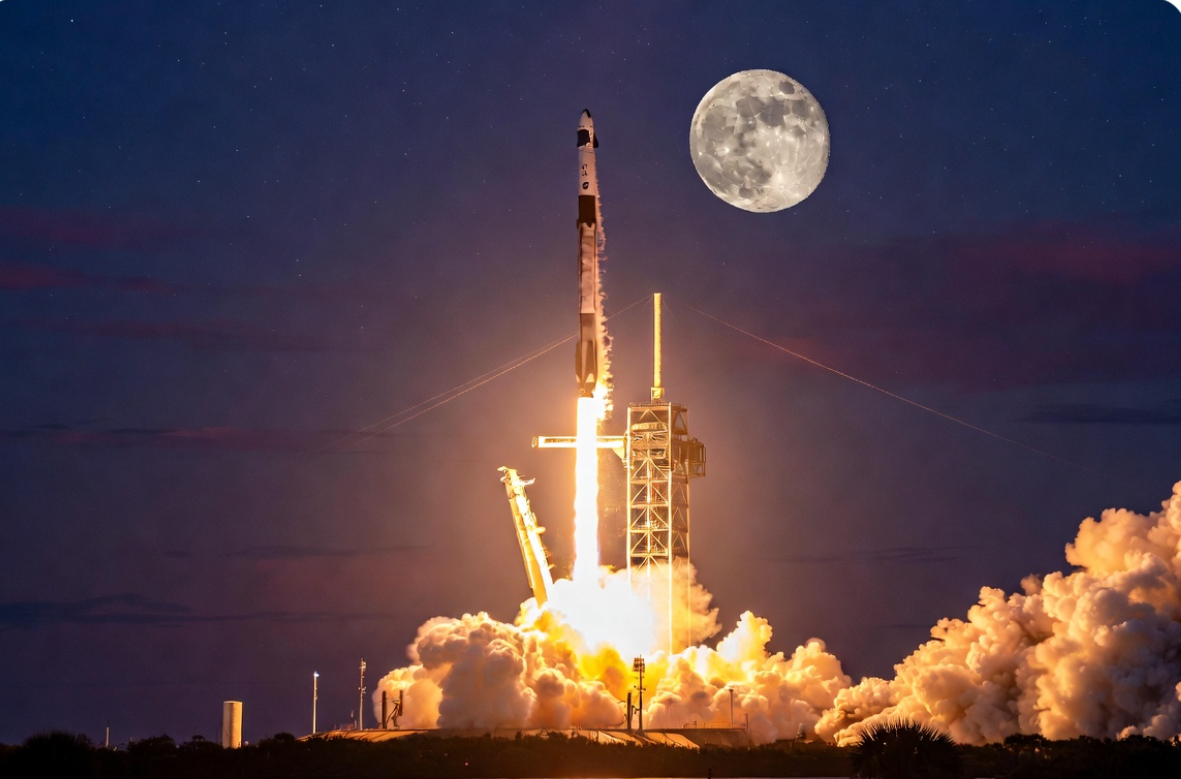

NASA’s Artemis II mission tonight marks a historic milestone as the first crewed flight of the Space Launch System (SLS) rocket and Orion spacecraft since the Apollo era.
This 10-day lunar flyby will send four astronauts around the Moon, testing deep-space systems ahead of future Artemis landings.
The SLS rocket—NASA’s most powerful ever—will launch from Launch Complex 39B at Kennedy Space Center in Florida. If you’re searching for Artemis II launch time, NASA Artemis rocket launch, or how to catch every moment, here’s your complete guide.
Artemis II Launch Time and Schedule
Primary launch target: Wednesday, April 1, 2026, with the window opening at 6:24 p.m. EDT (22:24 UTC). The two-hour window closes at 8:24 p.m. EDT.34
NASA has additional backup opportunities if needed:
- April 2: ~7:22 p.m. EDT
- April 3: ~8:00 p.m. EDT
- April 4: ~8:53 p.m. EDT
- April 5: ~9:40 p.m. EDT
- April 6: ~10:36 p.m. EDT
- Next fallback: April 30, 2026, at ~6:06 p.m. EDT
The onsite countdown clock began ticking on April 1 at 4:44 p.m. EDT. Weather is currently favorable (around 80% chance for the primary window), with cloud cover and winds as the main concerns.5
Artemis II launch time in other time zones (April 1 primary):
- Eastern Daylight Time (EDT): 6:24 p.m.
- Central: 5:24 p.m.
- Mountain: 4:24 p.m.
- Pacific: 3:24 p.m.
- UTC: 22:24
Liftoff will propel the crew on a trajectory that loops around Earth before a distant lunar flyby (coming within about 6,000 miles of the Moon’s surface) and return to Earth.
Crew for Artemis II
The four-person crew includes:
- Commander Reid Wiseman (NASA)
- Pilot Victor Glover (NASA)
- Mission Specialist Christina Koch (NASA)
- Mission Specialist Jeremy Hansen (Canadian Space Agency)
This diverse team will test Orion’s life support, navigation, and re-entry systems in deep space.
How to Watch the NASA Artemis Rocket Launch Live
You can follow the entire NASA Artemis rocket launch from home with multiple free options. NASA provides comprehensive coverage starting hours before liftoff.
Official NASA streams (recommended for the most detailed technical commentary):
- NASA YouTube channel: Live launch broadcast and pre-launch coverage.
- NASA+: Free streaming service with full mission coverage.
- Amazon Prime Video: Watch via NASA’s live channel (no Prime subscription needed for this content).
- Additional platforms: Peacock and others may carry the feed.
Live coverage typically begins in the early afternoon EDT, with intensive countdown starting around 12:50 p.m. EDT or earlier. NASA also offers a continuous 4K camera view of the rocket on the pad.21
Other ways to watch:
- Major news networks (CBS, NBC, etc.) will carry special reports with launch at ~6 p.m. EDT.
- YouTube channels from NASA Spaceflight, CBS News, and others for alternative angles and expert analysis.
- Social media: Follow @NASA, @NASAArtemis, and Kennedy Space Center for real-time updates.
For the best experience, open multiple tabs: one for NASA’s official feed (with mission audio) and another for public viewing cameras.
In-Person Viewing for the Artemis II Launch
If you’re near Florida, the NASA Artemis rocket launch creates a spectacular sight visible for miles.
Best public spots (free):
- Titusville area, especially the Max Brewer Bridge and along the Indian River (~10–12 miles from the pad). Arrive early for parking and traffic.
- Other locations along the Space Coast with clear eastern views.
Ticketed options:
- Kennedy Space Center Visitor Complex offers special Artemis II Launch Viewing Packages at the Apollo-Saturn V Center (closest public viewing). These often sell out quickly. Note: On April 1–2, access may be restricted to ticket holders only.33
Visibility tips:
- The SLS rocket’s massive engines will produce a bright plume, potentially visible from parts of central Florida and even southern Georgia depending on timing and weather.
- Evening launches mean a dramatic twilight or nighttime show. Check real-time visibility maps from NASA or local outlets closer to launch day.
Be prepared for heavy crowds and road closures. Playalinda Beach is typically closed for SLS launches due to proximity.
What to Expect During the Launch and Mission
- T- minutes: Final fueling, crew ingress (astronauts board hours before), and “go/no-go” polls.
- Liftoff: Powerful ignition of the SLS core stage and solid rocket boosters—watch for the signature “waterfall” sound suppression.
- Ascent: Booster separation, core stage burn, and Orion separation.
- Mission highlights: Earth orbit, lunar flyby (no landing), and splashdown ~10 days later.
NASA will provide real-time tracking of the spacecraft throughout the journey.
Why Artemis II Matters
This mission paves the way for Artemis III (first crewed lunar landing in over 50 years) and eventual sustained human presence on the Moon. It tests critical technologies for Mars exploration and returns humans to lunar vicinity for the first time since Apollo 17 in 1972.
Stay updated via NASA’s official Artemis II page for any last-minute adjustments to the Artemis II launch time or schedule. Delays are possible due to technical or weather issues, so monitor official sources.
Clear skies and safe travels to all watching this historic NASA Artemis rocket launch—whether from your couch or the Florida coast! The next giant leap for humanity begins soon.