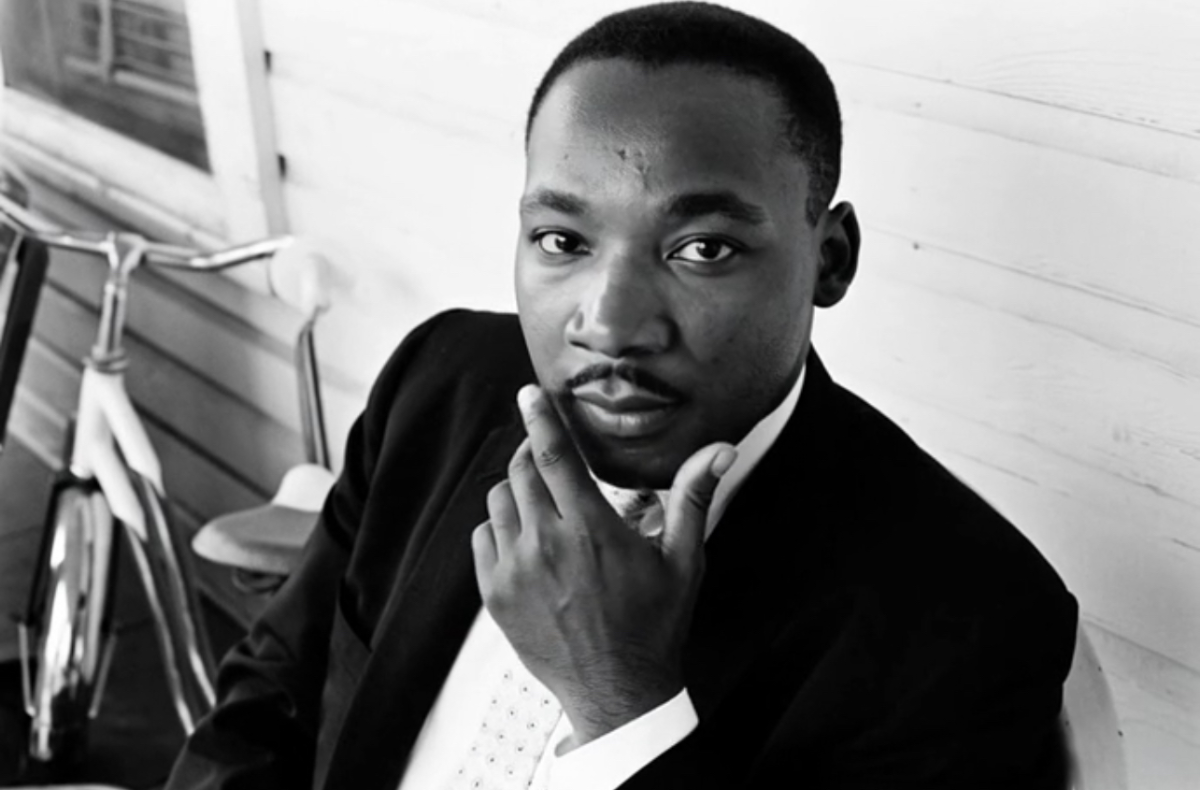

Dr. Martin Luther King Jr. is one of the most studied and celebrated figures in American history. This Black History Month, we’re digging into the life of MLK Jr. a little deeper.
His leadership in the Civil Rights Movement, his commitment to nonviolent resistance, and his iconic “I Have a Dream” speech are widely known. Yet beyond the familiar highlights lies a more complex and nuanced story.
Lesser-Known Facts About MLK Jr.
Here are seven lesser-known facts that shed additional light on King’s life, intellect, and legacy.
1. His Birth Name Was Not Martin

Martin Luther King Jr. was born Michael King Jr. on January 15, 1929, in Atlanta, Georgia. His father, Michael King Sr., was a Baptist minister at Ebenezer Baptist Church.
In 1934, after traveling to Germany and becoming inspired by the Protestant Reformation leader Martin Luther, King’s father changed both his own name and his son’s name to Martin Luther King. The change symbolized a spiritual and theological commitment to reform-minded Christianity.
2. He Entered College at Just 15 Years Old

King was academically gifted and skipped both the ninth and twelfth grades. At the age of 15, he enrolled at Morehouse College in Atlanta, a historically Black institution where his father and grandfather had also studied.
He later attended Crozer Theological Seminary in Pennsylvania and earned a Ph.D. in systematic theology from Boston University in 1955. His intellectual foundation—rooted in theology, philosophy, and ethics—shaped his approach to social justice.
3. He Nearly Died in a 1958 Assassination Attempt

Ten years before his assassination in 1968, King survived a near-fatal stabbing.
On September 20, 1958, while signing copies of his book Stride Toward Freedom at a Harlem department store, King was stabbed in the chest by Izola Ware Curry. The blade came so close to his aorta that doctors later said a sneeze could have killed him.
King publicly forgave his attacker—an act that reflected his unwavering commitment to nonviolence.
When it was learned that Curry suffered from mental problems, King said, “I am deeply sorry that a deranged woman should have injured herself in seeking to injure me. I can say, in all sincerity, that I bear no bitterness toward her and I have felt no resentment from the sad moment that the experience occurred. I know that we want her to receive the necessary treatment so that she may become a constructive citizen in an integrated society where a disorganized personality need not become a menace to any man.”
4. ‘I Have a Dream’ Was Partly Improvised

The March on Washington speech delivered on August 28, 1963, is among the most famous speeches in American history. But the “I Have a Dream” section was not originally part of the prepared text.
As King spoke, gospel singer Mahalia Jackson reportedly called out, “Tell them about the dream, Martin!”
King then set aside his notes and began delivering a version of themes he had used before, speaking extemporaneously. The improvised section became the defining moment of the speech—and of his public legacy.
5. He Spent Time in Jail Nearly 30 Times

Between 1955 and 1968, King was arrested approximately 29 times for acts of civil disobedience and protest.
His 1963 imprisonment in Birmingham, Alabama, resulted in one of his most important writings: “Letter from Birmingham Jail.” Written in the margins of newspapers and scraps of paper, the letter articulated the moral case for direct action and became a foundational document of the Civil Rights Movement.
An excerpt: “We have waited for more than 340 years for our constitutional and God given rights. The nations of Asia and Africa are moving with jetlike speed toward gaining political independence, but we still creep at horse and buggy pace toward gaining a cup of coffee at a lunch counter.”
6. He Was Awarded the Nobel Peace Prize at Age 35

In 1964, Martin Luther King Jr. became the youngest person at the time to receive the Nobel Peace Prize. He was awarded the honor for leading a nonviolent struggle against racial injustice in the United States.
King donated the entire prize money—$54,123 at the time—to the Civil Rights Movement, underscoring his belief that the award belonged not to him personally but to the broader struggle for equality.
7. His Advocacy Extended Beyond Civil Rights

While King is most closely associated with racial equality, his later activism addressed broader structural issues:
- Economic inequality
- Poverty
- Labor rights
- Opposition to the Vietnam War
In 1968, he was organizing the Poor People’s Campaign, a multiracial effort to demand economic justice, when he was assassinated in Memphis, Tennessee, on April 4.
King’s expanding focus on economic reform and anti-war activism was controversial at the time and complicated his public image. It also demonstrated his evolving vision of justice as interconnected—racial, economic, and global.
The Legacy Beyond the Monument
Martin Luther King Jr. is often memorialized through monuments, holidays, and quotations. Yet understanding the full arc of his life reveals a thinker, strategist, theologian, and activist who constantly refined his philosophy and expanded his mission.
He was not only a dreamer but also a disciplined organizer and intellectual—one who believed that moral courage, collective action, and nonviolent resistance could reshape a nation.
More than half a century after his death, his questions about justice, equality, and democracy remain central to American life.
More from AtlantaFi.com: